Cowboy Space Big Iron Orbital Data Center Rocket Targets 2028 Flight
Cowboy Space unveiled its Big Iron orbital data center design on Oct. 27, an 86 m rocket whose upper stage is meant to carry five NVIDIA Vera Rubin racks. Launch price and total cost were not disclosed.
2 min readAI-assisted
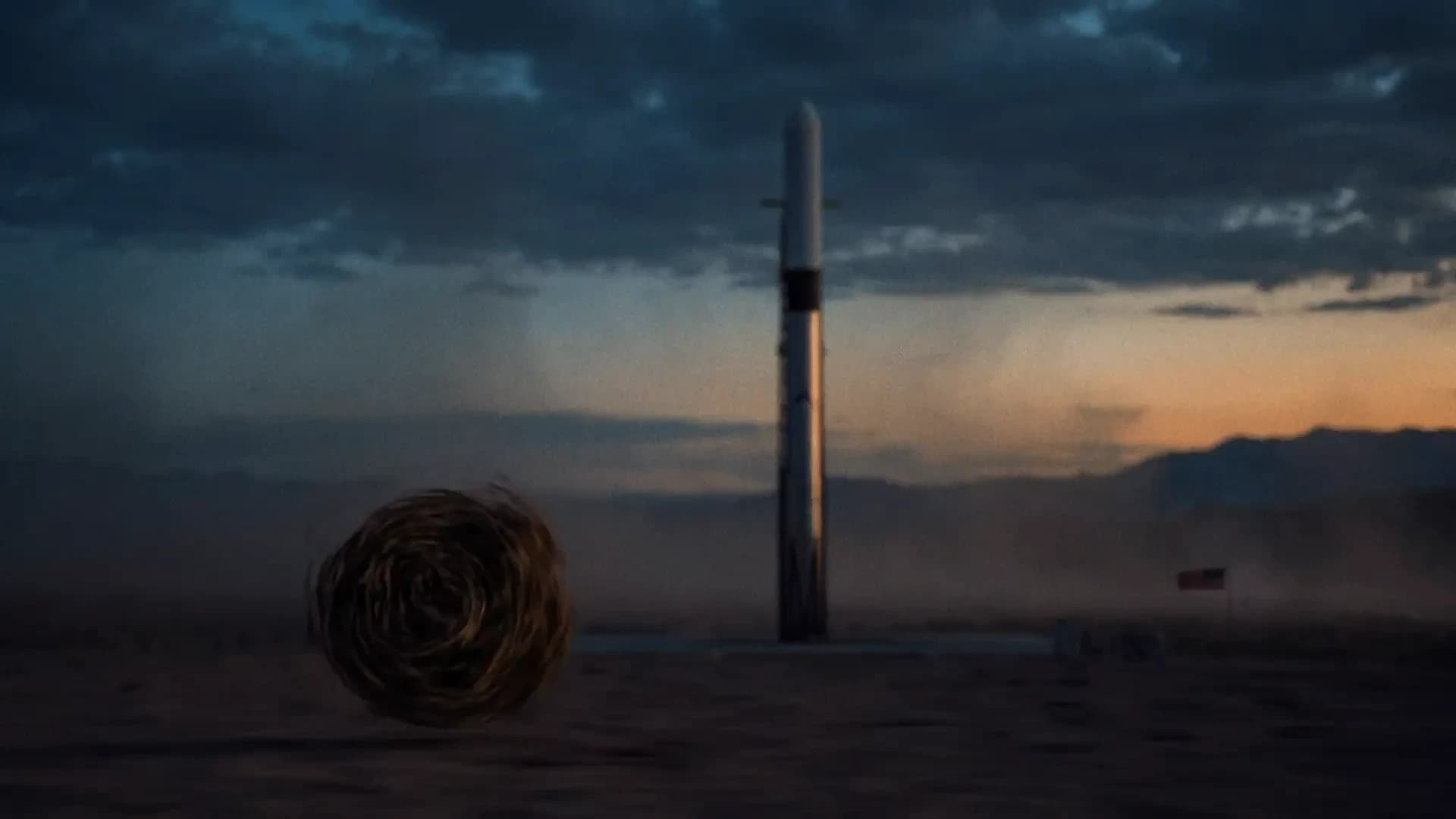
Promotional still from Cowboy Space's website. The company has not said it shows Big Iron's final design.
Image: Cowboy Space
Source · Press image from the Cowboy Space website, used for news reporting.
Cowboy Space unveiled Big Iron on Oct. 27, an 86-metre stainless-steel rocket whose upper stage is designed to stay in orbit as a megawatt-class orbital data center, according to Payload.
The company says each vehicle is designed to carry more than 15,000 kg to sun-synchronous orbit. The first stage is reusable, and Payload reports nine liquid-oxygen and methane "Clydesdale" engines, each rated at 300,000 lbs of thrust. Cowboy is targeting Big Iron's first flight in 2028. Nothing in the design has flown yet.
Instead of being discarded, the upper stage joins the company's planned Stampede constellation. Once deployed in dawn-dusk orbit, each satellite will measure 132 m by 73 m and carry five racks of NVIDIA Vera Rubin GPUs, Payload and Via Satellite both report. The company has filed to field up to 20,000 satellites, which still needs FCC approval.
Why the design matters for power and cooling
Cowboy's pitch is that power, not chips, is the scarce input. "What we want to do is put a lot of available power in orbit, in our case to power chips, to power AI data centers," COO and Chief Legal Officer Joseph Yaffe told Payload. The company says parts of the rocket take a second job once in orbit: the skin becomes the radiator, ammonia propellant works as coolant, and the nitrogen that pressurizes the second stage deploys the solar wings.
The cooling hardware is the point. Yaffe's argument is that a conventional small GPU satellite pays to lift radiator metal separately from its structure. Founder Baiju Bhatt, a Robinhood co-founder, says the design puts the company on a path to cost parity with terrestrial data centers. That is a company claim, and no launch price or development cost was disclosed.
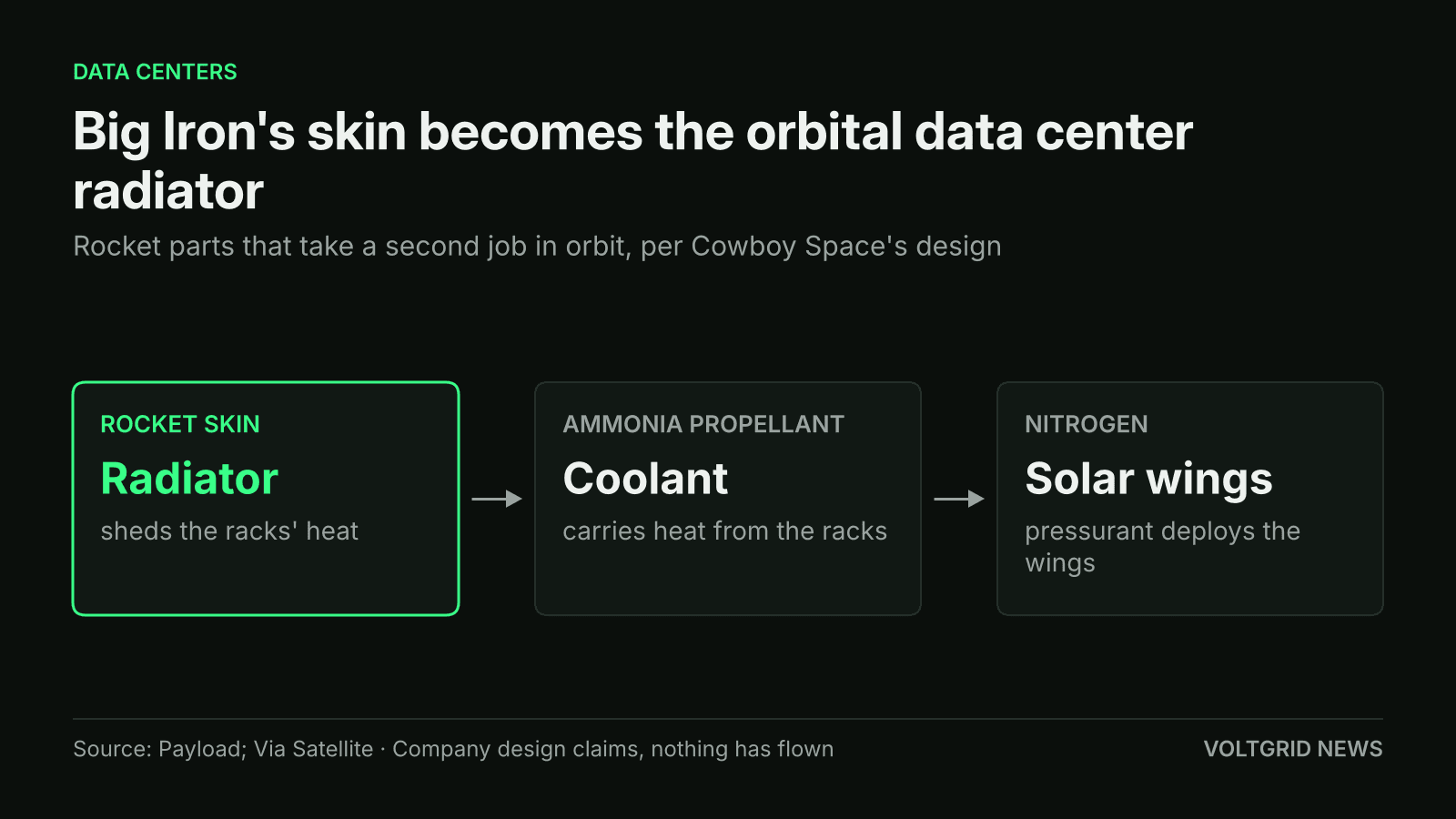
Cowboy Space says Big Iron's skin doubles as the data center radiator; these are design claims for a vehicle that has not flown.
Illustration (AI-generated)
What is still early
Cowboy is opening Big Iron to outside customers through a programme called Big Iron Express, for payloads that need up to a megawatt of power. Yaffe said many alternative launchers have yet to fly, and that government customers "want to see a completed rocket."
The company's flight record so far is small. Its Reason-1 laser power-beaming demo satellite launched Oct. 1 on SpaceX's Transporter-18, and Yaffe said the first beaming attempt will likely come in the next few weeks. Reason-2, slated for 2027, is meant to run GPUs in orbit for commercial and government customers, including a NOAA effort to process weather data in space.
What is not confirmed yet
The reports do not give a per-satellite power figure beyond "megawatt-class", nor the launch price or total cost. The 15,000 kg capacity, the five-rack payload and the cost-parity claim are design targets from the company, and Stampede depends on FCC approval. Cowboy told Payload it still has "a lot of executing to do."