Gotion Abandons $2.4B Big Rapids Battery Plant in Michigan Settlement
Gotion will return the Mecosta County land to the state and drop its suit as Michigan drops a grant clawback of over $24 million, ending the $2.4 billion plant. The deal is still being finalized.
2 min readAI-assisted
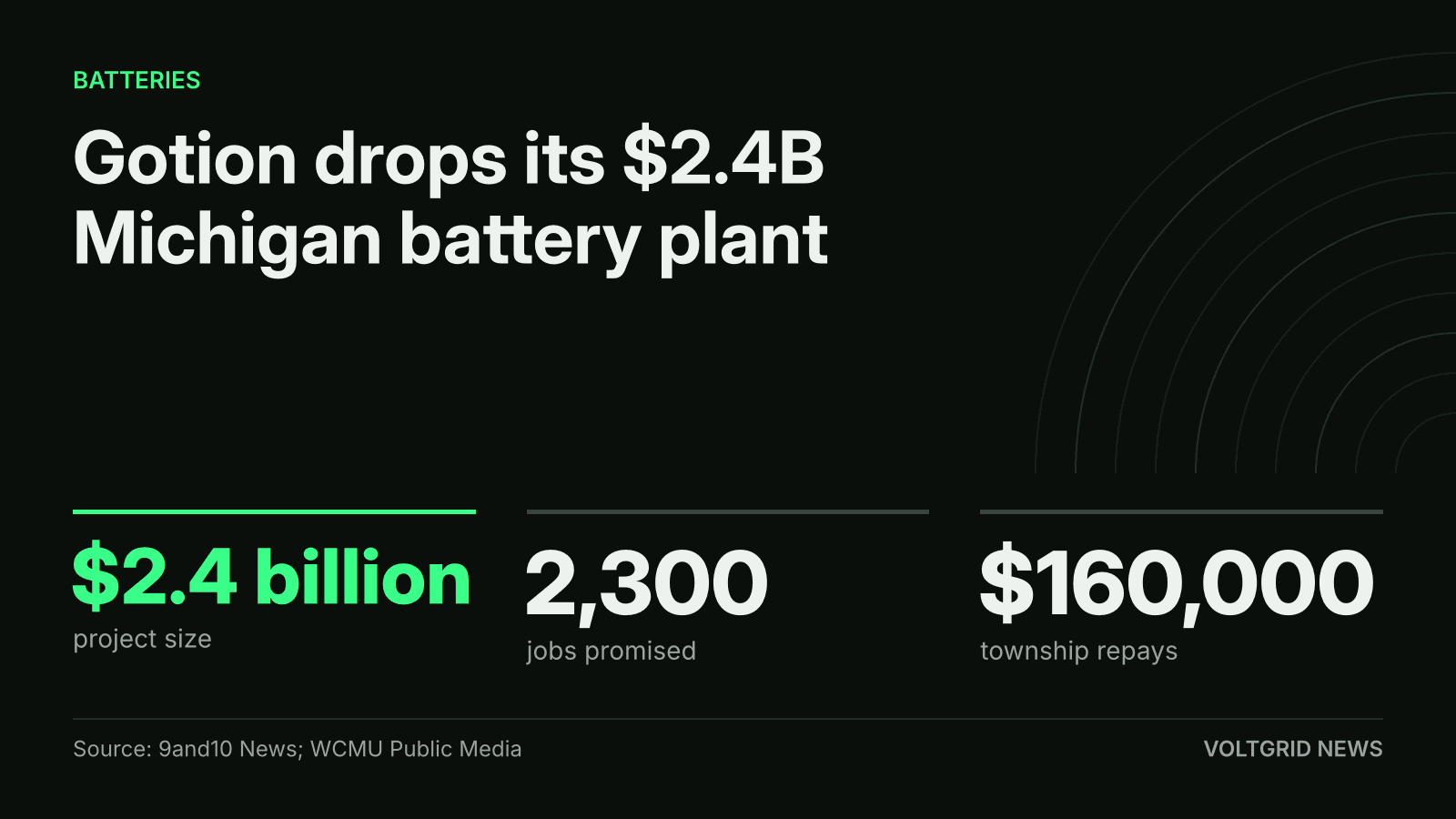
Key facts of the Gotion Big Rapids settlement, as reported by 9and10 News and WCMU Public Media.
Illustration (AI-generated)
Gotion and Green Charter Township in Mecosta County, Michigan, have settled a federal lawsuit that ends the $2.4 billion Gotion battery plant planned near Big Rapids, according to 9and10 News on Oct. 22. Gotion will walk away from the project entirely.
Under the agreement, Gotion drops its suit, which it filed in March 2024 seeking nearly $24 million in damages, and returns the development land to the Michigan State Land Bank, 9and10 reported. In exchange, the state drops its demand that Gotion repay more than $24 million in grant funding used to buy the property. WCMU Public Media, which describes the state side as the Michigan Strategic Fund, reported the same release of the subsidy demand on Oct. 23.
The township must repay $160,000 tied to a drafted fire contract amendment and pay $1 in damages, and the remaining counts are dismissed with prejudice, so they cannot be refiled. All project agreements are terminated, according to 9and10. WCMU quotes the township supervisor, Kruse, saying the township releases $160,000 it had held.
Why It Matters for US Battery Supply
The settlement closes a high-profile attempt to place a Chinese-owned battery plant in the United States. The project was first proposed in 2022 and promised 2,300 jobs. It met local and statewide opposition over environmental concerns and alleged ties to the Chinese Communist Party, and the township board was recalled in November 2023.
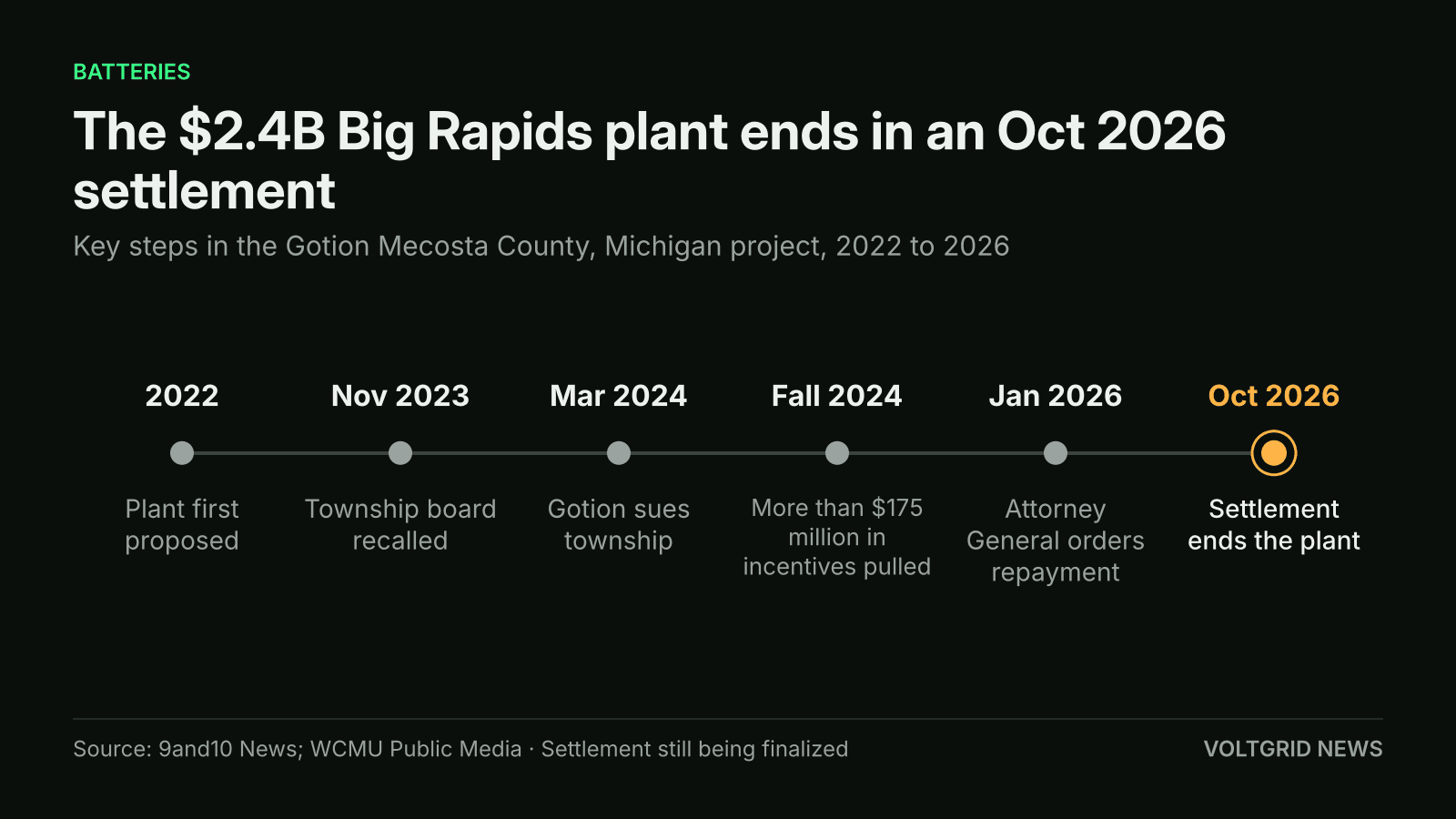
The Oct 2026 settlement ends a project first proposed in 2022, according to 9and10 News and WCMU.
Illustration (AI-generated)
The new board then rescinded earlier contracts. By fall 2024 the Michigan Economic Development Corp. had pulled more than $175 million in approved tax incentives after saying no work had occurred at the site for at least four months, 9and10 reported.
None of the reports Voltgrid read gives the plant's planned cell or cathode capacity, so no GWh figure is attached to the cancelled project.
Grant Repayment and Political Fallout
In January, Michigan Attorney General Dana Nessel ordered Gotion to repay more than $23 million in distributed grant money, and Gotion said it would surrender the land rather than repay, according to 9and10. The outlets differ on the amount, with 9and10 citing more than $24 million in the settlement terms and the January order at more than $23 million. WCMU quoted U.S. Rep. John Moolenaar, who chairs the House Select Committee on the Chinese Communist Party, saying it is unfortunate Michigan taxpayers will not receive restitution of the subsidies Gotion refused to pay back.
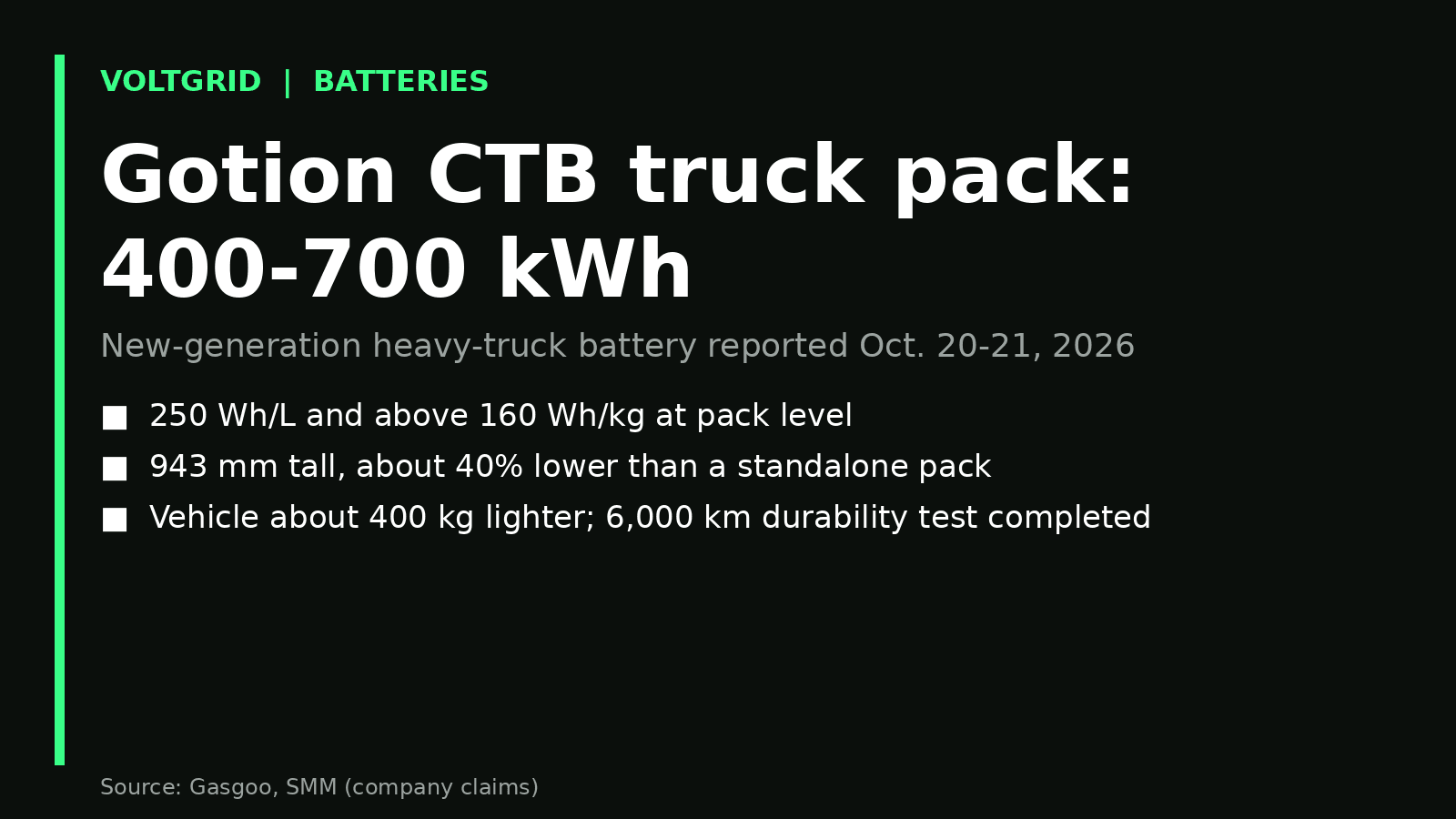
The litigation cost the township hundreds of thousands of dollars in legal fees, 9and10 reported. Gotion separately unveiled a heavy-truck battery system this month, so the company continues to sell batteries even as this US plant ends.
What Is Not Confirmed Yet
The deal is not fully final. WCMU reported on Oct. 23 that both parties have signed but the agreement is still being finalized, and the township supervisor said so. UpNorthLive reported that the township board approved the proposed settlement after terms were agreed at an Oct. 2 conference with a federal magistrate judge, and that its attorney said non-substantive changes could require formal ratification by the board. Gotion and the township declined to comment until the agreement is final, and the Attorney General's office did not respond to 9and10.