LSTC Targets 5x GPU Speed in 2nm Medical AI Chip Project
A NEDO-selected project led by Japan's LSTC will build 2nm-generation medical imaging AI, starting on IBM's Spyre, targeting 5x GPU speed; no foundry is named.
2 min readAI-assisted
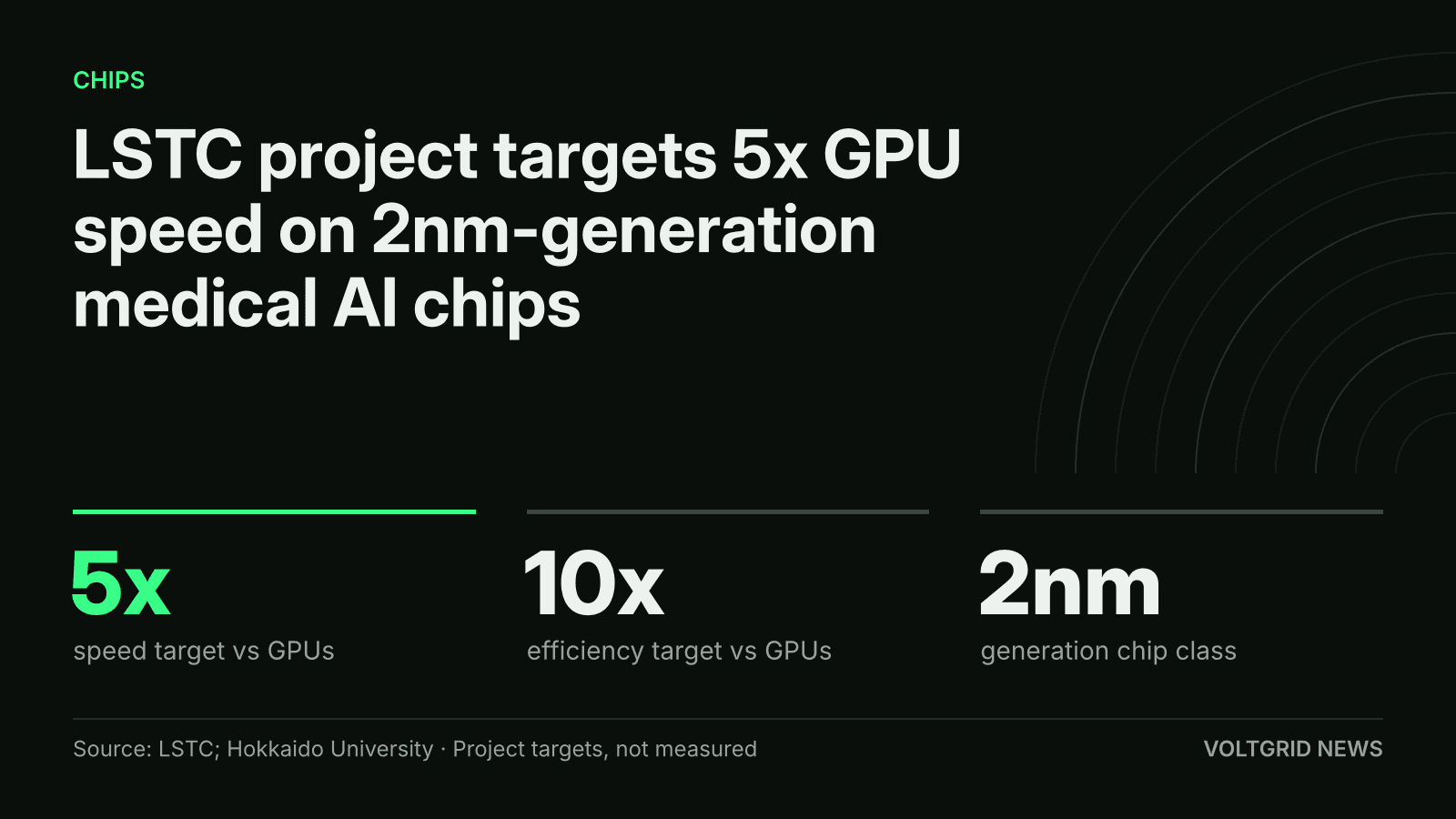
The 5x speed and 10x efficiency figures are project targets set by LSTC and partners, not measured results.
Illustration (AI-generated)
Japan's Leading-edge Semiconductor Technology Center (LSTC), Hokkaido University, Fujifilm, GE HealthCare Japan and Belgium's imec said on Oct. 20 that their 2nm medical AI chip project for imaging was selected under a NEDO research programme, with a target of at least 5x the image-processing speed of current GPUs.
NEDO is Japan's New Energy and Industrial Technology Development Organization, a public research agency. According to the partners' joint release, the project sits in its Post-5G information and communication systems programme, in the strand for advanced semiconductor manufacturing technology. LSTC chairman Tetsuro Higashi leads it. Hokkaido University professor Kohsuke Kudo is deputy director. Fujifilm, GE HealthCare Japan and imec take part as subcontractors, and imec supplies the international link.
The goal is to run image processing inside the medical device instead of on remote servers. The partners say power consumption and processing delay are what hold medical AI back. They want at least 10x the energy efficiency of current GPUs as well as the 5x speed gain. Those are targets set at the start of the project, not measured results.
Two stages, three systems
The plan has two steps. Development and optimisation start on IBM's Spyre Accelerator, which the release calls the precursor hardware, and then move to inference-specialised AI chips built on a 2nm-generation process. The partners describe this as their current plan. Results on Spyre will not automatically carry over to the later chips.