Meta Effective Tax Rate Hits 2% on $8.03B Treasury Notice Benefit
Meta's Q3 10-Q puts its nine-month effective tax rate at 2%, against the 21% US statutory rate, as seven senators press it on data center R&D credits.
3 min readAI-assisted

TodayToday's edition
Meta's Q3 10-Q puts its nine-month effective tax rate at 2%, against the 21% US statutory rate, as seven senators press it on data center R&D credits.
3 min readAI-assisted


Policy & Economics

Policy & Economics
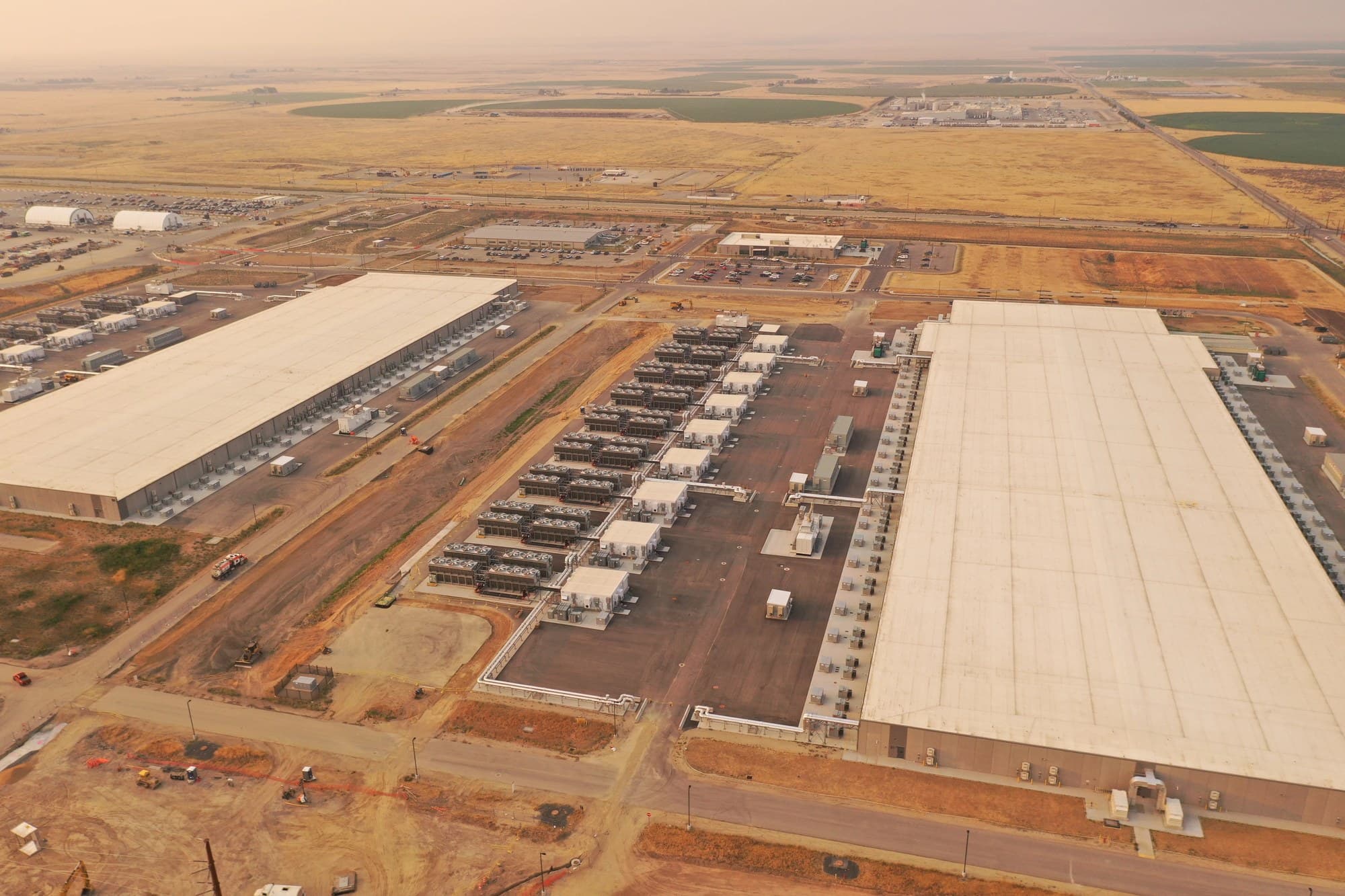
Meta's data center in Kuna, Idaho, shown on the company's data center site. It is an example of Meta's facilities, not a site named in the tax filing.
Image: Meta
Source · Press image from the Meta newsroom, used for news reporting.
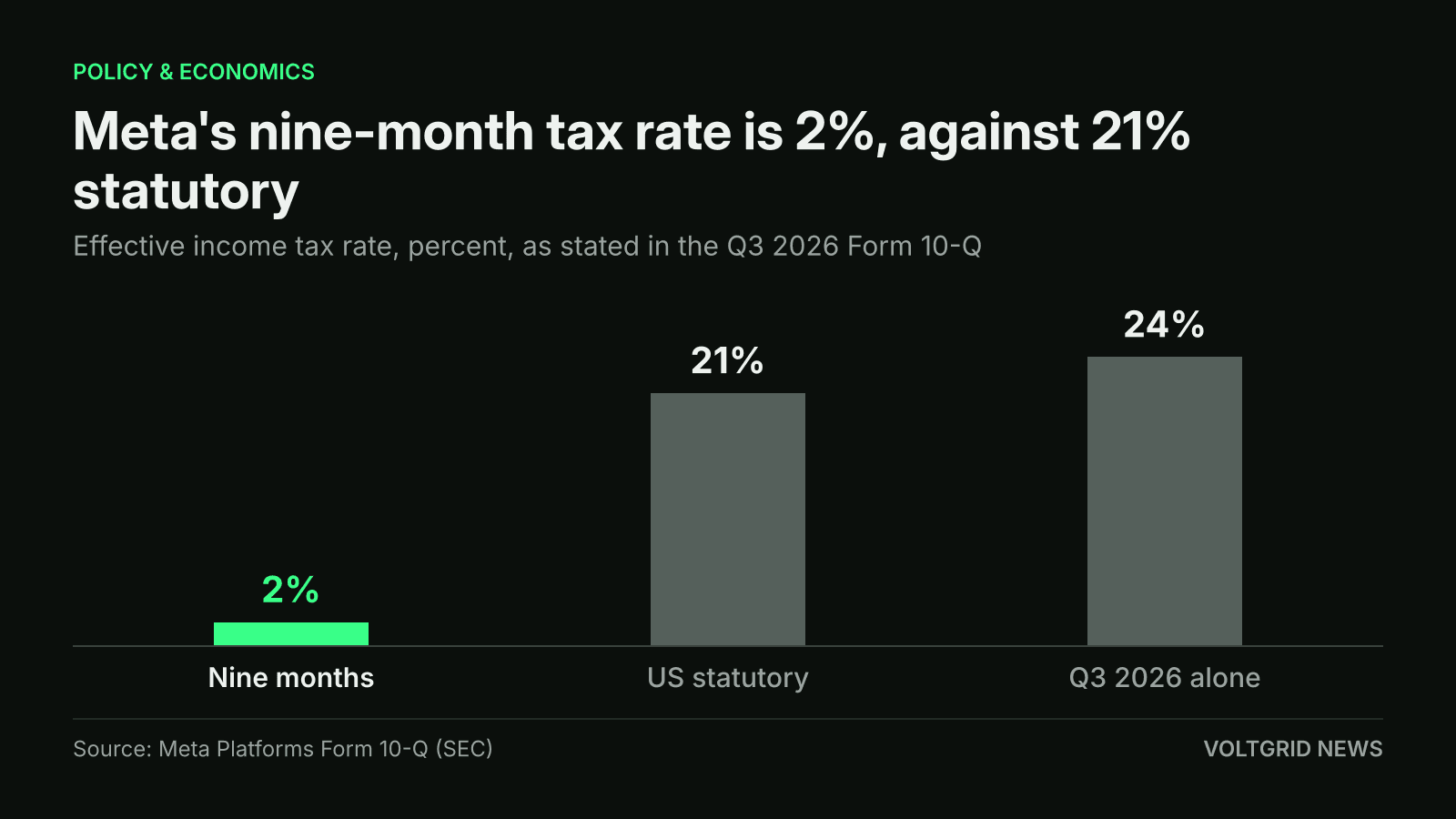
Meta Platforms said in its third-quarter Form 10-Q, filed with the SEC on Oct 22, that its effective tax rate for the nine months ended Sept 30, 2026 was 2%, against the 21% US federal statutory rate, mainly because of an $8.03 billion discrete benefit tied to Treasury Notice 2026-7.

Meta's nine-month effective rate was 2%, against the 21% US statutory rate, according to its Q3 Form 10-Q.
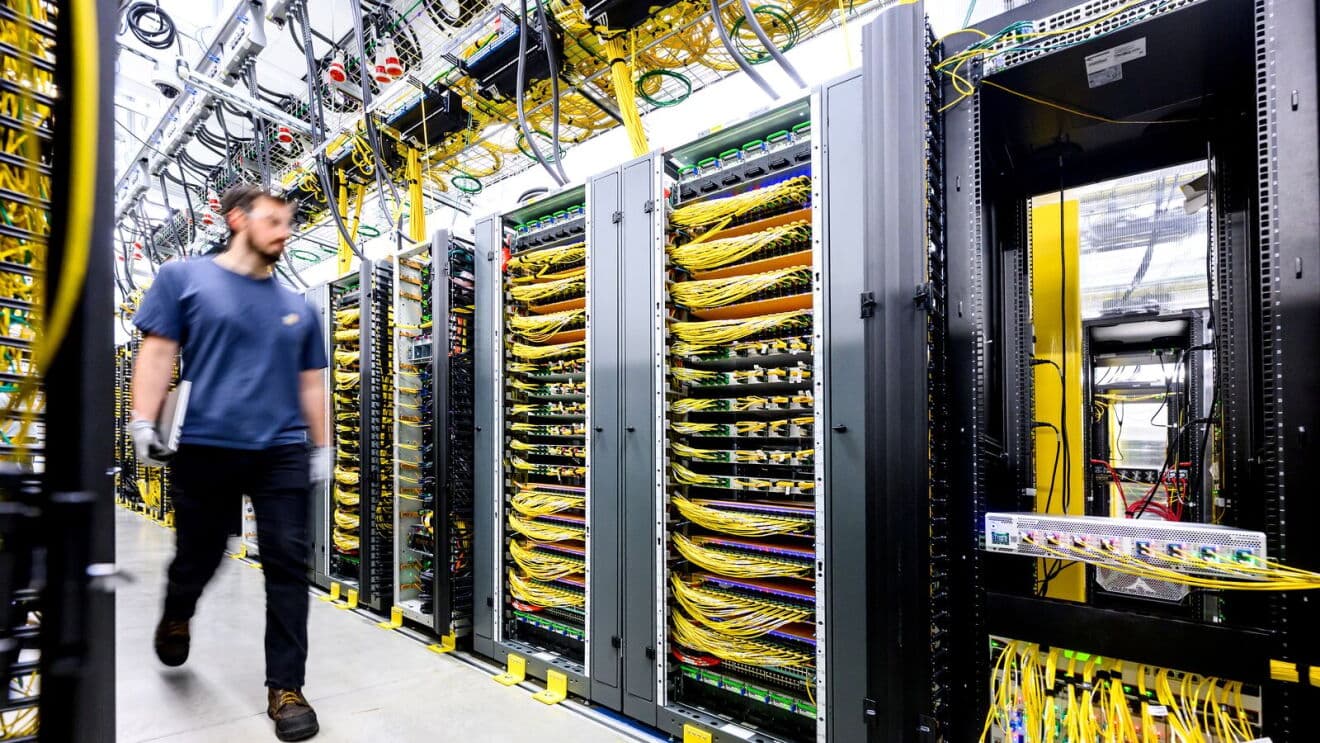
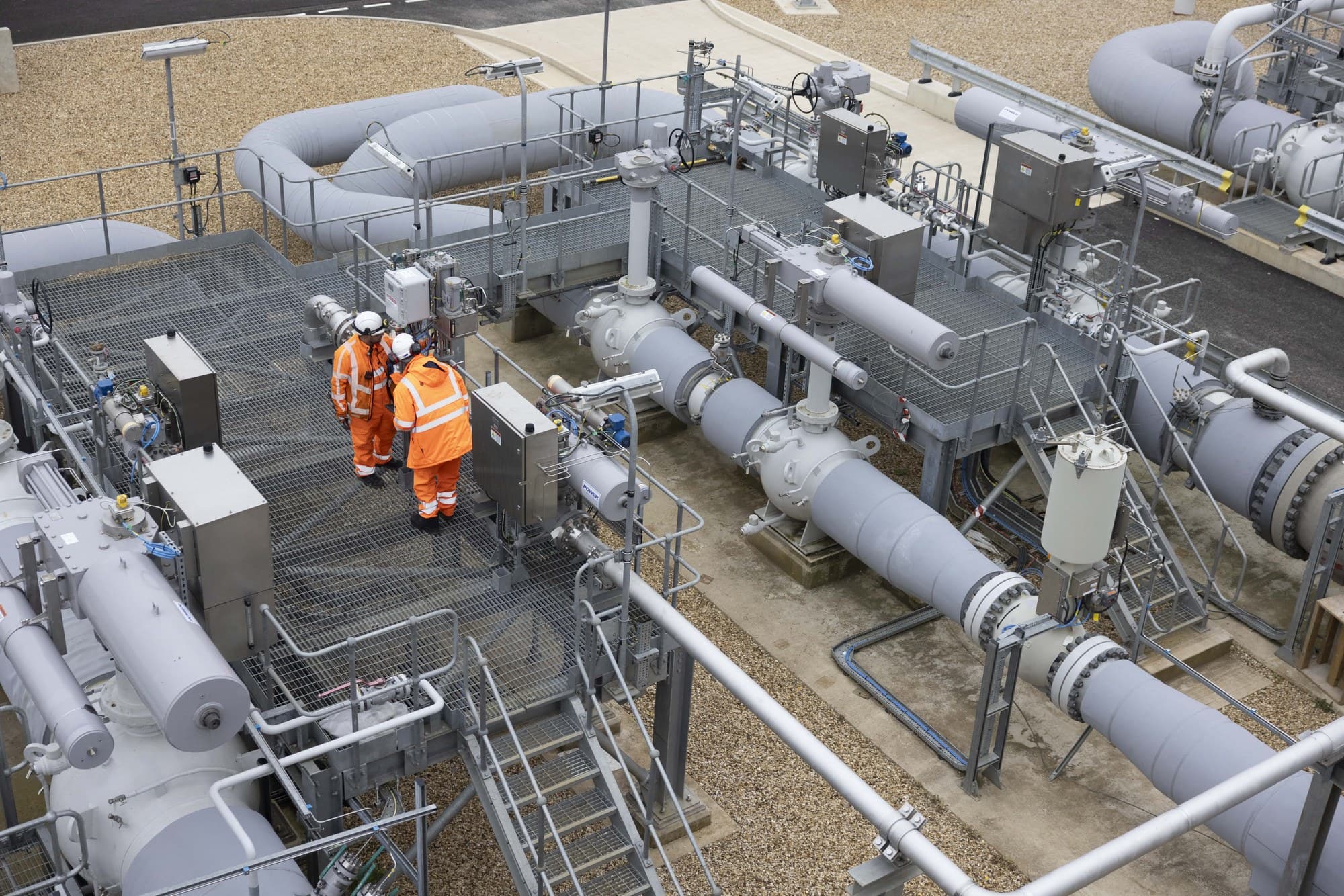
Illustration (AI-generated)
The company reported income before income taxes of $53.51 billion for the nine months and a provision for income taxes of $1.03 billion, according to the filing. Meta said the rate also reflected tax effects from share-based compensation, research tax credits and benefits from foreign-derived deduction eligible income. The rate for the third quarter alone was 24%. For the fourth quarter, Meta said it expects a rate between 15% and 17%, absent changes to its tax landscape.
Notice 2026-7 is interim guidance on the corporate alternative minimum tax (CAMT), a minimum tax on large companies' book income. The notice took effect on Feb 18, 2026, and includes an adjustment for domestic research amortization. Meta described it as relief for previously capitalized US research and development costs and booked the $8.03 billion benefit in the first quarter.
That benefit partly offsets a $15.93 billion discrete charge Meta recognized in the third quarter of 2025, when the One Big Beautiful Bill Act became law. Fortune, which reviewed the filing, calculated that without the benefit Meta's nine-month provision would have been about $9.06 billion, roughly 17% of pretax income. That figure is Fortune's calculation, not a number Meta reported.
Separately, seven Democratic senators led by Ron Wyden of Oregon wrote to Mark Zuckerberg on Oct 13, according to Fortune. The others named are Sheldon Whitehouse, Elizabeth Warren, Catherine Cortez Masto, Maggie Hassan, Ben Ray Lujan and Peter Welch. They asked for answers by Oct 31.
The senators wrote that public records indicate Meta told the IRS its AI data centers are experimental "pilot models" that qualify for the federal research credit. They said Meta's regulatory filings indicate the credit cut its federal income tax liability by $6.6 billion from 2023 through 2025: $700 million in 2023, $2 billion in 2024 and nearly $4 billion in 2025. They asked Meta to break down how much of each year's credit related to chips, computing equipment and other data center materials. These are the senators' claims, and Meta has not confirmed how it described the data centers to the IRS.
A Meta spokesperson told Fortune the company is one of the largest US investors in research and development and that AI-optimized data centers need extensive testing that cannot be simulated. The company said this is the kind of domestic investment Congress meant the incentives to encourage.
Meta's filing shows capital expenditures, including principal payments on finance leases, of $34.91 billion in the third quarter alone. How the tax code treats research costs and data center build-out therefore bears directly on the after-tax cost of AI capacity. The 10-Q also lists gross unrecognized tax benefits of $20.82 billion at Sept 30, up from $16.45 billion at the end of 2025, tied primarily to uncertainty over research tax credits and transfer pricing. If realized, they would lower the provision by $14.58 billion. Voltgrid News reported earlier on pledges by Amazon, Meta and Google to data center host communities.
The senators' letter asks questions and does not establish that any claim was improper. Meta has not published a response, and the Oct 31 deadline has not passed. Whether the IRS accepts the data center classification is not stated in the filing. The 15% to 17% fourth-quarter guidance also signals that the 2% nine-month rate is not a run rate.

Policy & Economics