Ohio's $16 Billion Data Center Power Cost Estimate Rests on a 16% National Assumption
Scioto Analysis projects $16 billion in added Ohio electricity costs from data centers in 2027-2034, using a 16% national mid-case rather than an Ohio model.
2 min readAI-assisted

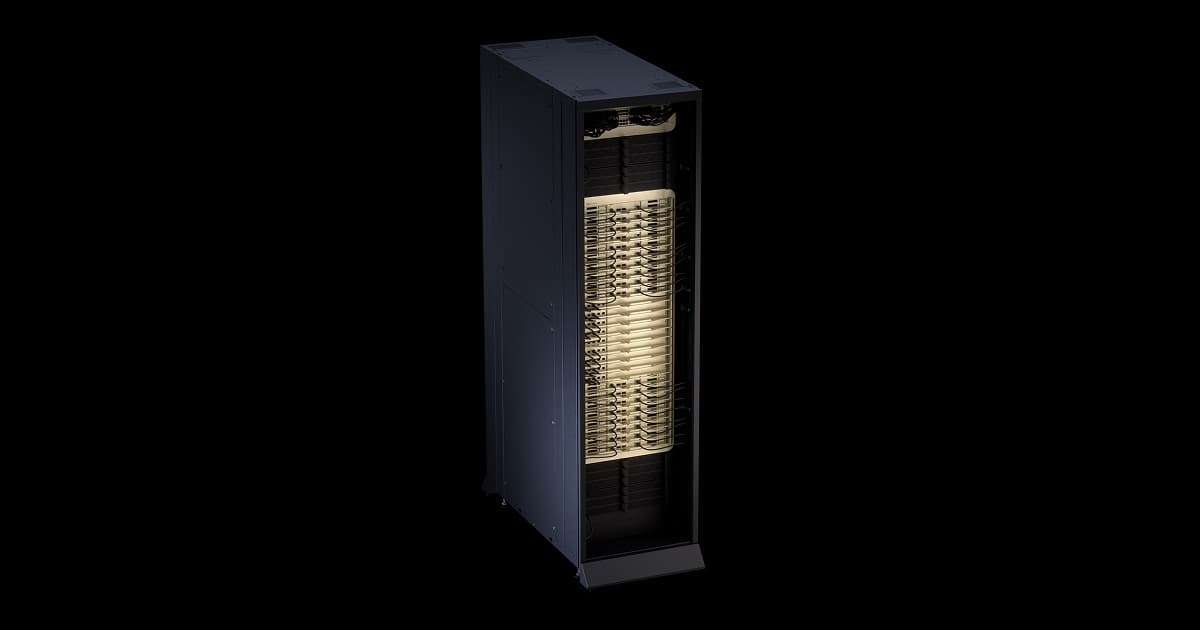
A data center near a residential area.
Illustration (AI-generated)
Columbus, Ohio, October 17 — A Scioto Analysis study estimates that data center growth could add $16 billion in electricity costs for Ohio ratepayers from 2027 through 2034 under current policies, cleveland.com reported. The figure is a modeled statewide cost, not a forecast of individual bills.
The Columbus firm did not run an Ohio-specific grid simulation. It applied a national study's mid-range cost increase to Ohio retail sales data.
The Technical Details
The underlying national study, by Jeremiah X. Johnson and colleagues, modeled how data center and crypto mining demand could raise electricity-system costs through 2030. Scioto chose its middle scenario and extended it four years past that horizon.
- Projected added cost: $16 billion, 2027-2034
- Assumed cost increase: 16% (national mid scenario)
- National scenario range: 5.9% (low) to 29% (high)
- Modeled 2030 energy cost: $30.10/MWh vs. $25.90/MWh without added demand
- Ohio data center net benefit, 2013-2026: $62 billion (Scioto estimate)
- Projected net benefit, 2027-2034: $2.4 billion under current rules
- Air pollution cost, 2027-2034: about $41 billion (Scioto estimate)
- Planned projects by 2028: 50% more data centers, electricity use more than tripling
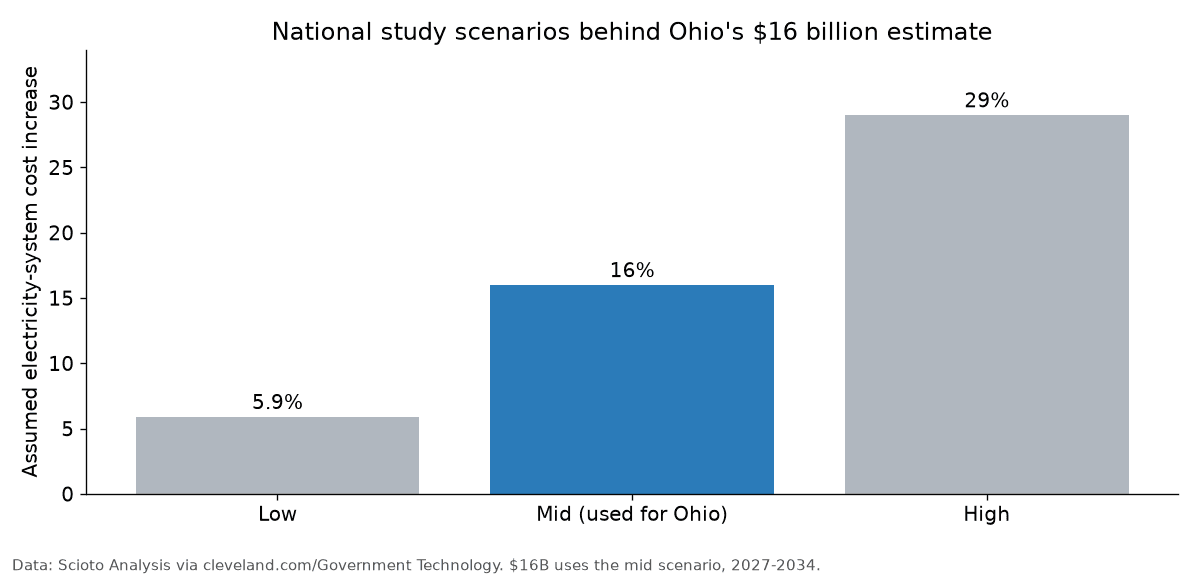
The $16 billion Ohio figure uses the 16% mid scenario.
VoltGridNews
Source · Original VoltGridNews diagram; data from cited source
Voltgrid Analysis: Infrastructure Implications
What the number does and does not say
The $16 billion is a cost-of-energy projection applied to retail sales. Retail bills also carry transmission and distribution charges, so the split between households, businesses and data centers depends on rate design that the study does not model.
Policy pressure on siting
Ohio is a core PJM data center market, and the study frames net benefits as falling from $62 billion historically to $2.4 billion ahead. That gives regulators a quantified case for tariffs that make large loads pay for capacity, which raises the cost of new Ohio campuses.
Generation mix matters
Scioto ties its largest cost, about $41 billion in air pollution damage, to a grid that runs partly on gas and coal. Operators with clean supply contracts in Ohio may find that a siting advantage as scrutiny grows, a projection rather than a reported outcome.
Looking Ahead
Expect the study to feature in Ohio debates on large-load tariffs and the data center sales tax exemption. Developers should model power costs across the 5.9% to 29% scenario range, not only the 16% midpoint.