S&P Rates $105.3B of North American Data Center Debt Across 32 Deals
S&P Global Ratings' data center debt dashboard covers 143 properties with about 8.7 GW available to tenants, and the agency says power limits and public pushback could delay new projects.
2 min readAI-assisted
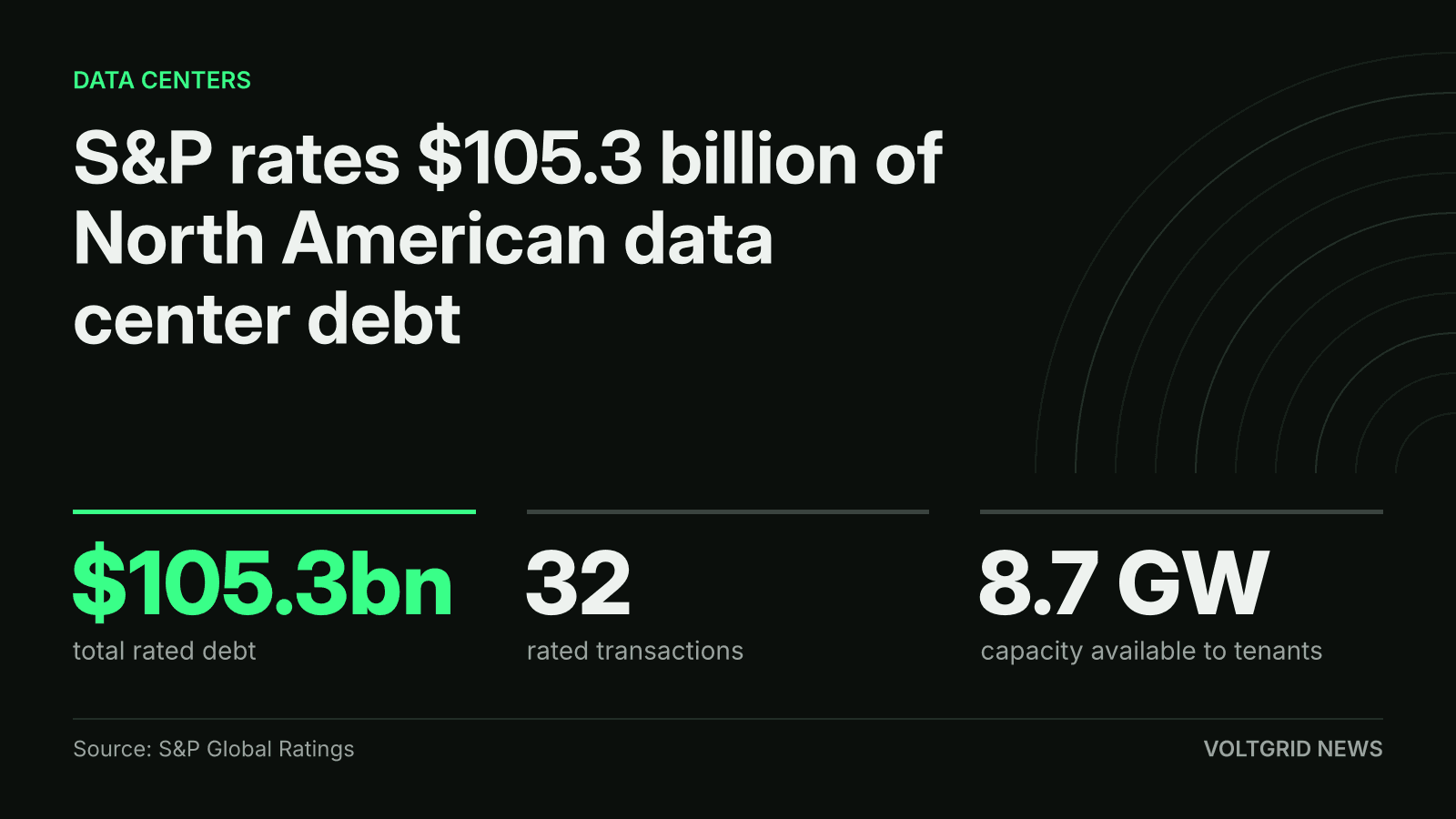
S&P Global Ratings' dashboard covers 32 rated transactions and $105.3bn of debt, backed by properties with about 8.7 GW available to tenants.
Illustration (AI-generated)
S&P Global Ratings said on Oct. 23 that its rated North American data center debt universe now spans 32 transactions and $105.3 billion, and warned that power constraints and public pushback could delay new projects.
The rating agency made the disclosure in a press release launching an interactive dashboard. The tool covers project finance, corporate and structured finance asset-backed securities (SF ABS) issuers, and it accompanies S&P's fourth-quarter 2026 North America data center roundup, published Oct. 16. Bloomberg reported the same day that the agency sees downgrade pressure from local opposition; S&P's release itself says only that the factors "could delay or constrain" development, and that it does not constitute a rating action.
What S&P's Rated Data Center Debt Looks Like
Those 32 transactions are backed by 143 properties with about 8.7 GW of capacity available to tenants, S&P said. Spread evenly, that is roughly 61 MW per property, a Voltgrid calculation from S&P's two totals rather than a figure S&P gives.

Project finance holds the largest share of rated debt at 58.3%, according to S&P Global Ratings.
Illustration (AI-generated)
By number of issuers, SF ABS accounts for 50%, project finance for 28% and corporates for 22%. By debt, the order changes: project finance holds 58.3% of the $105.3 billion, SF ABS 26.4% and corporates 15.3%. Project finance is the smaller group by issuer count but holds the largest share of the debt, while securitizations make up half of the issuers.
The 8.7 GW is capacity available to tenants at properties behind S&P-rated debt, so it measures the part of the build-out that lenders have already financed. Any delay in power or permits at those sites falls on borrowers with rated debt outstanding.
S&P still expects data center demand to remain strong in the foreseeable future, which it attributes to data growth, cloud migration and digitization. Its caution is about supply: power constraints, permitting challenges, public pushback and regulatory responses.
Local Pushback Is Already in the News
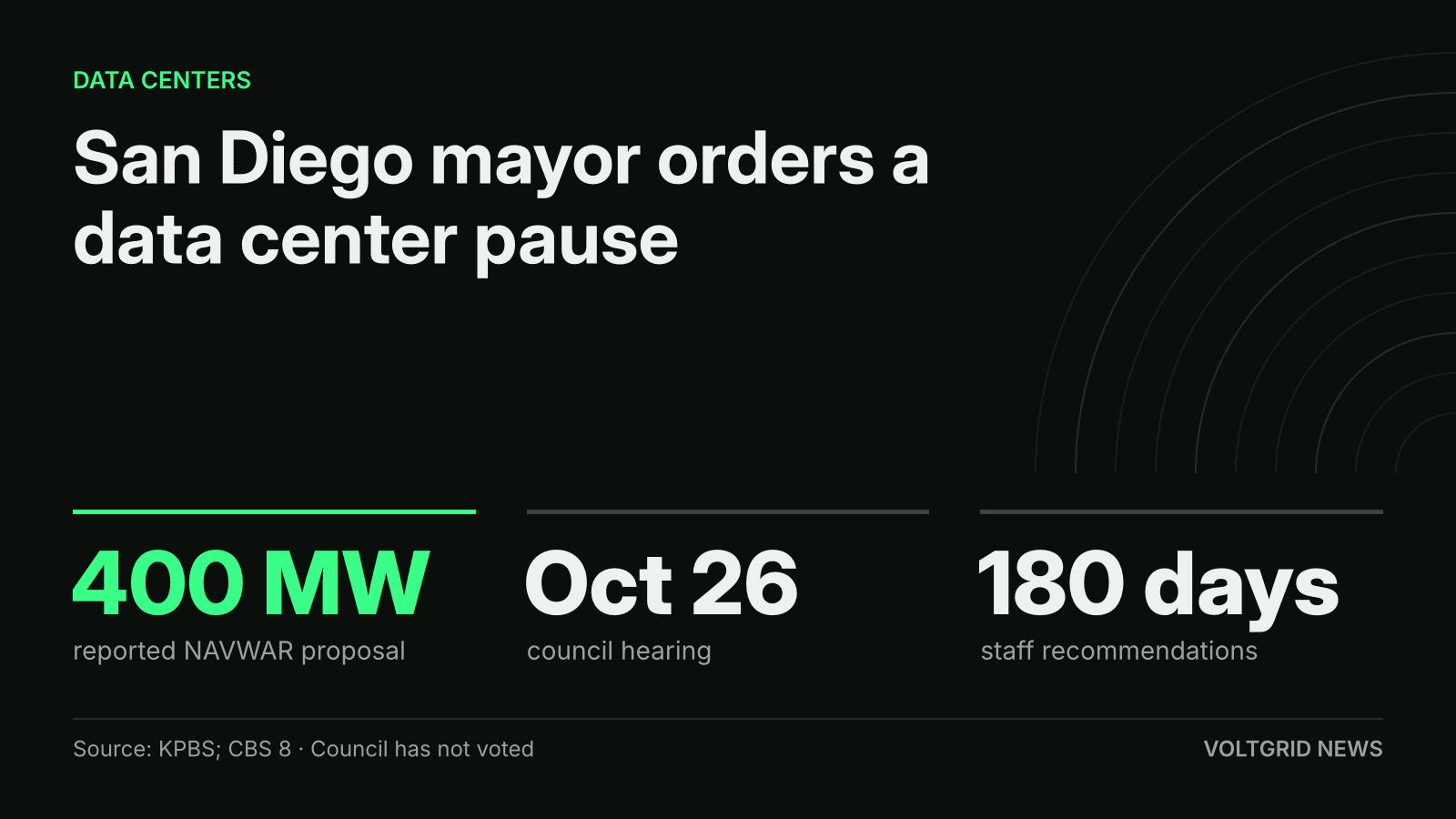
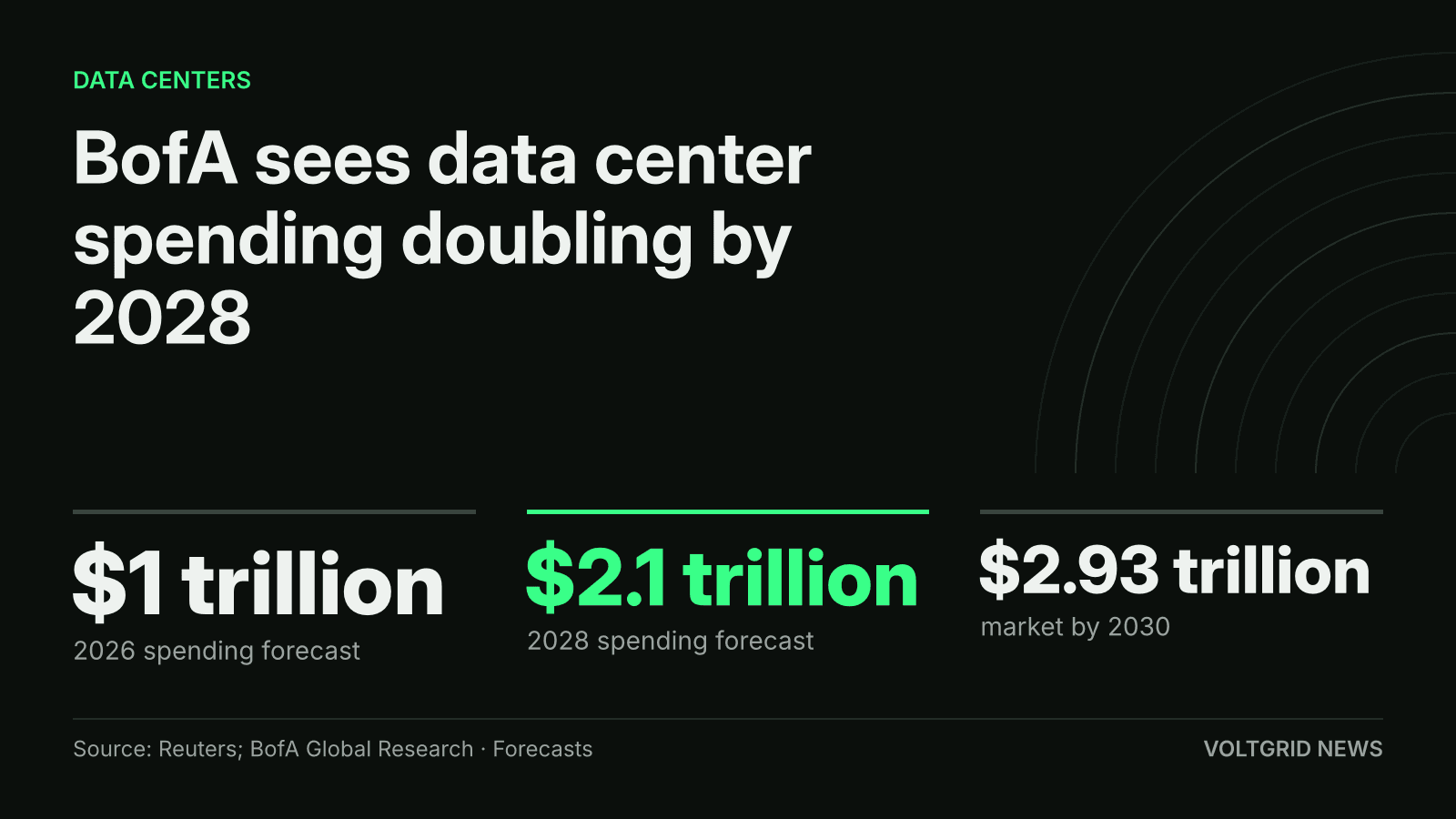
Local limits are showing up in recent Voltgrid coverage. San Diego signed a data center moratorium tied to a 400 MW NAVWAR plan, and Umatilla, Oregon declared an emergency over a state data center permit pause. Bank of America's estimate that spending doubles to $2.1 trillion by 2028, as Voltgrid reported, assumes that sites clear such hurdles on schedule.
What Is Not Confirmed Yet
S&P did not name any issuer facing a rating change, and the release states that the dashboard is not a rating action. Bloomberg's description of downgrade risk could not be checked against its full text, which sits behind a paywall. The release gives no state-by-state capacity numbers in text; those sit in the interactive dashboard, which Voltgrid has not reproduced here.
Watch for issuer-level commentary from S&P on projects facing zoning or grid delays, and for whether the next quarterly roundup shows the 8.7 GW figure growing or stalling.