Westinghouse Plans $1B LEU+ Fuel Factory in South Carolina, Targets 2030
Westinghouse will spend about $1 billion on a LEU+ fuel factory in Hopkins, South Carolina, but its 2030 start trails DOE's 5 GW UPRISE goal for 2029.
2 min readAI-assisted

TodayToday's edition
Westinghouse will spend about $1 billion on a LEU+ fuel factory in Hopkins, South Carolina, but its 2030 start trails DOE's 5 GW UPRISE goal for 2029.
2 min readAI-assisted

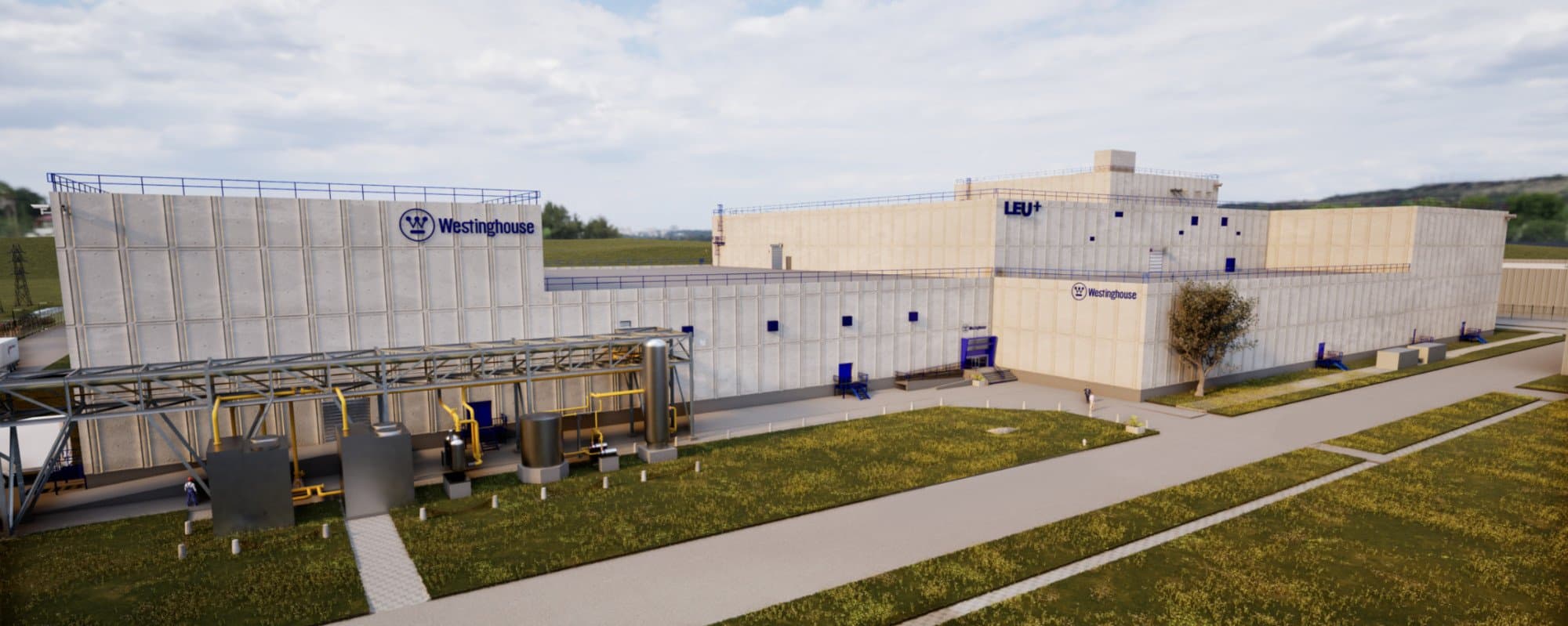
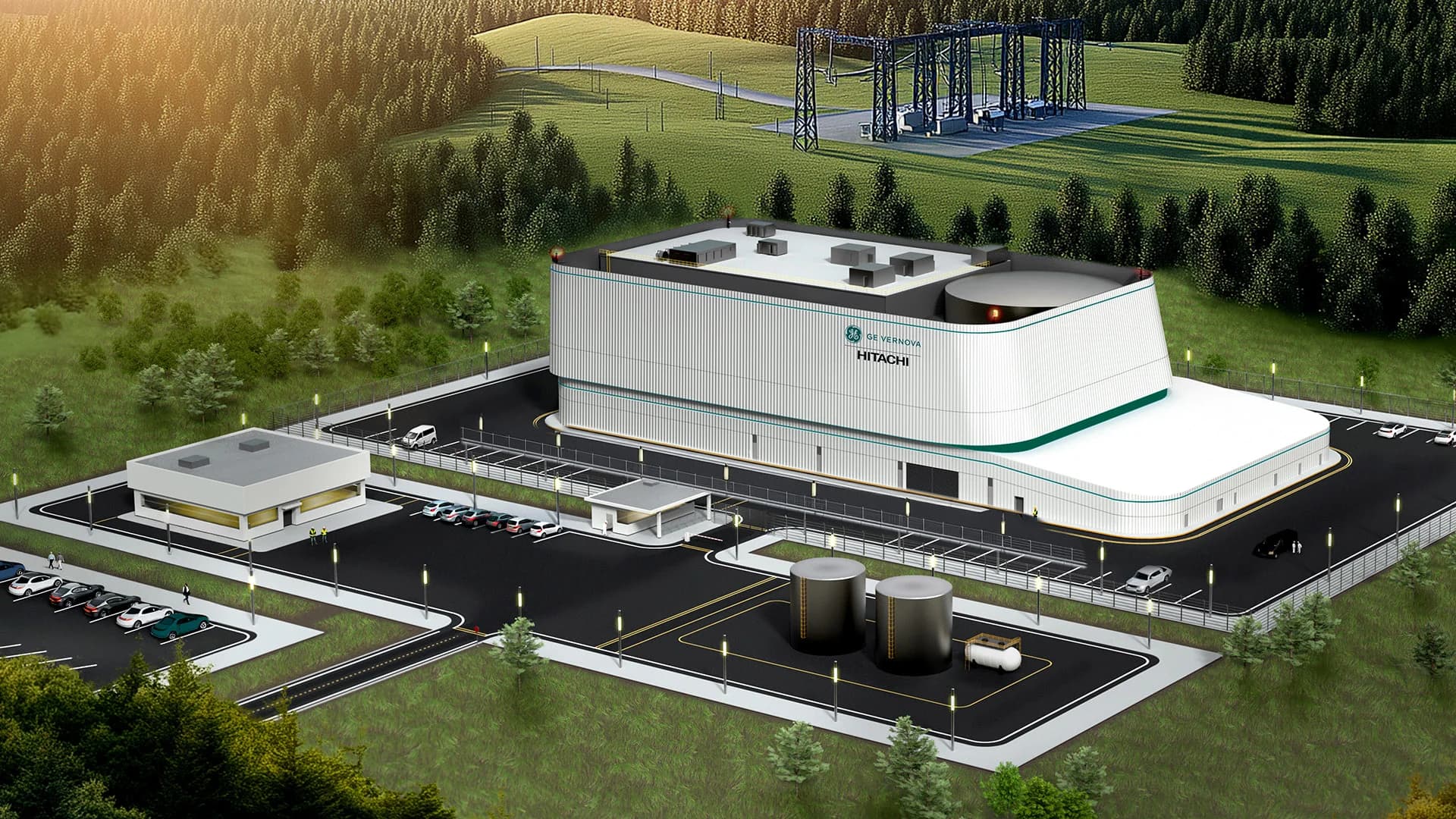
Westinghouse's rendering of the new LEU+ factory building in Hopkins, South Carolina, due to start operations in 2030 (company target). This is an artist's rendering, not a photo of the finished plant.
Image: Westinghouse
Source · Press image from the Westinghouse newsroom, used for news reporting.
Westinghouse Electric Company said on Oct. 21 it will invest about $1 billion in a new LEU+ fuel factory at its Columbia Fuel Fabrication Facility in Hopkins, South Carolina, with operations targeted for 2030.
The company calls it the first fleet-scale nuclear fuel factory built in the United States in more than 50 years. Construction is already underway, Westinghouse said in its release. LEU+ is low-enriched uranium with a higher enrichment of 5% to 8% uranium-235, against the 3% to 5% typical of fuel in most reactors today, according to World Nuclear News.
Westinghouse says the fuel is meant to unlock "advanced operating plant uprates", meaning more output from reactors that already run. It ties the plant to UPRISE, the US Department of Energy programme that targets a 5 GW increase in US nuclear capacity from the existing fleet by 2029, as World Nuclear News described it.

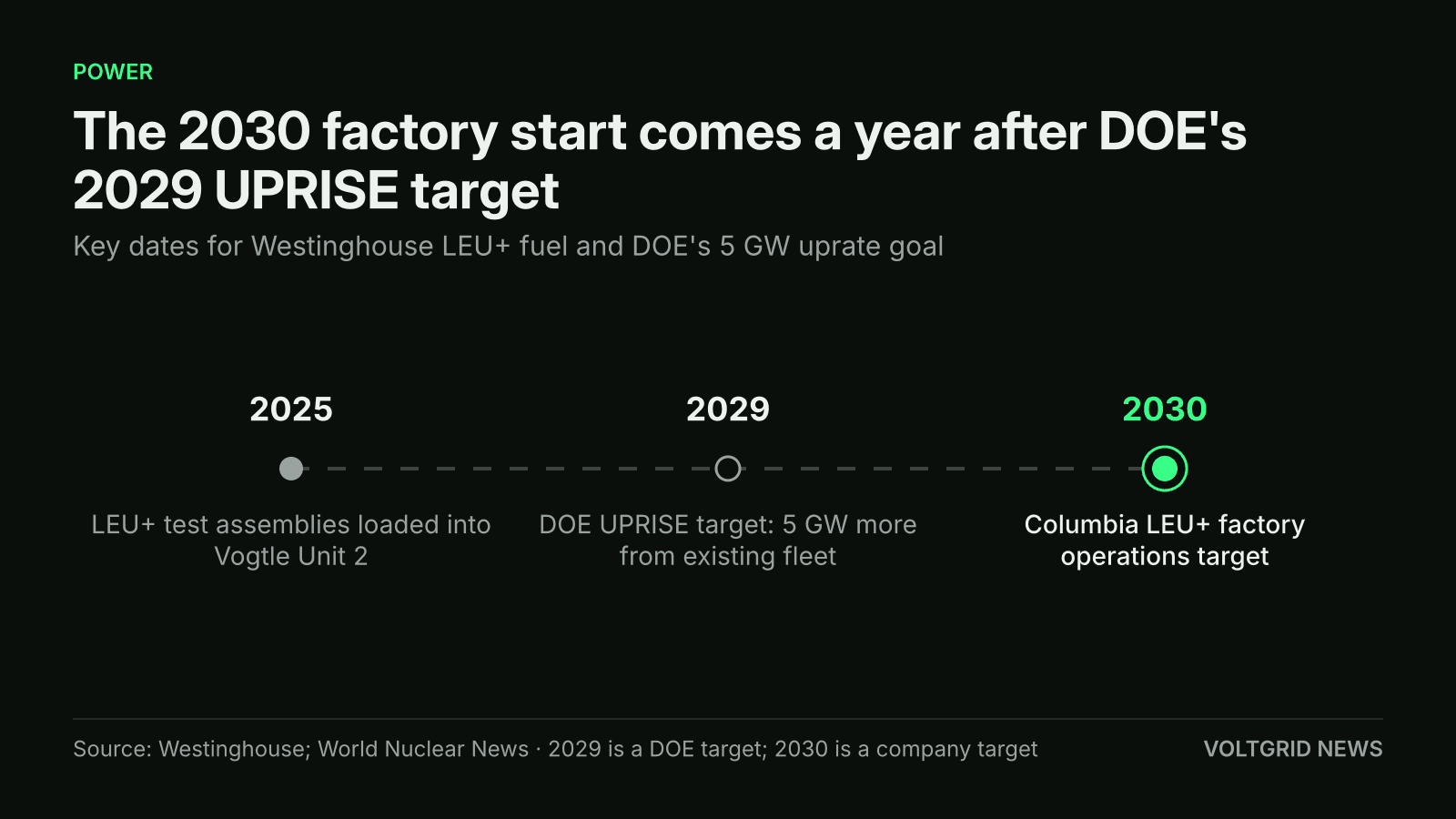
The factory's 2030 operations target (a company target) falls a year after DOE's 2029 UPRISE goal, according to Westinghouse and World Nuclear News.
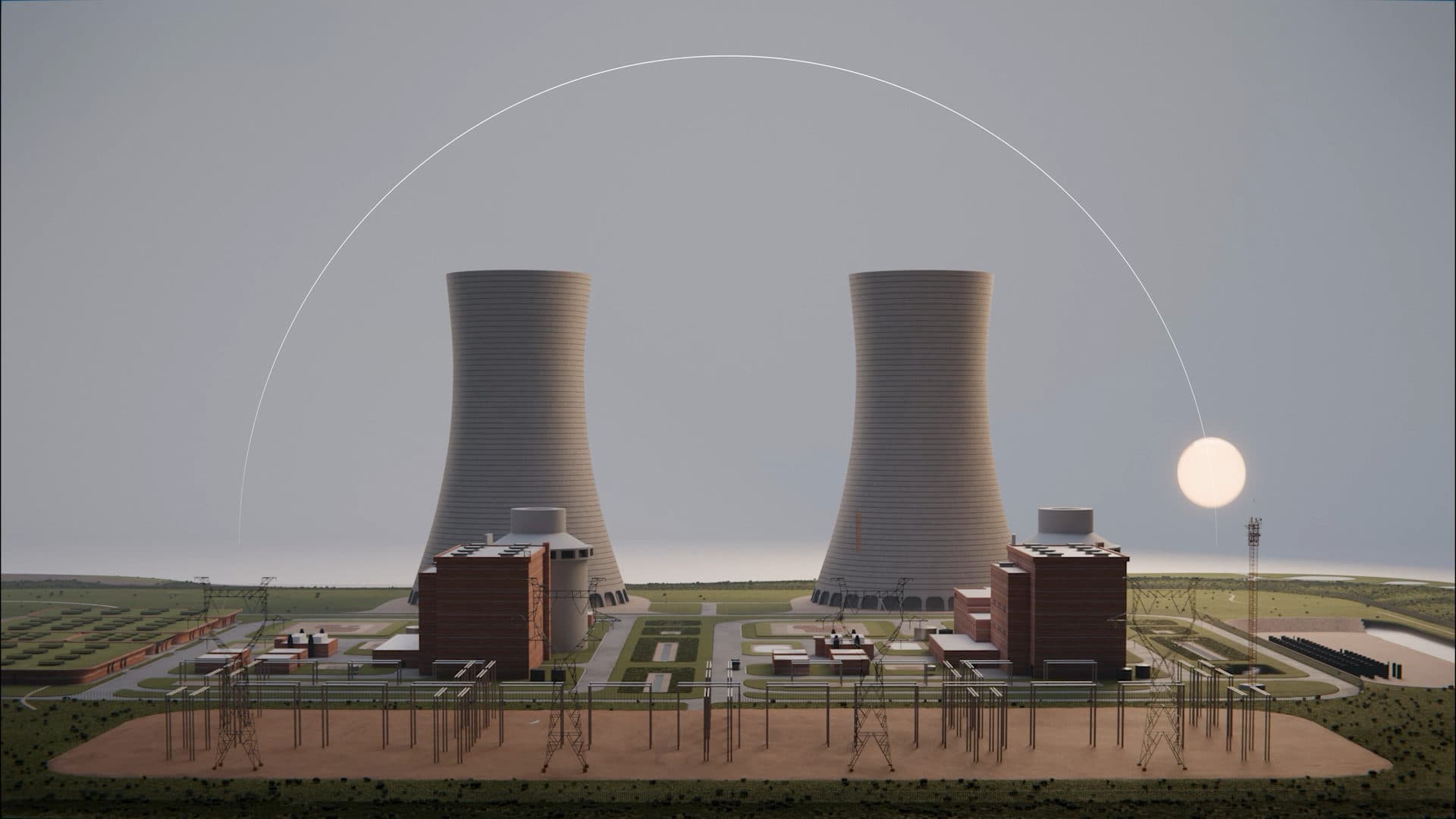
Illustration (AI-generated)
That matters to data-center planners because uprates add firm output at sites that already have grid connections, without waiting for new reactors. The catch is timing: the factory is due to start in 2030, a year after the UPRISE target date, so fuel from this plant cannot be the supply behind a 2029 goal. Westinghouse has not said how much of the 5 GW its fuel would serve.
The new factory will sit in a new building next to the existing plant, which was built in 1968 and cannot make LEU+ with its current process technology, World Nuclear News reported. It will use a "dry" process similar to the one at the company's UK facility. Westinghouse also says higher enrichment can extend operating cycles, which would lower operating costs for plant owners.
The first US deployment came last year, when lead test assemblies of EnCore accident-tolerant fuel with greater than 5% LEU+ were loaded into Unit 2 of the Vogtle plant in Georgia. That was a trial batch, not commercial-scale supply.
Westinghouse said the investment supports the operating fleet and the industrialisation of its AP1000 reactors worldwide. Voltgrid has covered the AP1000 pipeline, including a 6.6-GW Kentucky campus planned for six AP1000 units, where fuel supply would be a later question.
Economic figures come from a study Westinghouse commissioned from the University of South Carolina's Darla Moore School of Business. It projects $4.9 billion in positive economic impact for the state over 10 years. At peak, the project would host several hundred contractors plus an in-house team of 30 to 50 people.
Westinghouse has not named utility customers or reactors that will take LEU+ fuel at scale, and it has not published the plant's annual output. It has not said which uprates it expects, how many megawatts each would add, or what regulatory approvals each would need. Uprates require approval from the Nuclear Regulatory Commission plant by plant. The 2030 start date is a company target.