EnerSys to Buy Ultralife for $320M, Adding Defense Batteries
EnerSys agreed on Oct. 27 to acquire Ultralife for $16 a share in cash, about $320 million in enterprise value, to add multi-chemistry defense cells. Closing is targeted for early 2027.
2 min readAI-assisted
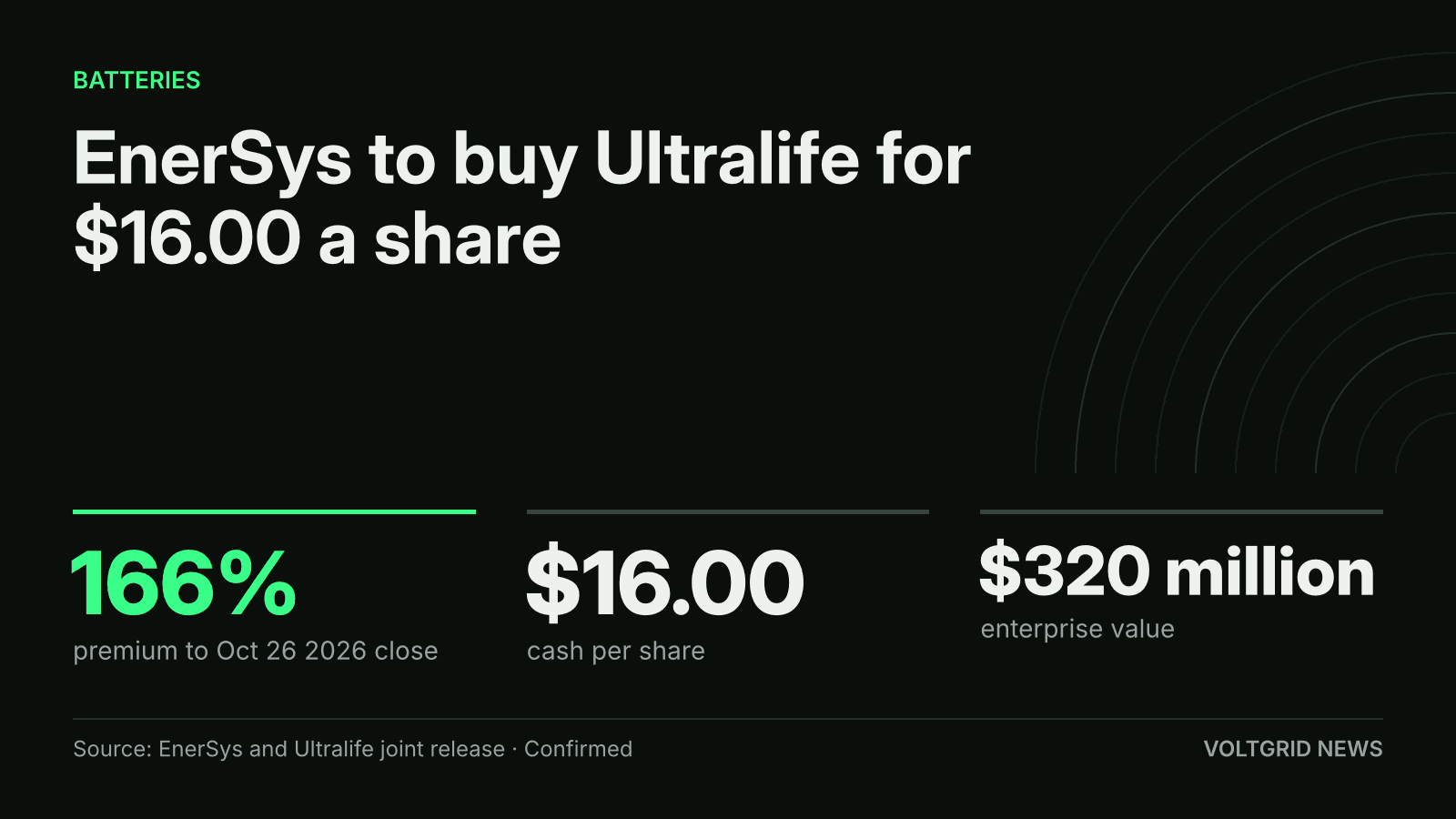
The cash offer is a 166% premium to Ultralife's Oct 26 2026 close, according to the joint EnerSys and Ultralife release.
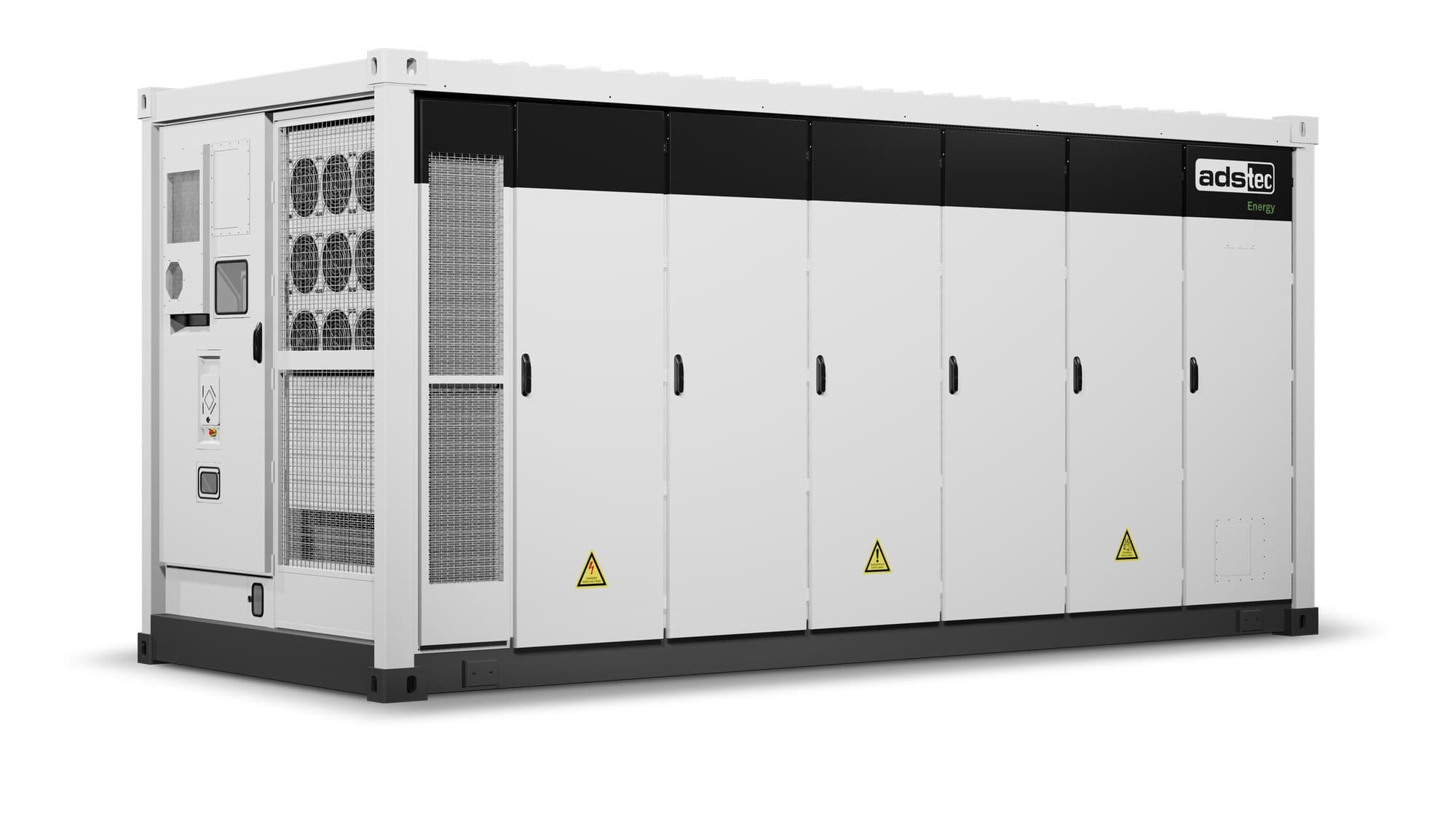
Illustration (AI-generated)
EnerSys agreed on Oct. 27 to acquire Ultralife Corporation for $16.00 per share in cash, a deal with an enterprise value of about $320 million that adds multi-chemistry defense batteries to EnerSys's portfolio.
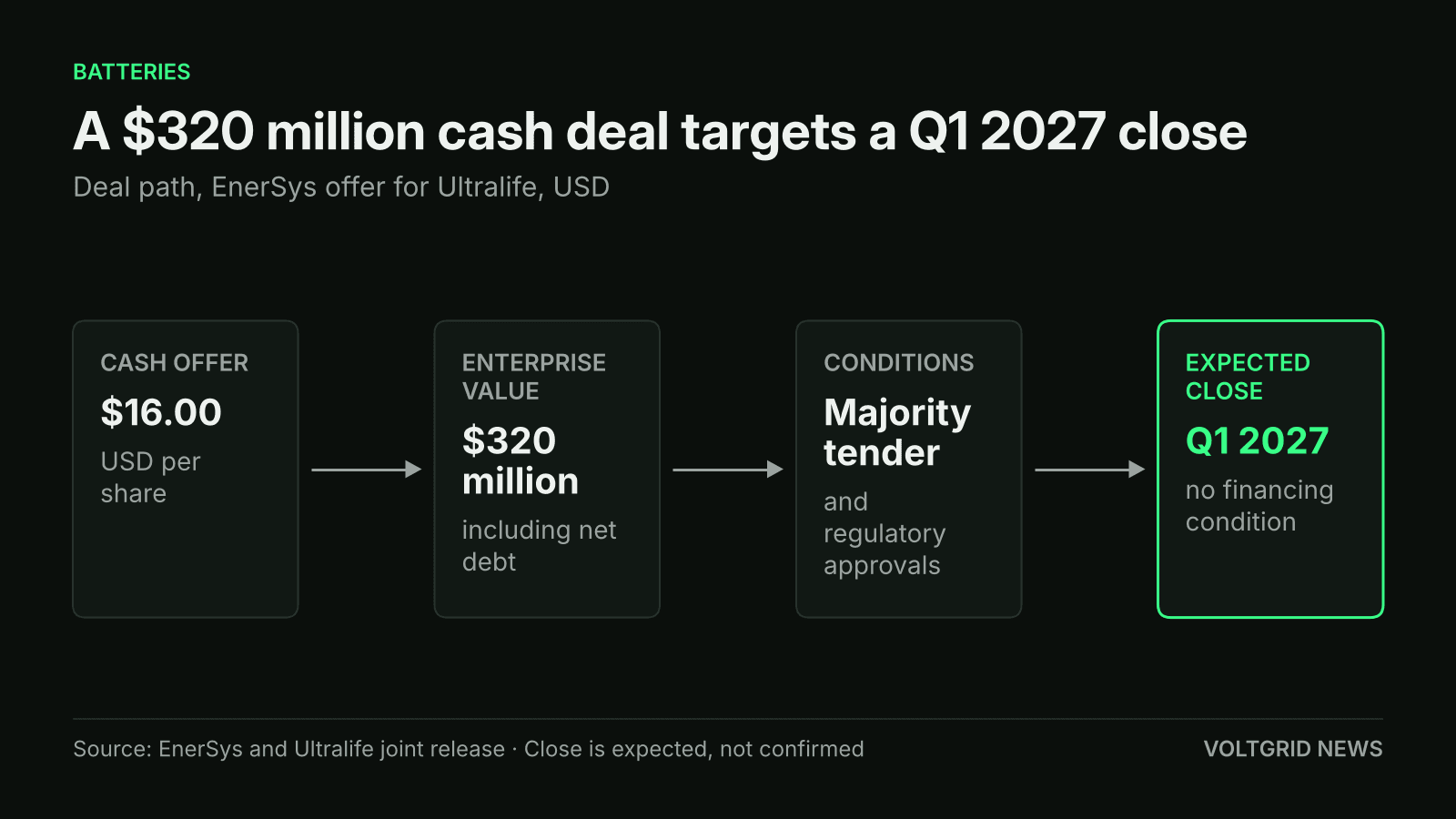
The companies expect a Q1 2027 close, subject to a majority tender and regulatory approvals, with no financing condition.
Illustration (AI-generated)
The price is a 166% premium to Ultralife's closing share price on Oct. 26, 2026, according to the joint announcement. Both boards approved the deal unanimously. EnerSys will fund it with cash on hand, and the agreement carries no financing condition.
The companies expect the deal to close in the first quarter of calendar 2027. It depends on holders tendering at least a majority of Ultralife shares and on regulatory approvals. EnerSys will launch the tender offer through a subsidiary, followed by a merger; the offer had not started when the deal was announced. Ultralife stock will stop trading publicly after closing.
What EnerSys Gets for Its Defense Business
Ultralife, based in Newark, New York, makes rechargeable and non-rechargeable batteries and battery systems for military communications and other specialized uses. Investing.com reported fiscal 2025 revenue of $191 million and more than 700 employees across the U.S., Canada, the U.K. and China.
EnerSys said the combination widens its reach in defense applications including munitions, soldier power, drones, counter-drone systems and autonomous systems. It also cited Ultralife's multi-chemistry capability and manufacturing capacity that already holds security and environmental permits. The release does not name the chemistries.
EnerSys said Ultralife's operating expertise will help it scale production of its own liquid reserve battery technology, and that the combined portfolio would be compliant with foreign-entity-of-concern (FEOC) rules for U.S. Department of War and allied customers.
Synergies and Unknowns
Investing.com reported that EnerSys expects $15 million to $20 million of annual run-rate cost synergies within 18 months of closing, and expects the deal to add to adjusted diluted earnings per share within about 18 months, excluding transaction and integration costs. The release itself does not quantify synergies, so treat those figures as the report's account of the company's guidance.
What is not confirmed yet
The release gives no Ultralife earnings figure, no defense share of its sales and no capacity in units or MWh. It names termination fees without stating amounts. EnerSys also lists possible competing offers, stockholder litigation and employee retention among the risks. Ultralife CEO Michael Manna said the deal delivers "substantial and certain cash value" to shareholders; EnerSys CEO Shawn O'Connell called it a "compelling strategic fit."