Sumitomo, JR Kyushu Start Work on 16 MW / 70 MWh Nagasaki Battery
Battery Station Kyushu began preparatory work in October 2026 on Battery Station Isahaya in Nagasaki. It is the venture's largest project and is due to start operating in December 2028.
2 min readAI-assisted
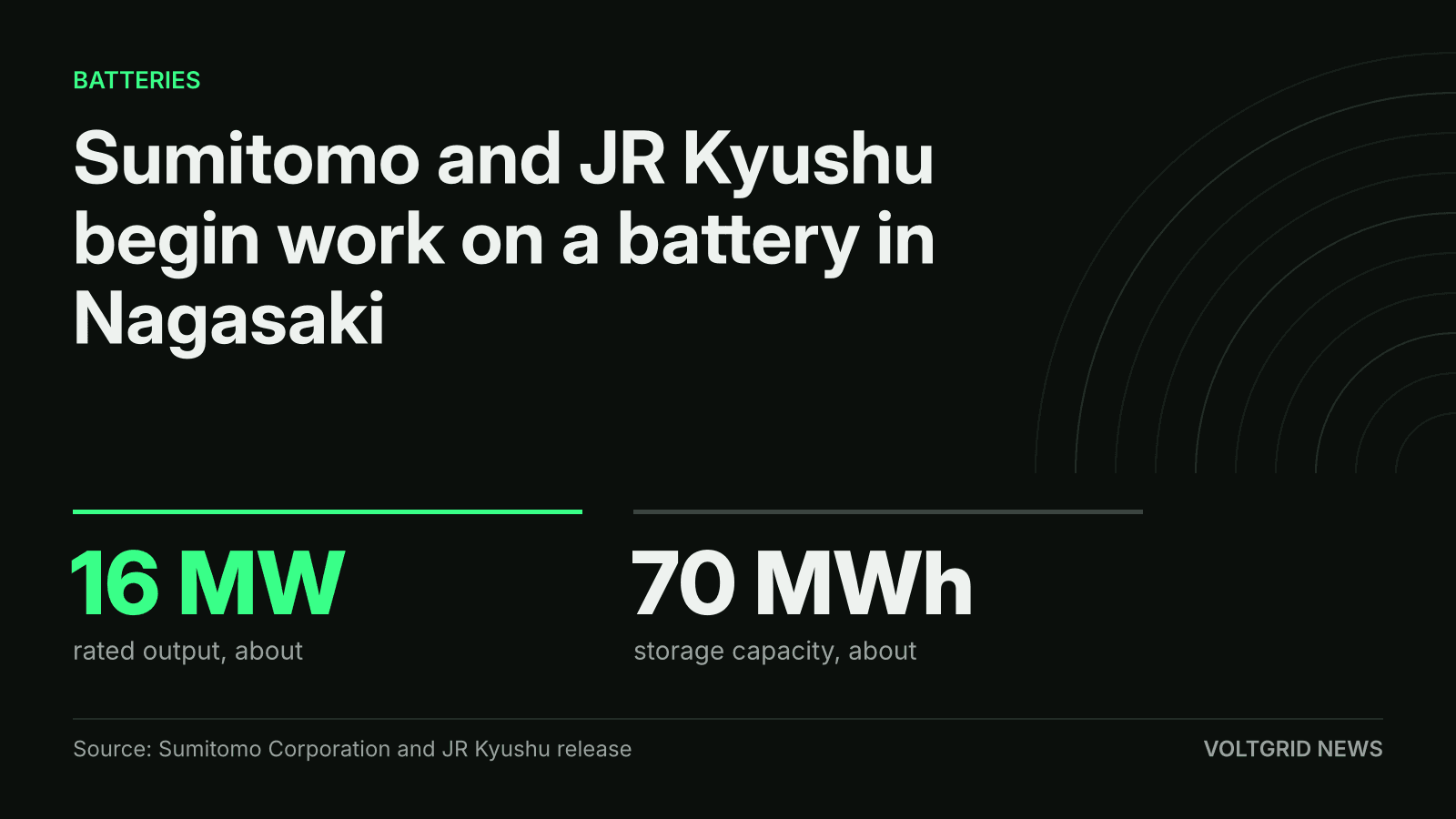
The Isahaya battery is planned at about 16 MW and about 70 MWh of storage capacity, according to the companies' release.
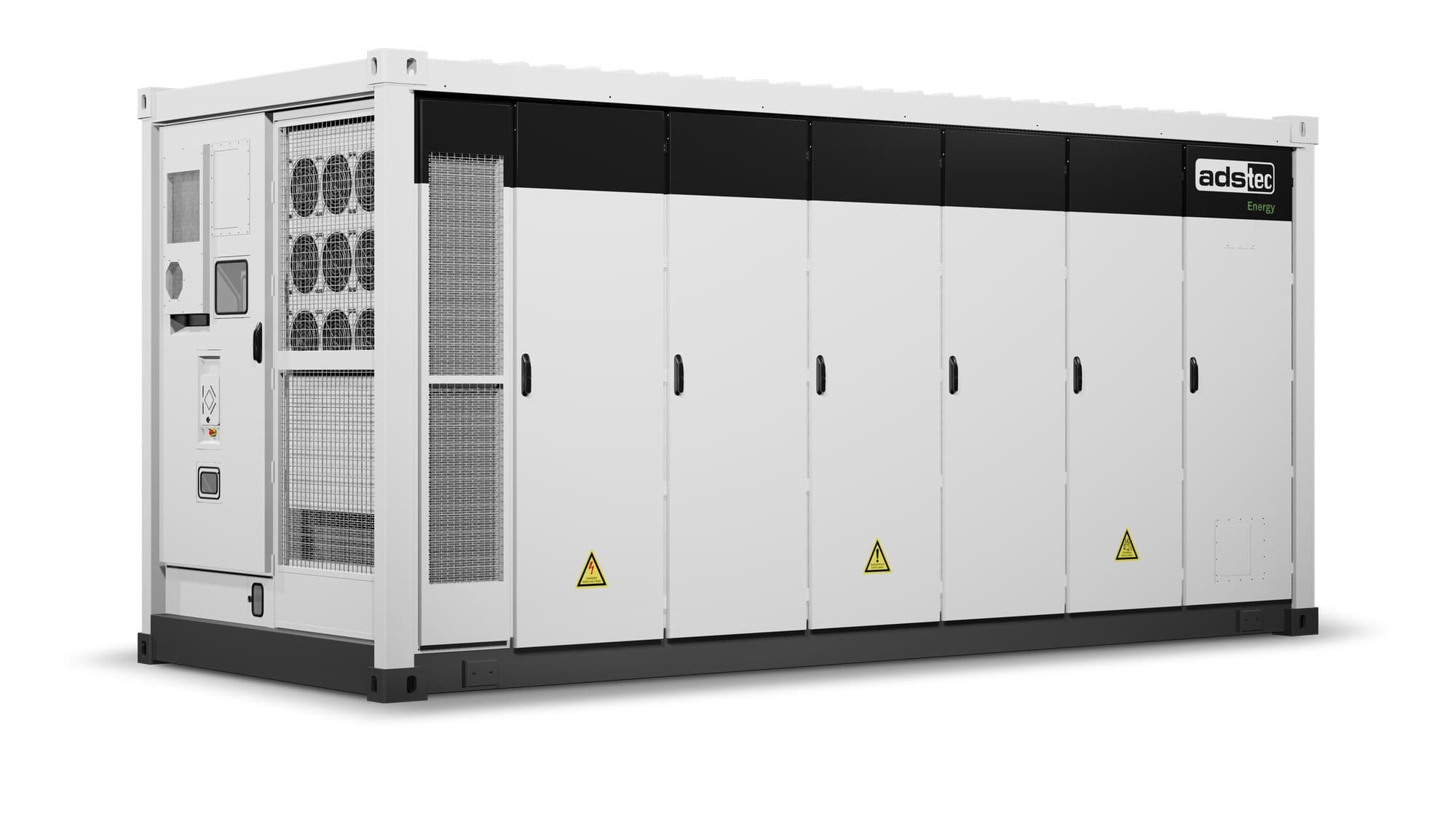
Illustration (AI-generated)
Battery Station Kyushu LLC, the joint venture of Kyushu Railway Company (JR Kyushu), Sumitomo Corporation and Sumitomo Corporation Kyushu, began preparatory work in October 2026 on a grid-connected battery in Isahaya City, Nagasaki Prefecture, with a rated output of about 16 MW and a storage capacity of about 70 MWh.
The facility, called Battery Station Isahaya, is scheduled to start operating in December 2028, the companies said in a release dated Oct. 28, 2026. The figures work out to roughly 4.4 hours of storage at full output.
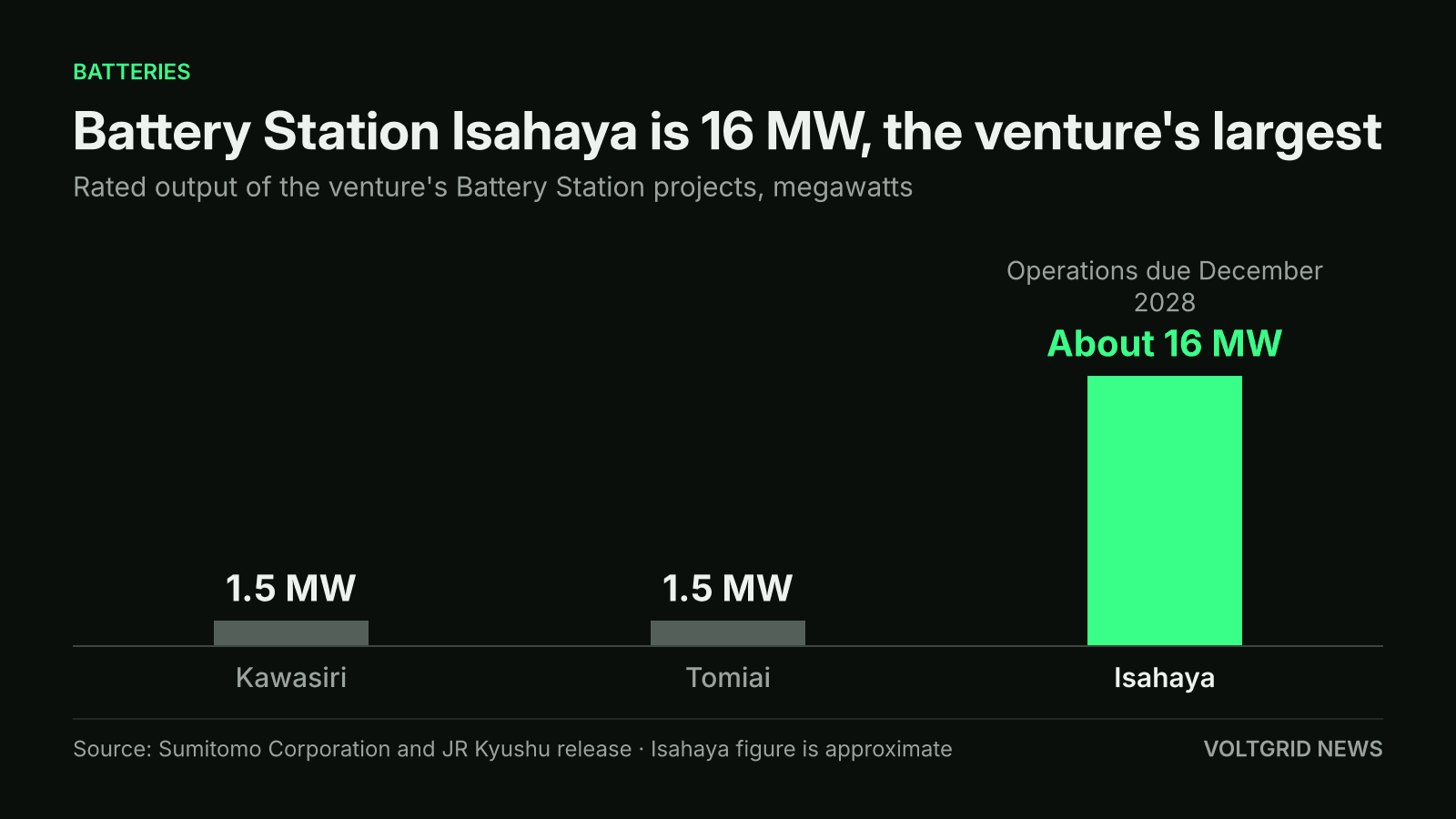
Isahaya, due to operate in December 2028, is the venture's largest Battery Station project, according to the companies' release.
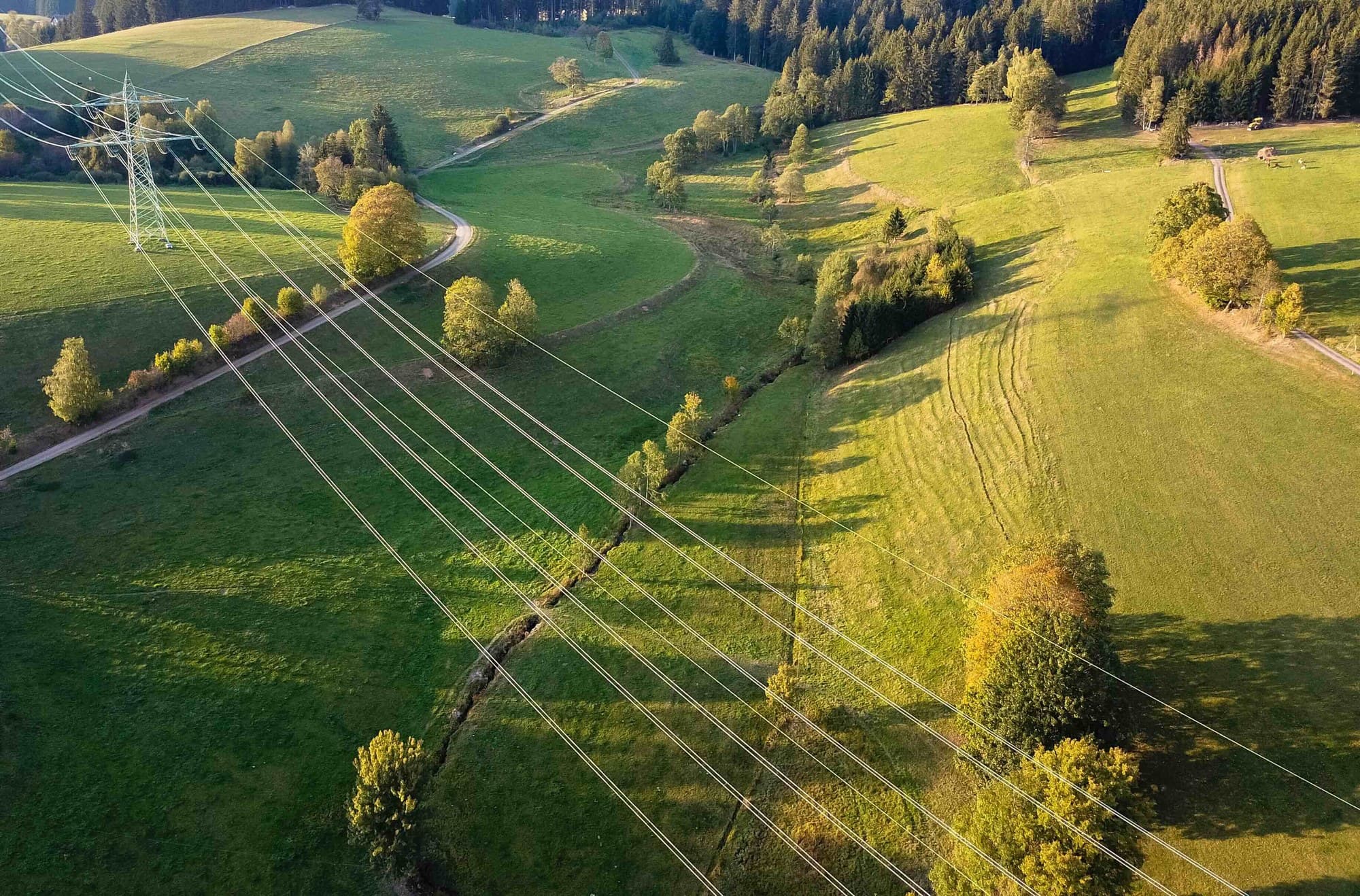
Illustration (AI-generated)
It is the third project of the venture and the largest it has undertaken. The first two, Battery Station Kawasiri and Battery Station Tomiai, both in Kumamoto City, each have a rated output of 1.5 MW and now trade in the supply-demand balancing market. Isahaya is also the venture's first extra-high-voltage battery storage facility, so it connects at a higher grid voltage than the earlier sites.
A former railway substation as the site
The battery will sit on the site of a former JR Kyushu railway substation and adjoining land. The venture was set up in 2023 to build storage on railway-adjacent and idle land that JR Kyushu manages. The companies said the partnership combines JR Kyushu's maintenance and management expertise with Sumitomo Corporation Group's knowledge of energy storage in Japan and overseas.
The stated purpose is local. Solar power has expanded quickly in the Kyushu region, and output curtailment is applied when supply exceeds demand. The companies said additional storage is needed to improve balancing, and that charging and discharging at Isahaya will help stabilize supply and demand while allowing more renewable electricity to be used.
What is not confirmed yet
The release gives the output and capacity as approximate figures. The sources read do not name the battery supplier or cell chemistry, the investment amount, or which revenue streams beyond the balancing market the plant will use. Those details would show how the project compares with larger Japanese utility-scale batteries.
The step from 1.5 MW to about 16 MW is a roughly tenfold jump in rated output for the venture, and it moves the partnership from pilot-sized sites to a plant built for a grid where solar output is already being curtailed.