IREN Redbank Data Centre: 900 MW Wagga Wagga Plan, Grid Not Yet Secured
IREN's Redbank scoping report puts a 900 MW gross, 600 MW IT campus near Wagga Wagga on the NSW planning portal, but no Transgrid capacity allocation has been shown and the first 75 MW block is not due until 2029.
3 min read
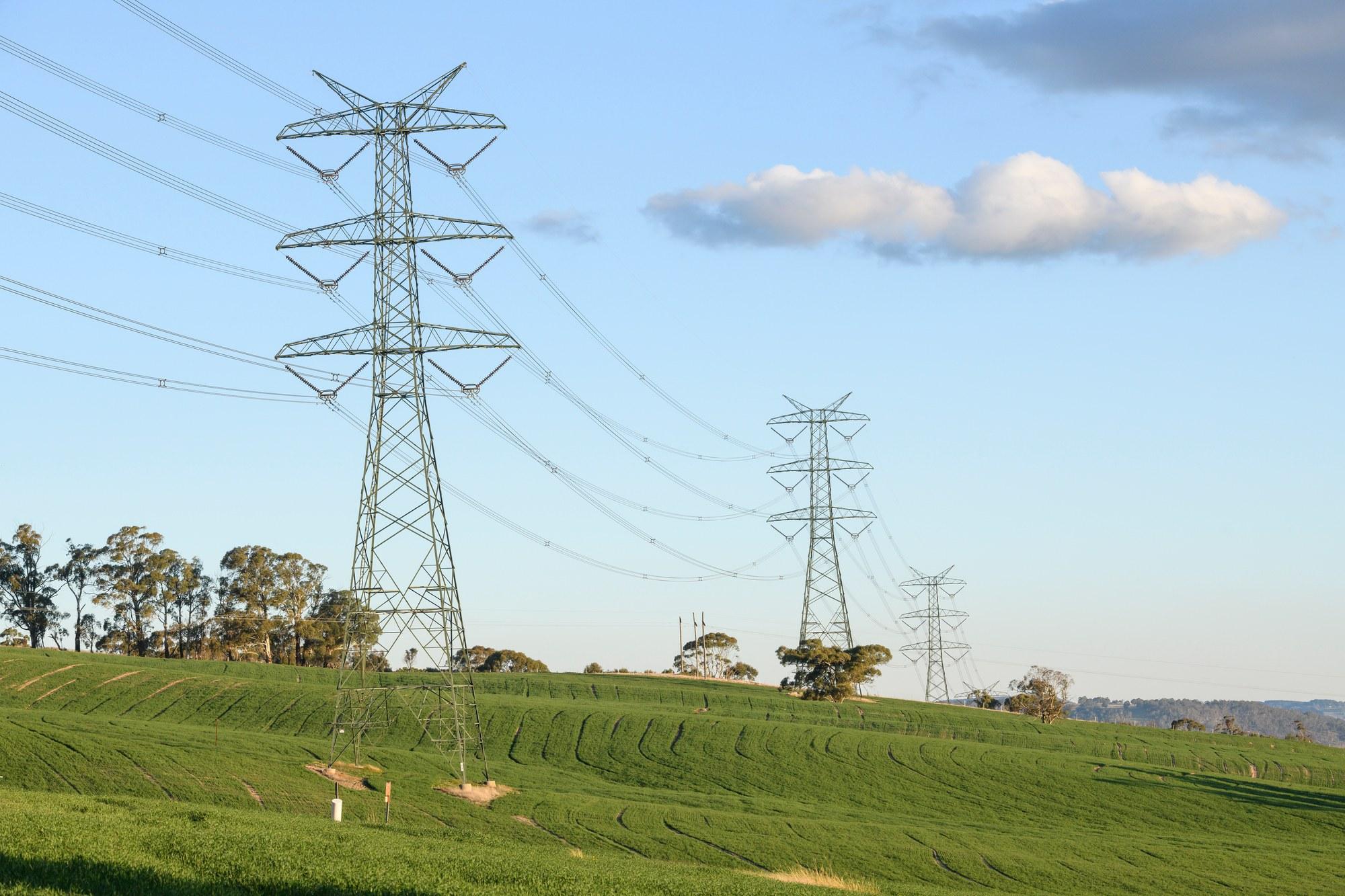
A Transgrid high-voltage transmission line in New South Wales. File photo of Transgrid network infrastructure, not the Redbank site or the Wagga Wagga substation.
Image: Transgrid
Source · Press image from the Transgrid media library, used for news reporting.
IREN's proposed Redbank campus near Wagga Wagga, NSW, would draw up to 900 MW gross to power about 600 MW of IT load, W.Media reported on Nov. 22, with no Transgrid capacity allocation shown yet.
The figures come from a scoping report prepared for IREN subsidiary TAS 1 Holdings, as described by W.Media. The NSW Planning Portal lists the project as a State Significant Development (SSD-155572991): a campus of five buildings with total power consumption of up to 900 MW, plus an amendment to the Wagga Wagga Local Environmental Plan 2010. Its status is "Prepare SEARs", the step before IREN writes a detailed environmental impact assessment. IREN first announced the Redbank plan on Oct. 14, 2026, and our earlier IREN coverage covered its November results.
The gap between 900 MW and 600 MW matters for anyone sizing the grid connection. W.Media says 900 MW is the maximum instantaneous gross electrical capacity the site requires, not expected average use. At a design annualised power usage effectiveness (PUE) of about 1.3, the report puts average facility demand at about 780 MW at full IT load. Two thirds of the headline figure is IT load by our arithmetic: 600 of 900.
How the Transgrid Connection Would Work
The site, in the locality of Rowan and next to the Gregadoo Waste Management Centre, is about 2.5 km from Transgrid's 330 kV Wagga Wagga substation. The report proposes three new 330 kV feeder bays there and three underground 330 kV circuits to a new on-site 330/132 kV substation with four 375 MVA transformers. Four further 132/33 kV substations would feed the five data halls. IREN says it will pay for the dedicated connection assets.
IREN's proposed Redbank connection steps 330 kV down to 33 kV across the site, but Transgrid capacity is not yet secured.
Graphic: Voltgrid News
Connection planning with Transgrid has run since May 2026 on the basis of a 900 MW connection, according to the report. Transgrid told W.Media it cannot discuss individual connection enquiries, and pointed to its Network Capacity Allocation Policy: capacity is provisionally allocated to a large-load project only when a Network Connection Agreement (NCA) is signed, and becomes final only if readiness criteria are met within three months.
Staging, Cooling and Backup Power
IREN proposes to build in blocks over about six to eight years. The first 75 MW gross block is targeted for 2029, with blocks of about the same size at six-month intervals and the full 900 MW by 2035, per the report's indicative staging. Cooling is direct-to-chip liquid cooling, rejecting heat through dry coolers or chillers. The report expects make-up water of about 1 per cent of the closed-loop volume a year, with the final volume still to be set. The design also includes about 444 standby diesel generators, which IREN says would not run continuously.
The report expects up to about 1,100 construction workers and more than 200 full-time operational roles at full capacity. Redbank is separate from IREN's planned 800 MW Bundey campus in South Australia. It also sits close to CDC Data Centres' planned Gregadoo development of up to 1.4 GW; together the two would be a potential 2.3 GW of new demand around Wagga Wagga, W.Media noted.
What Is Not Confirmed Yet
Neither the report nor Transgrid's reply shows a signed NCA or a formal capacity allocation, and Transgrid's answer did not establish whether IREN has reached that stage. IREN previously said Redbank is not part of its announced 5 GW secured-power portfolio. The project still needs the SEARs, a full environmental assessment and a Local Environmental Plan change before any approval. Watch for the SEARs issue and for any NCA, because those decide whether the 2029 block is a schedule or an aspiration.
Sources
- Published
- Sources
- 2 cited