Maui Military Data Center Near $100M Draws Water and Fuel Questions
The Air Force and Space Force are building a 56,000-square-foot lab and data center in Kīhei to run Haleakalā telescopes, but the AP says its water use is unstated and residents want answers.
3 min readAI-assisted
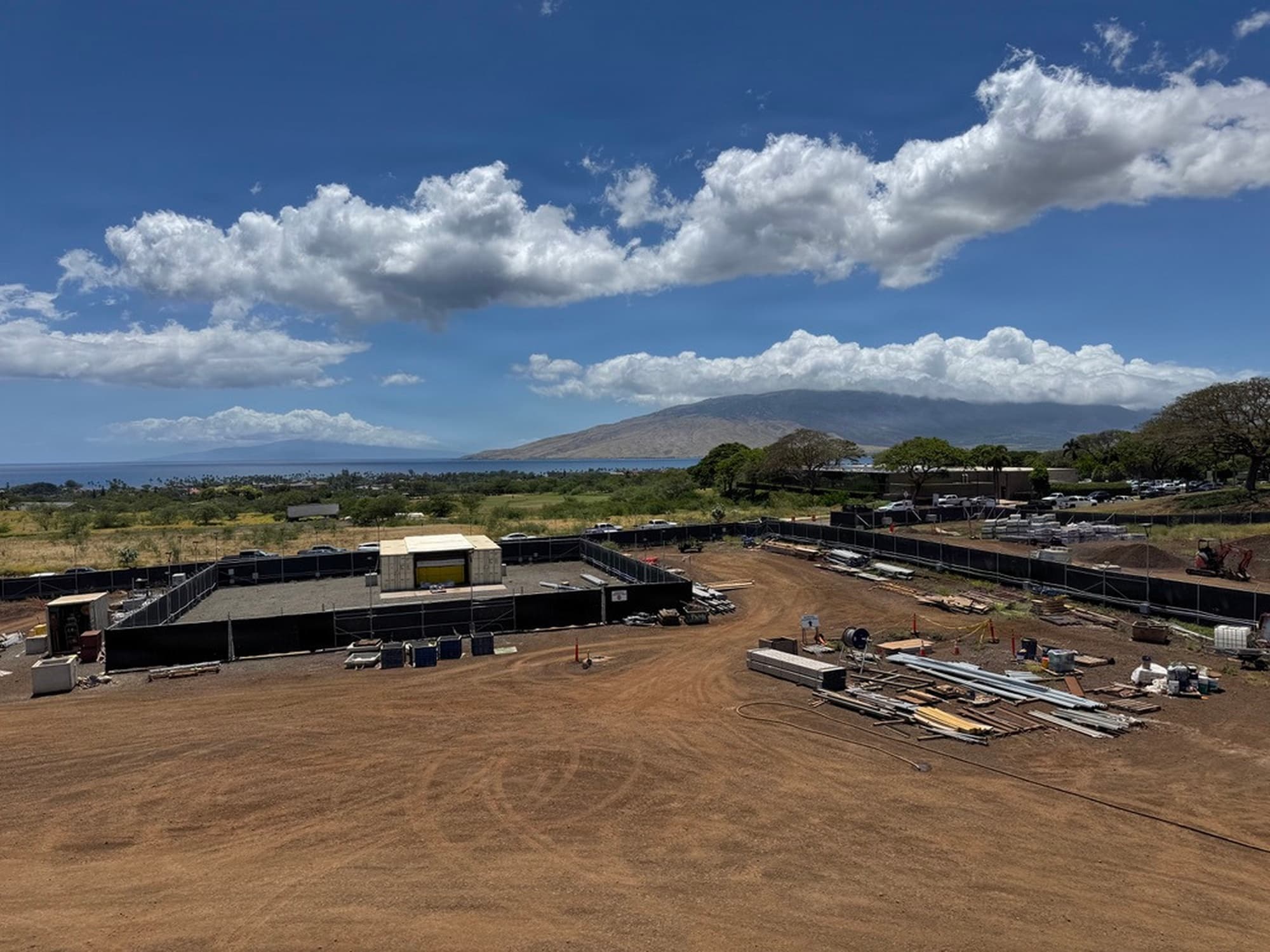
The Kihei, Maui, site where the Air Force and Space Force are building the Secure Integration Support Laboratory. The photo shows the construction area, not the finished building.
Image: U.S. Space Force photo by Connie Dillon, via DVIDS
Source · Official U.S. Space Force photo distributed by DVIDS, used for news reporting.
The U.S. Air Force and U.S. Space Force are building a nearly $100 million, two-story, 56,000-square-foot laboratory and data center in Kīhei on Maui, the Associated Press reported on Oct. 27.
The facility, called the Secure Integration Support Laboratory, or SISL, sits at the Maui Research and Technology Park and would remotely operate up to seven proposed telescopes at the Haleakalā summit, according to the AP. Federal officials finalized plans for it around the time they proposed the telescopes, the AP said, but the Kīhei project drew little public attention for several years. Construction began in late 2024 and is expected to finish early next year under a contract awarded to Hensel Phelps.
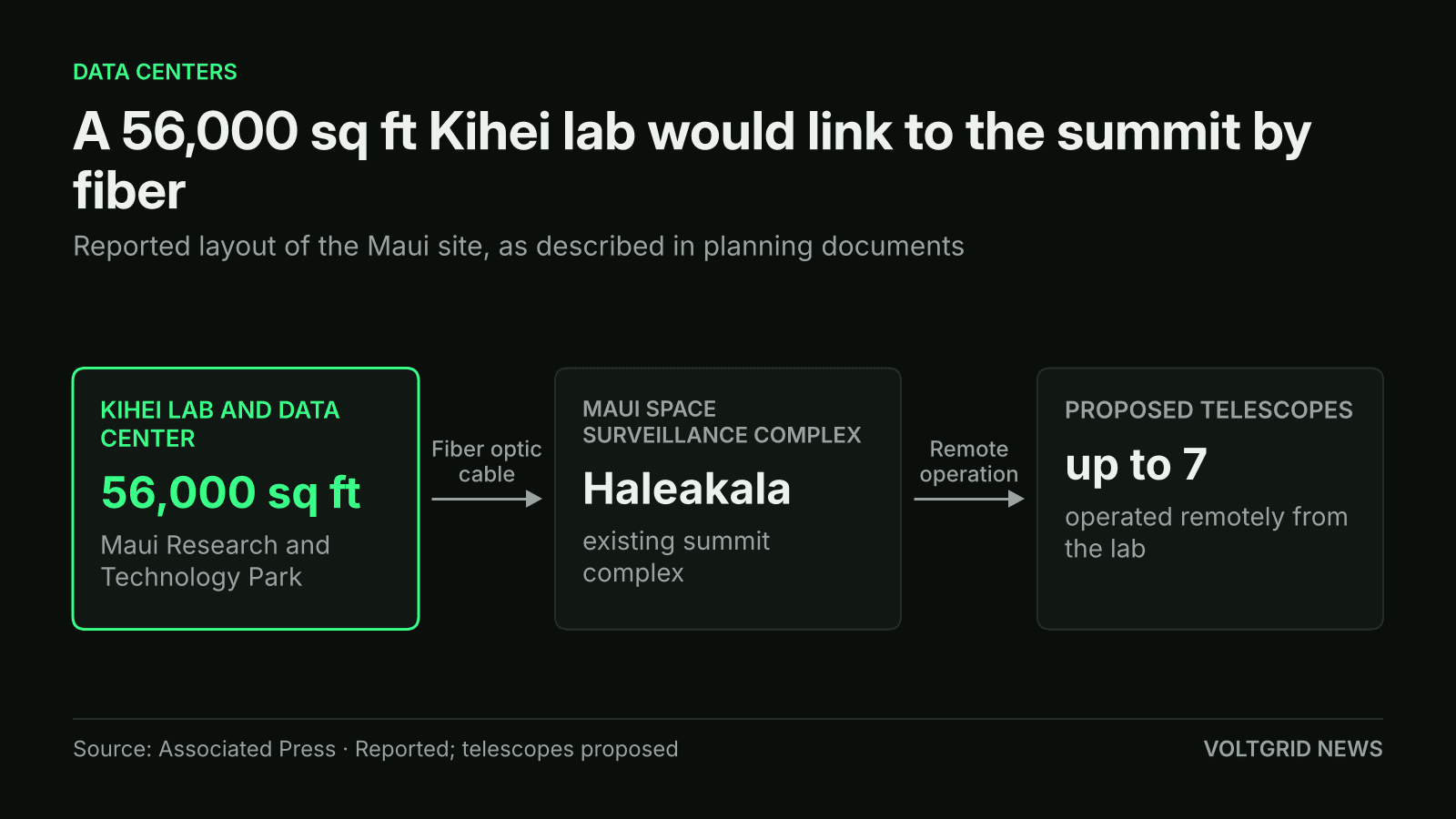
The Kihei lab would connect by fiber to the summit complex and remotely run up to seven proposed telescopes, as reported by the Associated Press.
Illustration (AI-generated)
For data-center watchers, the open question is resource demand. A 437-page environmental assessment does not say how much water the building would use, the AP reported, and the county Department of Water Supply could not be reached for comment on Monday. Public records indicate the site will likely include infrastructure that uses water to cool hardware. Neither a water figure nor a grid electricity load appears in the AP's account, so the site cannot yet be compared with the hyperscale campuses now facing local limits.
What the planning documents list
The building is meant to pull the Space Force's 15th Space Surveillance Squadron operations on Maui out of four facilities and into one. An April 2023 design document lists a high-performance data center, laboratories, a remote telescope operations center, offices, a conference center and warehouse space, the AP said. The site would connect by fiber optic cable to the Maui Space Surveillance Complex on the summit.
According to the draft assessment, water would come from an existing Maui County reservoir at the eastern end of Lipoa Road, with a new half-million-gallon storage tank proposed to add capacity. The document projected that consolidating operations would reduce the Air Force's water and energy use on Maui over the facility's life, with short-term minor adverse effects on potable water use early on. Backup power would come from an emergency 2,500-kilowatt generator, with a 12,000-gallon tank and three 20,000-gallon tanks holding a two-week diesel supply for the whole building.
Why residents are objecting
Hina Kneubuhl, an organizer with Protect Haleakalā, said splitting the two projects let federal officials avoid questions about their combined environmental effect. The Kīhei site is private land the government bought in 2023, so only an environmental assessment was required, a lighter process than an environmental impact statement. A 2022 draft concluded no significant adverse effects. The telescopes, planned on state land set aside for the federal government, cannot proceed until a full impact statement and public review are complete.
Some residents also object to storing large diesel reserves in a wildfire-prone area, the AP said, noting that cleanup of a 720-gallon diesel spill from a January 2023 lightning strike at the summit complex is not finished.
The AP noted that this would not be the first data center on Maui, since the Maui High Performance Computing Center already has one, and that not every data center needs the power and water that hyperscale or AI sites do. Hawaiʻi County recently joined hundreds of U.S. communities that have introduced rules or moratoriums on data center construction. Voltgrid News has covered similar local fights, including San Diego's data center moratorium and the Mountain Home, Idaho moratorium.
What is not confirmed yet
The facility's annual water use, grid load and cooling design are not stated in the reporting. The water and generator details come from a draft assessment and a 2023 design document, not from final operating figures. The telescopes the data center would support still need a full environmental impact statement before they can be built.