NVIDIA DSX Digital Twin: Schneider Plans 2027 Sale After Sines Pilot
Schneider Electric will commercialise its NVIDIA DSX digital twin next year after a pilot at Nscale's 26 MW SIN01 on Portugal's 1.2 GW Sines campus. It is not yet on sale, and no results are published.
2 min readAI-assisted
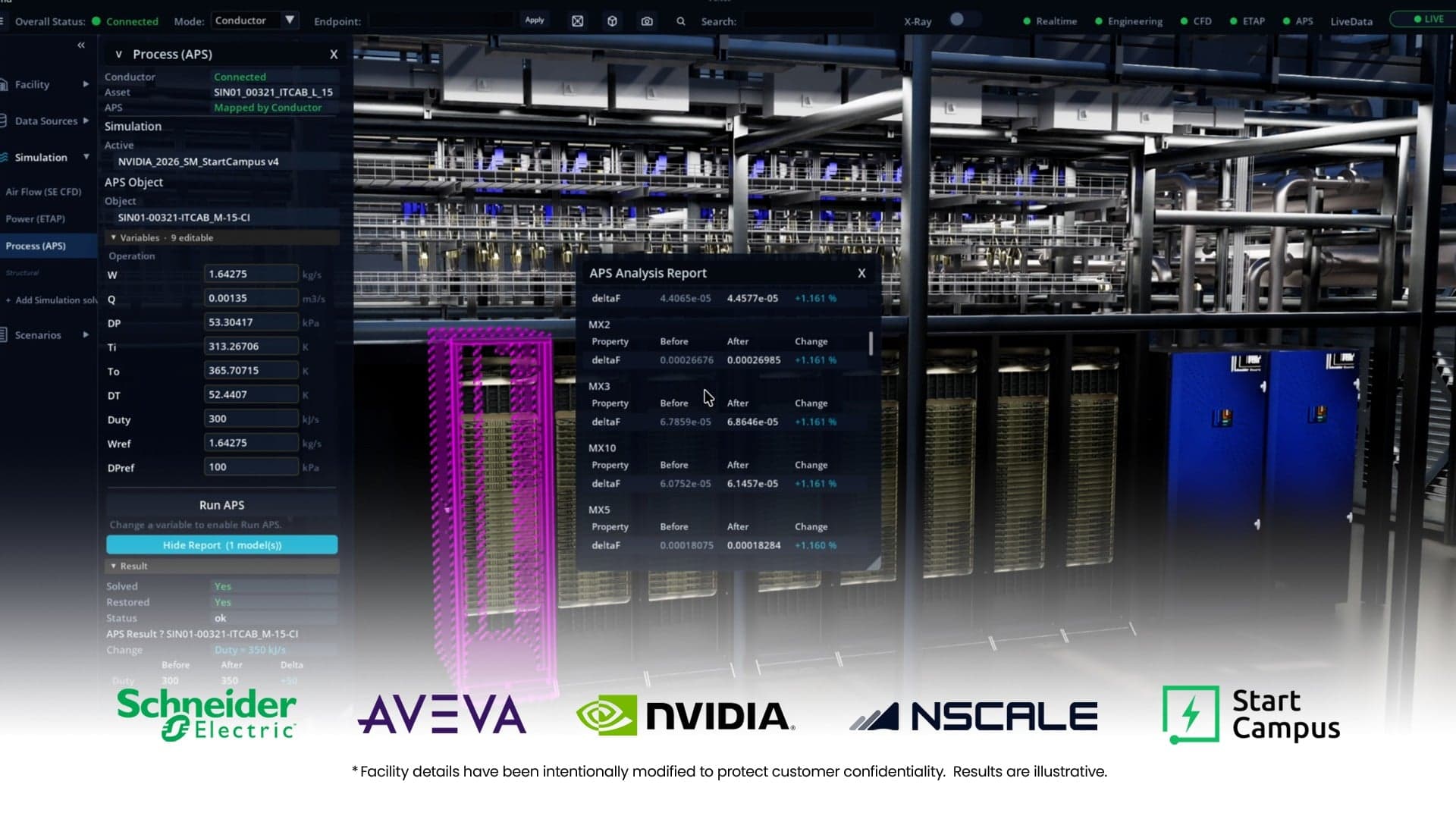
Screenshot of the twin from the companies' release. The companies say facility details were modified for confidentiality and results are illustrative.
Image: Schneider Electric and AVEVA
Source · Press image from the Schneider Electric and AVEVA newsroom, used for news reporting.
Schneider Electric plans to sell its Immersive Twin, a digital twin built on the NVIDIA Omniverse DSX Blueprint, commercially next year, Steve Brown, vice president of its EcoStruxure IT line, told Capacity Media on Oct. 26, after a pilot on a live NVIDIA DSX AI factory in Portugal.
The twin is not yet generally available, Brown said. Commercial talks are under way and Schneider is still working out how it will go to market. "This is not a one-and-done pilot," he told Capacity at NVIDIA's GTC Berlin event, where the pilot was announced on Oct. 21 by Schneider, AVEVA, Nscale and Start Campus.
Voltgrid covered the DSX design that the twin builds on: the DSX POD container reference design on Oct. 21, and Nscale's early DSX test results on Oct. 22. The Sines pilot runs the twin against a live site, with a campus developer and a tenant involved.
What the Pilot Models
The twin covers Nscale's operations in SIN01, the 26 MW first building on Start Campus's 1.2 GW SINES Data Campus in Portugal, according to Capacity. Nscale has more than 12,600 NVIDIA Blackwell Ultra GPUs planned for that building and plans to deploy more than 66,000 NVIDIA Rubin GPUs on the campus for Microsoft from late 2027, in SIN02, a second building of up to 200 MW.
It is built on the NVIDIA Omniverse DSX Blueprint. Schneider's ETAP software simulates power, its EcoStruxure IT software simulates cooling, and AVEVA software links the two, Capacity reported. Brown said the live link to those solvers separates it from static, CAD-style twins.
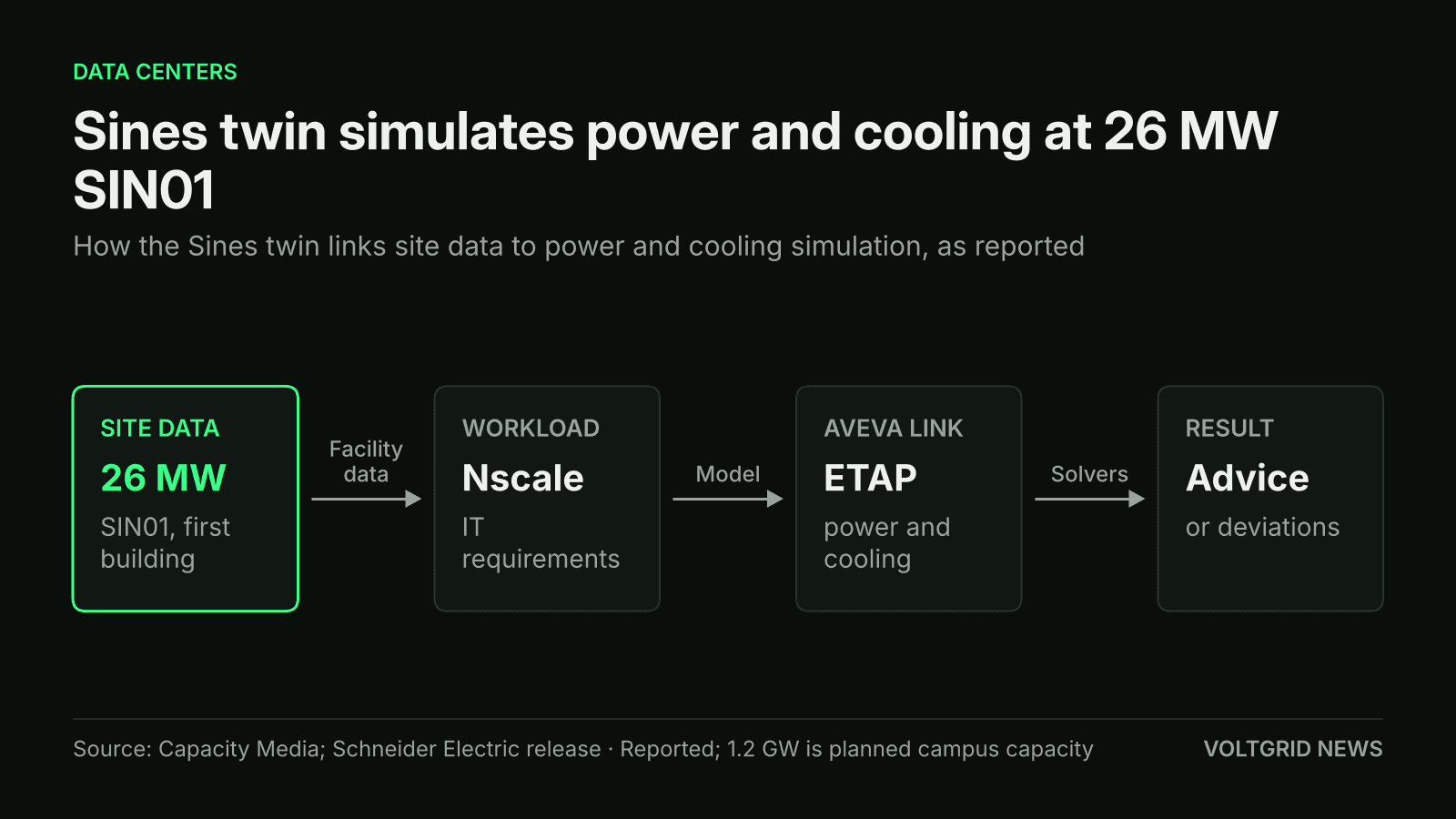
Schneider's twin passes Start Campus facility data and Nscale's workload through power and cooling solvers, Capacity Media reported.
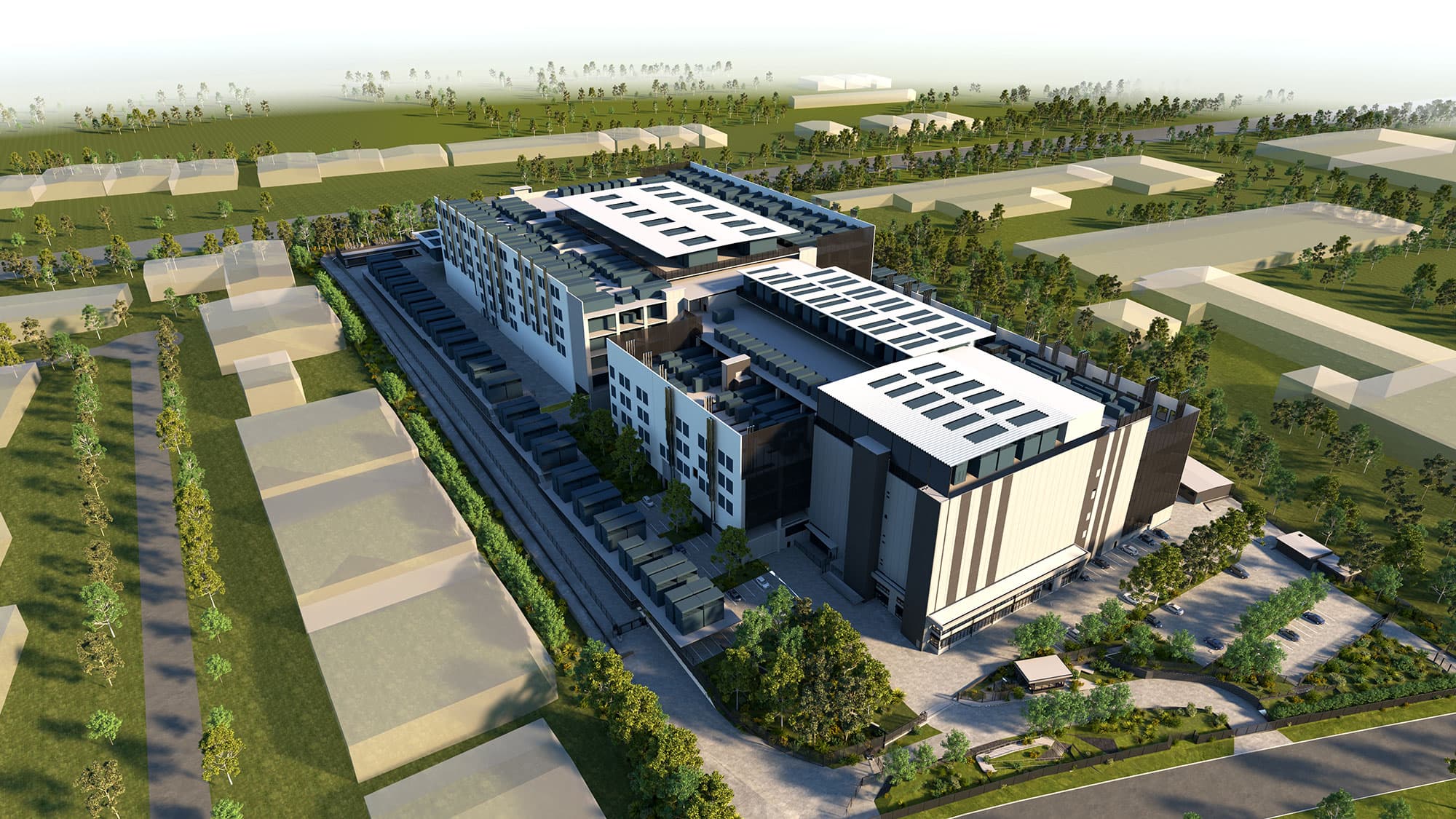
Illustration (AI-generated)
Why It Matters for Power and Cooling
Brown's example shows the use: an operator can swap a planned Blackwell rack for a Vera Rubin rack in the model, and the twin runs the change through the power and cooling solvers and returns recommendations or deviations. The aim is to check whether cooling distribution units, piping and upstream electrical gear are sized correctly before hardware arrives, which matters because data-center build cycles run slower than GPU cycles, Brown said.
The twin also maps links operators often leave undocumented, such as which switchgear feeds which UPS, busway and rack. Schneider says that lets operators ask how a cooling set point affects an upstream chiller and whether power is being stranded.
Start Campus supplied the facility, engineering and operational data, Nscale its workload and IT requirements, and Schneider the twin technology. Start Campus chief marketing officer Omer Wilson told Capacity the pilot is now part of its pitch for Sines against other European sites. Start Campus plans to build beyond SIN01 toward more than 1 GW, so the twin can be reused on later buildings.
What Is Not Confirmed Yet
No price, release date or customer beyond the pilot partners has been given. The companies disclosed no financial terms and no measured results: Nscale only says it expects faster time to token and greater token efficiency, and Schneider's own announcement describes those as expectations. Each twin is still customised to its site, and Schneider says it wants to standardise the core technology using Sines as the template.