Microsoft Capex Doubles to $39.4B as Azure Grows 48% in Fiscal Q1
Microsoft's additions to property and equipment hit $39.4 billion in the September quarter, double last year's, cutting free cash flow about 27% to roughly $18.6 billion; finance-lease spending is not disclosed.
2 min readAI-assisted
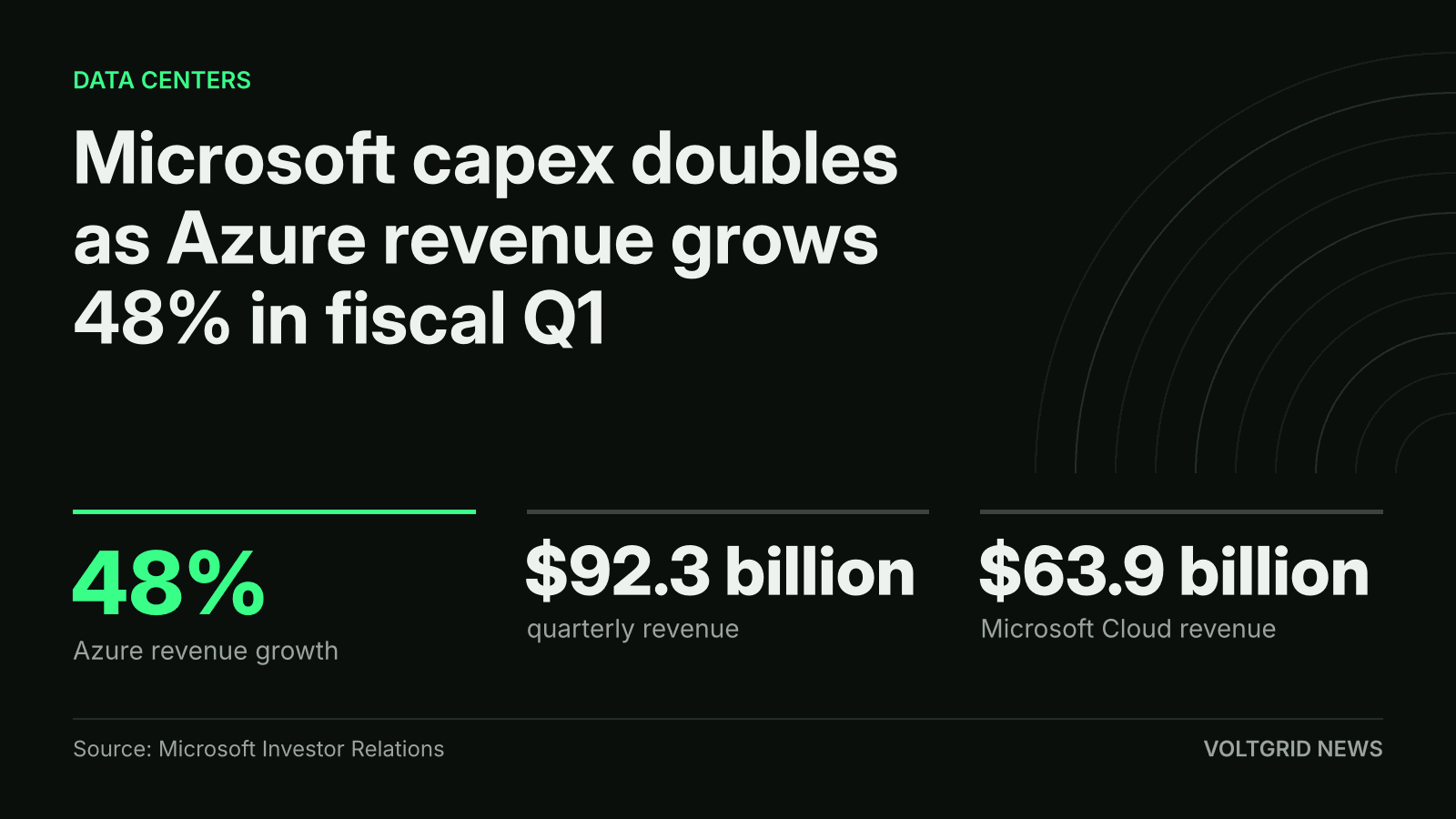
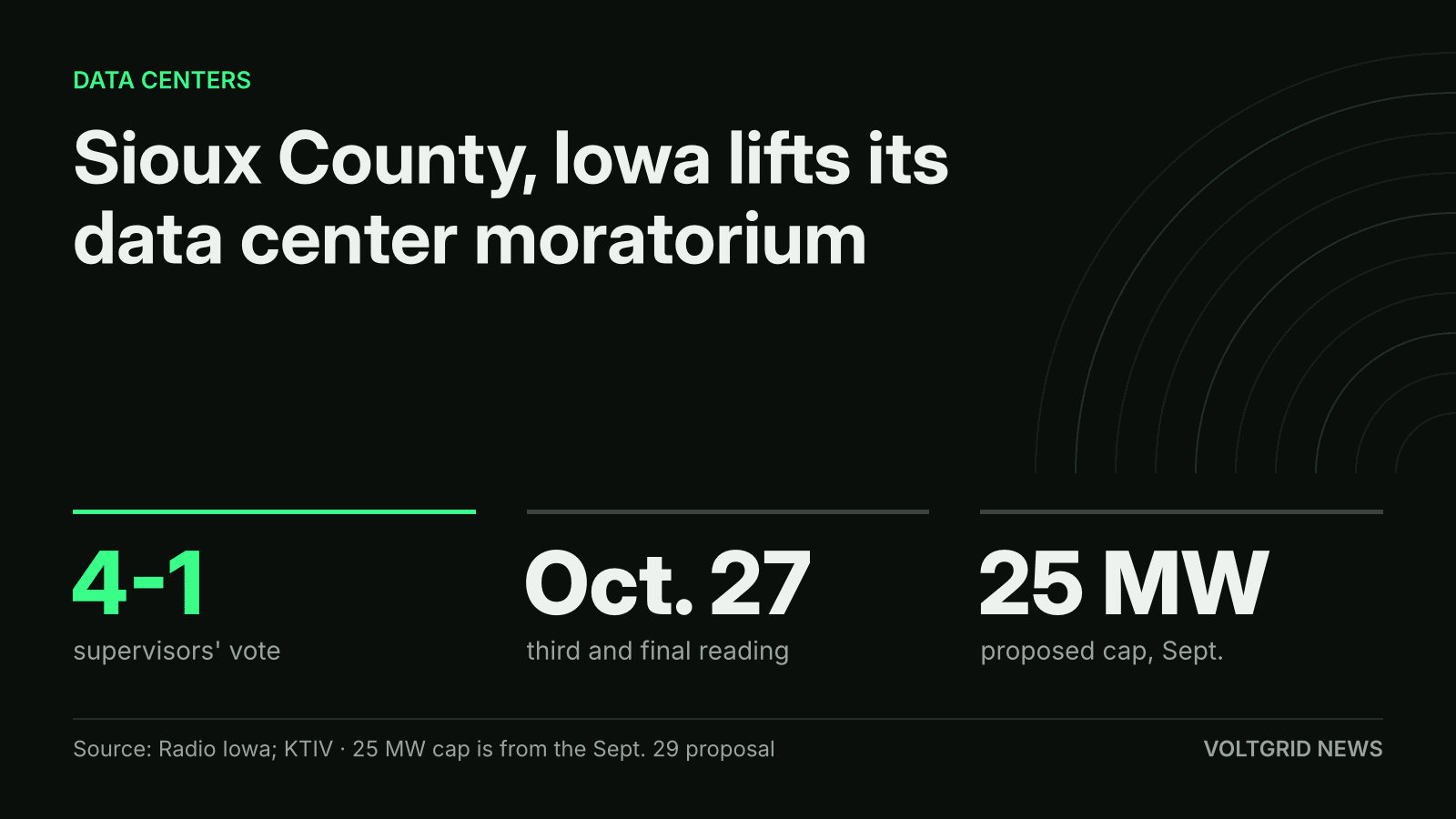
Microsoft's fiscal first-quarter results of Oct. 28 put Azure revenue growth at 48%, with quarterly revenue of $92.3 billion.
Illustration (AI-generated)
Microsoft capex, reported as additions to property and equipment, reached $39.4 billion in the quarter ended Sept. 30, 2026, double the $19.4 billion of a year earlier, while Azure revenue rose 48%, according to its fiscal first-quarter results released on Oct. 28.
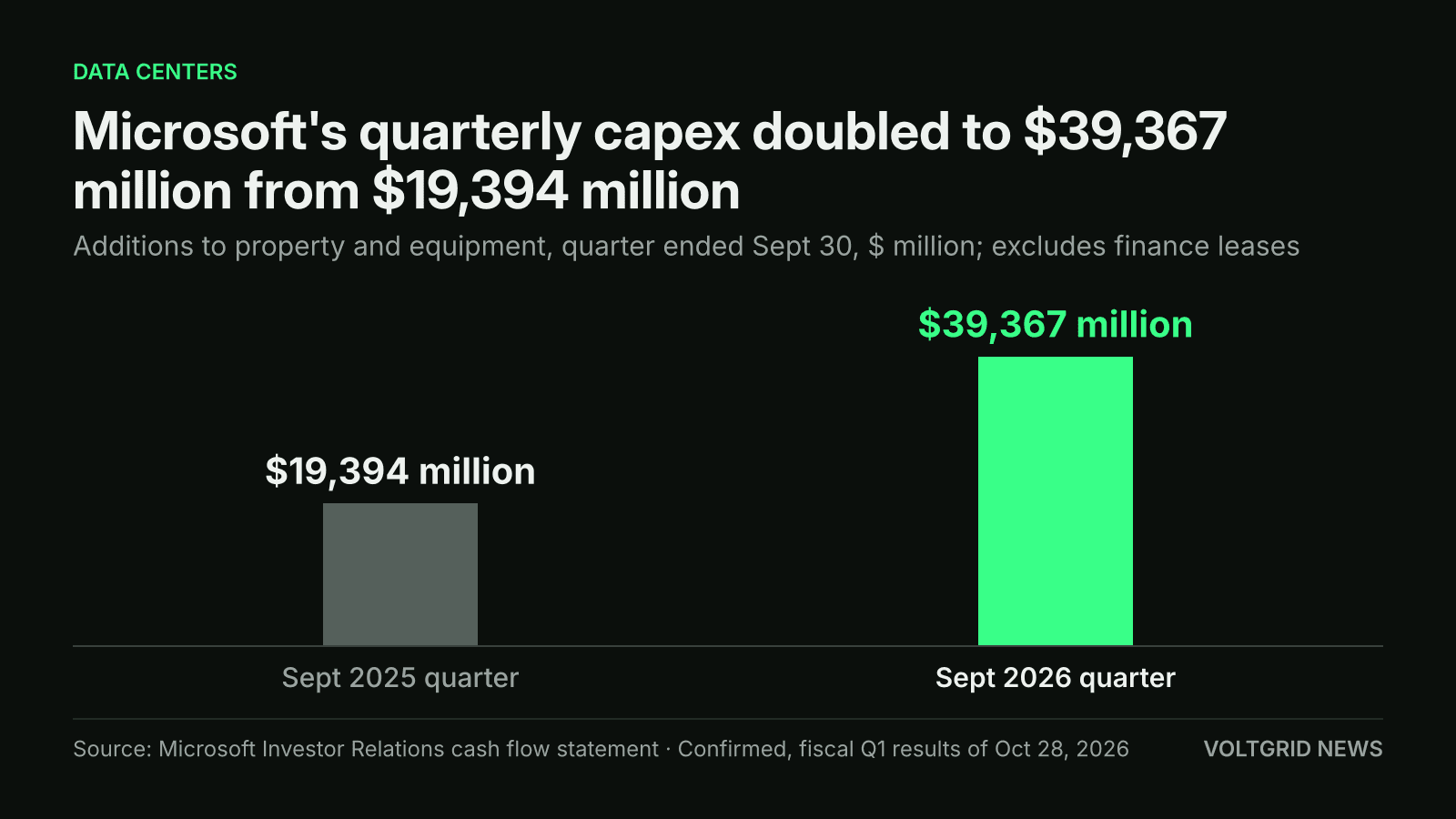
Microsoft's additions to property and equipment doubled year on year, according to its cash flow statement; finance leases are not broken out.
Illustration (AI-generated)
The company reported revenue of $92.3 billion, up 19%, and net income of $36.6 billion on a GAAP basis. Microsoft Cloud revenue was $63.9 billion, up 30%, and commercial remaining performance obligation, the contracted revenue not yet recognized, rose 73% to $677 billion. Chief financial officer Amy Hood said growth in Microsoft Cloud was accelerating. Voltgrid News laid out the dates in its earnings-week preview.
The cash flow statement shows where the data center build-out lands. Net cash from operations was $58.0 billion, up from $45.1 billion. Subtracting additions to property and equipment gives about $18.6 billion of free cash flow, against about $25.7 billion a year earlier, a drop of roughly 27%. The release does not state free cash flow; this is arithmetic on the two reported lines.
What Microsoft's Capex Line Covers
Additions to property and equipment is cash paid for servers, GPUs, networking and buildings. It excludes data center capacity Microsoft secures through finance leases, which the press release and cash flow statement do not break out, so the line understates total capacity spending. Microsoft did not give a figure for finance leases in the release.
Depreciation, amortization and other charges rose to $11.7 billion from $8.1 billion in the same quarter a year ago. That is the cost side of the same build-out: each new hall adds to the depreciation base before it adds revenue at scale.
What Microsoft Capex Means for Data Center Capacity
For power and data center planners, the numbers show capital spending growing faster than operating cash flow, which rose about 29% while additions to property and equipment rose about 103%. Microsoft's remaining performance obligation of $677 billion is the demand signal behind sites such as the 422 MW ATL80 campus in Rome, Georgia that Voltgrid reported from a state filing, and the up-to-1 GW Michigan project that CMS Energy said may advance after the midterms. Voltgrid News also covered Alphabet's capex and Google Cloud results from the same earnings week.
Grid access still sets the pace. In October Microsoft walked away from a 50 MW Nscale site in the UK when grid power was not due until the 2030s, as Voltgrid reported. Spending is large, but it still depends on when utilities can connect new load.
What Microsoft Has Not Yet Confirmed on Guidance
Microsoft said it would give forward-looking guidance on its earnings call at 2:30 p.m. Pacific time. This article is based on the press release and financial statements; guidance on capital spending and capacity for the next quarter is not covered here. The unaudited statements will also be superseded by the company's quarterly filing, so figures could be adjusted.