Vietnam Orders Provinces to Set Rooftop Solar Incentives by December 2026
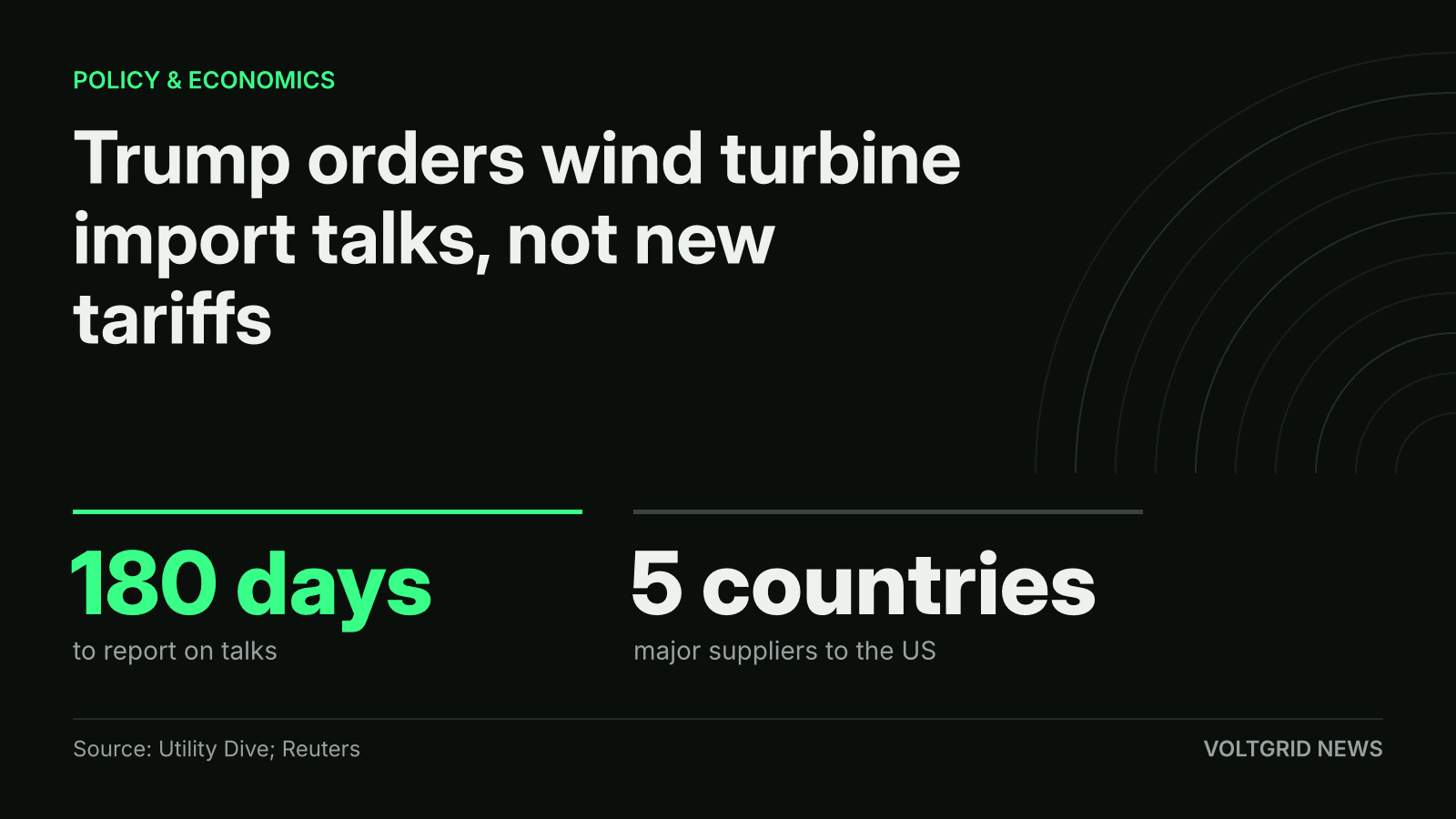
Dispatch 10790/VPCP-CN gives Vietnam's provinces until end-December 2026 to back household rooftop PV. It sets no national subsidy rate and targets a peak-demand cut of at least 3 GW.
3 min readAI-assisted
Vietnam's dispatch sets a government target to cut peak demand by at least 3 GW; 2 of 34 provinces had household support policies in September, MOIT reported.
Illustration (AI-generated)
Vietnam's government ordered provincial and municipal authorities on Oct. 22 to introduce support policies for household rooftop solar by the end of December 2026, with a target of cutting peak system demand by at least 3 GW, according to pv magazine.
The instruction came in Government Office Dispatch No. 10790/VPCP-CN, issued after a government meeting on electricity supply security and the revised Power Development Plan VIII (PDP8). It conveys Prime Minister Le Minh Hung's call for faster rooftop PV and battery energy storage system (BESS) deployment to lower peak demand and raise local self-sufficiency, pv magazine said. VnEconomy, which also covered the dispatch, describes it as a package of urgent measures to secure supply from 2027 to 2030.
What Vietnam's Dispatch Orders Provinces to Do
The Ministry of Industry and Trade (MOIT) must propose rooftop solar targets for individual provinces and cities by Oct. 30, specifying installation capacities and commissioning schedules, with a focus on northern provinces where supply constraints remain a concern, pv magazine reported. Provincial People's Committees must then adopt support policies for households investing in self-consumption rooftop systems by the end of December 2026, in line with Article 22 of the Electricity Law. MOIT is to provide guidance and monitor implementation, and progress will count in assessing the performance of ministries and local officials.
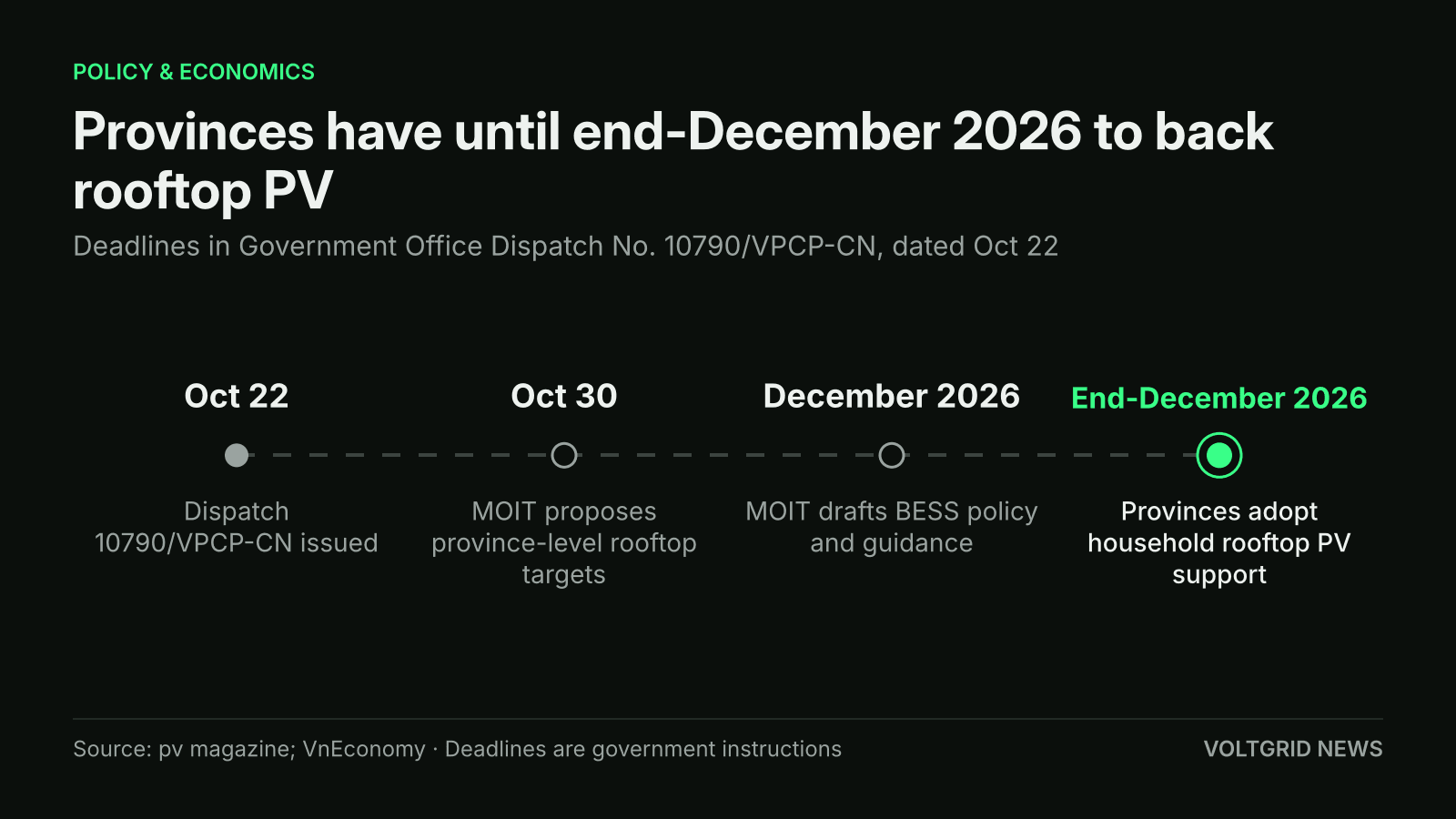
Provinces must adopt household rooftop PV support by end-December 2026, according to pv magazine's account of the dispatch.
Illustration (AI-generated)
The dispatch sets no nationwide subsidy rate. Each province decides its own support mechanism, so the value of the incentive will differ by locality.
Peak Demand Cut and BESS Policy
The wider supply-security programme carries targets of annual electricity savings of at least 3%, a cut in consumption of at least 10% in the peak summer months, and a reduction in peak system demand of at least 3 GW. VnEconomy, citing the instruction, lists April to July as the peak hot-weather months and adds a goal of holding total system power losses below 6%, plus demand-side management and load shifting.
For storage, MOIT must work with the finance and justice ministries to develop policies and guidance to accelerate BESS deployment by December 2026, pv magazine said. The government especially encourages rooftop PV paired with storage at industrial parks and industrial clusters in the north. The dispatch gives no storage capacity target in the reports read by Voltgrid.
On the supply side, VnEconomy reported that investors were told to speed construction and bring the Na Duong 2 and Quang Trach I thermal power plants into commercial operation in 2026. For 2028 to 2030 and beyond, ministries are to review planned generation and transmission projects, and the government agreed a list of key projects to be assigned to state-owned groups. For investors, the rooftop push is therefore a demand-side supplement to thermal and grid build-out, not a replacement for it.
Where Vietnam's Rooftop Solar Stands
Vietnam Electricity (EVN), the state-owned utility, counted 134,410 rooftop installations with a combined capacity of more than 11.45 GW at the end of August 2026, according to pv magazine. Earlier rule changes set the base. Directive No. 10/CT-TTg of March 2026 set rooftop expansion targets, and Decree No. 243/2026/ND-CP, in force since June 26, raised the standard cap on surplus sales to the grid from 20% to 50% of eligible generation, with higher shares negotiable until the end of 2030 depending on local grid conditions. It also lets eligible surplus power discharged from rooftop-charged batteries be sold to the grid.
Local uptake has lagged. MOIT reported in September that only two of 34 provinces and cities, Bac Ninh and Lai Chau, had adopted the required household support policies, pv magazine said. Whether the December deadline changes that will show in the provincial targets due Oct. 30 and the policies that follow. The size of any provincial incentive, the BESS support mechanism and any storage capacity figure remain unpublished. The 3 GW peak cut is a government target, and the reports do not say how much of it rooftop solar and storage are expected to deliver.