Batteries · Oct 19, 2026, 14:25
Wood Mackenzie: 4-Hour BESS Undercuts Gas Peakers in All 43 Markets
Wood Mackenzie finds 4-hour BESS now cheaper than open-cycle gas peakers in all 43 markets it modeled, as gas turbine shortages push peaking costs higher.
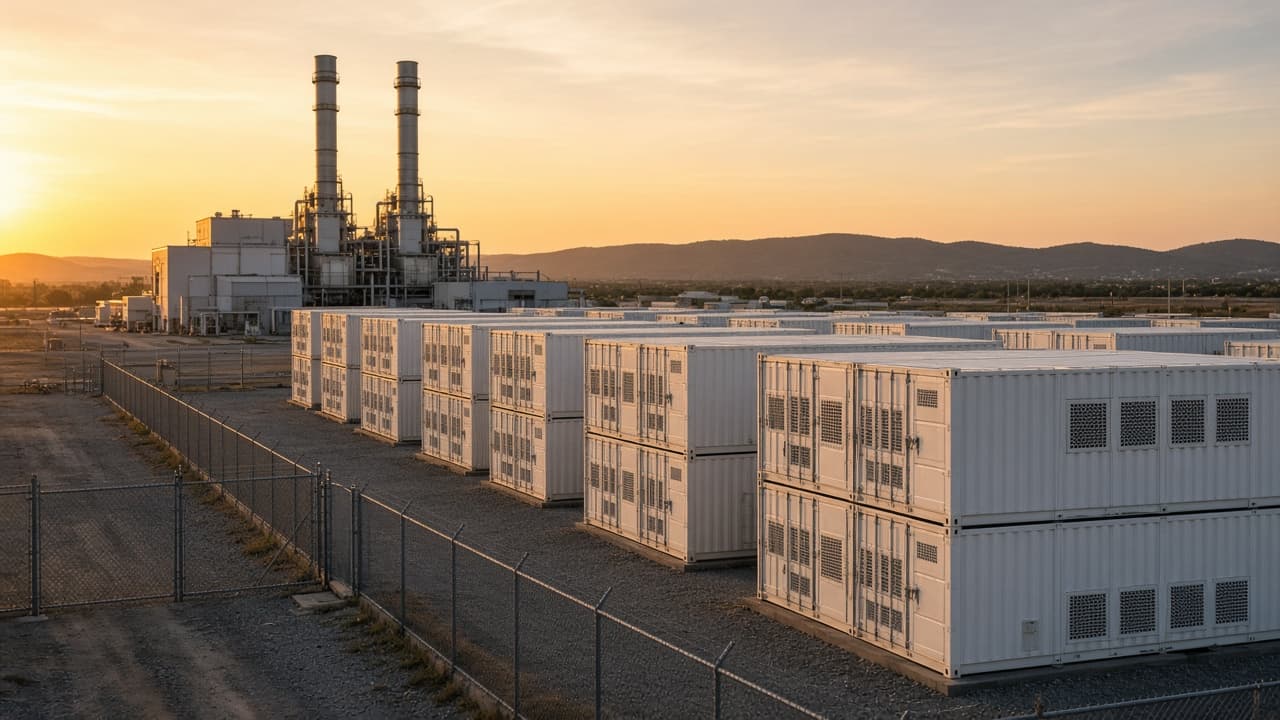
Battery storage beside a gas peaking plant.
Illustration (AI-generated)
Worldwide, October 8 — Wood Mackenzie's latest levelized cost of electricity (LCOE) report finds that 4-hour battery energy storage systems (BESS) now cost less than open-cycle gas turbine peakers in all 43 markets where the firm modeled both.
The research firm ties the shift to two opposing trends. Gas turbine shortages and fuel volatility are raising peaking costs, while expanding battery manufacturing keeps pushing storage costs down. Energy-Storage.news covered the findings on October 19.
The Technical Details
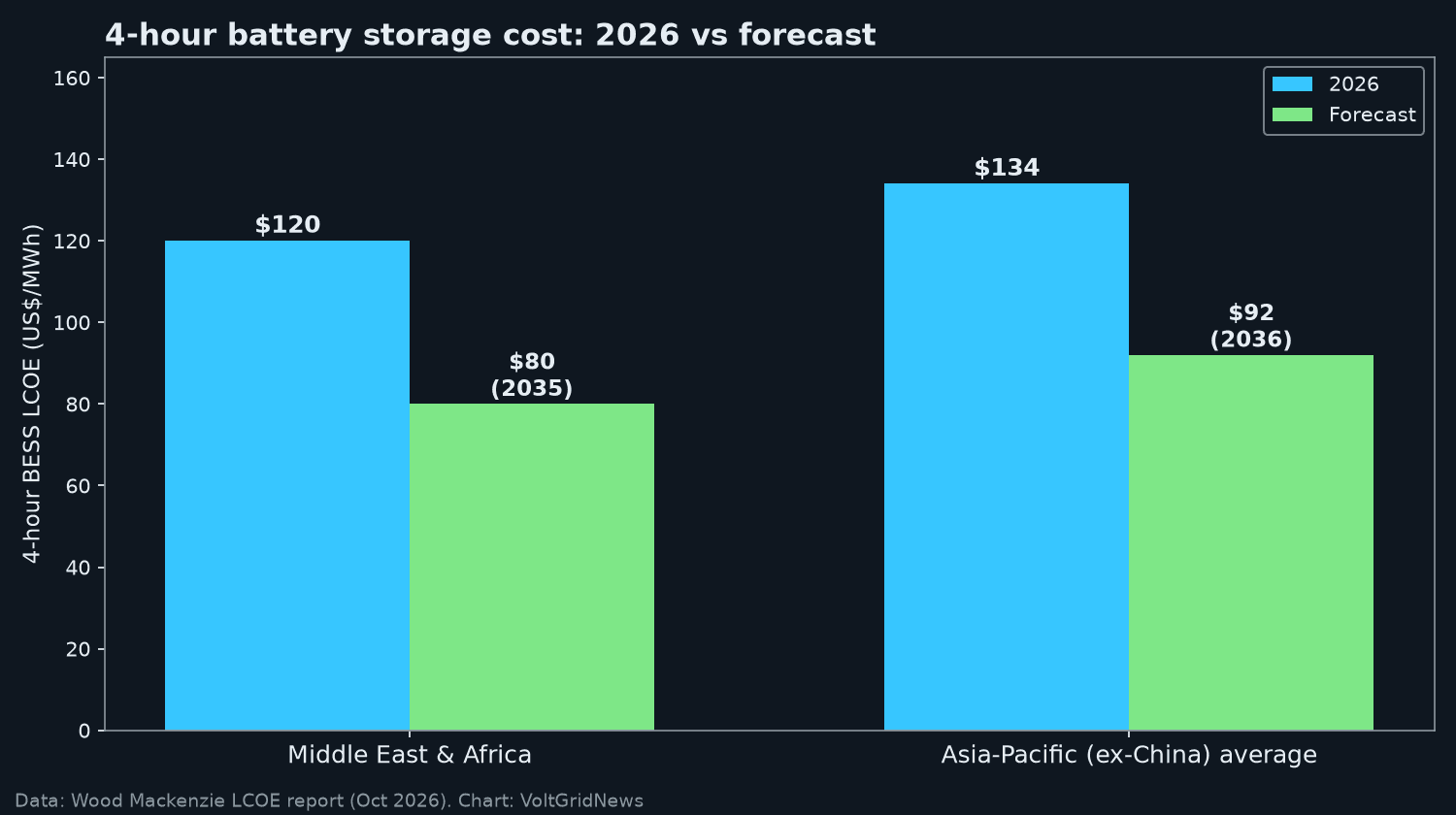
China sets the global cost floor for storage. Its benchmark BESS LCOE sits more than 55% below the average for the rest of Asia-Pacific. In the Middle East and Africa, storage now beats gas peaking in every gas-reliant market.
Europe saw its first BESS installation cost rise in three years as cell prices rebounded from their 2025 low. Wood Mackenzie still projects European capex to fall 12% by 2031, slowing once lithium prices roughly double in 2029.
- Markets where 4-hour BESS beats open-cycle gas: 43 of 43 modeled
- Middle East and Africa 4-hour BESS LCOE: US$120/MWh in 2026, US$80/MWh by 2035 (-33%)
Sources
- BESS beats gas peaker plants on LCOE globally, Wood Mackenzie finds · Energy-Storage.news