Anthropic Flags HBM Risk as H1 Compute Costs Hit $8.945 Billion
Anthropic's Oct. 26 filing says SK hynix, Samsung and Micron may not add high-bandwidth memory fast enough, as first-half compute and infrastructure costs reached $8.945 billion.
2 min readAI-assisted
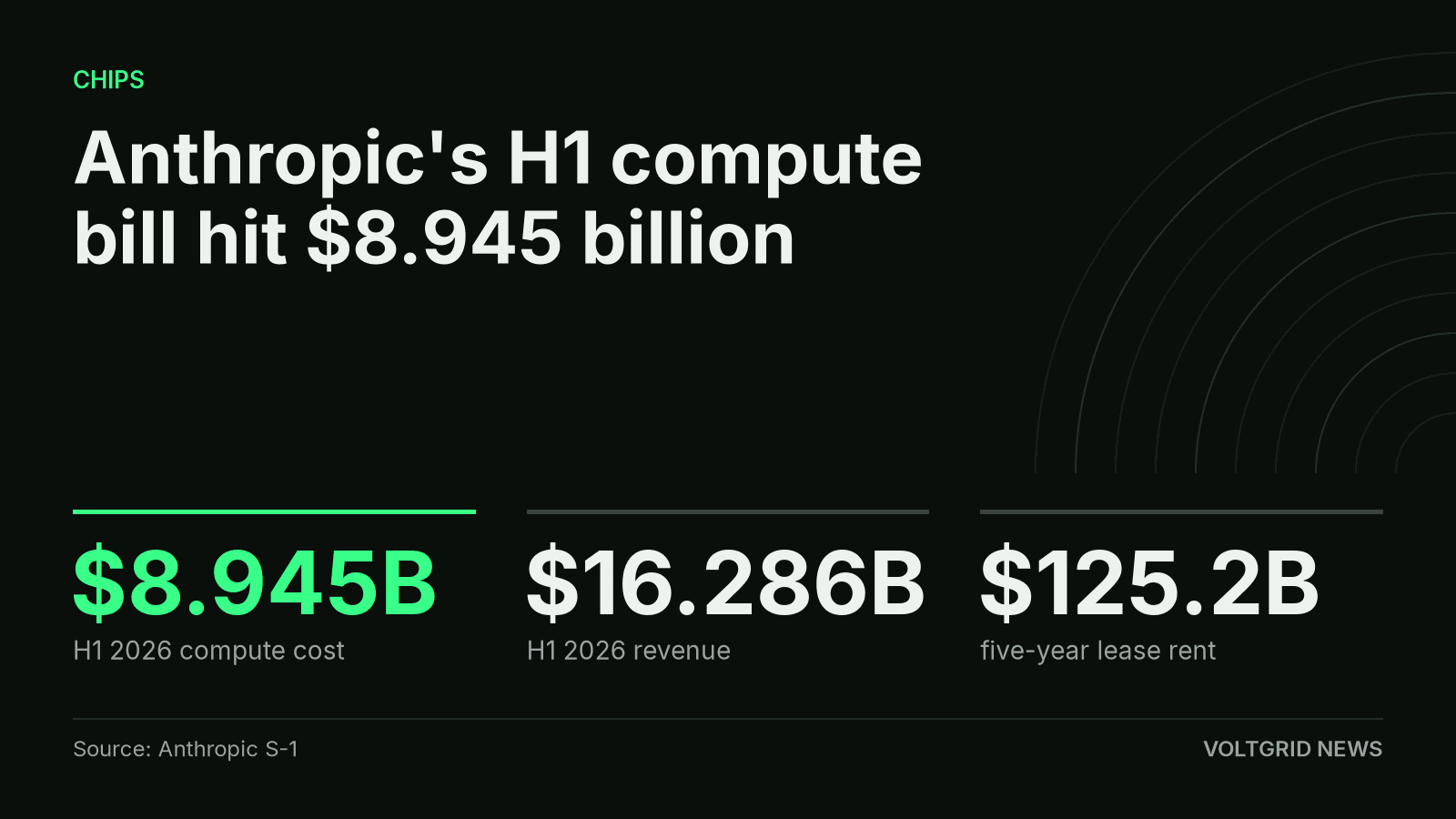
Anthropic's preliminary S-1 lists $8.945 billion of compute and infrastructure cost in the first half of 2026.
Illustration (AI-generated)
Anthropic told the Securities and Exchange Commission on Oct. 26 that high-bandwidth memory from SK hynix, Samsung and Micron may not expand quickly enough for its AI accelerators, while compute and infrastructure costs reached $8.945 billion in the first half of 2026.
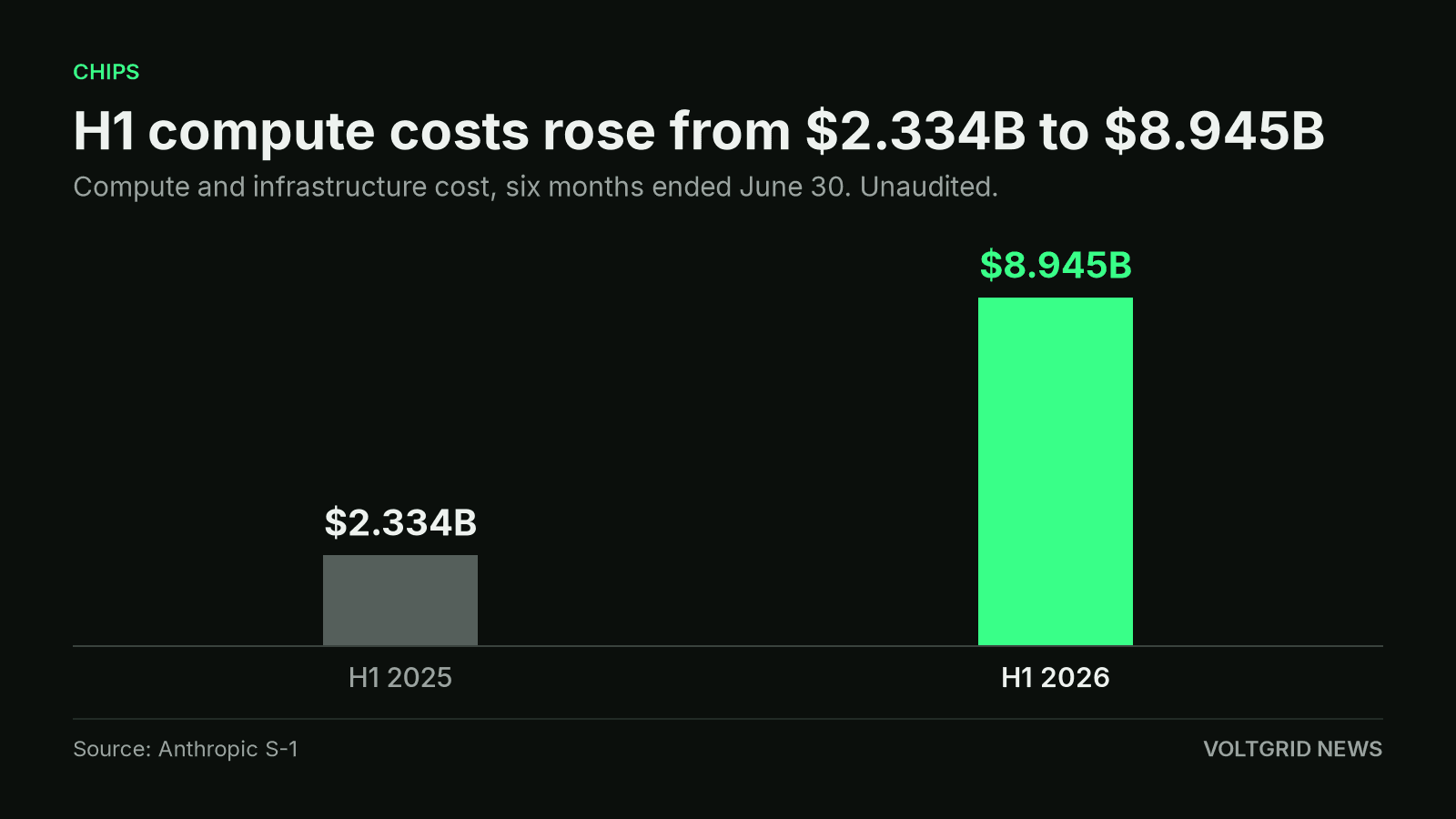
Unaudited figures from Anthropic's preliminary S-1. The first half of 2026 is marked.
Illustration (AI-generated)
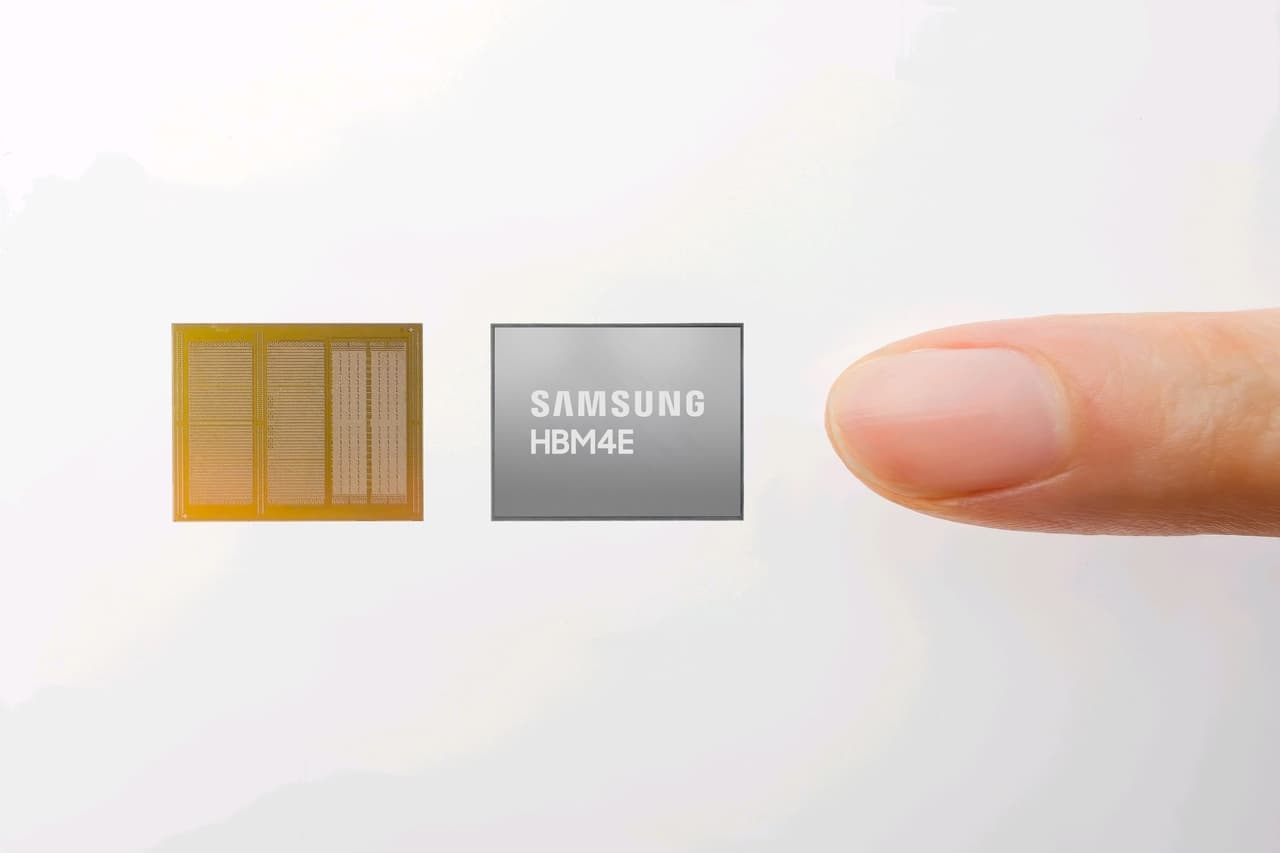
In its preliminary S-1, the company says those three firms largely make the HBM and other high-performance memory used in AI computing gear. It says there is no guarantee that their factory expansions will yield enough supply in time, particularly if big customers or competitors reserve most of a supplier's output. It also says most of the world's most advanced chip manufacturing sits in Taiwan, primarily at TSMC, and that Anthropic has at times been unable to obtain enough chips when it needed them. Efforts to add leading-edge capacity outside Taiwan, including in the United States, are still early, the filing says.
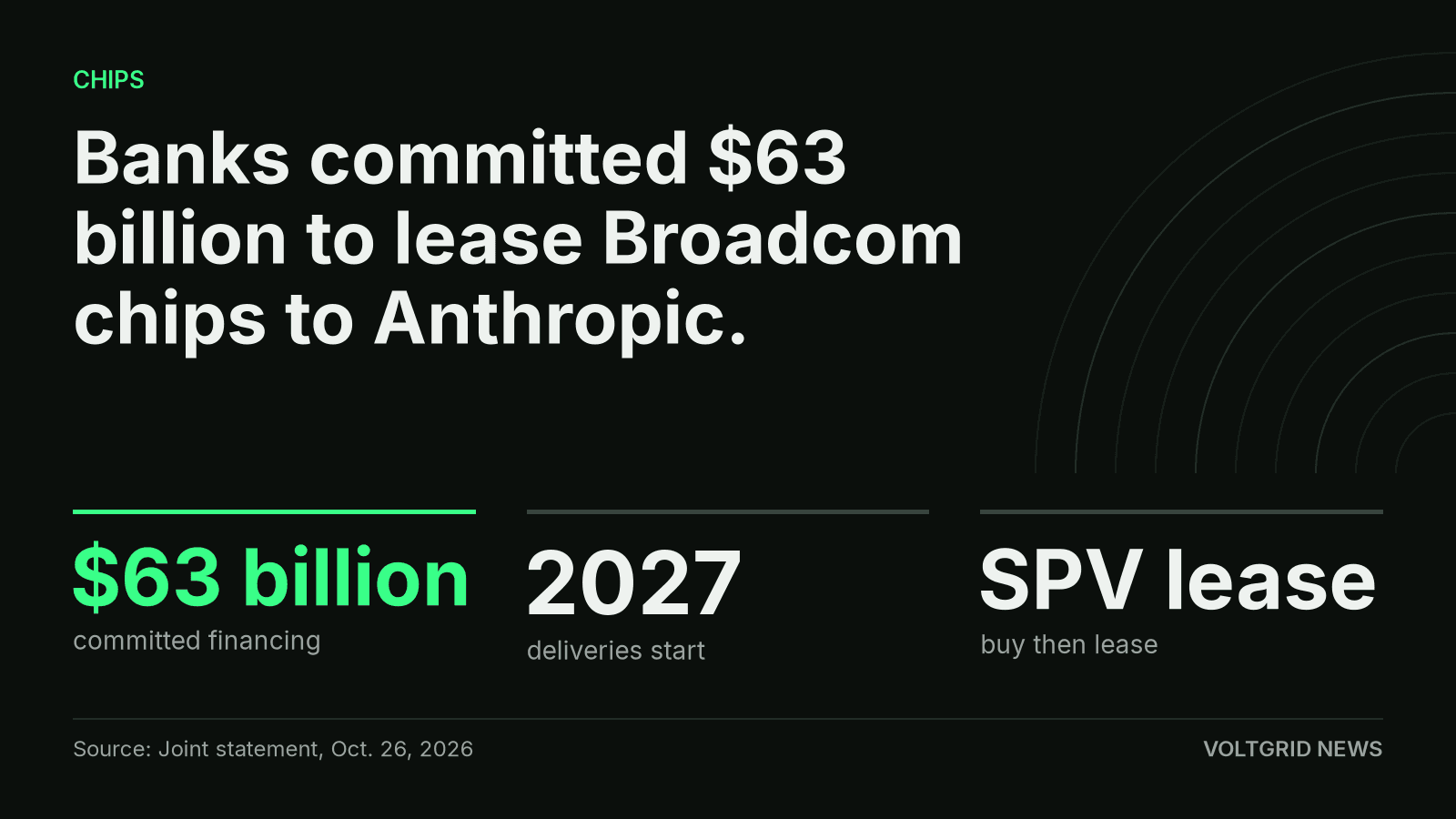
The half-year compute bill shows the scale of that risk. The same unaudited table lists revenue of $16.286 billion for the six months ended June 30, 2026, so compute and infrastructure cost more than half of revenue. A year earlier those costs were $2.334 billion. Yonhap, reading the same filing, described the change as a 283% increase. The prospectus also describes a 2026 equipment lease whose rent over five years is about $125.2 billion excluding interest, with payments that generally start when the hardware is ready for service in a data center. That rent total is not the $63 billion commitment banks announced the same day to buy Broadcom accelerators and networking gear and lease them to Anthropic, which Voltgrid reported.
Where the supply chain can stall
Anthropic says it already spreads work across Amazon Web Services Trainium chips, Google tensor processing units, and graphics processors from NVIDIA and AMD. HBM sits beside those accelerators, so a memory shortfall would slow more than one chip family. The filing adds that transformers, switchgear and turbines have long delivery times, and that Anthropic has publicly committed to covering electricity-price increases its data centers cause for other consumers, both the energy and the network needed to deliver it. A slip in memory, power equipment or a grid connection delays the hour when leased chips can run.
The prospectus is still marked preliminary. The offered share price is blank, and several totals for future purchase commitments are left empty, so they cannot be reported as figures. Anthropic has applied to list Class A shares on Nasdaq under the symbol ANT. It does not name an HBM purchase volume, a delivery quarter, or a supply contract with SK hynix, Samsung or Micron. Earlier coverage of Samsung's reported HBM revenue lead is a separate claim, and this filing does not cite it.
What is not confirmed yet
Samsung, SK hynix, Micron and TSMC are not quoted responding to the risk language. The filing does not say a shortage is underway today. It says supply might not keep pace, and that TSMC has sometimes fallen short of demand. The $125.2 billion sum is rent excluding interest, not a chip count and not a megawatt figure. No date is given for when fabs outside Taiwan would ease that concentration, or for when the three memory makers' expansions would match Anthropic's needs.