Cadence Raises 2026 Revenue Outlook to $6.387B-$6.417B, Backlog $8.2B
Cadence lifted its 2026 revenue forecast to $6.387 billion-$6.417 billion after third-quarter sales rose 22% to $1.633 billion, and said AI agents are driving use of its chip design tools.
2 min readAI-assisted
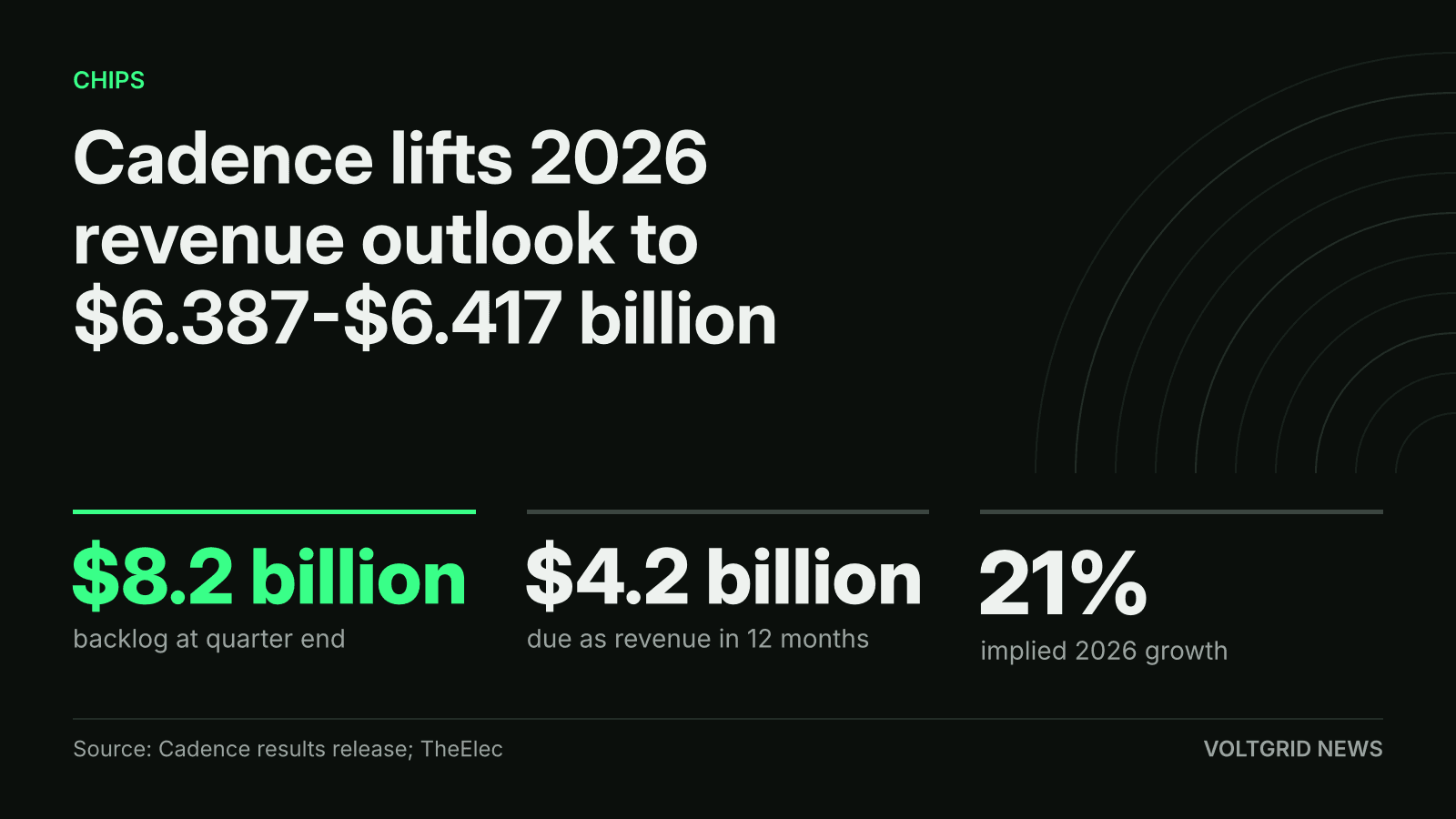
Cadence's outlook rests on a backlog of $8.2 billion, of which it expects $4.2 billion to become revenue within 12 months.
Illustration (AI-generated)
Cadence Design Systems raised its 2026 revenue forecast to between $6.387 billion and $6.417 billion on Oct. 26, after third-quarter revenue of $1.633 billion, up from $1.339 billion a year earlier, according to the company's results release.
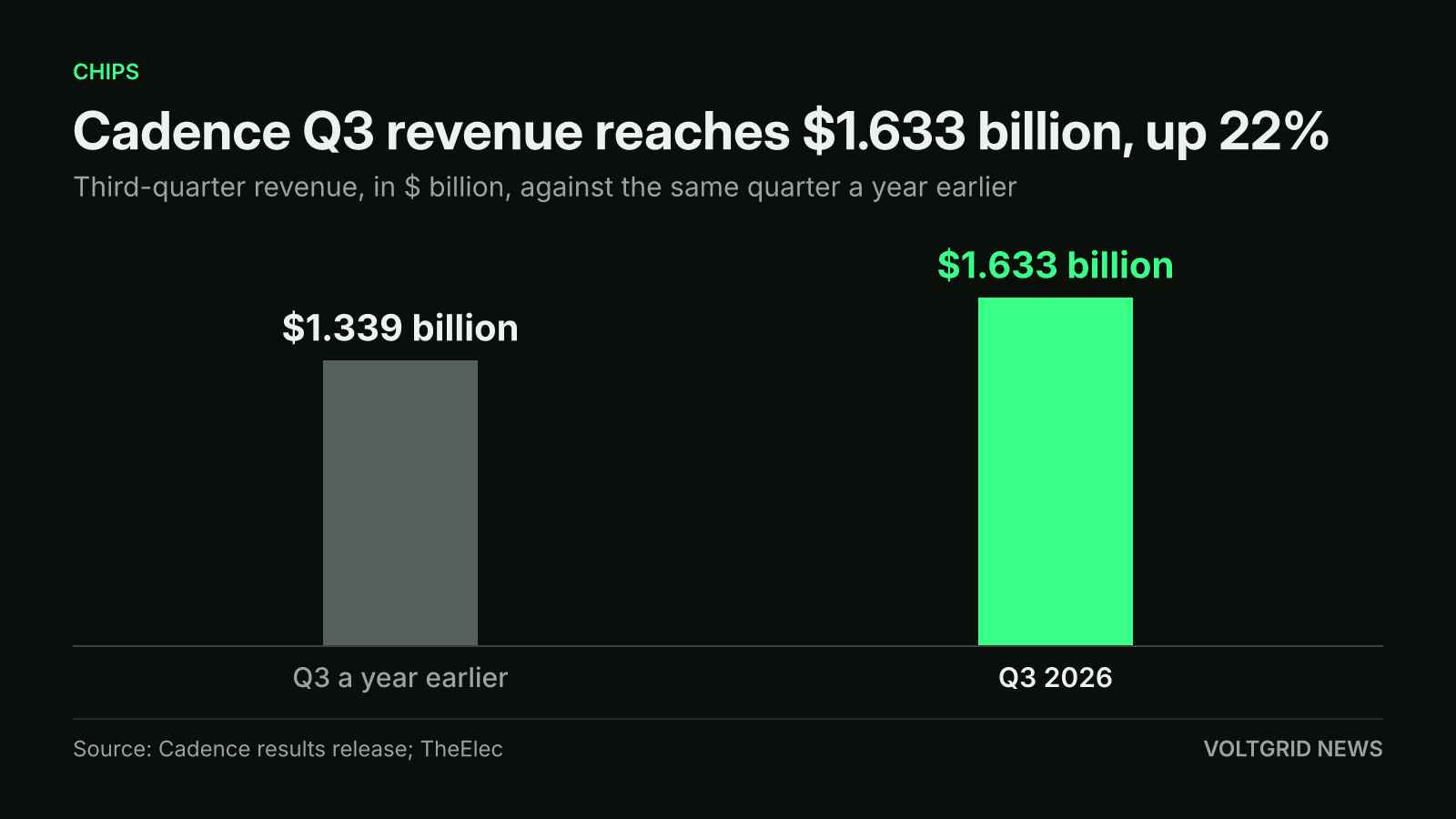
Third-quarter revenue rose 22% to $1.633 billion, according to Cadence's results release.
Illustration (AI-generated)
TheElec reports that the new range implies 21% growth, up from the 19% growth Cadence forecast with its second-quarter results. The outlook for non-GAAP earnings per share is $8.37 to $8.43, with a non-GAAP operating margin of 44.2% to 45.2%.
For the supply chain, backlog is the number to watch. Cadence ended the quarter with $8.2 billion in backlog, which TheElec called a record, and it expects $4.2 billion of that to turn into revenue within 12 months. Chip design software is bought before wafers are ordered, so demand here tends to come ahead of demand for foundry and packaging capacity.
Q3 Results in Detail
Cadence's third-quarter non-GAAP operating margin was 44.1%, against 47.6% a year earlier. Non-GAAP earnings per share were $2.11, against $1.93, while GAAP earnings per share were $1.05, unchanged from the prior year. Recurring revenue rose 18%. The company spent $400 million on share repurchases in the quarter, and its board added a $2.5 billion authorization.
Who Is Designing Chips
On the earnings call, Chief Executive Anirudh Devgan said about 45% of Cadence's business now comes from companies outside the semiconductor industry, TheElec reported. He named hyperscalers, automotive companies, aerospace firms and financial institutions as customers increasingly designing their own chips.
Devgan said AI agents are already in use at chipmakers. Samsung Foundry adopted Cadence's InnoStack agent in the third quarter, and MediaTek put ChipStack into its production verification flow, which Devgan said raised verification coverage by 50% to 70%. Those are Cadence's own customer results. Cadence launched its Maestro models the same week, as Voltgrid reported.
What Is Not Confirmed Yet
The release gives a revenue range, not a split between AI-related and other demand, so the link between agents and the raised outlook is the company's framing. Cadence's claim that AI could make chip design up to 1,000 times easier than it was two decades ago is Devgan's estimate, not a measured result.