Apple OLED MacBook Pro Keeps M5 Pro and M5 Max, Not M6, From $2,899
The OLED MacBook Pro, Apple's first touchscreen Mac, pairs a tandem panel with the M5 Pro or M5 Max and up to 128GB of memory. It ships Nov. 6; its AI and 24-hour battery figures are Apple's own and untested.
5 min readAI-assisted
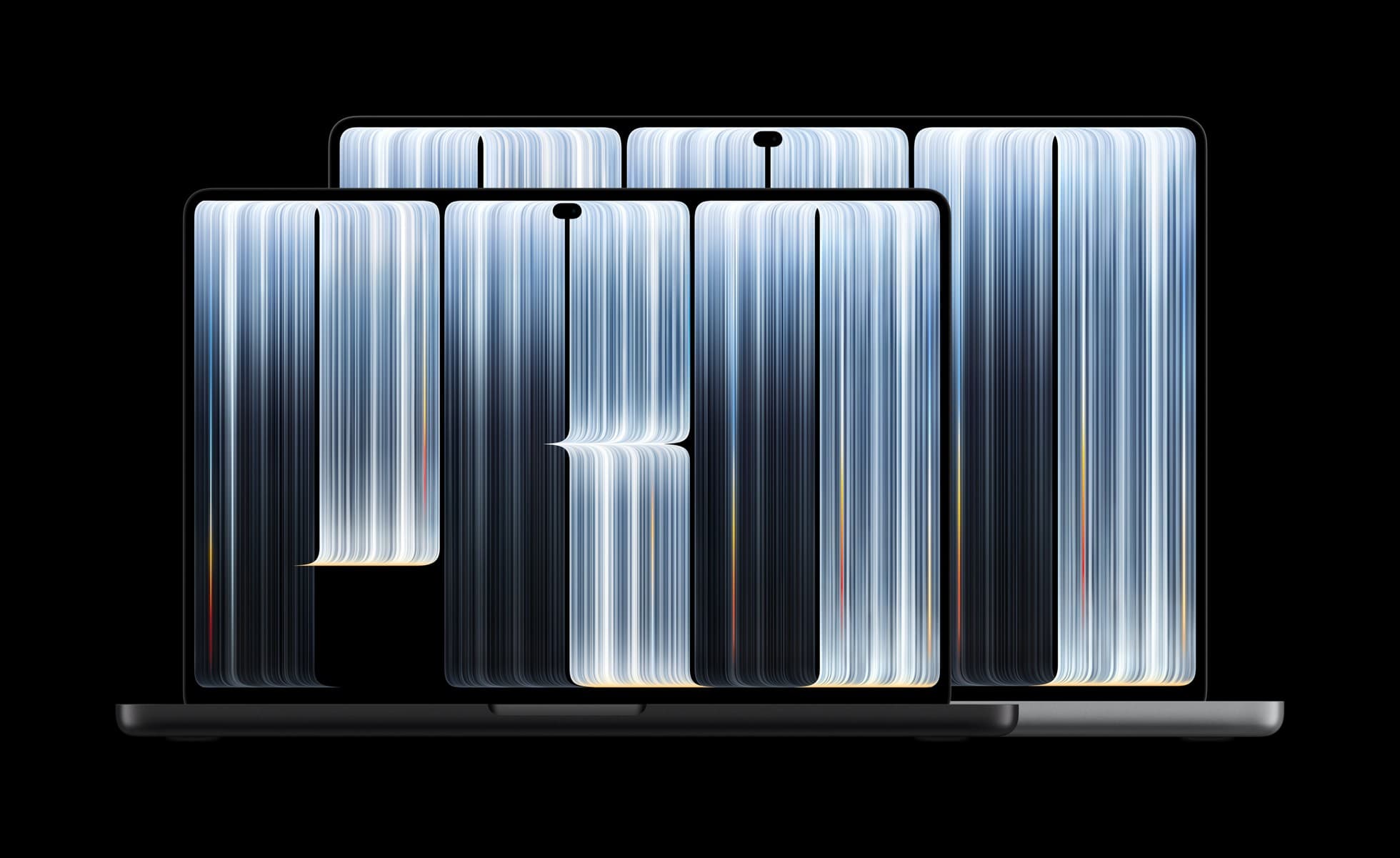
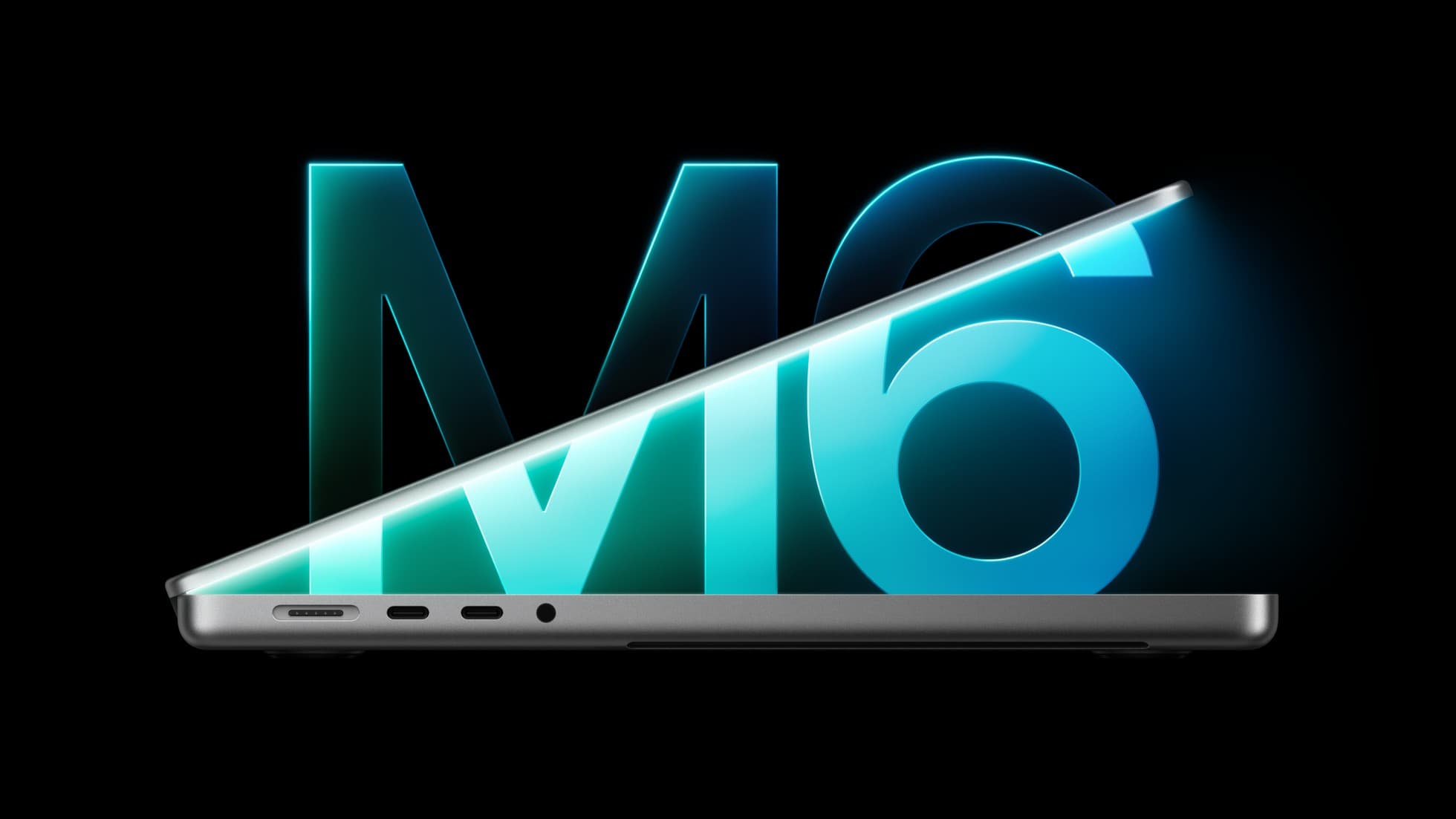
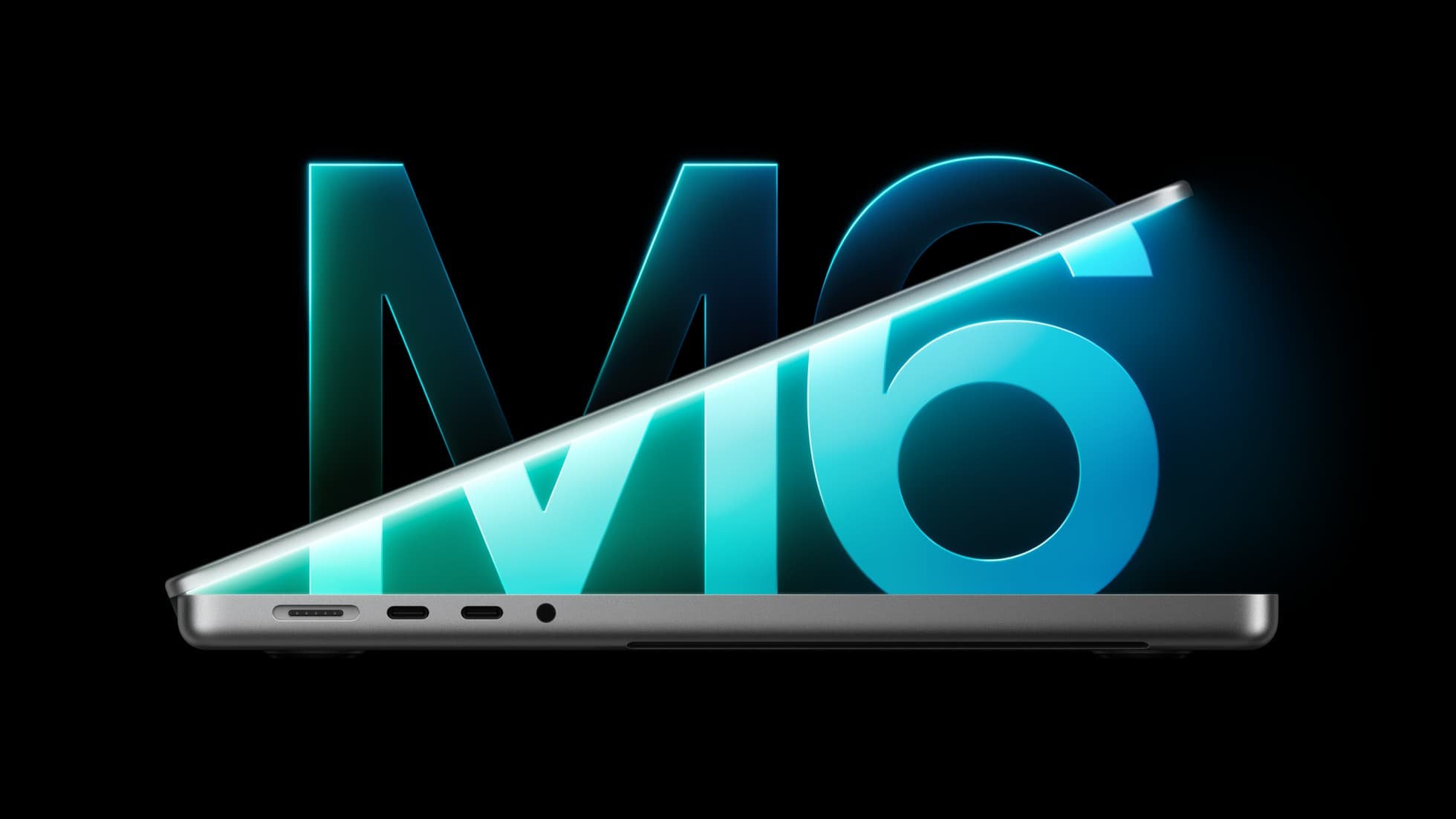
Apple's press image of the 14-inch and 16-inch MacBook Pro with PROLED XDR Display, which pairs a tandem OLED touchscreen with M5 Pro or M5 Max.
Image: Apple
Source · Press image from the Apple newsroom, used for news reporting.
Apple opened pre-orders on Oct. 28 for the OLED MacBook Pro with PROLED XDR Display, its first touchscreen Mac, which runs the M5 Pro or M5 Max with up to 614GB/s of memory bandwidth and ships Nov. 6.
This is not the M6 machine. Apple launched a 14-inch MacBook Pro with M6 a day earlier from $1,999, and The Next Web, citing Bloomberg, reported that the OLED model sits above it. The new design keeps the M5 Pro and M5 Max that Apple introduced in March, the same chips as the non-touch models, Engadget noted. Apple's release gives no reason for pairing its new flagship design with the older chip generation.
The buyer Apple names is the professional who needs a reference-grade screen on the road and a lot of memory: photographers, colorists and designers for the screen, and 3D visual-effects artists and AI developers for the M5 Max. Apple says the M5 Max lets users run large language models with hundreds of billions of parameters entirely on the laptop, a claim that names no model, precision or speed. Engadget, which called the starting price the highest it has seen for a MacBook Pro, expects a market anyway, given demand for powerful local AI hardware.
Inside the M5 Pro and M5 Max
Both chips use what Apple calls Fusion Architecture: two third-generation 3-nanometer dies joined by advanced packaging into one system on a chip, Apple said in March. The M5 Pro comes with a 15-core CPU (5 super cores, 10 performance cores) and 16-core GPU, or an 18-core CPU (6 super, 12 performance) and 20-core GPU, at 307GB/s and up to 64GB. The M5 Max pairs the 18-core CPU with a 32-core GPU at 460GB/s and 36GB, or a 40-core GPU at 614GB/s with 48GB, 64GB or 128GB. Apple's spec sheet lists only super and performance cores for both chips.
The design choice that matters for AI is unified memory. The CPU and GPU share one pool, so a model that fits in 128GB runs without a separate graphics card and its own smaller memory. When a model writes text, each new token re-reads its weights from that pool, so bandwidth sets the pace: 614GB/s on the top M5 Max against up to 170GB/s on the M6, by Apple's figures. That gap, not the touchscreen, is what separates this machine from the $1,999 model for local AI work.
How the OLED MacBook Pro Compares With M6 and RTX Spark
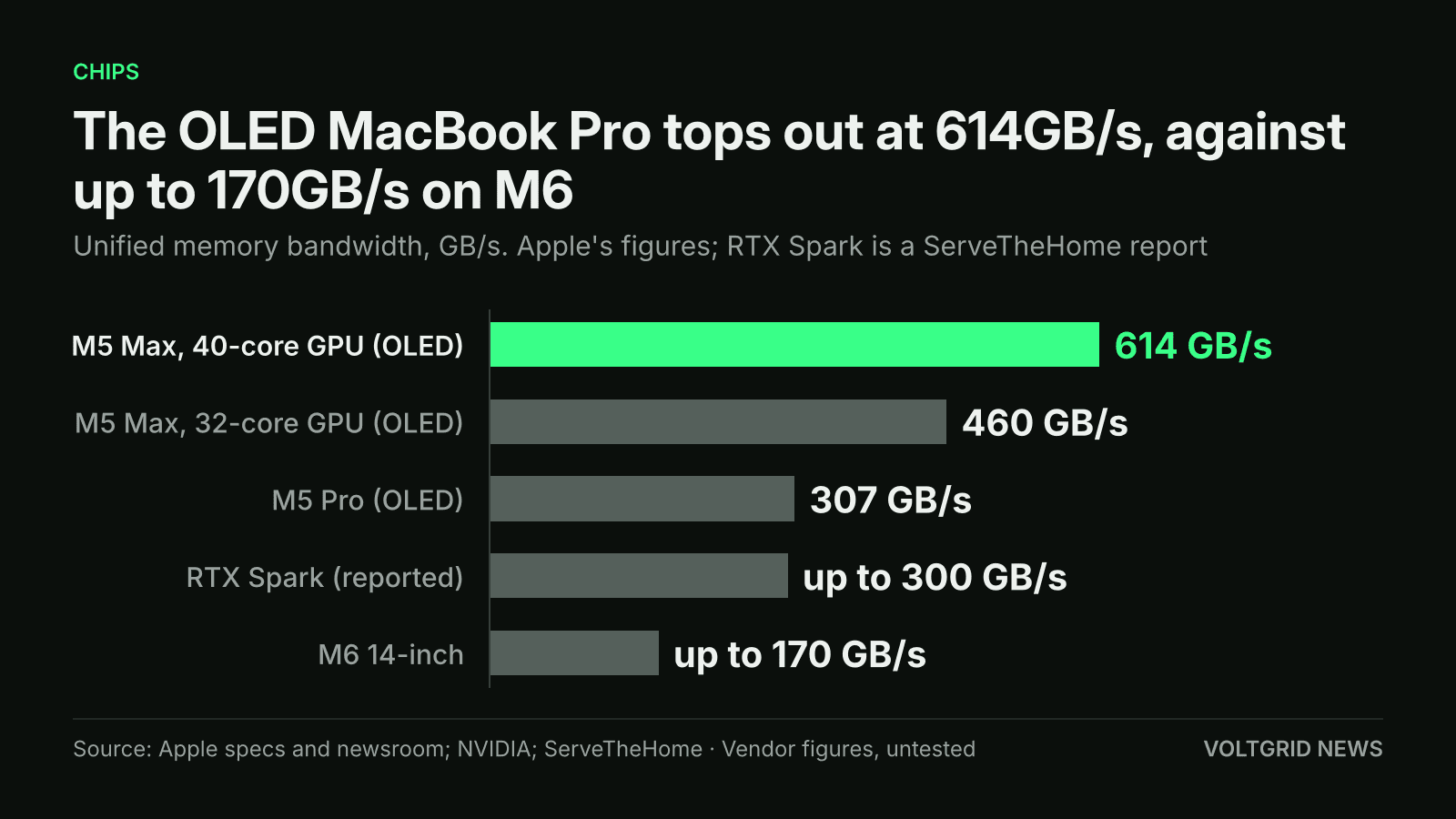
Apple's top M5 Max configuration lists 614GB/s against up to 170GB/s for the M6 14-inch; the RTX Spark figure is a ServeTheHome report.
Illustration (AI-generated)
Against the 14-inch M6 MacBook Pro, the step is memory: up to 32GB and 170GB/s on M6, as the Apple M6 specs product file sets out, against up to 128GB and 614GB/s here. Against the non-touch M5 Pro and M5 Max MacBook Pro, the chips are the same. At their March 3 launch those models started at $2,199 (14-inch M5 Pro) and $3,599 (14-inch M5 Max), according to Apple's release at the time.
The closest Windows rival is a laptop built on NVIDIA's RTX Spark, which Voltgrid covered at launch. NVIDIA lists up to 128GB of unified LPDDR5X memory and laptops from $2,599. NVIDIA publishes no bandwidth figure; ServeTheHome put it at up to 300 GB/s. Engadget made the same price comparison, saying both need deep pockets.
Apple's own AI figure is time to first token, the wait before a model starts answering. Apple claims the 14-inch M5 Max is up to 12.0 times as fast as an M1 Max, against 2.8 times for the M4 Max, and the M5 Pro up to 10.9 times an M1 Pro (M4 Pro: 2.7 times). Apple ran it in September on preproduction units with an 8K-token prompt, a 14-billion-parameter model at 4-bit and LM Studio v0.4.25+1. It measures prompt processing, not tokens per second while generating.
Why Time to First Token Is Not Chat Speed
A local language model works in two phases. First it reads the whole prompt at once, which is mostly arithmetic; that wait is the time to first token, and it is what Apple's 12.0x figure for the 14-inch M5 Max against the M1 Max measures. Then the model writes one token at a time, and each token re-reads its weights from memory.
That second phase is limited by memory bandwidth: Apple lists 614GB/s for the M5 Max with the 40-core GPU, 460GB/s with the 32-core GPU and 307GB/s for the M5 Pro, against up to 170GB/s for the M6. Apple publishes no tokens-per-second figure for either chip, so how fast this laptop writes stays unmeasured until reviewers test it.
Battery, display and what is Apple's claim
The headline "up to 24 hours" belongs to one configuration. Apple footnotes it to a preproduction 16-inch M5 Pro with a 100Wh battery, streaming 1080p video in Safari over Wi-Fi. The 16-inch M5 Max is rated at 22 hours on the same test. The 14-inch carries a 72.6Wh battery, and Apple's spec sheet lists up to 22 hours for the M5 Pro and 20 hours for the M5 Max. Wireless-web ratings are lower, from 13 hours (14-inch M5 Max) to 17 hours (16-inch M5 Pro). Every one of these is Apple's test, and Apple publishes no chip power in watts.
The tandem OLED panel stacks two light-emitting layers. Apple rates it at up to 1,000 nits sustained full-screen and 2,000 nits peak, the peak limited to HDR content and, for SDR, to outdoor use, with a 10,000,000:1 contrast ratio and a 10Hz to 120Hz refresh rate. The touch sensor sits inside the panel. The 14-inch weighs 3.0 pounds with M5 Pro, half a pound less than before, and is 0.59 inch thick; the 16-inch weighs 4.0 pounds. Apple says a redesigned thermal system keeps the same sustained M5 Pro and M5 Max performance in the lighter body. No one outside Apple has checked that yet.
OLED MacBook Pro Price, Availability and Software
U.S. prices start at $2,899 for the 14-inch M5 Pro, $3,399 for the 16-inch M5 Pro, $4,499 for the 14-inch M5 Max and $4,799 for the 16-inch M5 Max. Engadget put a fully equipped 16-inch M5 Max at $14,549, describing it as 128GB of memory and 16TB (storage, by Apple's configurator limits); Voltgrid did not price it. Pre-orders are open in 30 countries and regions. The 14-inch ships with a 70W or 96W adapter depending on the chip, and the 16-inch with 140W. It runs macOS 27, which turns touches into clicks for apps that have not been updated, and Apple ran its LLM test in LM Studio and its image-generation test on MLX.
What to watch
Units reach customers and stores on Nov. 6, 2026. The first independent reviews should answer three questions only Apple has answered so far: whether the M5 Max holds its clocks in the thinner chassis, how long the 14-inch lasts under reviewers' own battery tests, and how the panel measures against its 1,000-nit sustained rating. Voltgrid has not tested the machine and will add those measurements, with each outlet named, when they publish.
Sources
- 01MacBook Pro with PROLED XDR Display - Technical SpecificationsApple · apple.com
- 02Apple launches its first touchscreen MacBook Pro, from $2,899The Next Web · thenextweb.com
- 03Apple unveils groundbreaking MacBook Pro with PROLED XDR Display and Touch for the first time on MacApple · apple.com
- 04Apple's redesigned MacBook Pro has an OLED touchscreen, weighs just three poundsEngadget · engadget.com