CAISO Large-Load Interconnection Plan Approved; FERC Filing Due Nov. 16
CAISO's Board approved a large-load plan on Oct. 28 that lets data centers connect on flexible terms before network upgrades finish. The FERC filing is due by Nov. 16, and no MW threshold was given.
2 min readAI-assisted

The California ISO headquarters. The photo shows the grid operator's building, not the large-load proposal itself.
Image: California ISO
Source · Press image from the California ISO website, used for news reporting.
The California ISO (CAISO) Board of Governors approved on Oct. 28 a proposal to set new procedures for connecting large loads such as data centers to the grid quickly and reliably, and the grid operator said it will file the plan with the Federal Energy Regulatory Commission (FERC) by a Nov. 16 deadline.
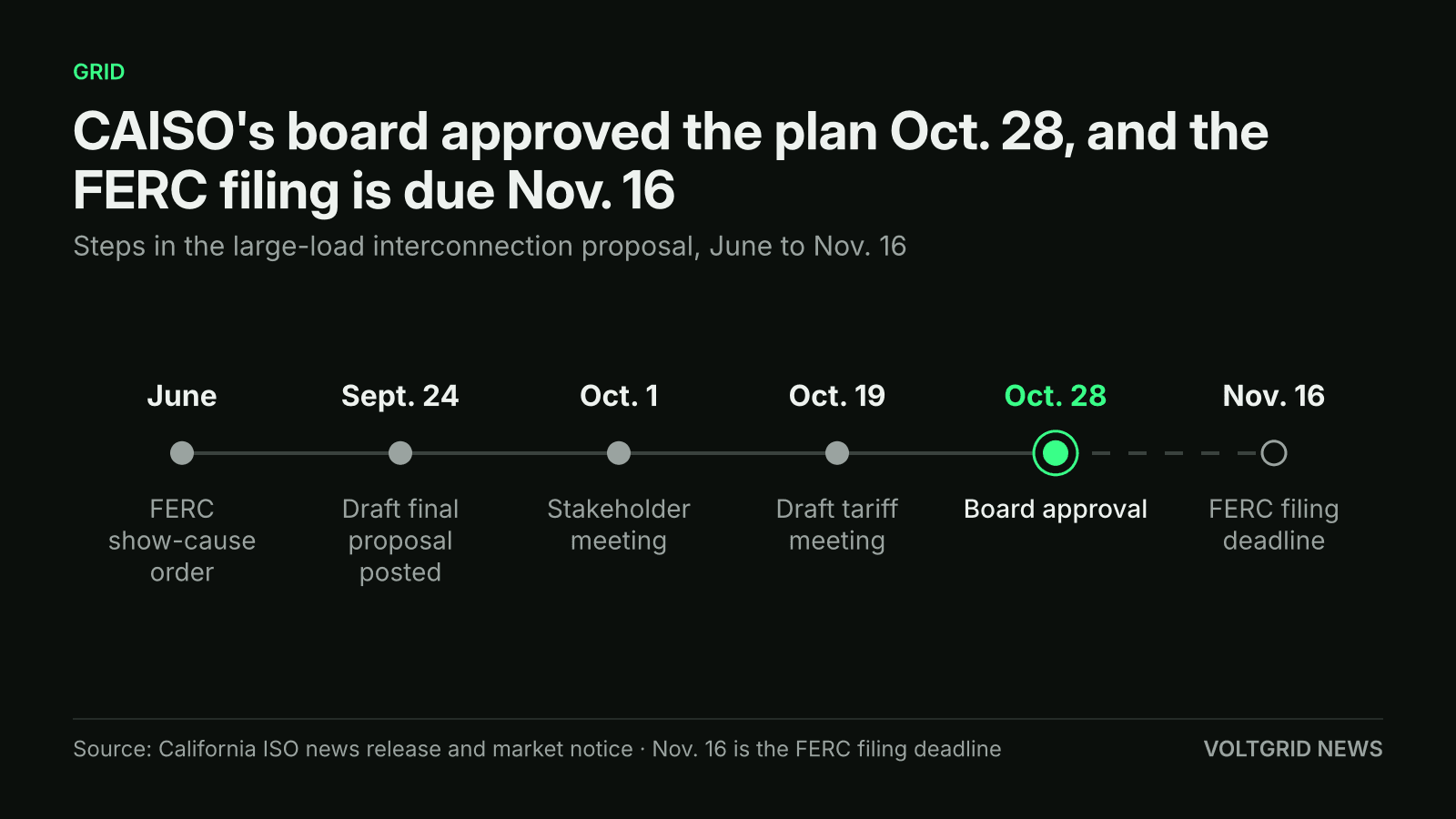
CAISO's board approved the large-load plan on Oct. 28, and the filing at FERC is due by Nov. 16.
Illustration (AI-generated)
FERC will then decide whether the filing satisfies its June show-cause order, CAISO said in a news release. That order directed CAISO and five other regional grid operators, together with their transmission owners, to show they have the rules to connect large loads, including data centers and manufacturing sites, without compromising reliability or shifting costs to other customers.
The central piece is what CAISO calls a flexible interim load interconnection. A large load would connect to the transmission system quickly, with enforceable flexibility set by grid conditions and constraints, until the network upgrades it needs are complete. In practice a project could energize on curtailable terms first and move on as the upgrades arrive.
What else the plan requires
CAISO listed four other areas. The first is coordination with utilities on load interconnection applications, studies, technical standards and operating requirements. The second is a framework to prevent cost shifting. The third is parallel information and application requirements for co-located load and generation, so CAISO sees both. The fourth is future policy work on studying generating facilities for loads and generation sited separately but close together.
On studies, the plan creates a monthly window for CAISO to review transmission additions or upgrades tied to large loads that fall outside the usual transmission planning cycle. CAISO said this is meant to fit FERC's 60-90 day requirement for transmission owners' load interconnection studies.
The operating terms are strict. CAISO proposes to require hourly forecasts, telemetry and other operating data. It also proposes communication protocols so that CAISO and the participating transmission owner can remotely disconnect large loads when needed to keep the transmission system reliable. CAISO said it will keep working with the North American Electric Reliability Corporation (NERC) on reliability standards for computational loads.
Why it matters for data centers
Flexibility in exchange for speed is the trade. A data center that accepts remote disconnection and hourly reporting may get power sooner, while one that wants firm service from day one still waits on upgrades. Earlier Voltgrid News coverage of large-load oversight includes FERC's decision on PJM's 50 MW load registry, which rejected a data center curtailment plan.
On operating visibility, PJM told FERC that 3,900 MW of data center load switched to backup in July, a reminder of why grid operators want hourly data on large sites.
CEO Elliot Mainzer said the response to the FERC order should improve planning and operational awareness of new large loads, prevent cost-shifting, encourage flexibility and speed energization.
What is not confirmed yet
The release gives no megawatt threshold for what counts as a large load, and it does not say when loads could first energize under the new rules. CAISO's Sept. 24 draft final proposal had already narrowed the scope by deferring a permanent flexible interconnection option, and service for nearby load and generation arrangements, to later stakeholder processes. FERC has not yet ruled on the filing, and it has not said whether it will accept CAISO's approach.