PJM Urges FERC to Dismiss Mon Power's $145M Winter Storm Fern Complaint
PJM called the Mon Power complaint "a fishing expedition without substance" in its Oct. 26 filing, Utility Dive reported, while West Virginia officials want FERC to investigate.
2 min readAI-assisted
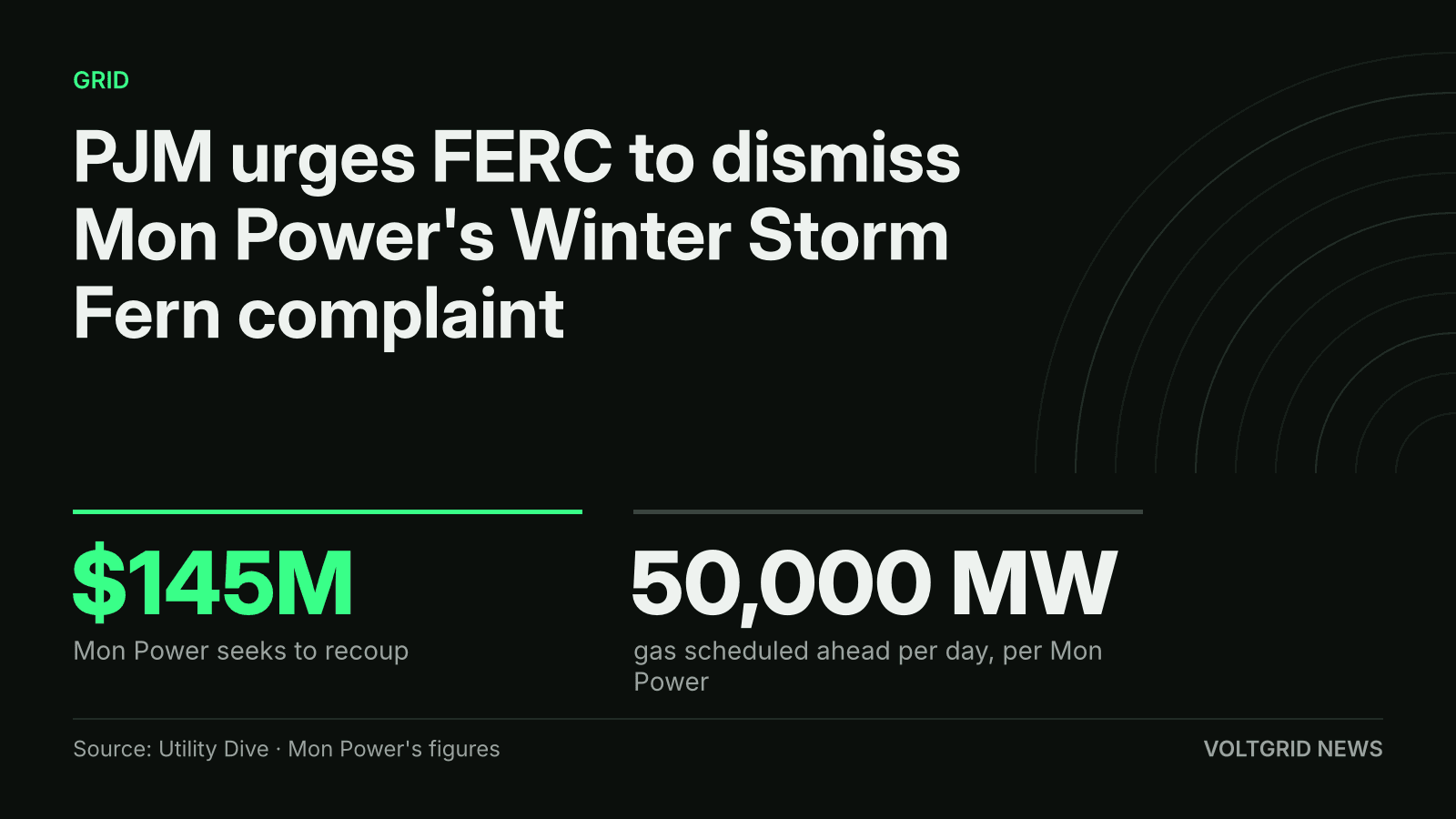
Mon Power seeks to recoup $145M; it says PJM scheduled ahead 50,000 MW a day of gas units, according to Utility Dive.
Illustration (AI-generated)
PJM Interconnection on Monday, Oct. 26, urged the Federal Energy Regulatory Commission to dismiss a complaint from FirstEnergy's Monongahela Power (Mon Power) that seeks to recoup $145 million in costs from Winter Storm Fern, Utility Dive reported.
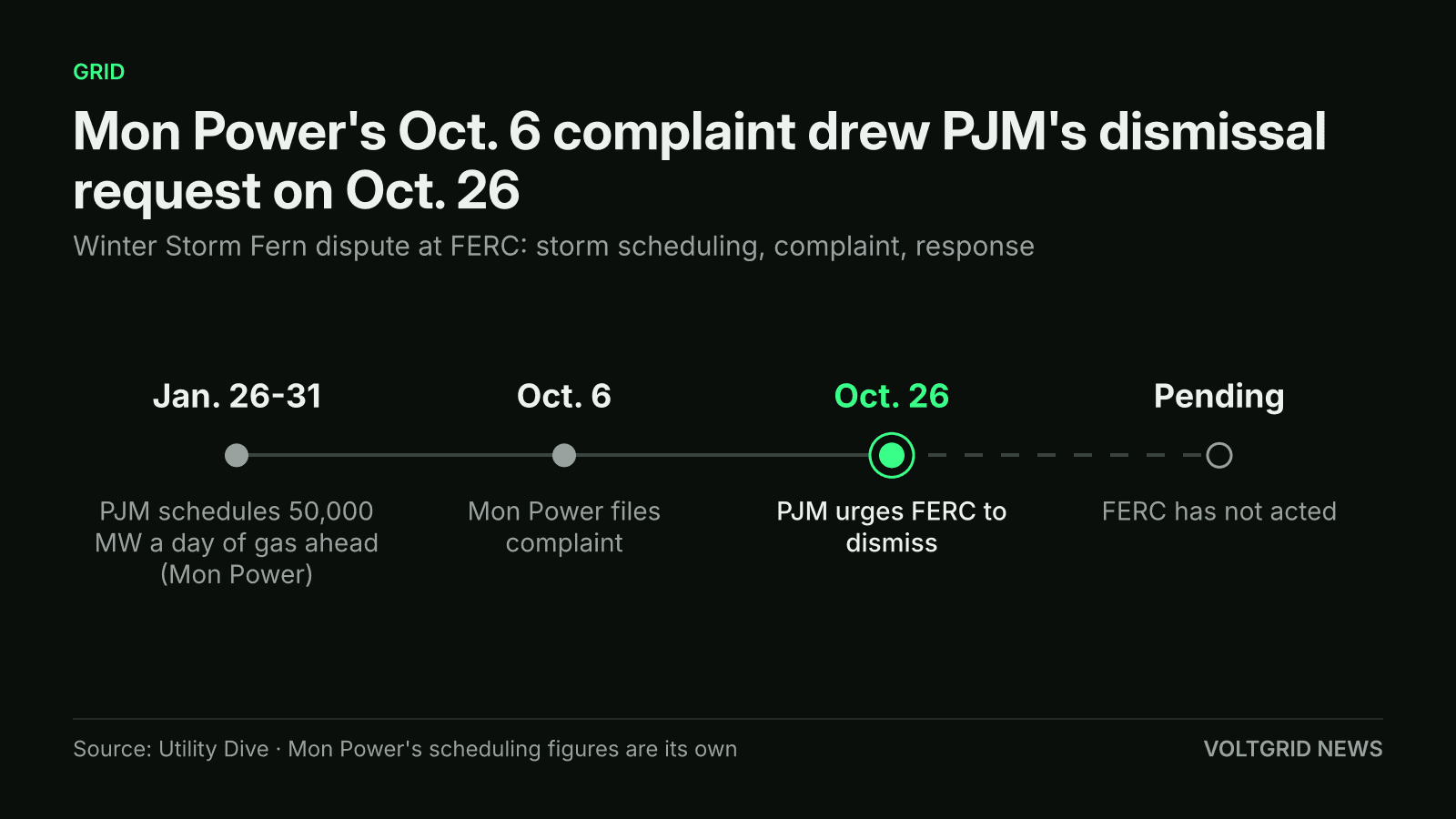
PJM's Oct. 26 filing answers Mon Power's Oct. 6 complaint; FERC has not acted, Utility Dive reported.
Illustration (AI-generated)
PJM called the complaint "a fishing expedition without substance," according to the filing as quoted by Utility Dive. It said the "most obvious and significant" driver of the locational marginal price differences Mon Power faced was downed power lines on the utility's own system. Mon Power filed the complaint on Oct. 6, asking FERC to examine whether PJM exceeded or misused its authority to schedule and commit generation in advance.
The case matters because it tests how far a grid operator can lean on advance commitments when demand spikes. Those operating choices decide which plants run and who carries the cost, a question that grows sharper as large loads such as data centers add to winter peaks, as Voltgrid has reported in FERC's Oct. 21 reliability conference coverage.
What Mon Power says happened
Mon Power says PJM scheduled ahead more than 50,000 MW a day of gas-fired units from Jan. 26 through Jan. 31, and more than 45,000 MW on Feb. 1. PJM had nearly 89,000 MW of gas-fired generation on its system as of Dec. 31, the utility said. Over the same days, Mon Power says, its cheaper coal units were held at or near their economic minimum levels.
The utility calls the $145 million its largest net expense ever and says that, without FERC action, ordinary West Virginia customers would pay it. Mon Power serves about 400,000 customers in the state. It also argues that many of the gas units were already obligated to be available because they had cleared in the capacity market. These are Mon Power's figures and claims, not findings.
Who backs Mon Power and who opposes its remedy
The Public Service Commission of West Virginia and the state Attorney General's Office asked FERC to accept the complaint and investigate. The Attorney General's office said the next winter storm will arrive before the proceeding ends and that the gaps Fern exposed should be closed first.
Independent power producers split the issue in two. The PJM Power Providers Group and the Electric Power Supply Association said they sympathize with Mon Power but oppose its remedy of rerunning or resettling markets long after they cleared. They said that would undermine market finality and investment certainty. Vistra told FERC that heavy use of advance gas commitments can distort markets and raise customer costs, yet it also opposes retroactive relief and wants PJM and stakeholders to design market-based limits on advance commitments.
What is not confirmed yet
FERC has not acted on the complaint. The cause of the price gaps is disputed: PJM points to downed lines, while Mon Power points to advance scheduling. Mon Power's scheduling numbers come from its own complaint, and Utility Dive does not say PJM confirmed them.
What to watch is whether FERC sets the complaint for investigation or dismisses it. Vistra and the producer groups both want any fix aimed at future storms rather than past settlements, and the West Virginia officials want that work done before the next winter.