Chinese Battery Makers Plan $90B Abroad Since 2023; Europe Gets $31.5B
Chinese battery makers have announced nearly $90 billion of overseas investment since 2023, the FT reported Oct. 21, 2026. Europe draws $31.5 billion, but it is announced spending, not capacity in operation.
3 min readAI-assisted
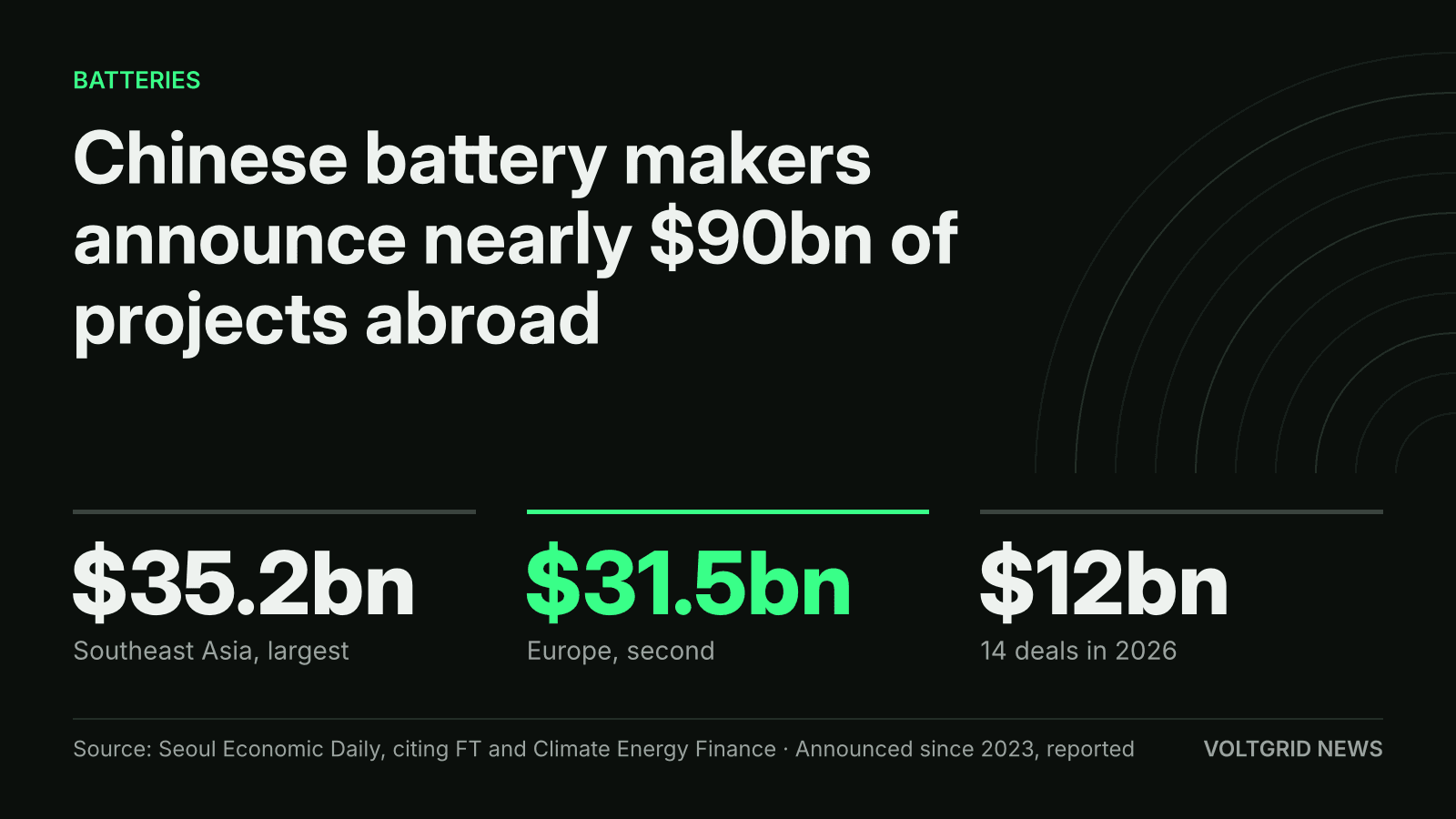
Chinese battery makers have announced nearly $90bn of overseas investment since 2023, the FT reported on Oct. 21, 2026, as relayed by Seoul Economic Daily on Oct. 23. The figures are announced, not spent.
Illustration (AI-generated)
The Financial Times reported on Oct. 21, 2026, that Chinese battery makers have announced nearly $90 billion of overseas investment since 2023, citing data from Climate Energy Finance, an Australian research group.
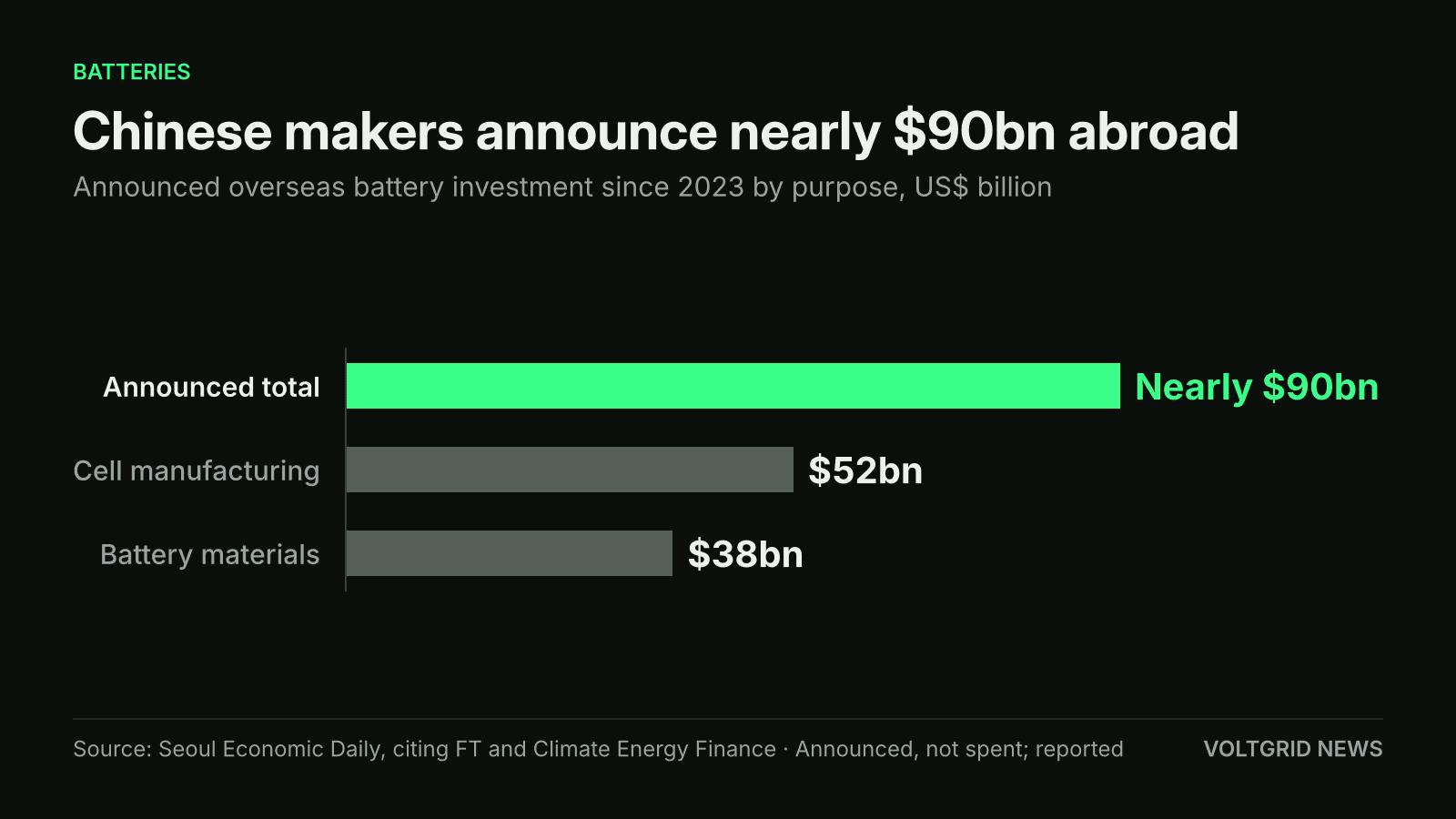
Cell plants account for $52bn and materials for $38bn of the nearly $90bn announced since 2023, according to the FT as relayed by Seoul Economic Daily.
Illustration (AI-generated)
Of that total, $52 billion is for battery cell manufacturing and $38 billion for battery materials, according to Seoul Economic Daily, which summarised the FT report on Oct. 23, 2026. Southeast Asia has drawn the largest share at $35.2 billion, followed by Europe at $31.5 billion. Chinese firms struck 14 overseas deals worth a combined $12 billion in 2026 up to the report.
For buyers of cells and storage systems, the point is where supply will come from. Europe's $31.5 billion is announced money for plants and materials sites on the continent, so more of its cell supply may come from Chinese-owned local factories rather than imports. Imports are still large: China shipped $31.2 billion of lithium-ion batteries to the EU in January-September 2026, up 46%, as Voltgrid reported. That is a nine-month customs value, not comparable with a cumulative investment total, and the reports give no GWh figure for the planned plants.
Who is building where
CATL, China's largest battery maker, has plants in Germany, Hungary and Spain and is scouting more European sites, per the FT as relayed by Seoul Economic Daily. Chief technology officer Zhu Lingbo told the FT that CATL is in talks with governments across Europe. CATL's international chief Akin Li told electrive on Oct. 22, 2026, that it runs three European plants, as Voltgrid reported, without a capacity split by site.
Gotion's board approved a plan on Sept. 28, 2026, to build three joint ventures with Volkswagen's PowerCo worth about €3.22 billion, CnEVPost reported from Gotion's exchange filing. They cover cell plants in Valencia, Spain (29.1 GWh a year) and Šurany, Slovakia (8.4 GWh a year), plus a lithium iron phosphate cathode plant in Kenitra, Morocco (100,000 metric tons a year). Gotion's own share is about €1.598 billion; the agreement was not yet signed and needs shareholder and government approvals.
Why the push is also domestic
The FT's reading is that the makers see global policy moving toward protection and local production, which pushes them to build offshore. A European plant costs Chinese builders about three times what one at home does and takes about three times longer, the FT said, yet Rystad analyst Du Fu said companies still have to go abroad to survive.
Price competition at home is the second factor. CATL's third-quarter net profit rose 14.5% to 21.25 billion yuan, as Voltgrid reported, against market consensus of 41.2% growth, per Seoul Economic Daily. China's VAT export rebate on batteries was cut from 9% to 6% on April 1, 2026, and is to be removed on Jan. 1, 2027, Caixin Global reported. According to the FT, CATL and other makers want their Chinese suppliers to set up abroad too, so the supply chain relocates rather than being replaced. Wood Mackenzie expects Chinese companies to keep more than 80% of global output in four key battery raw materials through 2034.
What is not confirmed yet
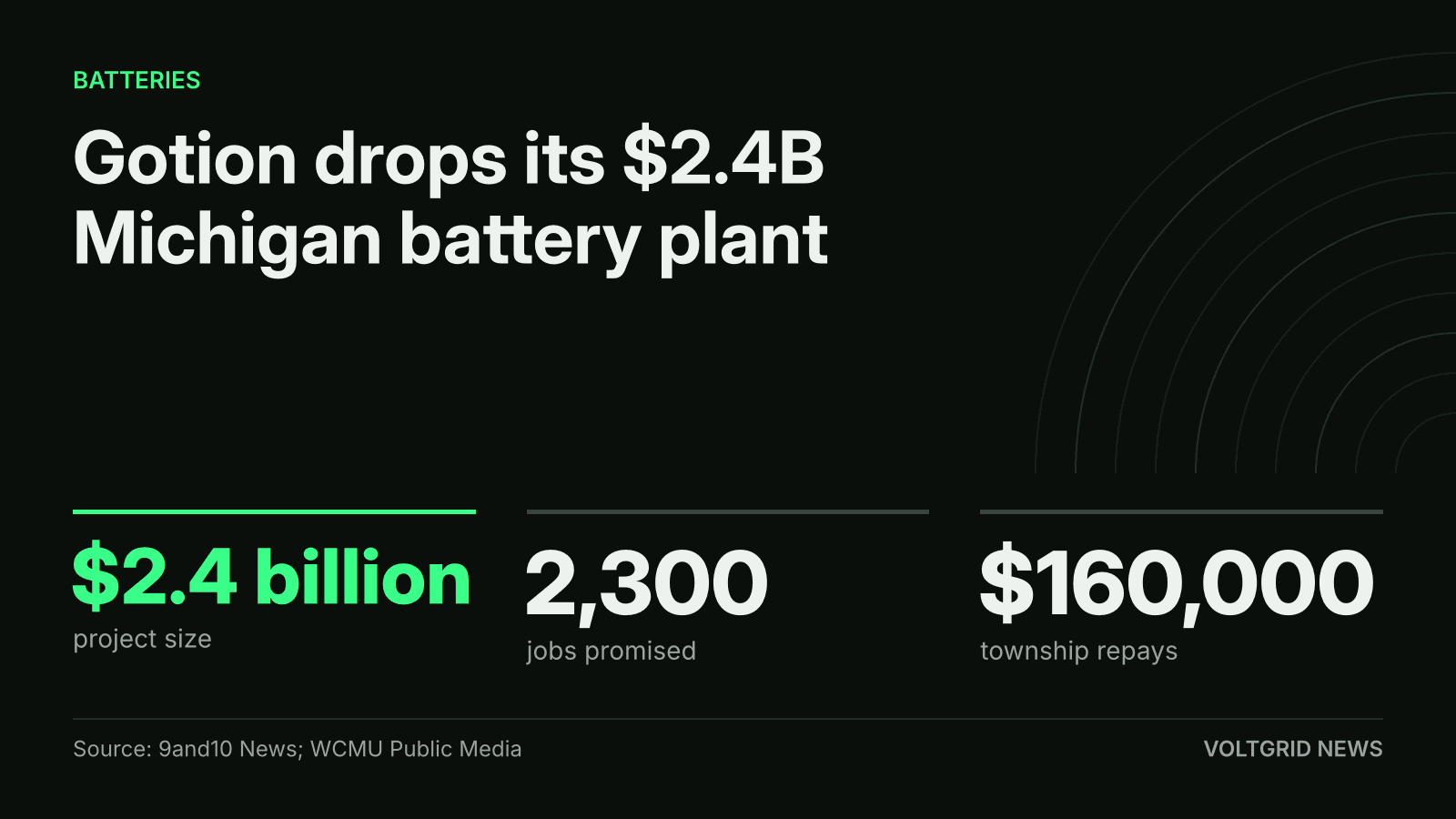
The $90 billion is announced investment, not money spent or capacity in operation. The FT article is paywalled and the Climate Energy Finance data was not available to check, so the splits rest on the FT's figures as relayed by Seoul Economic Daily, whose English edition is machine-translated. Announced projects can fall away: Gotion settled its Michigan suit and ended the $2.4 billion Big Rapids plant, as Voltgrid reported, with that deal still being finalized as of Oct. 23, 2026. No correction or response to the figures had appeared as of Oct. 25, 2026.