Cuprate Superconductivity Tied to Electron Spin, Bristol Team Says
Cuprate superconductivity in electron-doped copper oxides is linked to spin fluctuations, a Nature Physics study from Bristol reports, but the higher-Tc hole-doped side is still unexplained.
2 min readAI-assisted

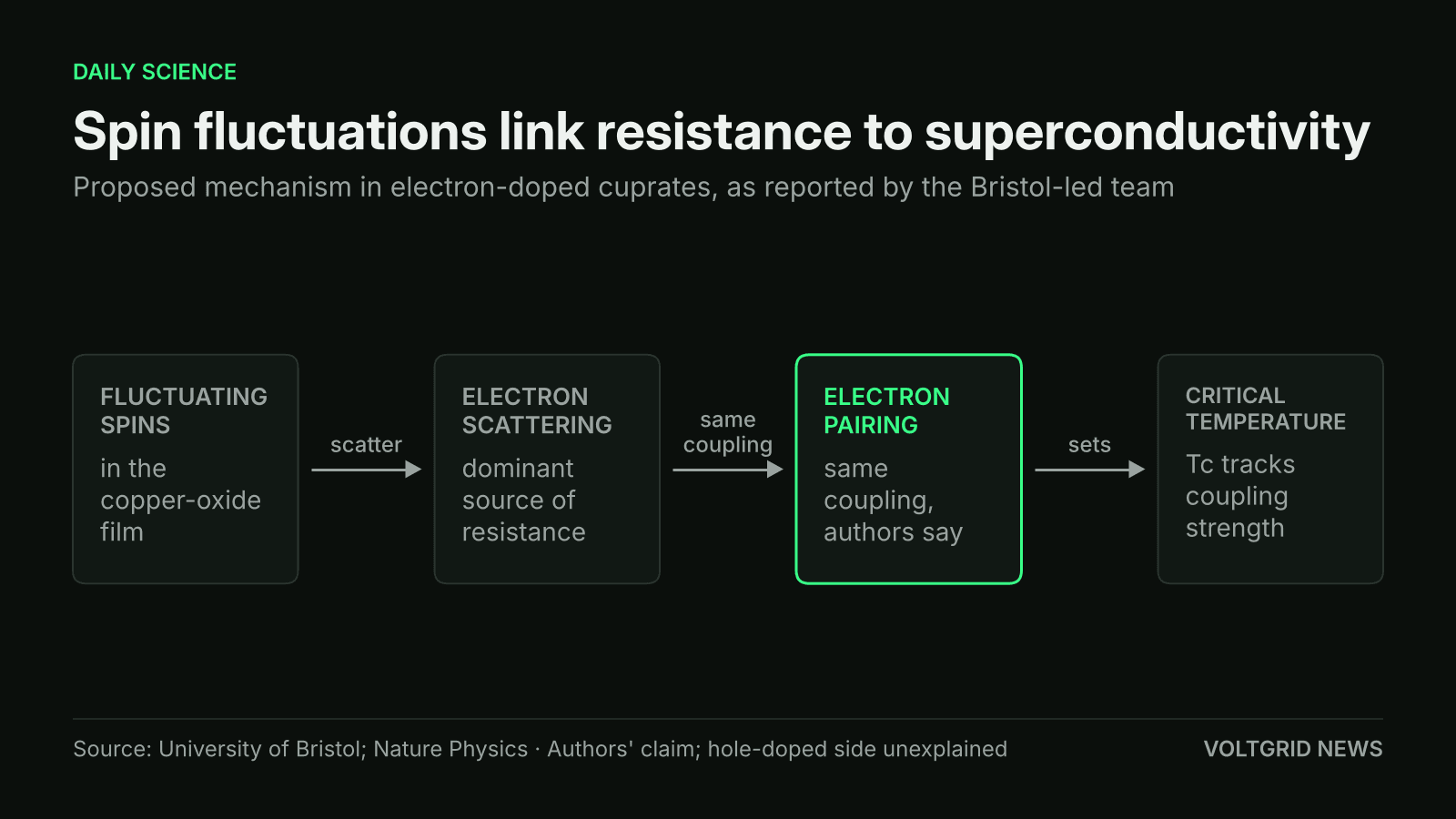
Key facts from the University of Bristol's Nature Physics study; the authors say the hole-doped side, where Tc is highest, is still unexplained.
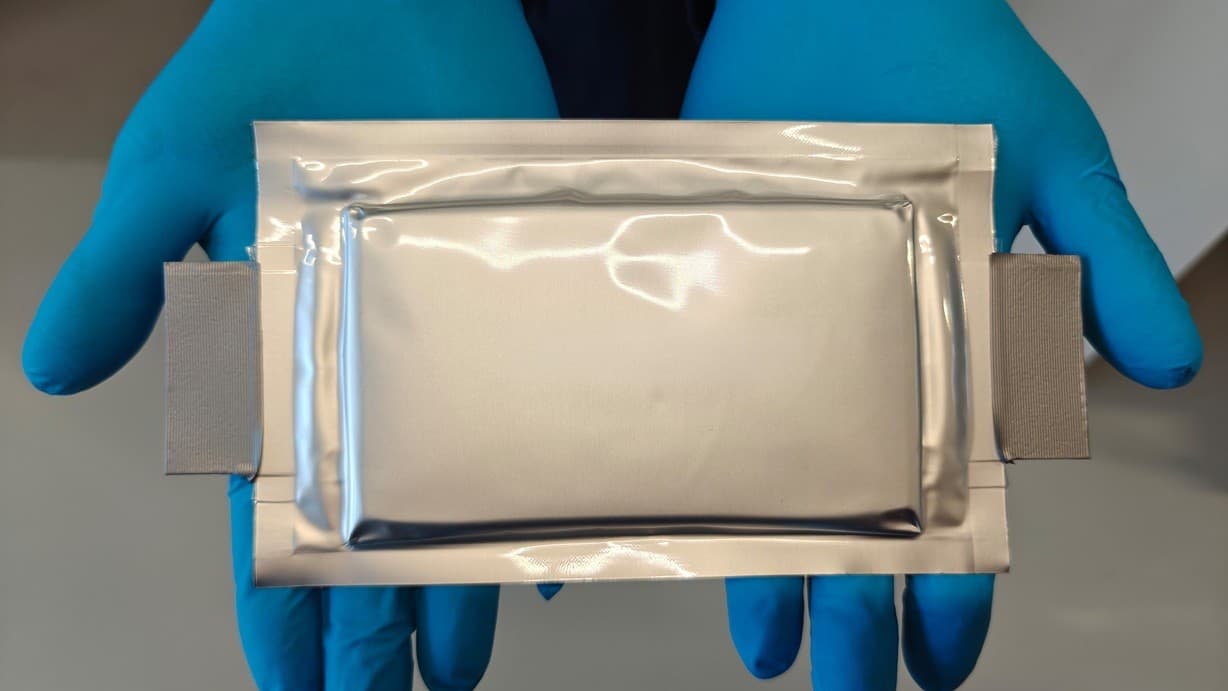
Illustration (AI-generated)
Physicists at the University of Bristol report evidence that cuprate superconductivity in one family of copper-oxide materials is driven by fluctuating electron spins, not lattice vibrations. The study appeared in Nature Physics this week, and the team calls the result a "smoking gun" for part of a decades-old puzzle.
A superconductor carries current with no resistance. In conventional, low-temperature superconductors, electrons pair up through vibrations of the ions in the crystal. Copper-oxide materials, known as cuprates, superconduct at higher temperatures, and researchers have long suspected something faster is at work: the spin of the electrons themselves, a tiny magnetic moment that can fluctuate in space and time.
How the Bristol Team Tested Spin Fluctuations
The group grew a thin film of lanthanum cerium copper oxide, depositing it one atomic layer at a time so that its critical temperature (Tc, the point below which it superconducts) varied smoothly along the film, from its maximum down to zero. The researchers then patterned electrical contacts along the film with lithography. That let them measure resistance at finely spaced Tc values while keeping the level of disorder the same everywhere, according to the University of Bristol release.