ERCOT CEO Plans to Seek Data Center Cuts at Emergency Level 1
ERCOT chief Pablo Vegas told the BloombergNEF Summit he will ask Texas lawmakers to let the grid operator order data center cuts at level 1 of a three-level emergency or earlier, not at level 2.
Energy & Cooling DeskEdited by Ege Erten
3 min readAI-assisted
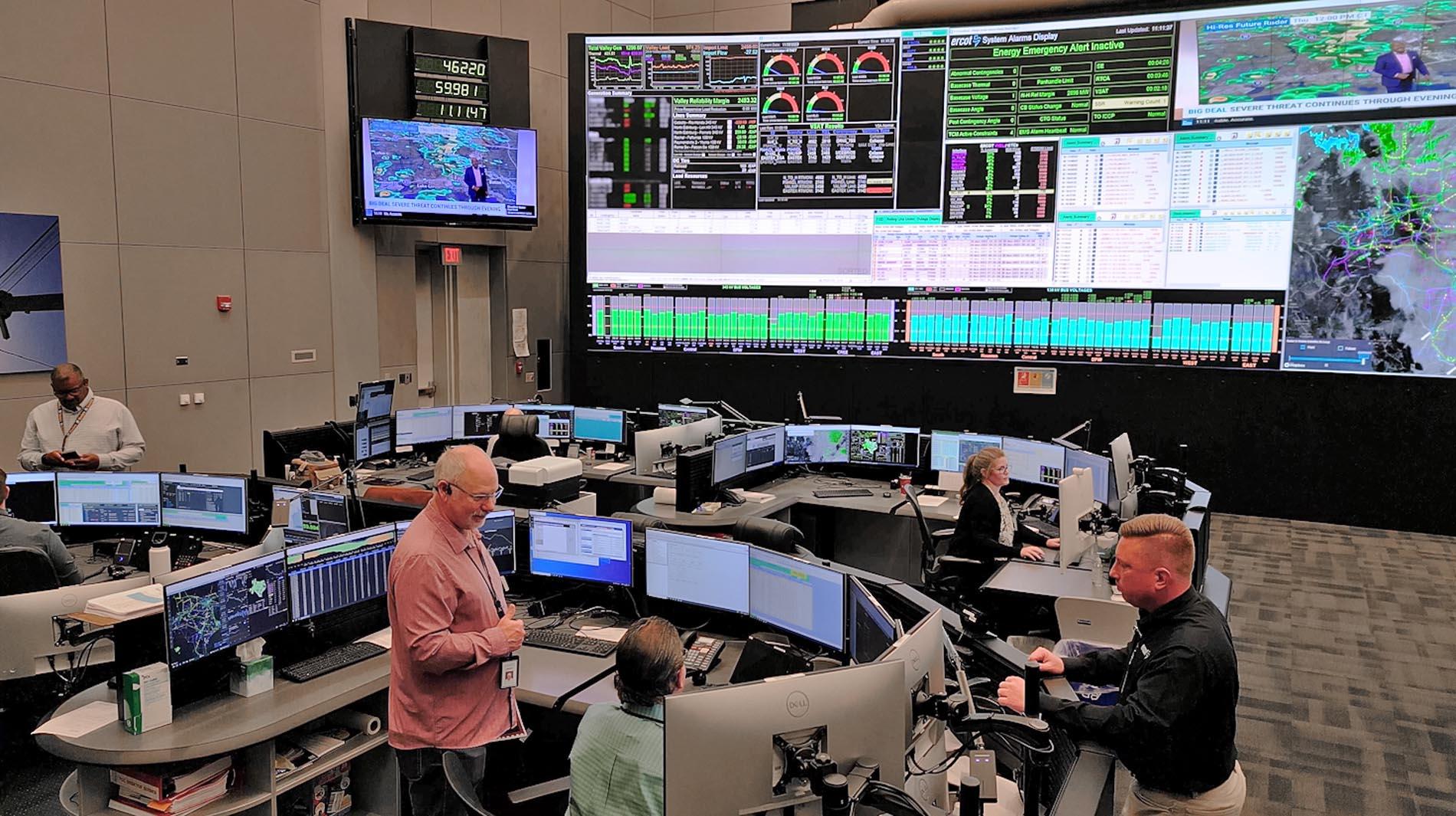
ERCOT's control room, where operators watch the Texas grid and its emergency status.
Image: ERCOT
Source · Press image from the ERCOT newsroom media kit, used for news reporting.
Pablo Vegas, chief executive of the Electric Reliability Council of Texas (ERCOT), plans to ask Texas lawmakers to let ERCOT require data centers to cut power use at emergency level 1 or earlier, Bloomberg reported on Nov. 11.
Data centers can be asked to cut demand at level 2 today; ERCOT's CEO wants it required at level 1 or earlier (reported).
Illustration (AI-generated)
Under current rules, the Texas grid must reach level 2 of a three-level power emergency before data centers can be asked to cut demand, according to Bloomberg as carried by Quartz. Vegas wants curtailment required at level 1 or even earlier. It is a request to the Legislature, not a rule: no bill text or ERCOT filing has been reported.
"The practical realities of curtailing large amounts of customers like data centers and managing that from an operational point of view really requires us to think about pulling that up a little bit earlier into the process," Vegas said on Wednesday at the BloombergNEF Summit in Houston, per Bloomberg. He added that ERCOT does not want to affect residential customers and everyday businesses in a scarcity event.
Why the trigger point matters for data centers
Texas Senate Bill 6 (SB 6), enacted in 2025, obliges large electricity users, data centers especially, to cut consumption when given a day's warning, according to Bloomberg. ERCOT has so far not directed any data center to scale back under the law. Moving the trigger from level 2 to level 1 would put curtailment earlier in an emergency sequence, which changes how much interruptible load a data-center operator has to plan for when it signs a grid connection.
Vegas said hyperscalers are on board with integrating into the system and that ERCOT could work with lawmakers if they decide to modify the requirements. He said data centers cut their consumption on their own initiative when severe weather hit last winter, and that for the coming winter they can draw on a supply of power measured in the low single-digit gigawatts, per Bloomberg.
Part of a wider Texas data center push
ERCOT and the Public Utility Commission of Texas (PUCT) had already sought more authority from lawmakers. In a July letter to Gov. Greg Abbott, PUCT Chairman Thomas Gleeson said regulators should be able to ask data centers directly to cut back in an emergency, instead of routing the request through the data center's utility, Houston Public Media reported on July 28. He also said the agencies were developing a program to encourage data centers to reduce consumption ahead of an anticipated energy emergency, and he asked that large consumers be required to register with the state.
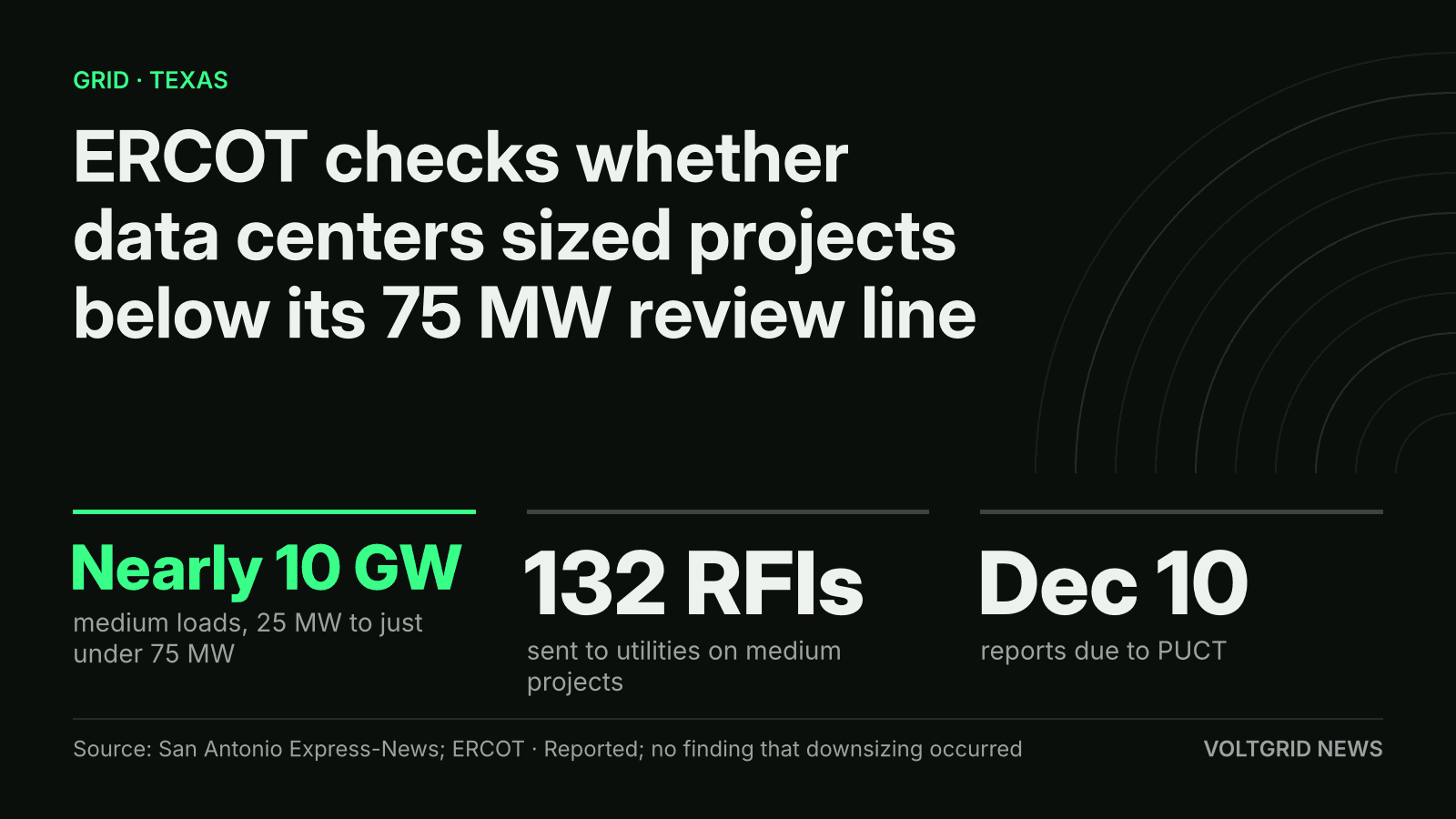
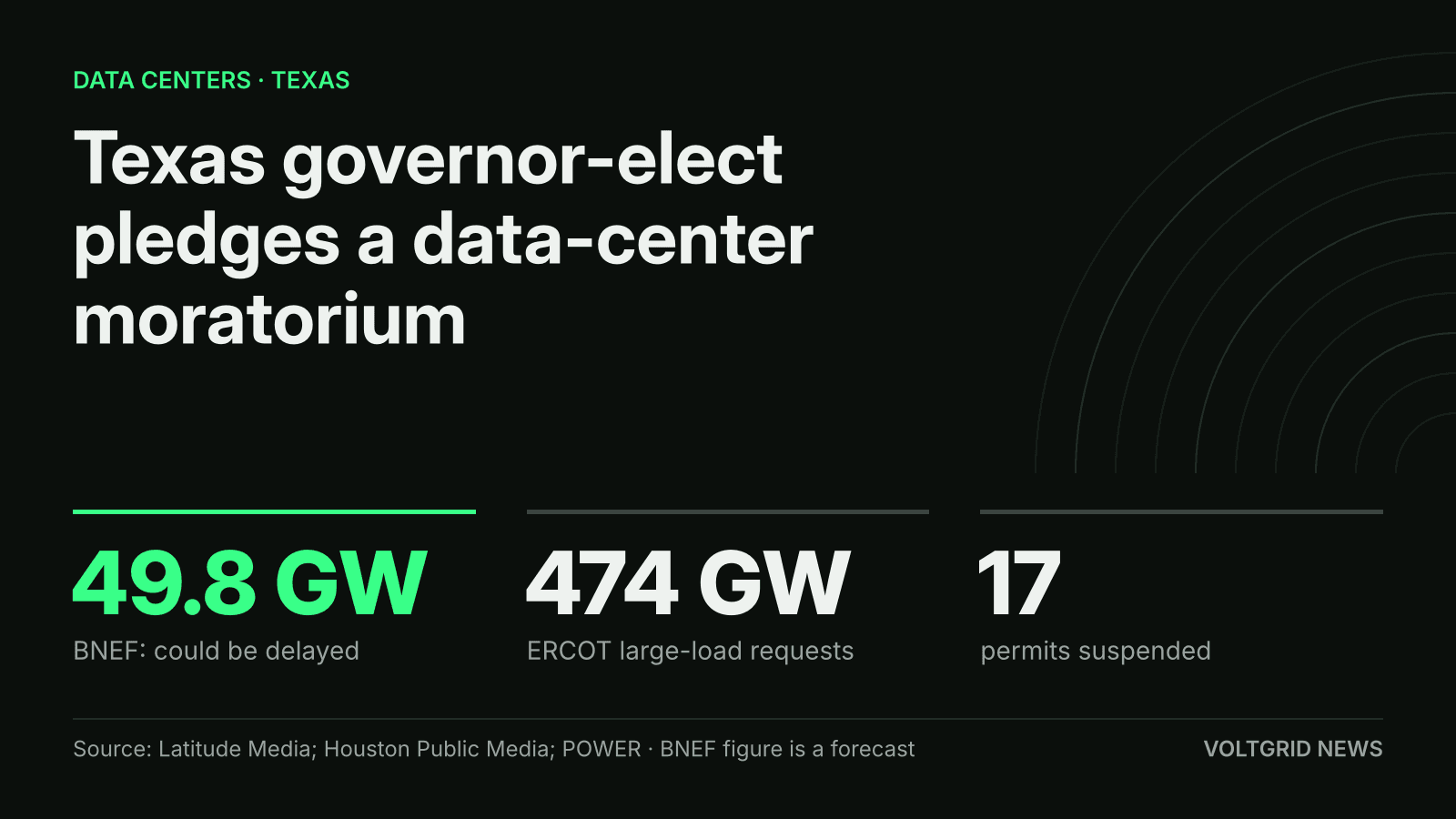
The proposal also follows Abbott's August moratorium on new data center grid connections and his September order halting environmental permits for data center projects until ERCOT and the Texas Water Development Board finish their audits, according to Quartz. Voltgrid News reported on Nov. 9 that ERCOT is probing nearly 10 GW of sub-75 MW data center projects, with an audit report due Dec. 10. Gov.-elect Gina Hinojosa has also pledged a data center moratorium, and the 2027 Legislature will take up data center rules with the pause still in place.
What is not confirmed yet
Bloomberg's original story could not be read in full, so the figures and quotes above come from Quartz's account of it. No bill has been filed that would change the level 2 trigger, and Vegas did not say which emergency level the new threshold would be tied to beyond "level 1 or even earlier." ERCOT has not published a protocol revision, and lawmakers have not responded in any report we found. Whether data centers with on-site backup generation would be treated differently from those without is also not stated.