Iluvatar CoreX Tiangai 300 Claims 1.05x NVIDIA H200 Throughput
Iluvatar CoreX says third-party tests put its Tiangai 300 GPU at 1.05 times NVIDIA's H200 per card, but it has not published the method, models or workload, so the claim is unverified.
3 min readAI-assisted
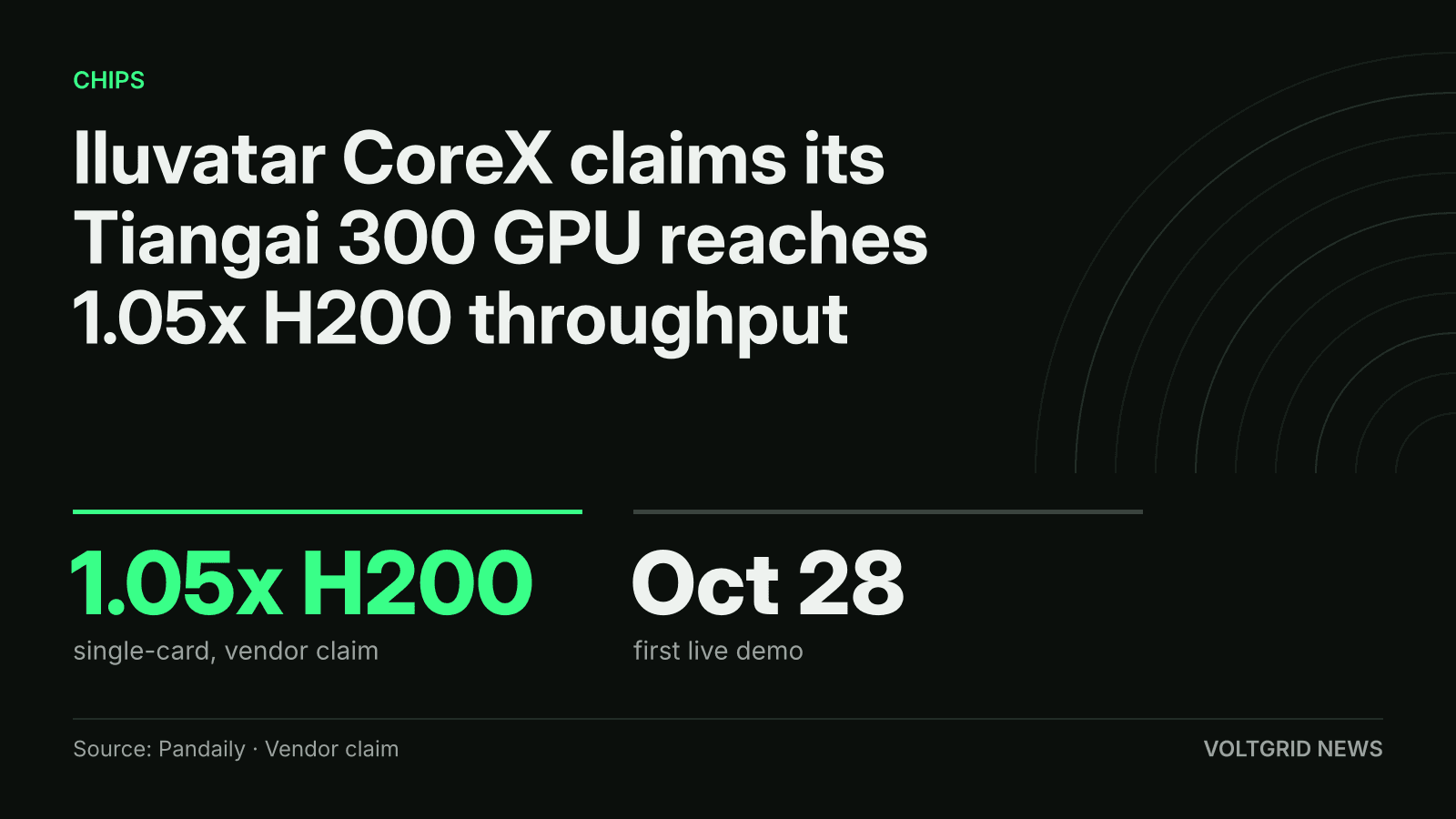
Iluvatar CoreX's 1.05x H200 single-card figure is a vendor claim; the company has not published the test method.
Illustration (AI-generated)
Iluvatar CoreX said on Oct. 28 that its Tiangai 300 GPU reaches 1.05 times NVIDIA H200 single-card throughput, a claim it has not backed with a published test method.
The Shanghai company made the comparison at a media open day, where it showed the chip running on real hardware for the first time, according to Pandaily. Iluvatar CoreX describes the Tiangai 300 as the first domestic general-purpose GPU whose measured performance reaches H200 level, and says third-party testing, "after conversion," gave the 1.05x figure. The Hong Kong-listed company (09903.HK) separately launched the chip as its new flagship in a notice published by AASTOCKS on Oct. 29, an AI-translated copy for which AASTOCKS says the original is authoritative.
What Iluvatar CoreX Has Not Shown
Everything in the comparison is the vendor's own statement. Pandaily reported that Iluvatar CoreX has not published the test method, the models that were run or the workload conditions, so nobody outside the company can check the number. The tester is not named in the report, and the "conversion" step is not explained.
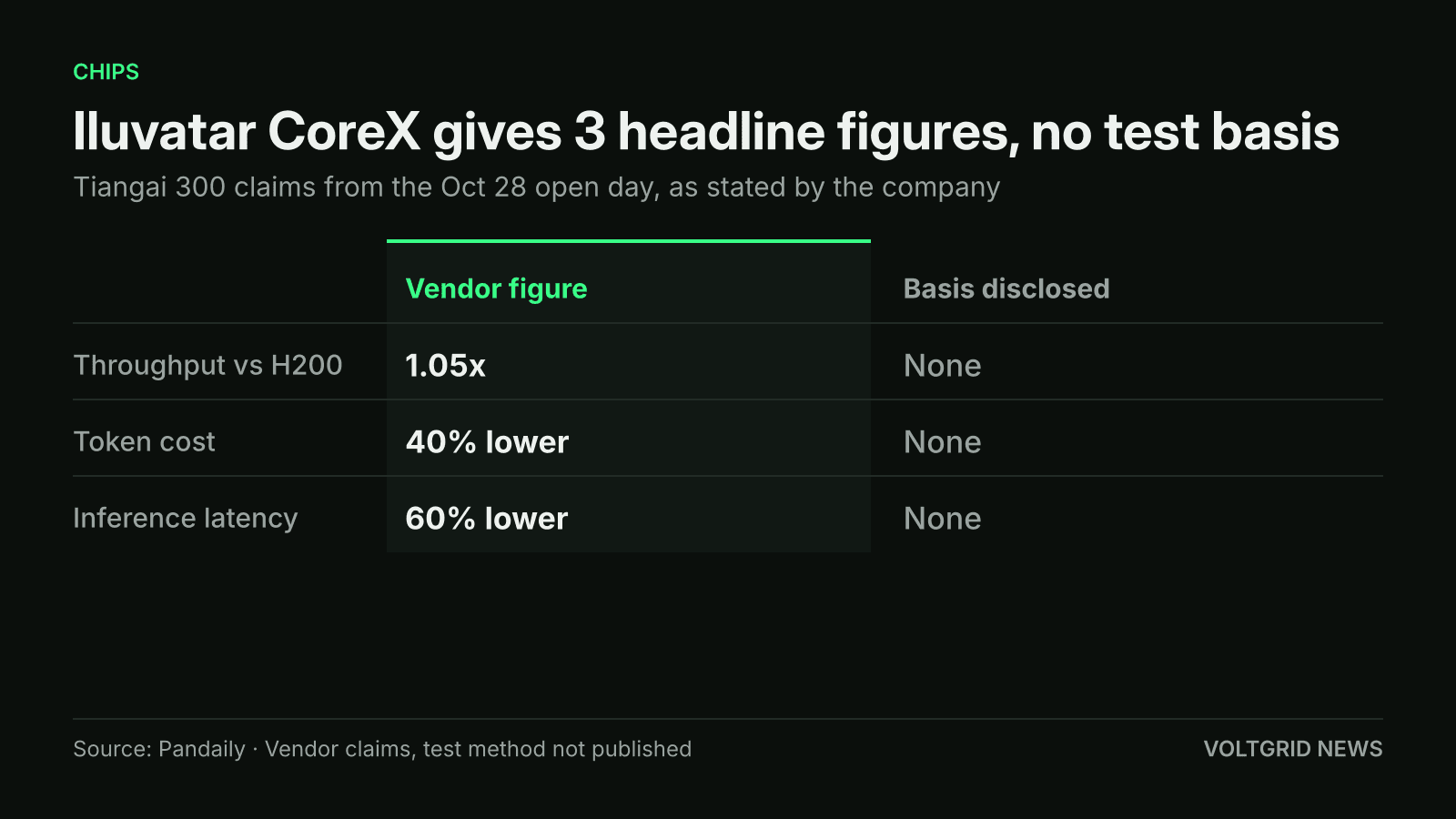
Iluvatar CoreX's three headline figures are vendor claims, and none comes with a published test basis.
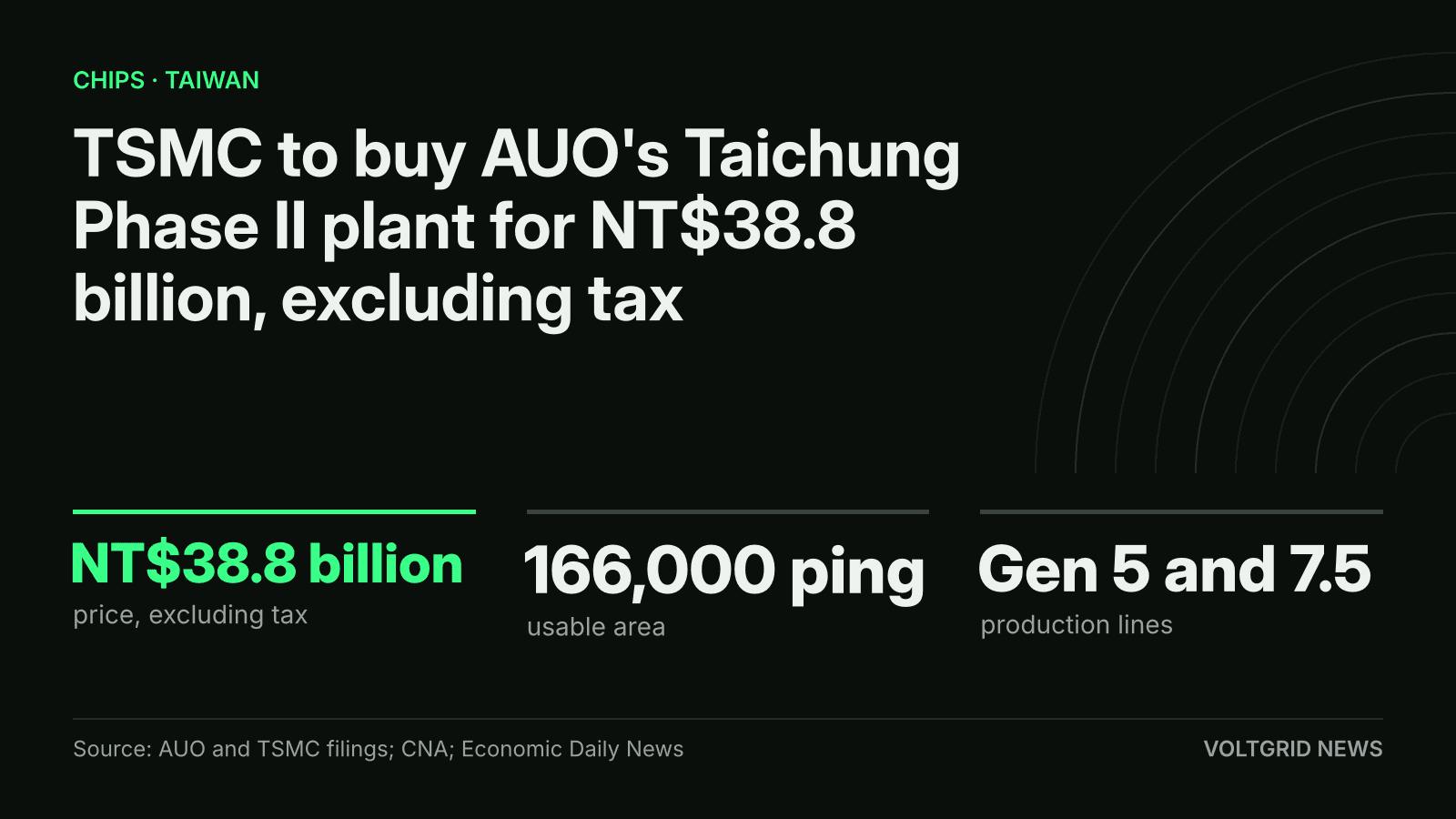
Illustration (AI-generated)
The wording also shifts between venues. The company's launch notice, as relayed by AASTOCKS, says the Tiangai 300 targets performance "comparable to and exceeding" mainstream international solutions based on the Hopper architecture, the generation of NVIDIA's H200. The notice does not name NVIDIA. A target and a measured result are not the same claim, and the notice carries no throughput figures.
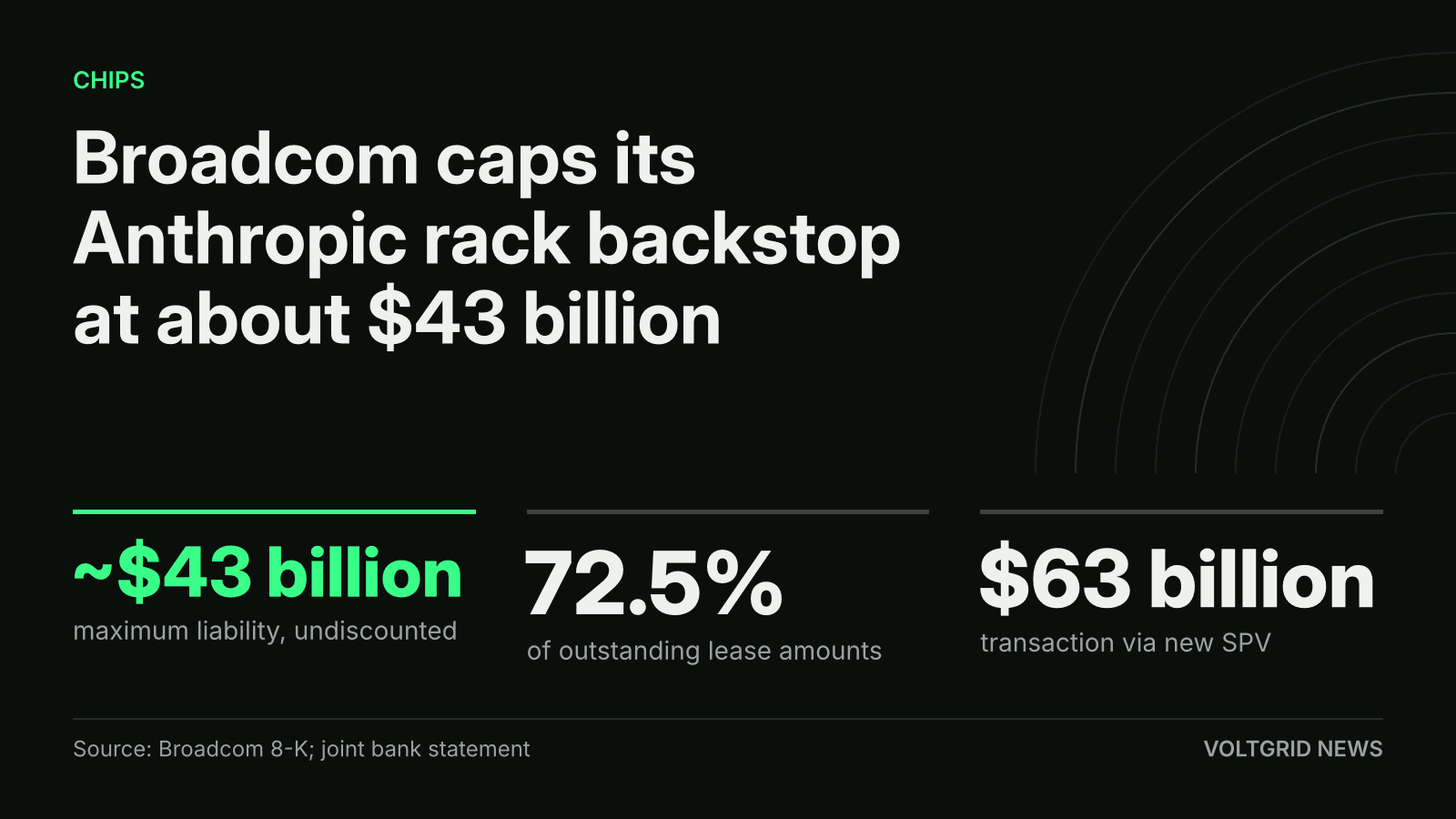
IXL144 Rack and the 40% Token Claim
Iluvatar CoreX designs the chip for deployment in IXL144, a supernode it showed earlier at the China International Industry Fair. One IXL144 rack combines 144 GPUs with 18 CPUs and about 10.1 TB of GPU memory, and the company calls it the highest-density single-rack GPU supernode in the industry. By its own estimate, the setup cuts the cost per million effective tokens by 40% against mainstream international solutions.
That cost figure inherits the same gap: no baseline system, model or utilization assumption has been disclosed. Pandaily's account also includes no power draw per card or per rack. For data-center planners, watts per accelerator and per rack decide how many of these cabinets a hall can host, so the missing figure matters as much as the throughput ratio.
Other Claims From the Open Day
Iluvatar CoreX said it has run what it calls the first domestic AFD disaggregation scheme across GPUs and XPUs, cutting inference latency by 60%. AFD generally means splitting stages of model computation, such as attention and feed-forward layers, across different processor types. The company also said its Tongyang TY1200 edge system, which it lists at 300 Tops@Int8, outperforms NVIDIA's Jetson Thor T5000 in its own tests, again without details. NVIDIA lists the T5000 module at up to 517 FP8 TFLOPS dense, so the claim cannot be read off peak figures.
What Comes Next for Chinese GPUs
The announcement follows other news on China's home-grown accelerators in the past ten days. Voltgrid News reported earlier that DeepSeek added Huawei Ascend support in six code repositories, and that Cambricon's third-quarter revenue rose 104%. Demand for NVIDIA parts in China has not gone away: Chinese buyers reportedly ordered more than 3 million NVIDIA RTX PRO 5500 cards, per earlier Voltgrid reporting.
What a 1.05x H200 Claim Needs to Show
A throughput ratio is a measured result, not a spec sheet figure. It depends on the model, the number format, the batch size and the latency target. Iluvatar CoreX has published none of those for its 1.05x claim, so the ratio cannot be rebuilt from specifications.
NVIDIA's own figures give the H200 side a fixed anchor: 141 GB of HBM3e at 4.8 TB/s per GPU, and a maximum TDP of up to 700 W for the SXM version. The reports give no memory, bandwidth or power figure for the Tiangai 300, so it is not yet possible to tell whether a 1.05x result comes from more compute, more memory bandwidth or a favorable test.
What Is Not Confirmed Yet
The reports read cite no independent benchmark with a disclosed workload for the Tiangai 300. Pandaily names independent benchmarks with disclosed workloads as the next thing to watch. Until the test method, the tester, the power draw and the IXL144 baseline are public, the 1.05x ratio and the 40% token-cost cut remain Iluvatar CoreX claims, not measured results.