INA Solar, Caelux Sign 3 GW Tandem Deal, 29% by 2028
INA Solar said on Oct. 23 it signed a five-year Caelux deal to commercialize 3 GW of hybrid-tandem modules in India, with a 2028 target of up to 29% efficiency.
1 min readAI-assisted
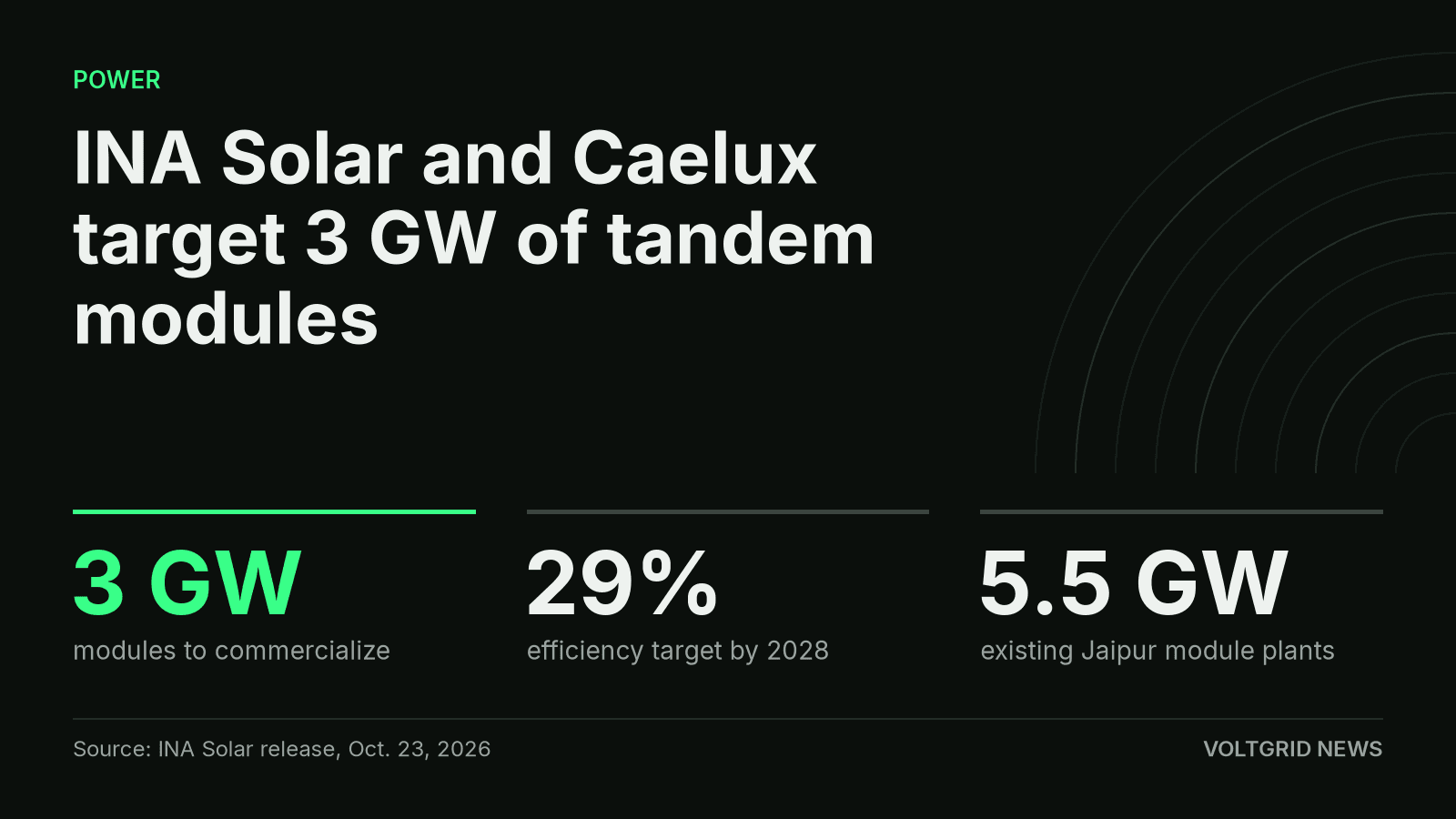
The 29 percent figure is a 2028 target. The 3 GW is not added to the 5.5 GW already built.
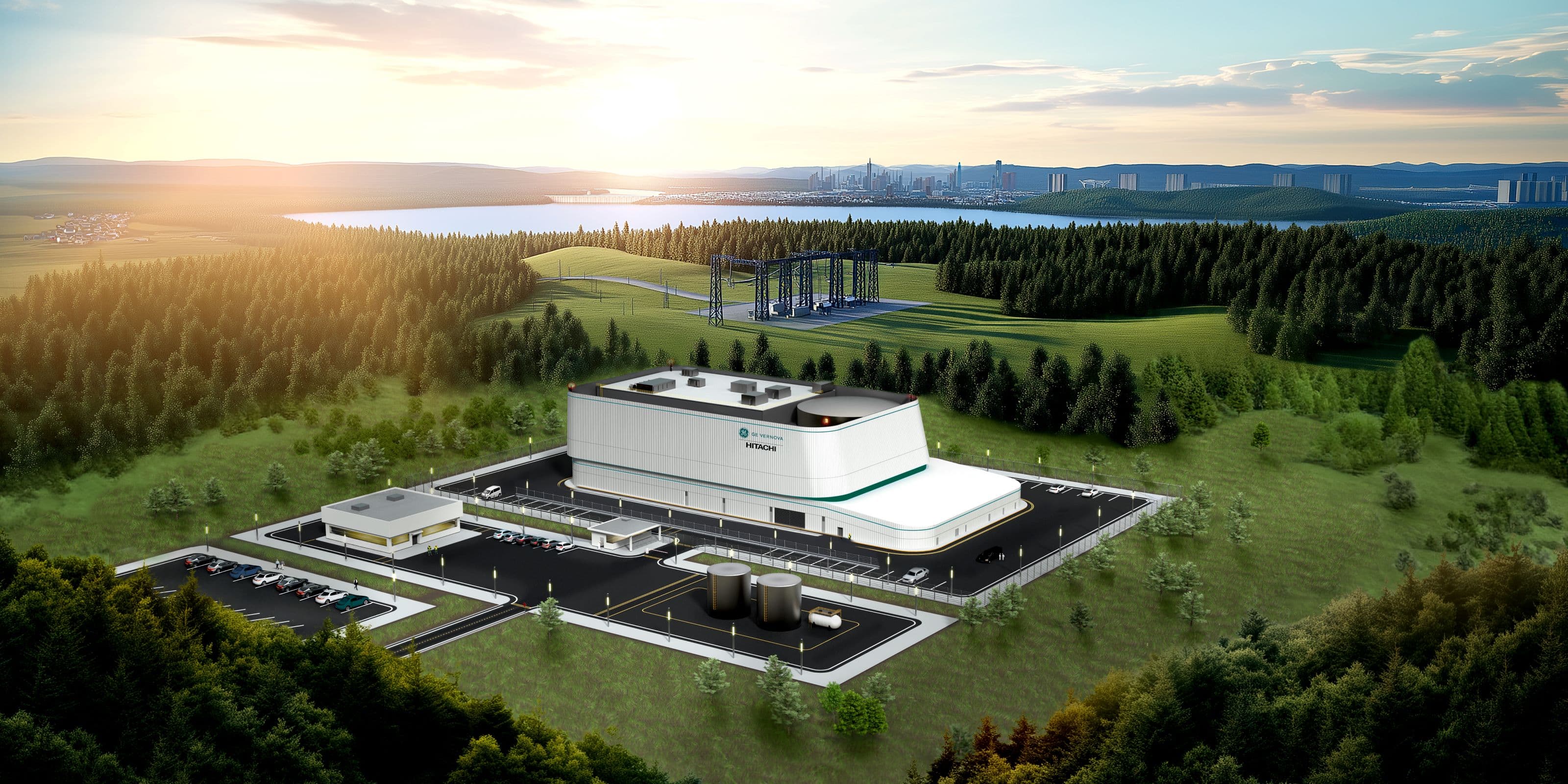
Illustration (AI-generated)
Insolation Energy said on Oct. 23 that its INA Solar business, through subsidiary Insolation Green Energy, signed a five-year partnership with Caelux to commercialize 3 GW of modules in India that pair Caelux's perovskite power-generating glass with INA's n-type TOPCon cells.
The companies' target is commercial production at module efficiencies of up to 29 percent by 2028. The Oct. 23 release, carried by Business Standard, says they will work on technology validation, manufacturing readiness and India's Approved List of Models and Manufacturers. pv magazine reported the same terms on Oct. 26. The 29 percent figure is a target, not a measured module from a production line.
Caelux chief executive Scott Graybeal said the agreement takes the company's contracted volume with module makers worldwide above 25 GW. That is a company total across partners, not the 3 GW in this deal, and it is Caelux's statement.
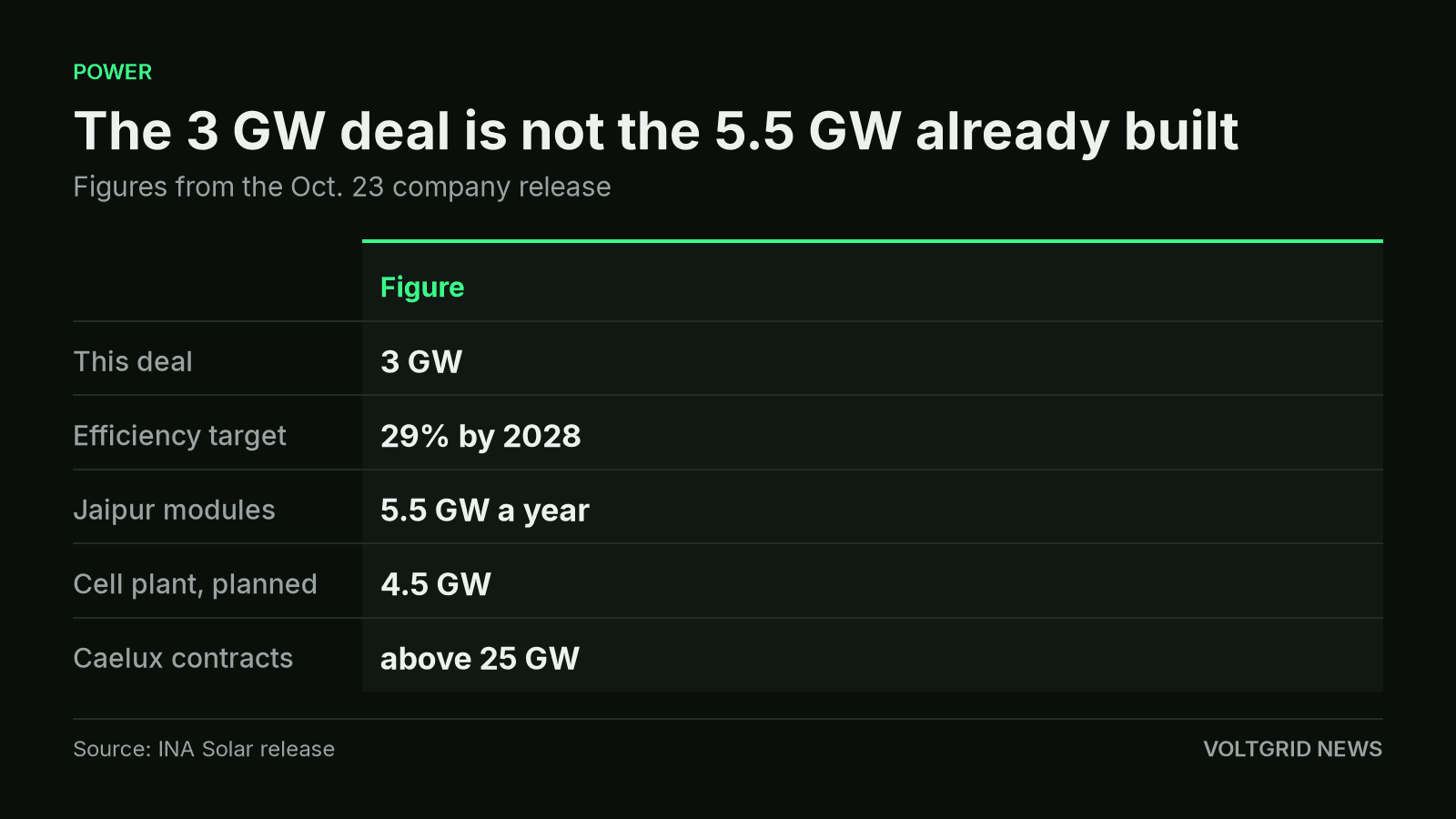
Existing Jaipur module plants are 5.5 GW. The tandem volume is a separate 3 GW commercialization target.
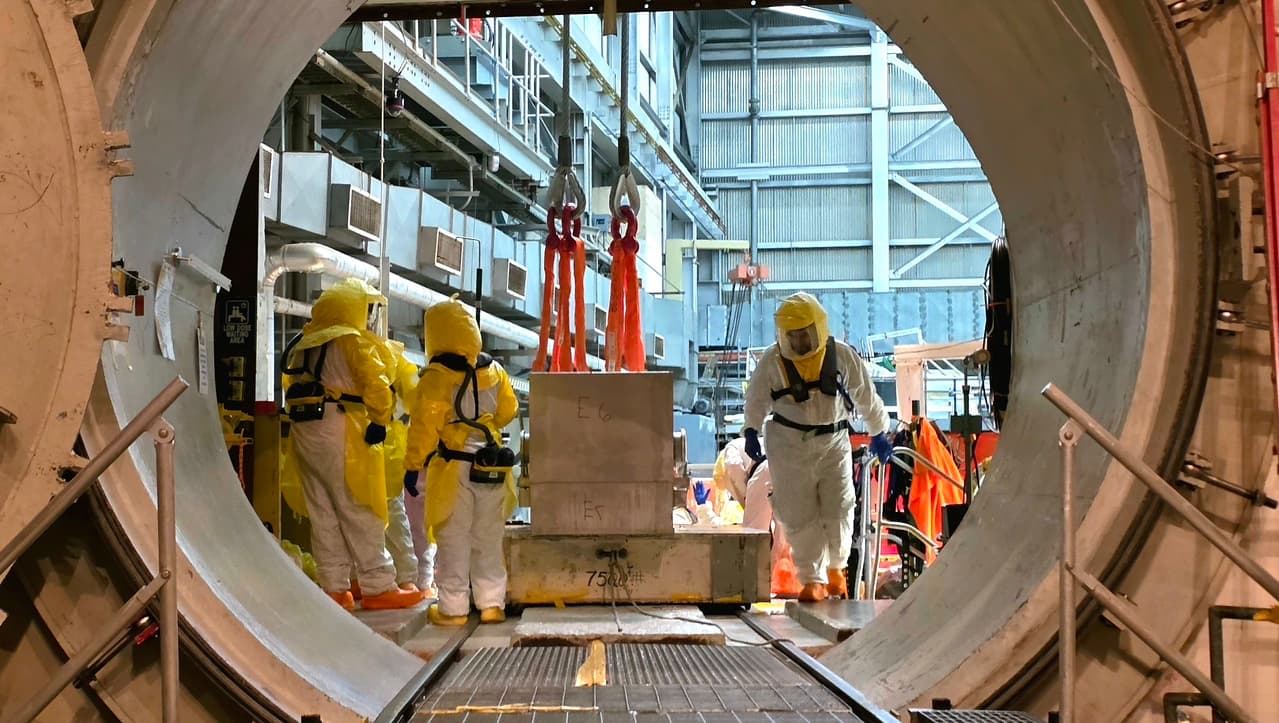
Illustration (AI-generated)
Factories already running, and one that is not
INA Solar says it runs three module plants in Jaipur with 5.5 GW of combined annual capacity. It is still developing a 4.5 GW TOPCon cell factory and an aluminium-frame plant rated at 18,000 metric tons a year in Narmadapuram, Madhya Pradesh. Current modules span 500 to 635 watts-peak. The company also has an independent-power-producer fleet of about 400 MW. None of those figures is the new tandem line. The 3 GW is the volume the partners say they intend to commercialize.
A state approval this week in Tamil Nadu, 600 MW of solar with 1,800 MWh of storage, is a different fact: a project permit, not a module factory contract.
What is not confirmed yet
The release does not give a production start inside the five-year term, a delivery schedule or an ALMM listing. Durability, bankability and the gap between a 29 percent target and a shipping module are still open. Chairman Manish Gupta and managing director Vikas Jain described the tie-up as a manufacturing step. They did not announce a plant groundbreaking for the tandem product.