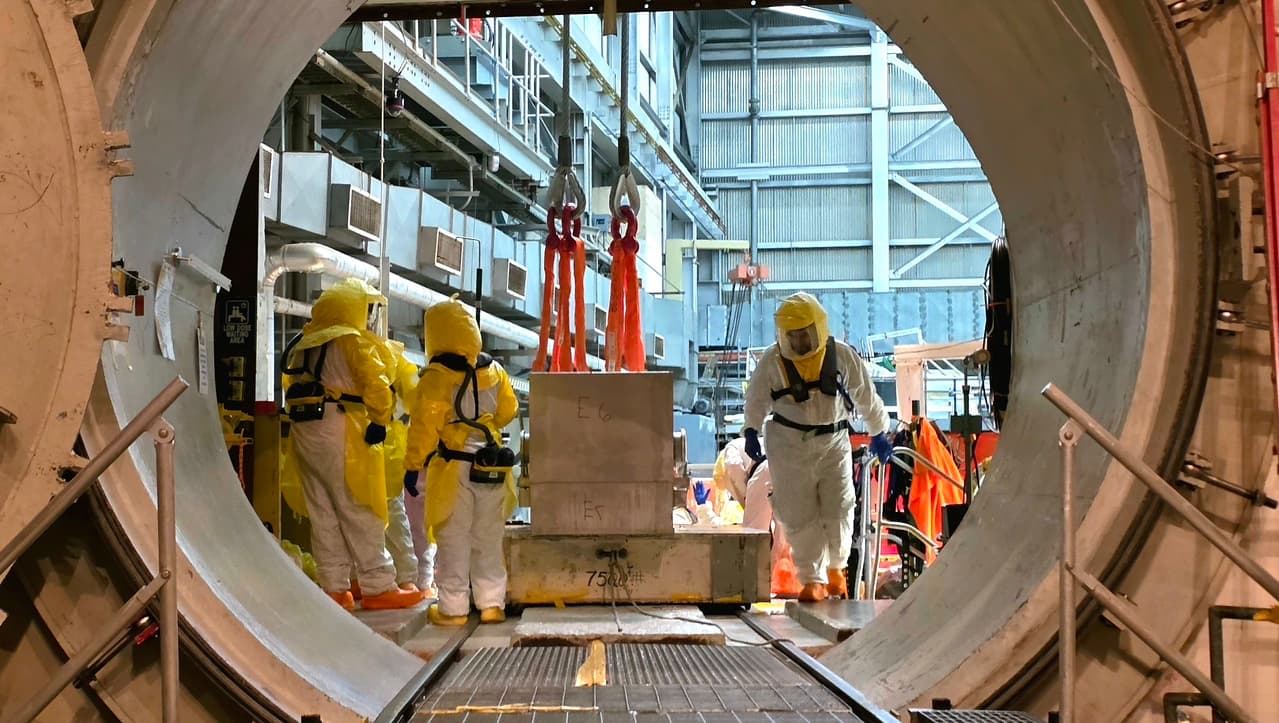
Oracle Project Jupiter Air Permit Survives With 1,600 MW Cap
A New Mexico hearing officer refused to dismiss the air-permit application for Oracle's Project Jupiter fuel-cell plant. The bid seeks a 1,600 MW operating cap on a 2,462 MW nameplate.
5 min readAI-assisted
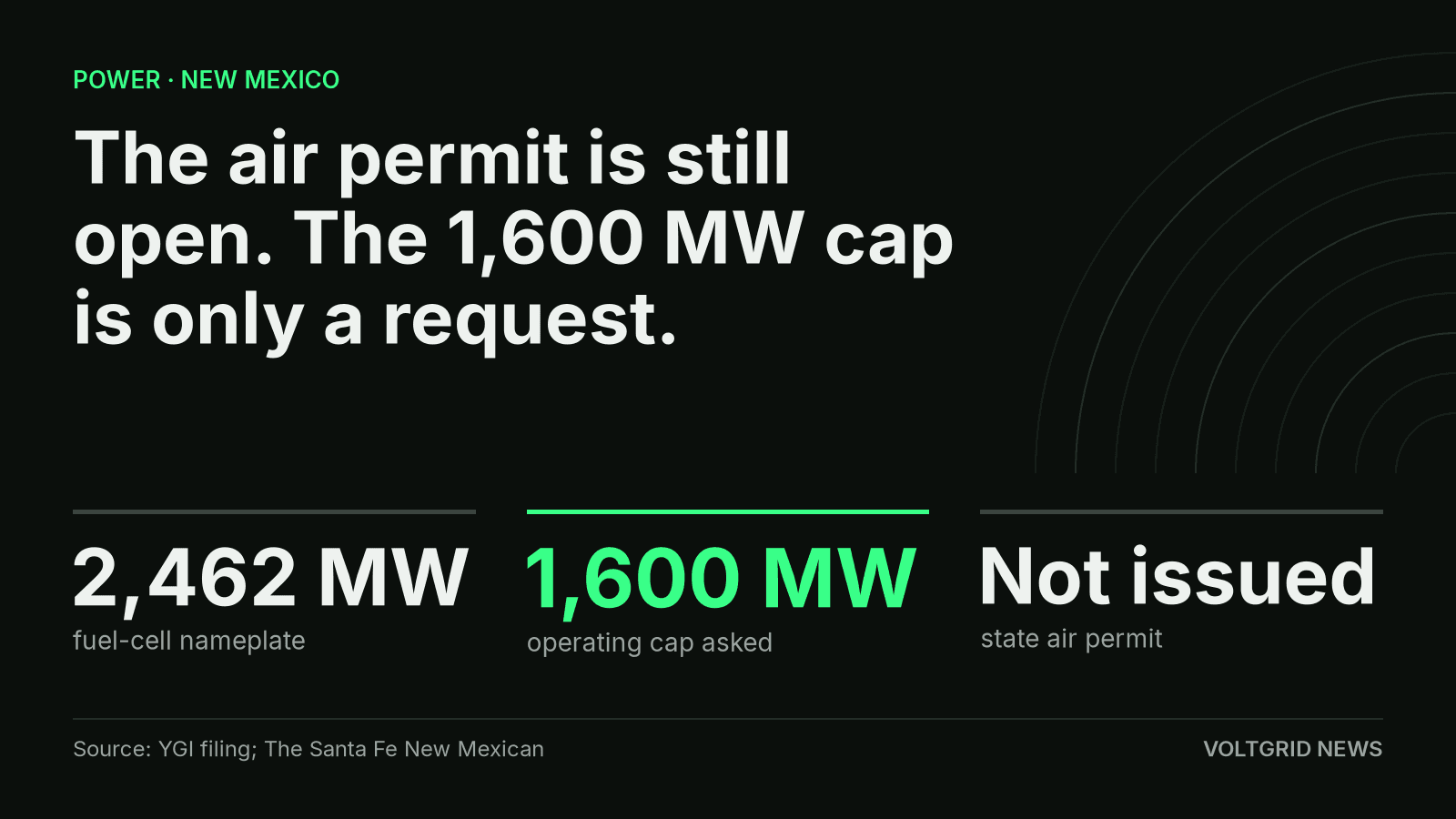
The plant's 2,462 MW nameplate and the 1,600 MW operating cap Yucca has asked for. The New Mexico air permit is not issued.
Voltgrid News
Illustration (AI-generated)
Hearing officer James O. Browning on Monday, October 26, refused to dismiss the air-quality permit application for a Bloom Energy fuel-cell plant proposed to power Oracle's Project Jupiter campus near Santa Teresa, New Mexico, The Santa Fe New Mexican reported. Yucca Growth Infrastructure, the applicant, has asked the state to limit operation to 1,600 MW of a 2,462 MW nameplate.
The campus is designed to draw about 2.45 GW, Engineering News-Record reported, and this plant is the power source proposed for it. The New Mexican reported that buildings at the site still have no power, because the air permit is the approval the generating plant still lacks. Monday's ruling keeps the application alive. It does not issue the permit.
The technology
Yucca Growth Infrastructure filed application 10883 on April 27, 2026 for a fuel-cell plant it calls a microgrid, capable of producing 2,462 MW, its response to a dismissal motion says. Bloom Energy would operate it. That filing says the equipment is a set of identical 65 kW Bloom modules, and that the nameplate stays 2,462 MW after the October redesign. Engineering News-Record, describing the application, calls the machines solid-oxide fuel cells and says a draft permit would let them cover all base-load and backup power, with no other on-site equipment authorized to generate.
In an October 14, 2026 letter to the New Mexico Environment Department, the applicant asked for a permit condition so the plant would not run above 1,600 MW. The letter says that figure represents 65% of the 2,462 MW permitted capacity, and that the extra equipment is redundancy so power can still be delivered. It also groups the modules into three-tier clusters, cutting stacks from 2,275 to 1,263, and raises stack height from 30 feet to 45 feet. A nameplate is the hardware's built capacity. An operating cap limits how much of it may run. The pages read call the project a behind-the-meter microgrid. They do not say it can disconnect from the grid and run alone.
The fuel is natural gas. Engineering News-Record reported that the application puts maximum use at about 375 million standard cubic feet a day and about 136.8 billion standard cubic feet a year. Oracle said on October 15 that the cap would lower projected emissions of several regulated air pollutants by about 35%, and would cut greenhouse gases from about 8.8 million tons a year to 5.7 million. The October 14 letter states those greenhouse-gas figures as 8,820,970 tons a year at nameplate and 5,732,544 tons under the cap.
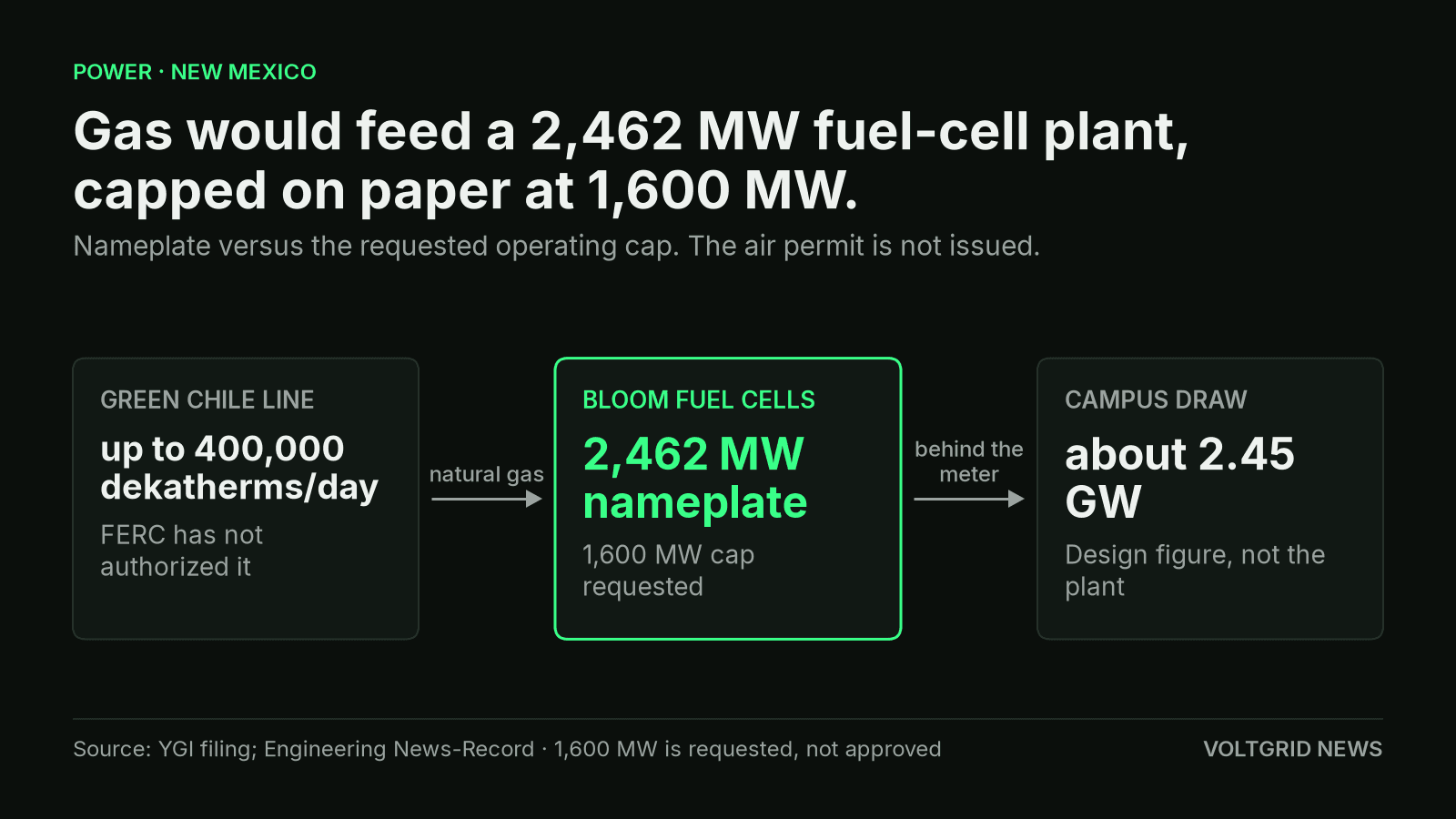
Gas, the fuel-cell nameplate and the campus draw. The 1,600 MW figure is a requested cap, and the pipeline is not yet authorized.
Voltgrid News
Illustration (AI-generated)
The deal and the money
Yucca Growth Infrastructure is the applicant and the developer of the generating plant. Bloom Energy is named as the operator, not the buyer. Oracle and Yucca announced the redesign together on October 15 and said the campus's planned IT capacity does not change. The price, term and contract type of Oracle's fuel-cell arrangement were not in the documents read here. Engineering News-Record reported that Bloom says Oracle remains committed to a contract for 2.4 GW of natural-gas fuel-cell capacity, a figure stated separately from the application's 2,462 MW nameplate.
The campus is a separate project from the power plant. Engineering News-Record reported that STACK Infrastructure, with BorderPlex Digital Assets, is developing the buildings near Santa Teresa, and that Oracle sent a force majeure notice on September 24 to Blue Owl Capital, STACK's owner. The notice preserves protections if the campus misses a planned 2028 opening, the magazine reported. Oracle vice president Michael Egbert told the magazine that the project remains on that plan, and that such a notice does not by itself set a delay. At a July hearing, Yucca counsel Jennifer Bradfute said the firm stood to lose $325 million a month from November if the permit slipped. That sum is counsel's statement, not a price in a published contract.
Licensing and timeline
The department found the application administratively complete on May 27, 2026 and issued a draft permit on July 29, the applicant's filing says. A June modeling review, as Engineering News-Record reported it, found the plant would not cause or contribute to breaches of air-quality standards. The state Supreme Court stayed the case on August 23, and the stay lifted on September 17. The applicant answered further questions on October 14 and sent revised modeling on October 16.
New Energy Economy asked Browning to throw the application out as administratively incomplete. Department counsel Kelsea Sona wrote in a Friday filing that late revisions left the case short of a hearing, the New Mexican reported. On Monday she said the department did not support dismissal, and she gave no timeline for the new modeling review. Browning refused to dismiss and called a schedule change premature. The decision deadline remains November 23, the paper reported, though it might move to December 18 to reflect a 25-day court pause. A public hearing once set for September is now due to open on December 7 in Sunland Park.
The construction dates still conflict. Engineering News-Record reported that the application starts construction when a permit is issued and expects completion in November 2029, while the same filing lists a startup of approximately October 2026 and does not explain the gap. On the gas side, the magazine reported that the Federal Energy Regulatory Commission has not authorized Transwestern's Green Chile line, described as 17.77 miles and up to 400,000 dekatherms a day, and that an August filing moved the anticipated in-service date to February 2027.
What it means for the campus
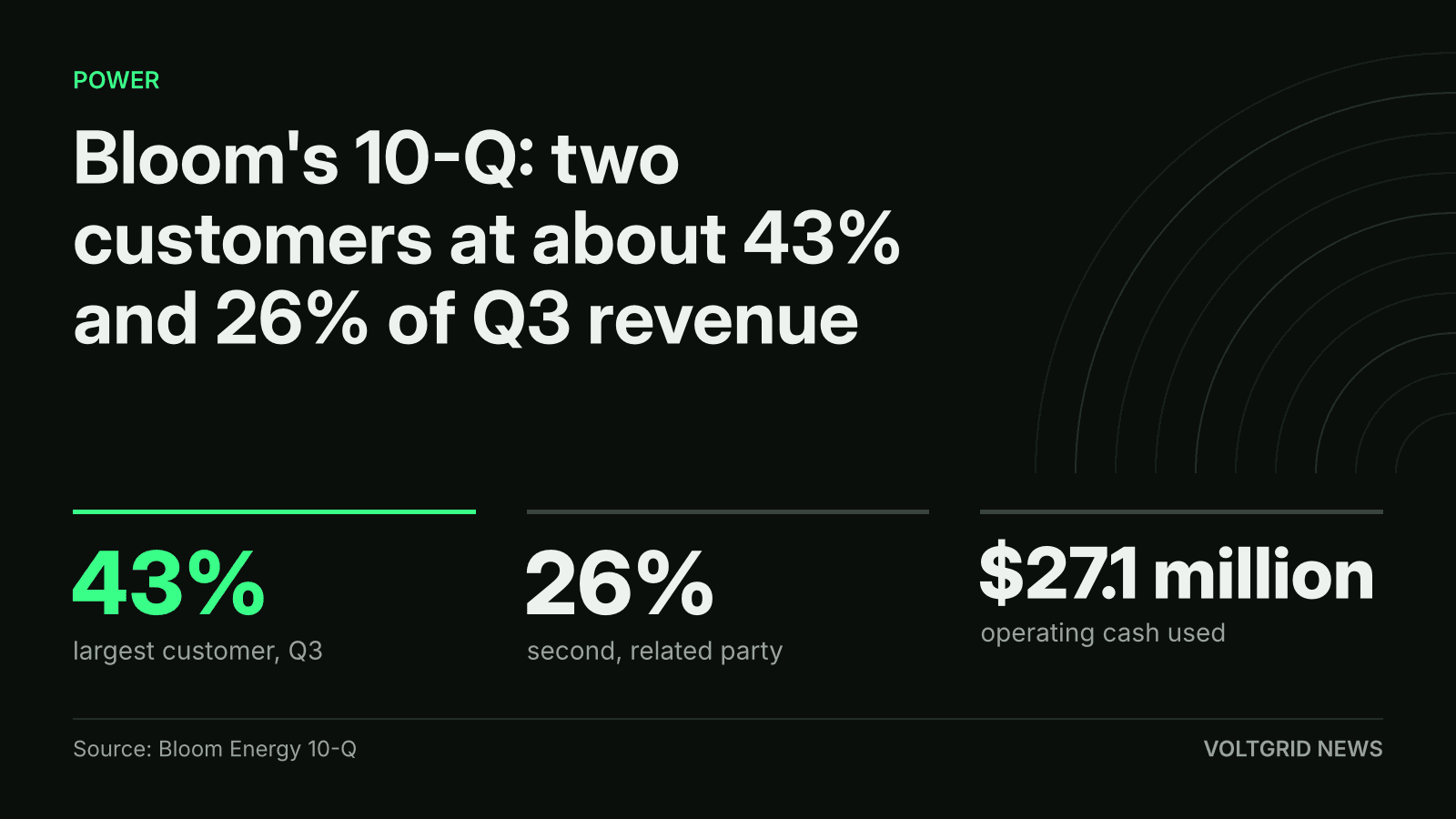
Egbert told Engineering News-Record that more than 3,600 construction workers are on the campus, including more than 1,000 New Mexico residents. That work is on the buildings. The generating plant still has no air permit, and the New Mexican reported the buildings remain without power. Oracle's October 15 statement also commits the company to matching Project Jupiter with carbon-free energy by 2031. Matching pairs the site's electricity with carbon-free supply. It is not a claim that the gas-fired fuel cells are carbon-free. Bloom's fuel-cell sales to data centers already move the manufacturer's results, which is why one campus permit of this size sits on the supply chain before a watt is delivered.
What to watch
The next dated step is the department's decision, still set for November 23, and a public hearing set to open on December 7. Browning left room for both dates to move. After a permit, the application's construction line points to completion in November 2029, while Oracle still describes 2028 as the campus plan. The pipeline's reported in-service target is February 2027, and that line is not yet authorized. Until the state issues the air permit, 1,600 MW is a requested operating cap, not a limit the department has approved.
Sources
- 01Project Jupiter Microgrid Cuts Permitted Emissions by 35%, Including Greenhouse Gases, in Response to NMED Review and Public CommentOracle · oracle.com
- 02YGI response on air permit 10883: 1,600 MW operating cap for the Project Jupiter microgridNew Mexico Environment Department · env.nm.gov
- 03Project Jupiter foes dealt blow in data center permit fightThe Santa Fe New Mexican · santafenewmexican.com
- 04Oracle Invokes Force Majeure as New Mexico Project Jupiter Power Work Faces HurdlesEngineering News-Record · enr.com
- 05YGI response opposing dismissal of air permit application 10883Yucca Growth Infrastructure · env.nm.gov