NRC EIS Backs a Licence for GLE's Paducah Plant, Fuel up to 8%
World Nuclear News reported on Oct. 26 that the NRC's final environmental review recommends a construction and operating licence for Global Laser Enrichment's Paducah plant, for fuel up to 8% U-235.
2 min readAI-assisted
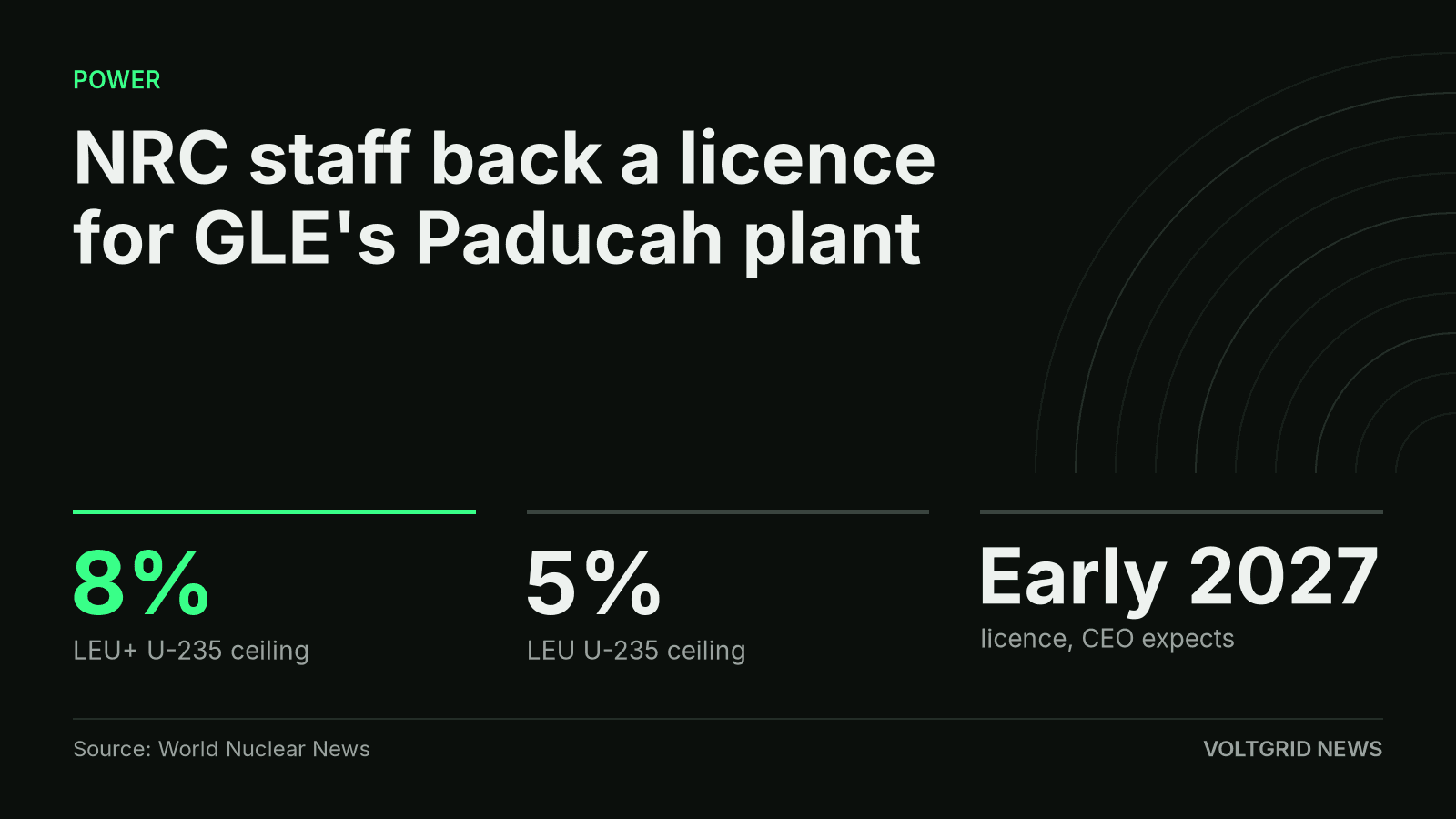
World Nuclear News says the environmental review recommends a licence. Eight percent is an assay ceiling, not plant output in megawatts.
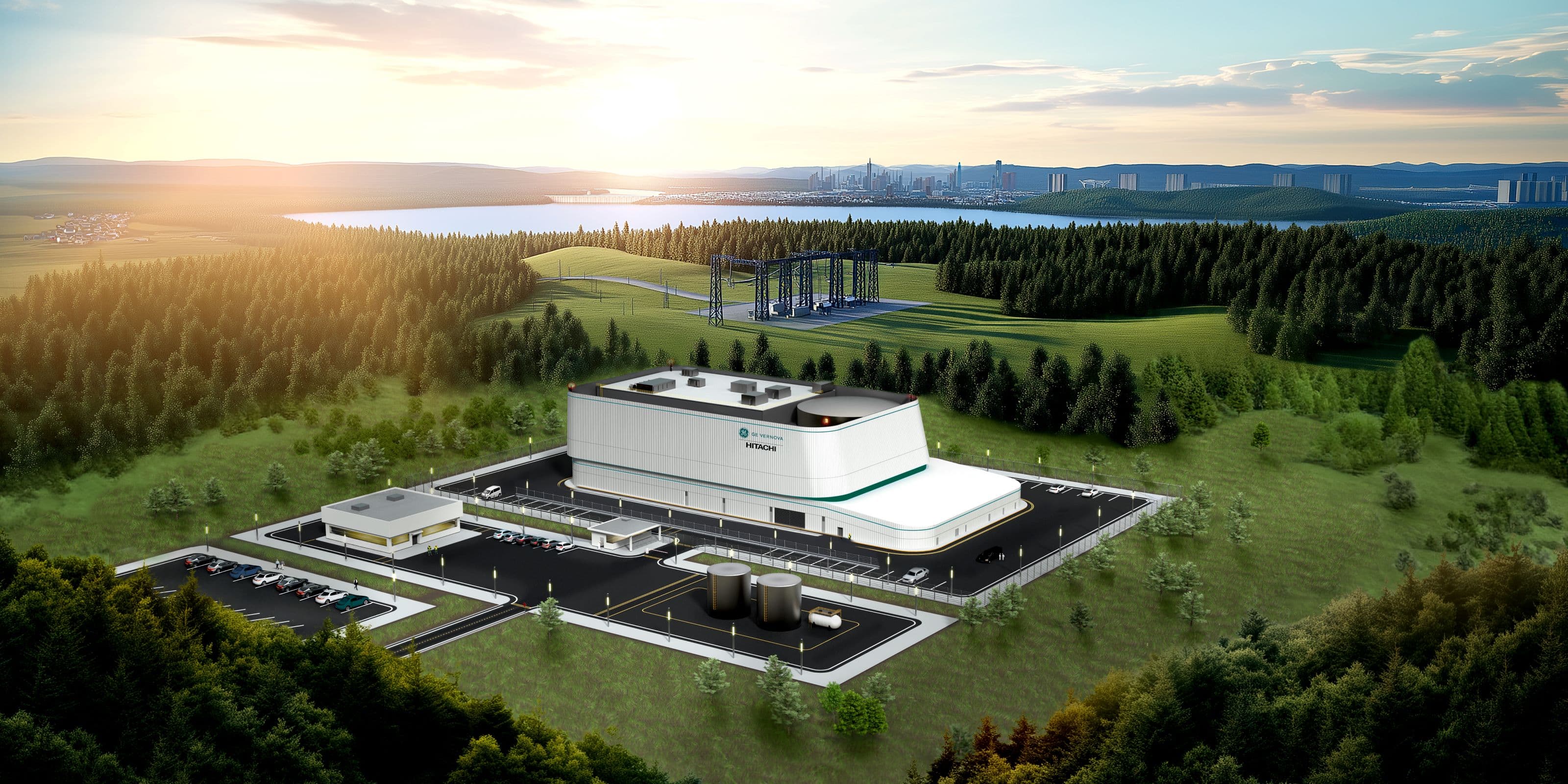
Illustration (AI-generated)
World Nuclear News reported on Oct. 26 that US nuclear regulators have finished the environmental review of a laser uranium plant Global Laser Enrichment wants at Paducah, Kentucky, and that staff recommend a construction and operating licence.
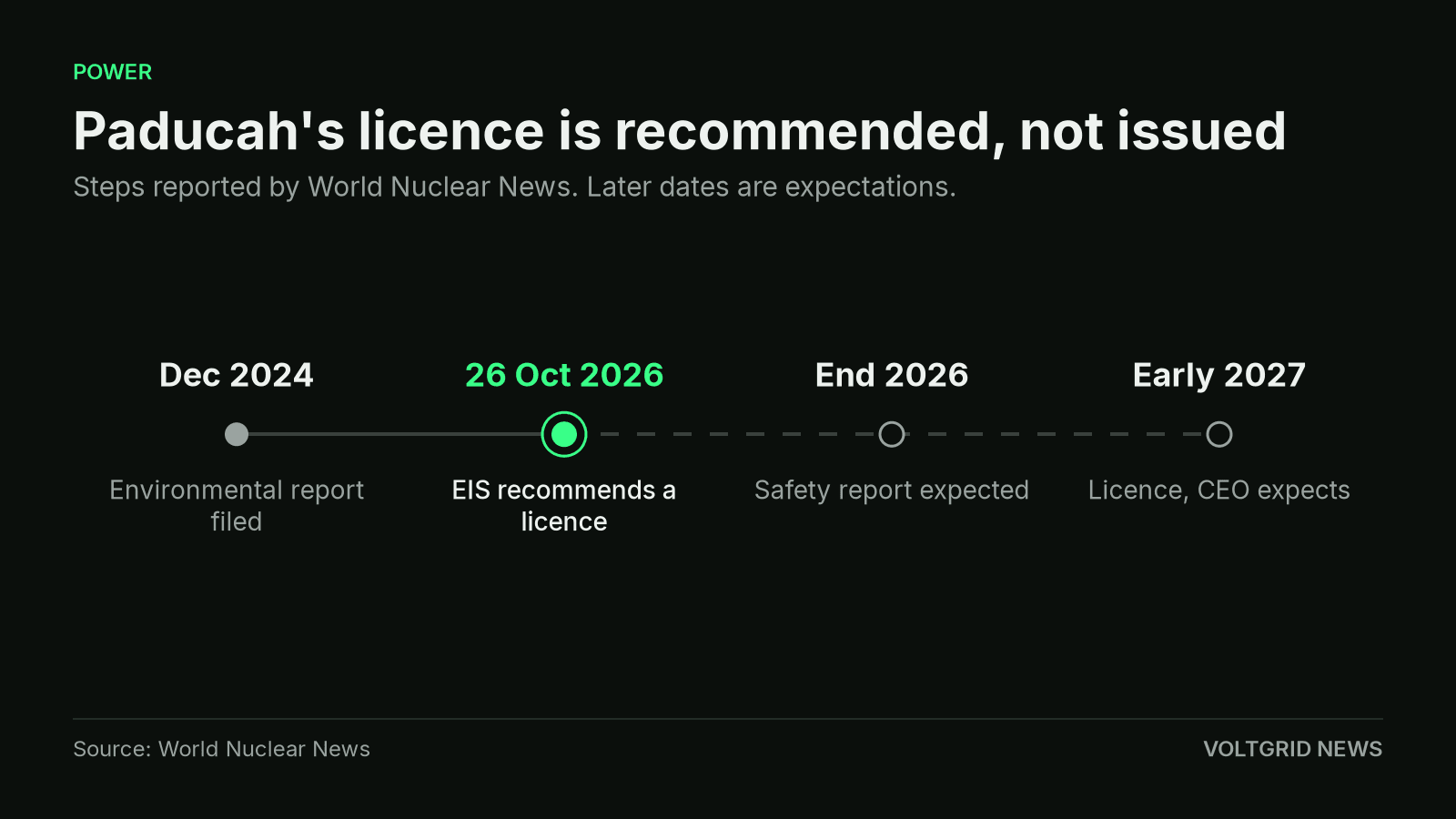
The Oct. 26 step is a staff recommendation reported by World Nuclear News. The licence is not issued.
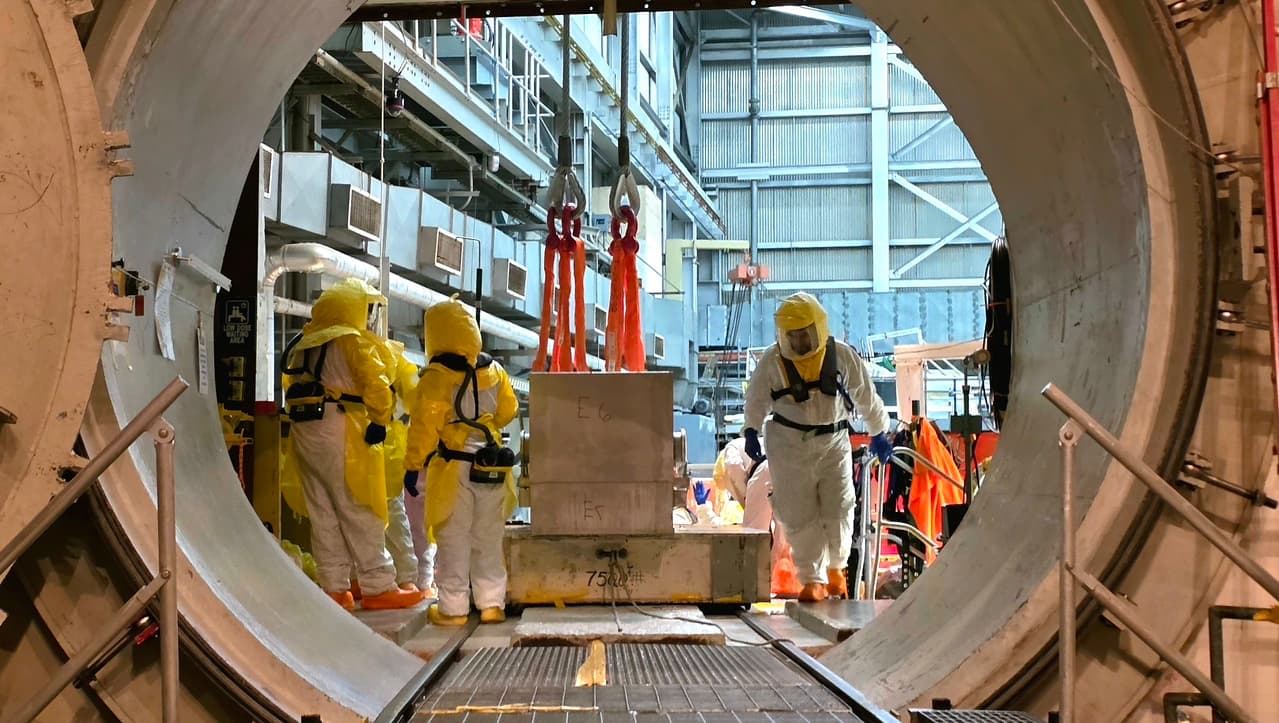
Illustration (AI-generated)
The proposed plant would use Silex laser technology to re-enrich depleted-uranium tails left at the Department of Energy's former gaseous-diffusion site. Silex chief executive Michael Goldsworthy said a licence would cover natural-grade uranium made from those tails and low-enriched uranium up to 5% uranium-235, plus a higher grade, LEU+, up to 8%. He expects the licence in early 2027. WNN said the final safety evaluation, the remaining step before a licensing decision, is expected by the end of 2026.
Assay is not a reactor's output in megawatts, but it sits in front of every nuclear project that needs fuel. Most commercial reactors run on low-enriched uranium of about 3% to 5% uranium-235, WNN notes, and Goldsworthy said utilities want LEU+ up to 8% to improve plant economics. A licence, if issued, would be for enrichment, not for a power station. Data-center plans that depend on nuclear electricity still need a reactor and a grid connection. This review does not add generation.
How laser enrichment differs
Plants operating today separate isotopes with gas centrifuges. A rotor spins uranium gas so the slightly lighter uranium-235 moves apart from uranium-238. Laser processes, which WNN calls a later generation, use specific wavelengths to add energy to one isotopic form and not the other. GLE is the exclusive licensee of Silex Systems' process. WNN said the firm reached technology readiness level 6 last year after a demonstration at its Wilmington, North Carolina test loop, and that it holds a long-term offtake with Cameco. Those are earlier steps, not decisions taken this week.
GLE vice president Tim Knowles called the environmental review a significant milestone and credited the agency's process. The company submitted its environmental report in December 2024. The recommendation belongs to the staff. It is not the licence. The review is also separate from the NRC's Oct. 22 rule letting reactor applicants cite Department of Energy and Department of War test data, which Voltgrid reported.
What is not confirmed yet
The commission has not issued the construction and operating licence. The end-of-2026 safety report and the early-2027 licence date are expectations from WNN and from Goldsworthy, not a vote. WNN gives no enrichment capacity in separative work units, no construction cost and no first-production date. No utility or data-center buyer is named for the Paducah output beyond the earlier Cameco agreement, and that agreement's volume is not stated here.