Lam Research Posts Record $8.22B Revenue, Guides December to $8.60B
Lam Research reported record $8.22B September-quarter revenue and guided December to $8.60B, saying supply chain constraints held the guide down as it sees 2027 chip equipment spending above $200 billion.
3 min readAI-assisted
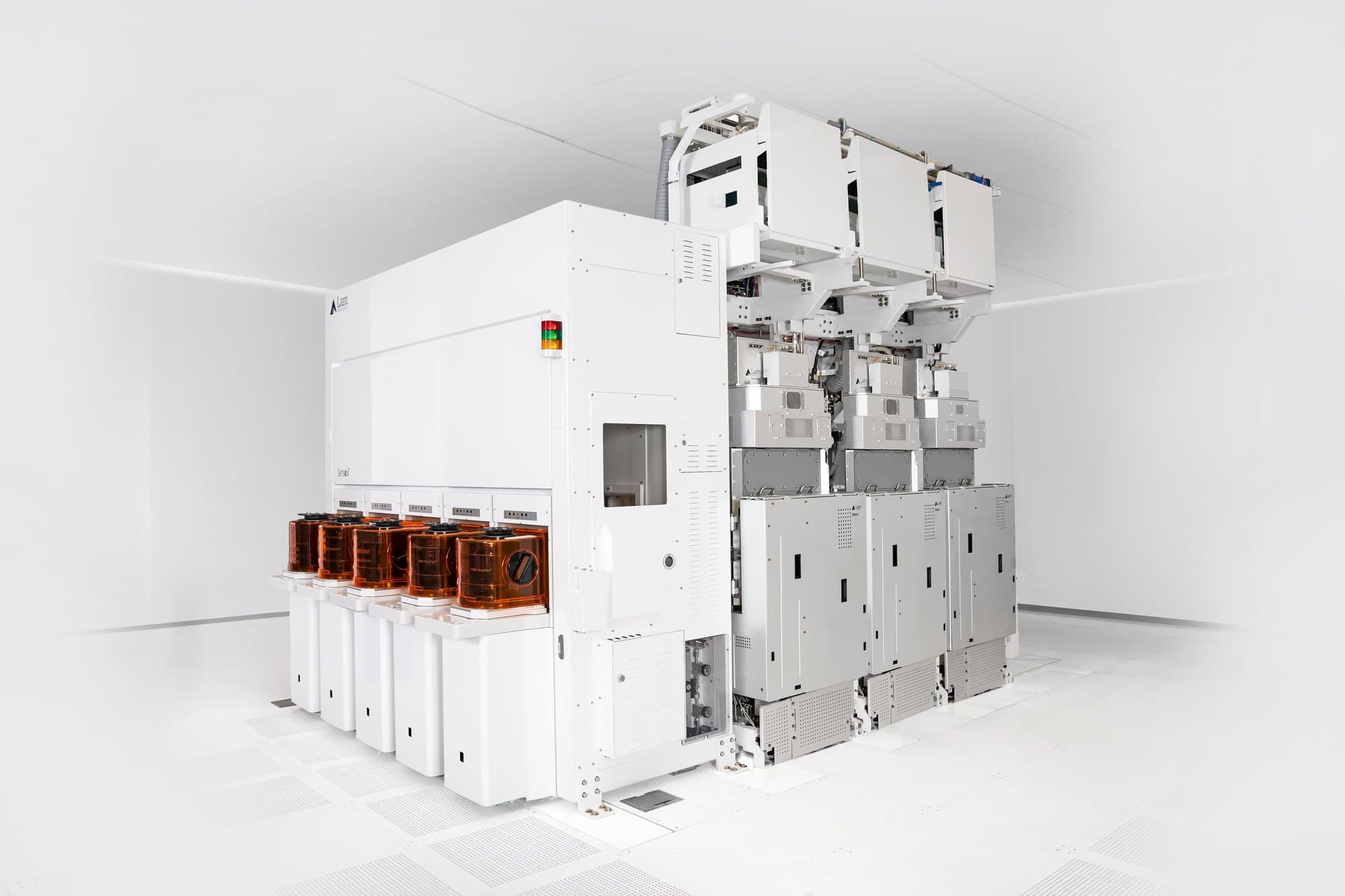
A Lam Research wafer fab equipment tool, from the company's product image gallery. It is a company file photo, not a picture of the quarter's results.
Image: Lam Research
Source · Press image from the Lam Research newsroom, used for news reporting.
Lam Research reported record revenue of $8.22 billion for the quarter ended September 27 and guided December-quarter revenue to $8.60 billion, plus or minus $400 million, the company said on October 21, 2026.
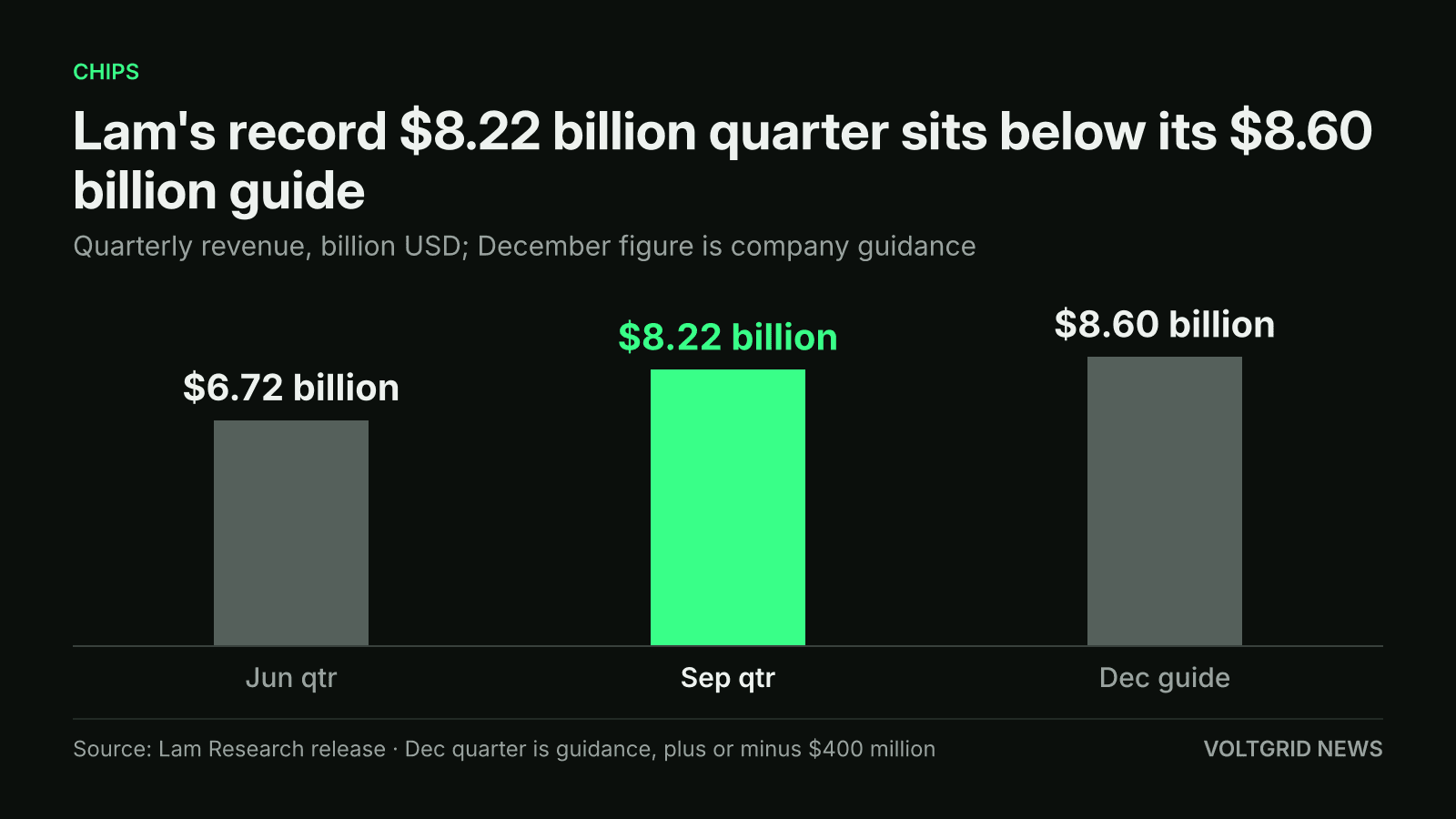
September revenue of $8.22 billion was a record; Lam guides December to $8.60 billion, according to the company release.
Illustration (AI-generated)
The September figure is up 22% from $6.72 billion in the June quarter. Systems revenue, which covers new deposition, etch and clean tools, rose to $5.73 billion from $4.25 billion. Non-GAAP gross margin was 52.4%, non-GAAP operating margin 40.2% and non-GAAP earnings per diluted share $2.20. For December, Lam guided non-GAAP gross margin to 52.5%, plus or minus 1 percentage point, and earnings per share to $2.33, plus or minus $0.15.
Lam shares closed lower on October 22, the first full session after the report, according to Yahoo Finance price data. On the earnings call, Chief Financial Officer Doug Bettinger said the revenue guide would have been a bit higher without near-term supply chain constraints the company is managing.
Lam Research's 2026 and 2027 WFE Outlook
Lam expects wafer fabrication equipment (WFE) spending in calendar 2026 in the mid-$150 billion range, according to its results presentation. Bettinger said that view began the year in the mid-$130 billion range and rose as customers squeezed more out of existing cleanrooms and pulled projects forward. CEO Tim Archer gave a preliminary 2027 outlook of more than $200 billion, with percentage growth led by DRAM, then leading-edge foundry logic, then NAND.
Memory made up 46% of Lam's systems revenue in the September quarter, with NAND at 26% and DRAM at 20%. Foundry also made up 46%, and logic and other 8%. Bettinger said foundry strength came from leading-edge nodes, including advanced packaging, and from mature-node spending in China.
What a DRAM-Led 2027 Means for AI Hardware
WFE is the tool budget behind every wafer that ends up as an accelerator, an HBM stack or a server DRAM module. High-bandwidth memory (HBM) is built from DRAM dies, and Bettinger said September DRAM spending went to technology additions and upgrades on the 1-alpha, 1-beta and 1-gamma nodes that serve DDR5, LPDDR5 and, more importantly, HBM. Lam said its Aether dry-resist tools are already ramping in HBM volume production, and it now expects about $2.5 billion in cumulative Aether revenue by the end of the decade, roughly $1 billion above its earlier view.
The limit on 2027 is physical. Archer said cleanroom space and supply constraints on certain components continue to limit chipmakers and equipment makers from fully meeting end demand, and Lam is working with its suppliers to bring their capacity forward. Bettinger said 10 new tier-one fabs come online during 2027. Asked what demand would be without those limits, he gave no number but said it would be higher than the more-than-$200 billion outlook. As Voltgrid reported on October 21, Micron expects memory supply to stay tight for at least two years, matching the supply limits Lam describes.
China Share Rises to 35% as Lam Research Flags a Drop
China accounted for 35% of Lam's September-quarter revenue, up from 26% in June and down from 43% a year earlier, according to Lam's quarterly filing. Korea followed at 20% and Taiwan at 18%. Management said it expects China to be a significantly lower share of total revenue in the December quarter. Asked to quantify it, Bettinger gave no figure. He said the drop would come from Chinese domestic customers, while multinationals in China likely stay reasonably strong.
The WFE numbers are management expectations, not reported results, and Lam cautions that actual outcomes may differ materially. Archer said Lam expects a better view of cleanroom schedules and supply constraints by its January call, and Bettinger said the 2027 figure will be sharpened then. Watch that report for whether supply limits cost Lam more revenue than Bettinger described, and for how DRAM customers' 2027 spending plans line up with the more-than-$200 billion outlook.