Microsoft Amsterdam Data Center Protest: Police Detain 150-200 at Site
Protesters broke into Microsoft's Amsterdam construction site on Nov. 6, opening a 15-country push for a European data center moratorium. Microsoft has not said whether work was delayed.
Chips & Power DeskEdited by Ege Erten
3 min readAI-assisted
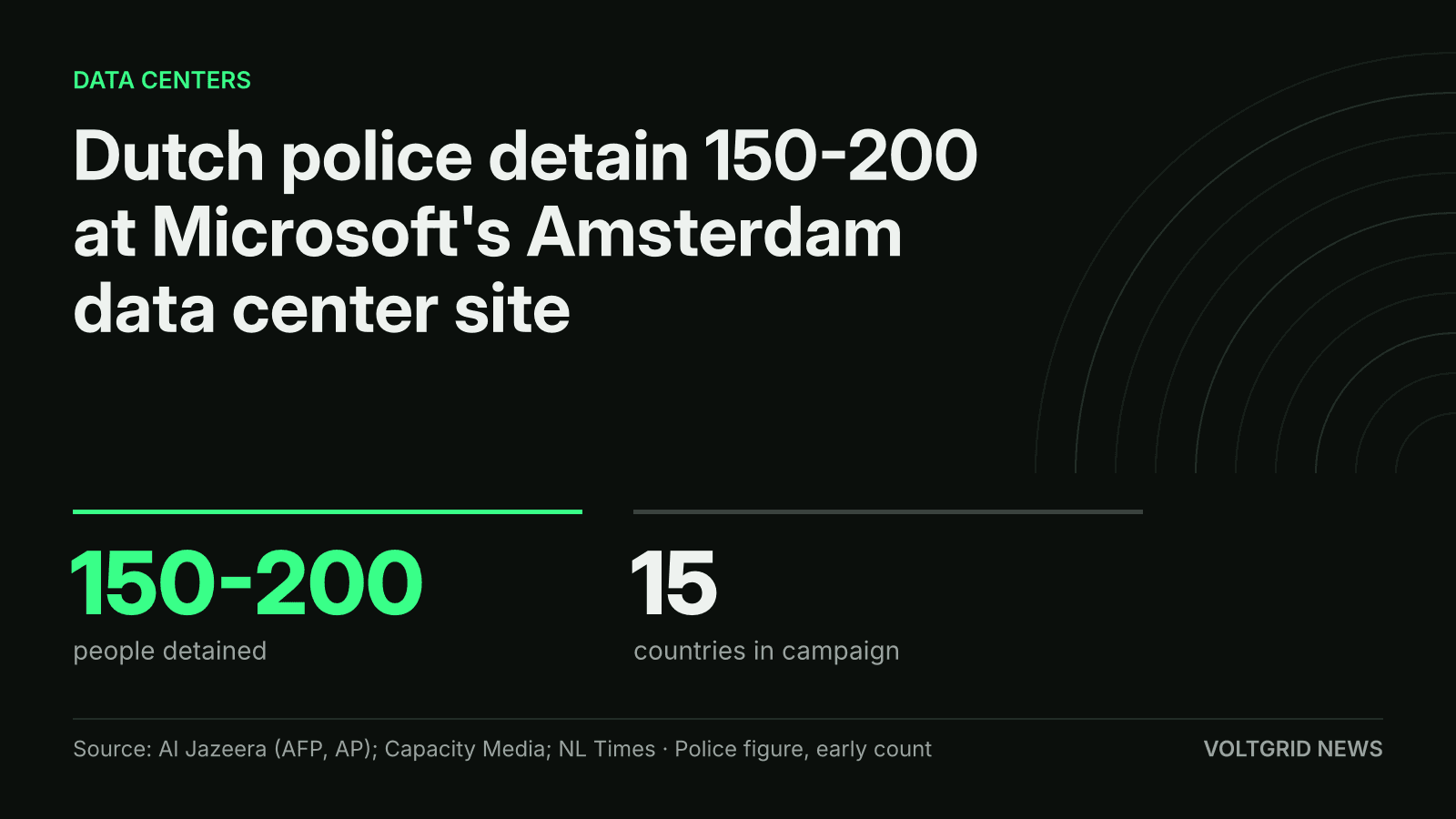
Police detained 150-200 people at the Microsoft data center construction site in Amsterdam on Nov. 6, an early police count; the protest opened a campaign in 15 countries.
Illustration (AI-generated)
The Microsoft Amsterdam data center protest ended with Dutch police detaining 150 to 200 people on suspicion of trespassing on Nov. 6, after hundreds of protesters broke into the construction site, the first mass action of a two-day Europe-wide campaign.
The site is in the Sloterdijk district, in Amsterdam's western port area, where three large data center towers are planned on Plimsollweg, according to NL Times. Some protesters climbed over the fence or cut a hole in it and spray-painted slogans on the concrete foundations, NL Times reported. Capacity Media reported that the mayor had banned the demonstration and that a Reuters witness counted about 100 people on the site, while organizer Geef Tegengas told broadcaster AT5 the figure was closer to 500.
Pure Data Centers, the site's developer, asked those inside to leave safely and talk, according to Tom's Hardware's account of the Reuters report. Microsoft said it understood that people feel strongly about the project and respected the right to peaceful expression, but did not condone unlawful action or anything that puts safety at risk, a statement the Associated Press also carried.
Why it matters for data center builds
Amsterdam is a test of what protest can and cannot stop. Capacity Media said plans for the site were filed in 2016, before Amsterdam banned new data centers inside the city, and the provincial government allowed it to proceed in January. The Netherlands has barred new hyperscale facilities above 70 MW and 10 hectares outside designated areas since Jan. 1, 2024, yet at least seven hyperscale projects, including sites in Amsterdam and Lelystad, are still going ahead, the outlet said. Neither source gives the Amsterdam site's capacity in MW, so its load is not confirmed. Protesters say it would consume as much energy as all of Amsterdam's households combined, NL Times reported, a claim not backed by a published figure.
For developers and lenders, the lesson is that permits granted before a moratorium are no longer a settled position. Construction crews now face site occupations, and the campaign, called Stop Dirty Data Centres, demands an immediate moratorium on large data centers across Europe.
A campaign, not a single protest
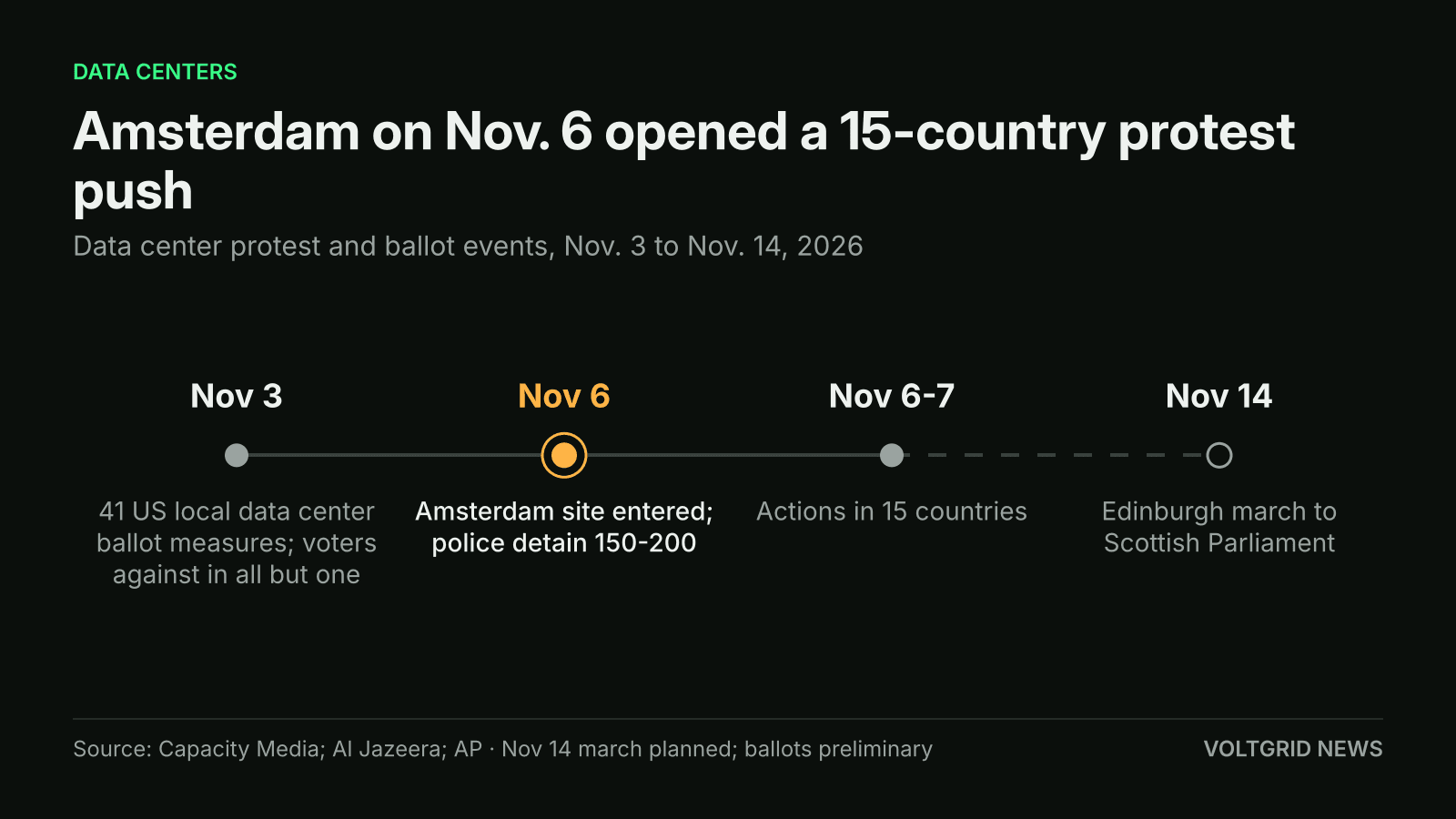
The Amsterdam action on Nov. 6 opened two days of protests in 15 countries; the Edinburgh march on Nov. 14 is planned.
Illustration (AI-generated)
The Amsterdam action opened events on Nov. 6 and 7 in 15 countries, according to the Associated Press and Al Jazeera; Tom's Hardware, citing Reuters, counted 16. Tom's Hardware also reported that the coalition's map lists 85 planned actions across Europe, a figure we could not check independently. Other actions included a protest of about 100 people outside the Polish parliament in Warsaw, a march in Dublin, a rally at a Microsoft site in Denmark and about a dozen people outside a data center near Berlin. A march to the Scottish Parliament in Edinburgh is planned for Nov. 14, Capacity Media said.
The European actions followed US ballots by two days. Voters in 10 states decided 41 local data center ballot measures on Nov. 3 and, by preliminary results, sided against the facilities in all but one, Capacity Media reported. Voltgrid has tracked the same pressure on North American projects, from the Nova Scotia marches against a 420 MW Anthropic data centre to Texas governor-elect Gina Hinojosa's moratorium pledge and Mooresville, North Carolina's 12-month moratorium.
What is not confirmed yet
Charges have not been reported; the 150-to-200 figure is the police's early count, and the organizer's higher tally has no police confirmation. Microsoft has not said whether construction was delayed, and no source gives the site's capacity or schedule. The next signals to watch are the Edinburgh march on Nov. 14 and whether EU lawmakers take up the moratorium call, which two MEPs from The Left group, Leïla Chaibi and Lynn Boylan, have backed and Renew MEP João Cotrim de Figueiredo opposes, according to Capacity Media.