Microsoft Granger Data Center Dewatering Approved: 200,000 Gallons an Hour
An Indiana county drainage board approved construction dewatering for Microsoft's Granger data center campus on Nov. 2, at up to 200,000 gallons an hour into two creeks; the total volume is undisclosed.
Chips & Power DeskEdited by Ege Erten
3 min readAI-assisted

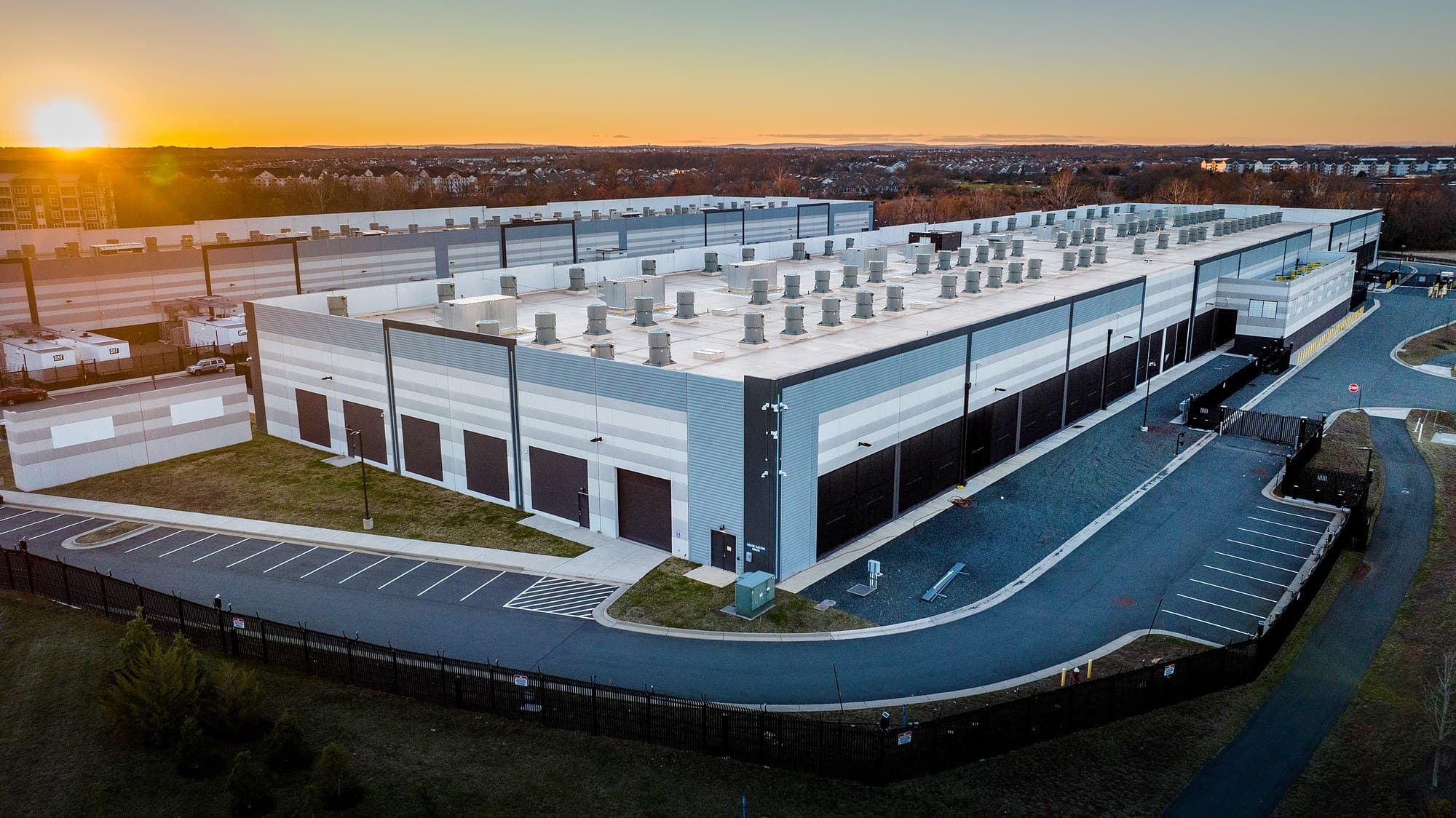
A Microsoft datacenter hall, file image from the company's Indiana community page; it does not show the Granger site.
Image: Microsoft
Source · Press image from the Microsoft newsroom, used for news reporting.
The St. Joseph County Drainage Board in Indiana approved a groundwater dewatering plan for Microsoft's planned data center campus in Granger on Nov. 2, allowing discharge of up to 200,000 gallons an hour into nearby creeks.
According to WNDU, which cited the project applications, three separate wells are expected to operate at different times between mid-December and early April, not all at once. The wells would discharge into Willow Creek and Juday Creek. Board member Anthony Hazen said officials do not expect the discharge to cause flooding or creek overflow.
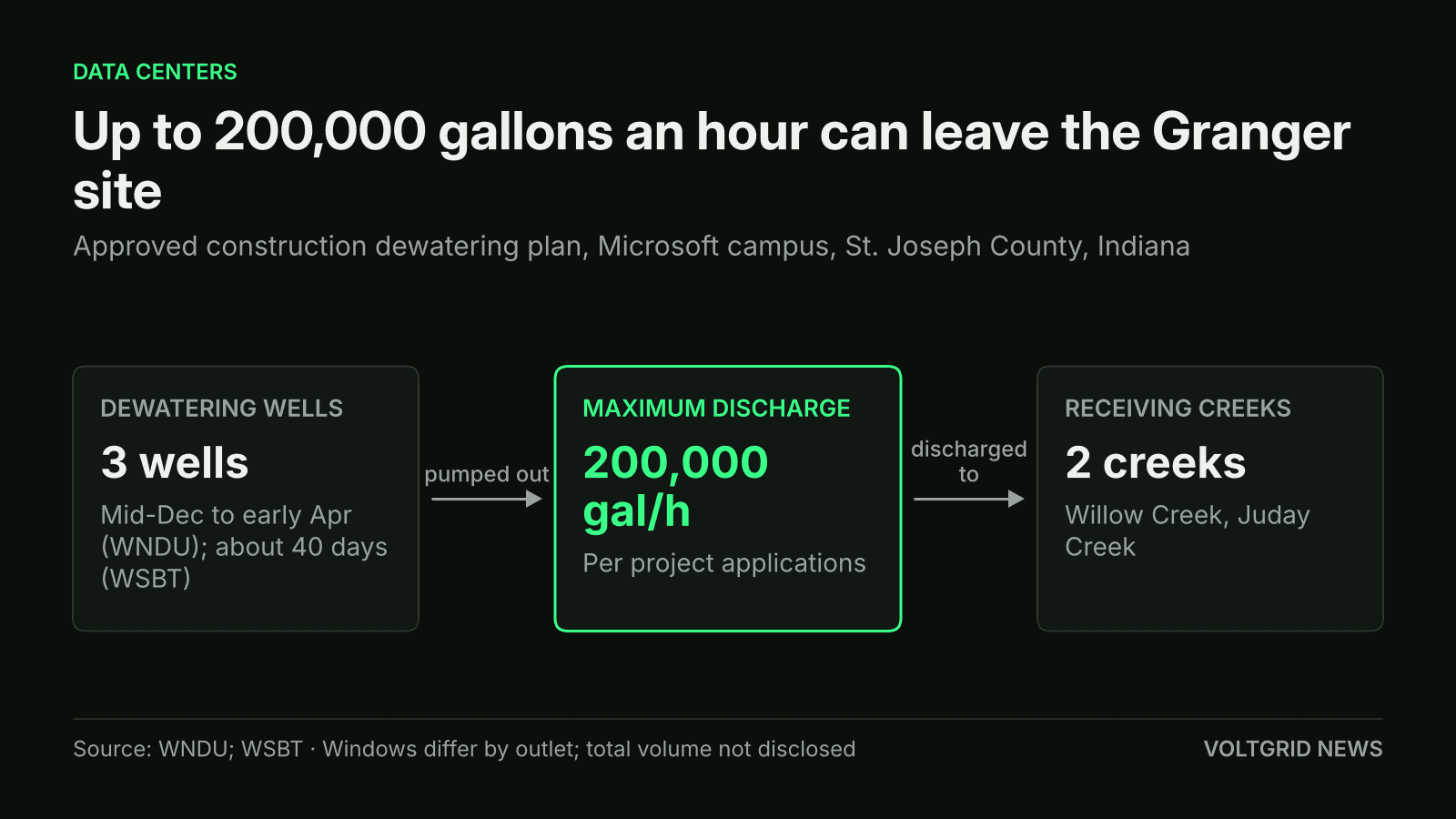
The approved plan allows up to 200,000 gallons an hour; the total volume is not disclosed.
Illustration (AI-generated)
WSBT reported the same approval but gave a narrower window: the work could last about 40 days, with pumping expected to begin in late February and continue through April. The two stations' schedules differ, and neither cites a board document, so the exact timetable is not settled.
This is construction water, not cooling water
The permit covers dewatering, which removes groundwater from a site when the water table is too high, while sewer and water lines are installed. WNDU described it as a step that must happen before construction can begin. It says nothing about how much water the finished campus will draw to cool servers, and no cooling design, water-use-effectiveness (WUE) figure or chiller plan is public in the reports we read.
That distinction matters for readers tracking data-center water. A temporary discharge is not a measure of operating cooling demand, and the two should not be added together. The cooling load only becomes visible once building plans and the utility water agreement are filed, which is the next number to watch. Microsoft's Rome, Georgia project, by comparison, surfaced through a power filing, as Voltgrid reported.
How big the discharge could be
The board has not published a total volume, and WNDU said the amount discharged will depend on how long the pumps run and how much water must be removed. A resident, Steve Francis of the Juday Lake Estates Homeowners Association, told WSBT the project could drain as much as 192 million gallons from one area of the property. That is his estimate, not a figure from the board or Microsoft. It matches the arithmetic of the 200,000 gallons-an-hour ceiling running nonstop for 40 days, which would be a worst case, since the three wells are not meant to run together.
Residents also raised concerns about private wells, flooding and water quality. Hazen said the drilling company plans to install monitors around nearby wells to track water levels. Juday Creek is home to one of Indiana's few trout streams, WSBT reported, and some residents asked the board to table the vote. WSBT noted that a similar discharge permit for an Amazon data center near New Carlisle went through several delays before approval.
What is not confirmed yet
Construction Review Online reported that the campus is planned as six buildings on about 929 acres, with the first three targeted for mid-to-late 2029 per Microsoft's community materials. It also reported that the Indiana Department of Environmental Management has opened a comment period through Nov. 25 on Microsoft's air permit application, which is separate from the water approval. Microsoft has not been quoted in the local reports on the dewatering plan.
Still open: the total volume to be removed, the monitoring frequency near private wells, and the campus's operating water supply. The project is also under political scrutiny, and CMS Energy's chief executive has said a separate Microsoft site of up to 1 GW may advance after the midterms, as Voltgrid reported.