Microsoft Patent Application Describes Paying Owners for Idle GPU Training
A Microsoft patent application published Nov. 5 describes splitting AI training into micro-tasks for idle GPUs in PCs and phones. Payment appears only in the description, not in the 20 claims; no product is announced.
Chips & Power DeskEdited by Ege Erten
2 min readAI-assisted
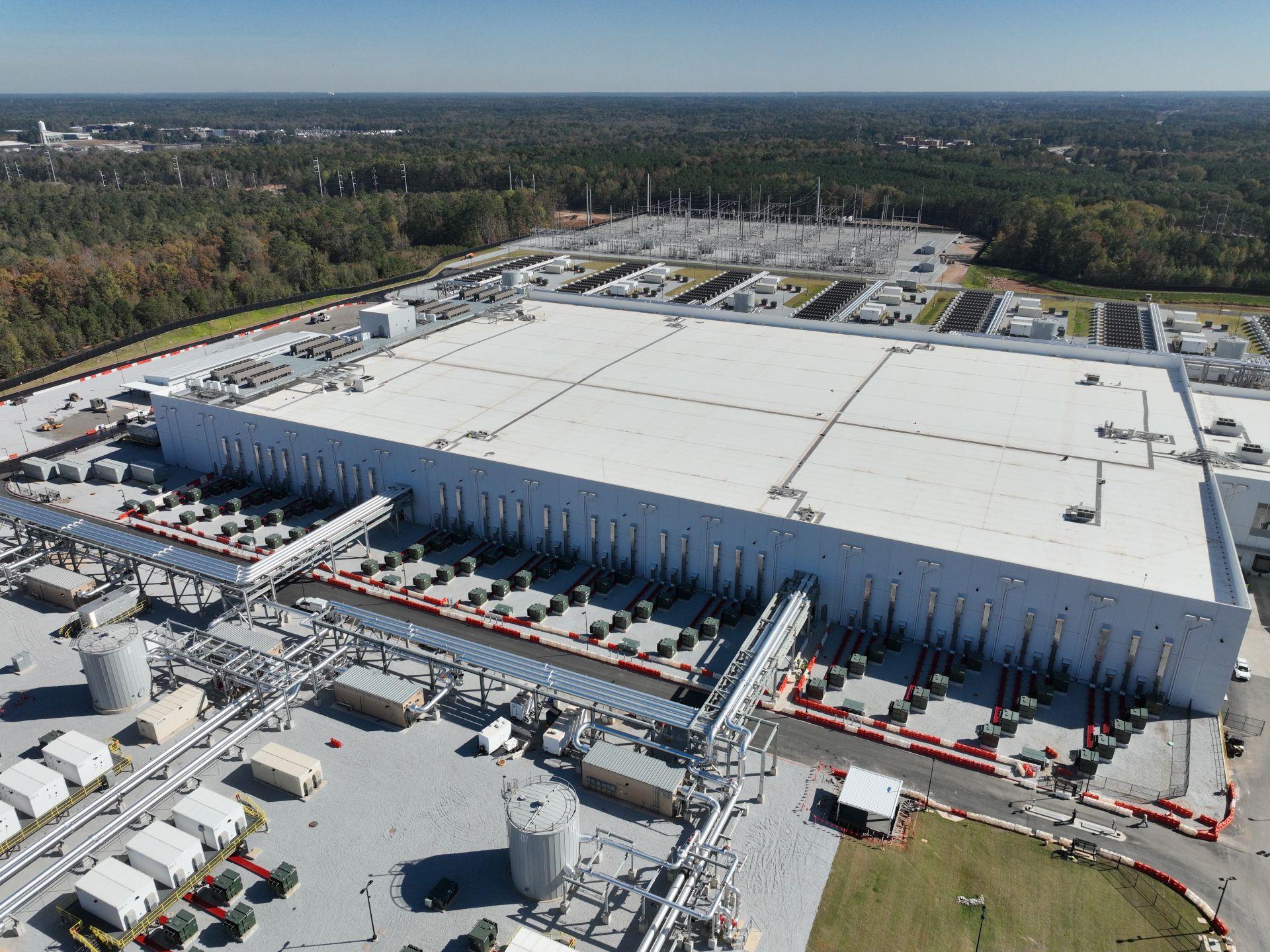
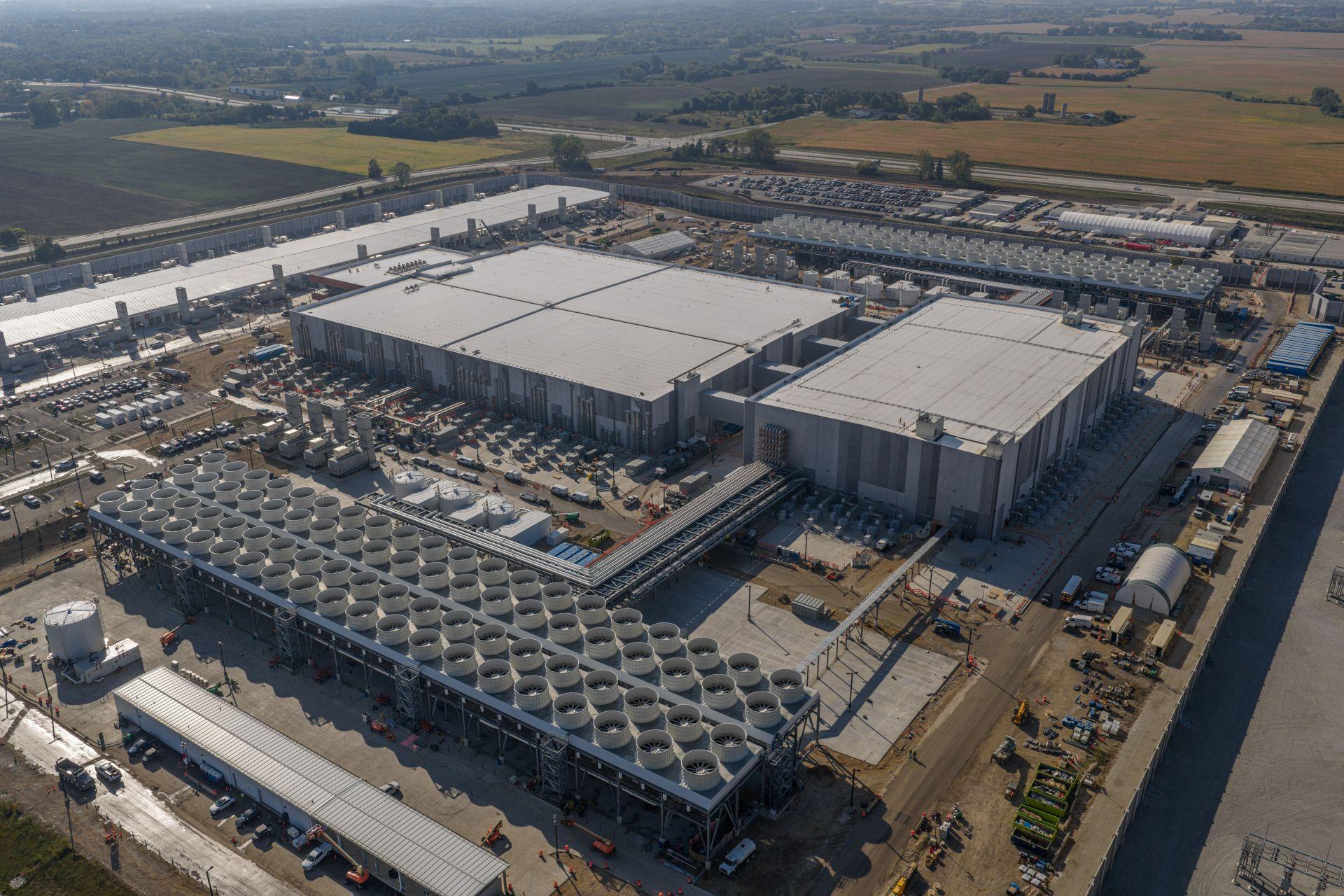
Microsoft's Fairwater AI datacenter near Atlanta, a dedicated AI facility. The patent application instead describes using idle GPUs in PCs and phones; this photo does not show that system.
Image: Microsoft
Source · Press image from the Microsoft blog, used for news reporting.
Microsoft Technology Licensing has a published US patent application, US 2026/0349820 A1, that describes splitting machine-learning training into small tasks and running them on idle phones, laptops and gaming PCs, and it was published on Nov. 5, 2026. It is an application, not a granted patent, a product or an announced plan.
The application, number 19/195,047, was filed on Apr. 30, 2025 and lists one inventor, Aditya Vasanth Challapally of San Francisco, according to the USPTO publication as carried by Justia Patents. It has 20 claims. They cover how a model is divided: a dependency graph of its layers, candidate split points scored on communication cost and memory overhead, and the distribution of the resulting micro-tasks to devices.
What the filing describes
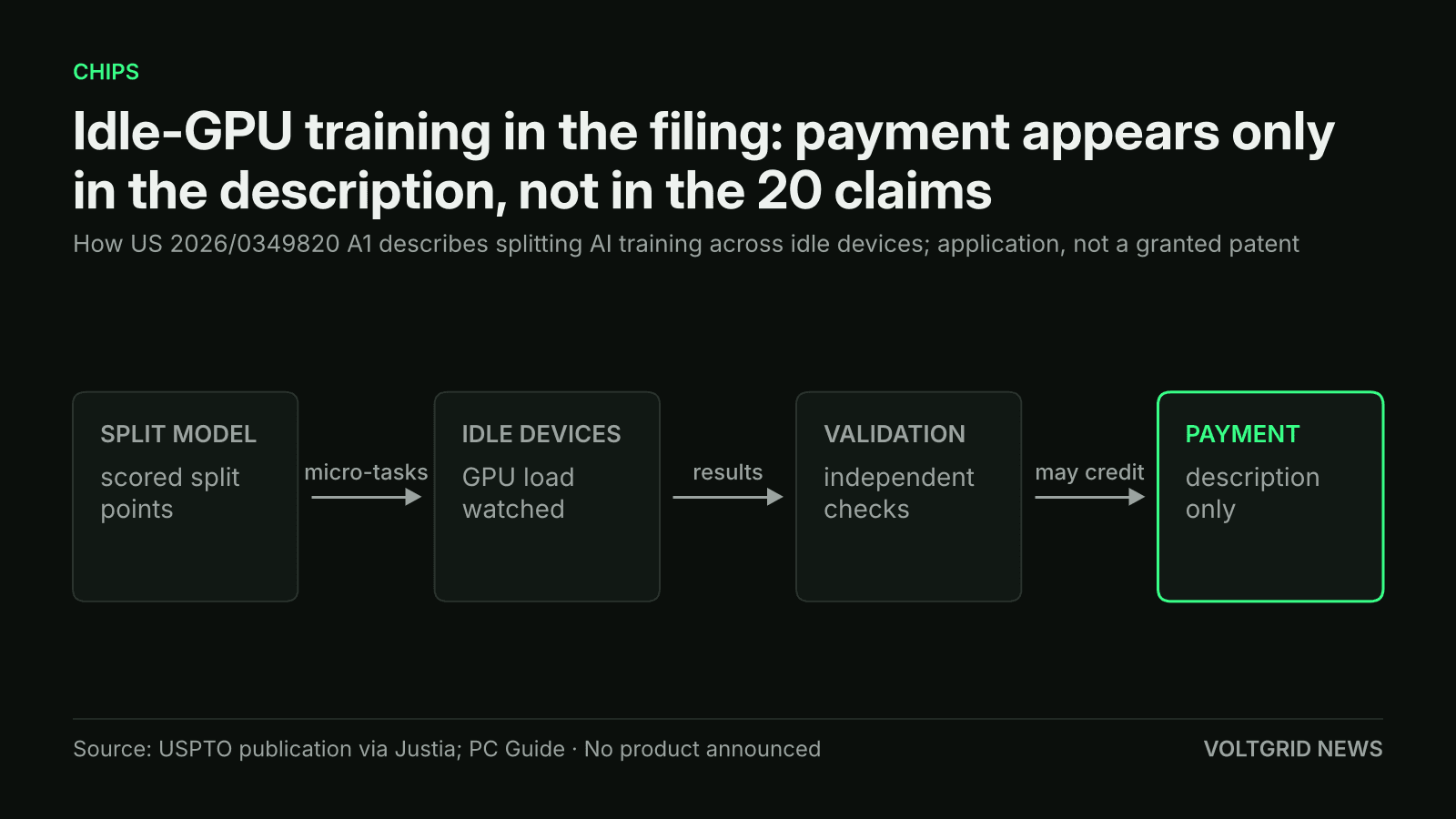
In US 2026/0349820 A1, payment is described only in the description; none of the 20 claims mentions it.
Illustration (AI-generated)
The system would watch each device's GPU utilization, memory use, temperature and power draw, predict when spare capacity exists, and size each micro-task to the device. The text says the sampling rate drops when a GPU is busy or hot and rises when it is idle and cool. Results from untrusted devices would be checked with what the filing calls a Byzantine-resistant validation protocol, which can require several independent verifications, and results would be weighted by a reliability score for each device.
The filing names the target hardware plainly: its background section points to smartphones and gaming computers whose powerful GPUs sit largely unused when not in play. PC Guide's reading of the application adds that training would pause when a game or application needs the GPU or the card runs too hot.
Where the payment idea sits
Payment is a single passage in the description, not a claim. The text says the system "may" track the computation each device provides and compensate owners, for example by applying a credit to an account. Credits could be exchanged for free software, access to the model being trained, or money. A review of the claims text finds no claim that mentions credits, compensation or money. The application gives no payout rate and no list of supported GPUs, and it says the devices would be third-party machines whose owners have given express authorization.
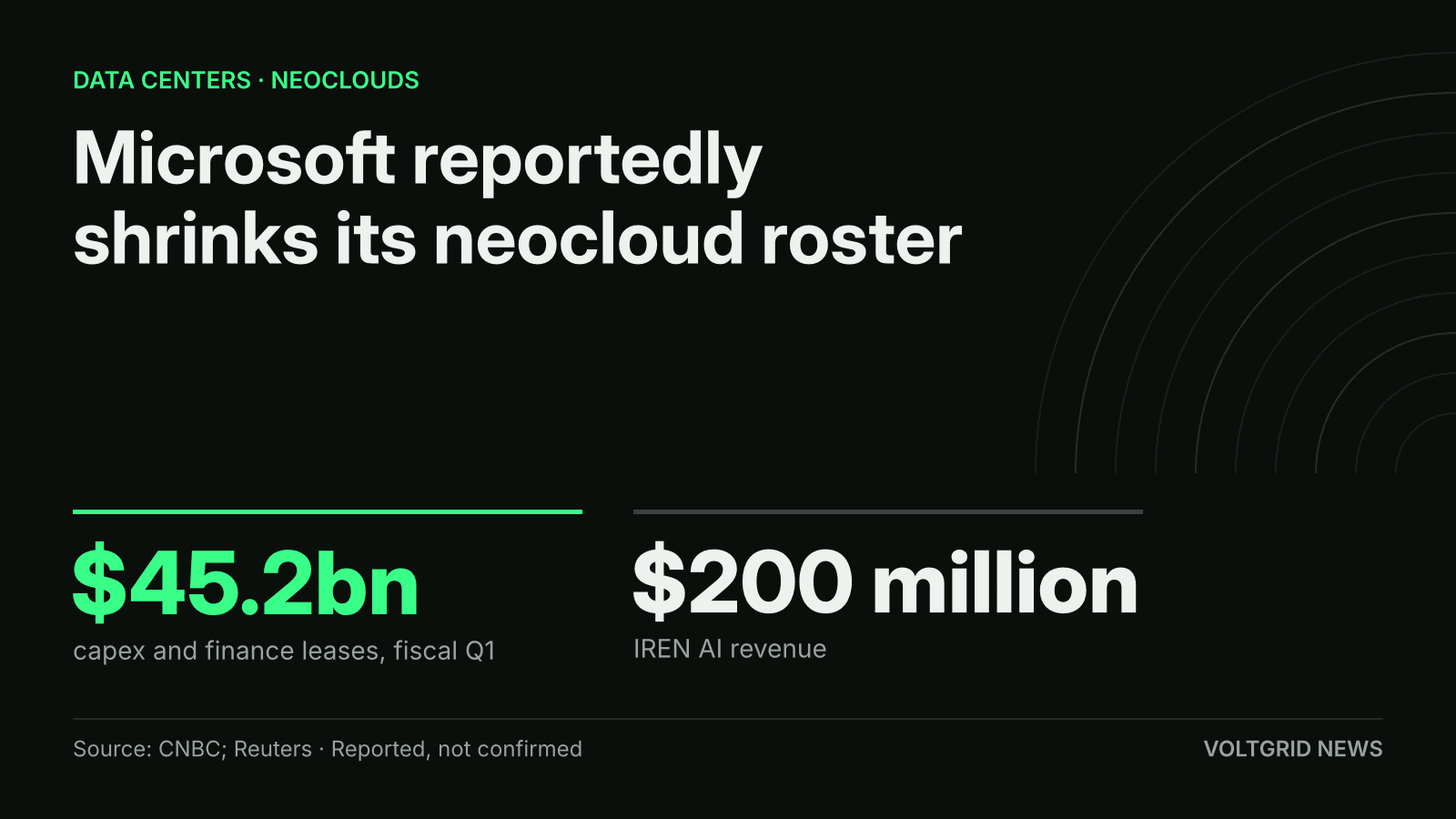
Nothing in the filing quantifies the load. PC Guide notes the obvious cost to owners: sustained AI training raises GPU usage, which can mean higher electricity bills and more heat, and the application sets no figure for either. The filing's stated reason for the idea is scarcity, the difficulty of obtaining enough compute to train models. Microsoft is also trimming its roster of outside GPU-cloud providers, as Voltgrid reported on Nov. 8.
What is not confirmed yet
Microsoft has not announced a product, a pilot or a launch date based on the application, and a published application can be rejected, narrowed or abandoned. The claims as published may change during examination, and the payment passage may never become a claim. Voltgrid has not seen a Microsoft statement on the filing as of Nov. 10.
Sources
- 01Microsoft might start paying GPU owners to train AI on their graphics cardsPC Guide · pcguide.com
- 02Microsoft Patent Describes Paying PC Owners to Train AI on Idle GPUsTechPowerUp · techpowerup.com
- 03US 2026/0349820 A1: Opportunistic Micro-training on Edge Devices Using Spare GPU UtilizationJustia Patents (USPTO publication) · patents.justia.com