Tianwan Unit 8 Completes Hot Tests, Gets Fuel; Site Nears 9.1 GW
China National Nuclear Power finished hot tests on Tianwan unit 8 on Nov 25 and Rosatom's TVEL delivered its core, taking the site toward 9.1 GW, above Kashiwazaki-Kariwa's 8.2 GW.
3 min read
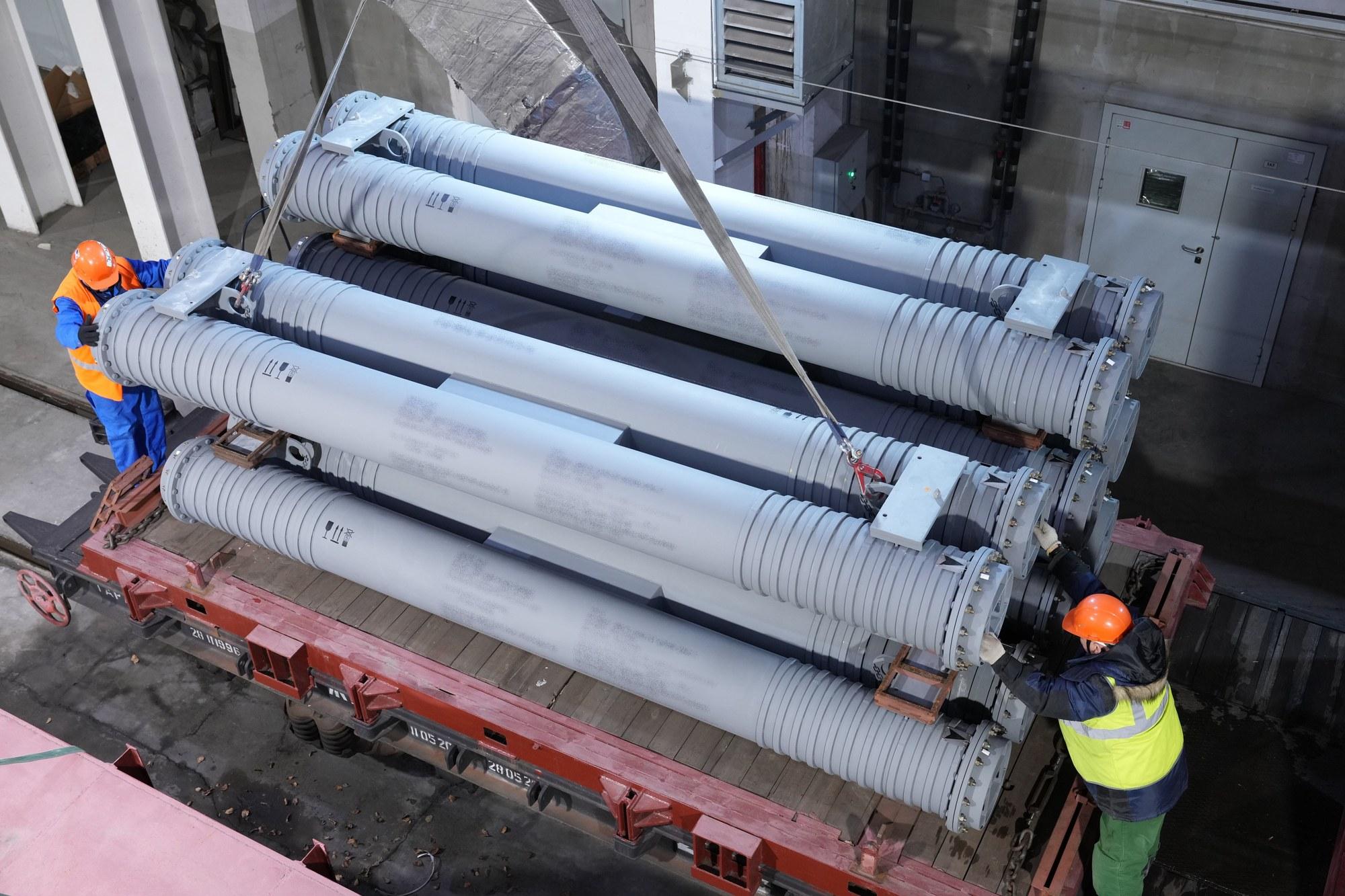
Fuel shipping containers loaded for dispatch to China, from Rosatom's January 2026 release on the first VVER-1200 fuel for Tianwan unit 7 (TVEL).
Image: Rosatom / TVEL (Atom Media)
Source · Press image from the Rosatom Atom Media newsroom, used for news reporting.
Tianwan unit 8, a Russian-design VVER-1200 reactor in China's Jiangsu Province, completed hot tests on Nov. 25, and Rosatom's fuel division TVEL has delivered the initial core load plus a reserve batch, according to World Nuclear News. The fuel has not been loaded yet.
China National Nuclear Power, a subsidiary of China National Nuclear Corporation (CNNC), announced the hot tests, Jiemian News reported. They check that nuclear-island and conventional-island equipment performs reliably under heat before fuel goes in. The fuel was made at the Novosibirsk Chemical Concentrates Plant, World Nuclear News said. Jiangsu Nuclear Power will next carry out reactor disassembly and in-service inspection to prepare for fuel loading, Jiemian reported.
Once unit 8 runs, Tianwan will have about 9.1 GW of installed capacity, World Nuclear News said. That would pass Japan's Kashiwazaki-Kariwa, listed at 8.2 GW with seven units classed as operable, a status that does not mean they are running, by about 0.9 GW in Voltgrid's arithmetic on the rounded figures. Tianwan today is second on that ranking at 7.9 GW operable across seven units, ahead of Hongyanhe and Fuqing at 6.7 GW each. For power planners, the point is scale: the finished site is expected to generate over 70 TWh a year, per the same report, all from one coastal site.
With unit 8 running, Tianwan is expected to reach 9.1 GW, ahead of Kashiwazaki-Kariwa at 8.2 GW; World Nuclear News does not say whether the figures are net or gross.
Graphic: Voltgrid News
How Unit 8 Compares With Unit 7
Unit 7 is the template. CNNC finished its hot tests on Dec. 30, 2025, and TVEL delivered its first core on Jan. 21, 2026, in what Rosatom called the first VVER-1200 fuel shipment to China. The unit then connected to the grid on Oct. 8, 2026, just over a week after reaching criticality, World Nuclear News reported. Counting from hot tests to first power, that is just over nine months. Unit 8 finished its cold tests in October and its hot tests on Nov. 25. Applying unit 7's interval is Voltgrid arithmetic, not a schedule anyone has published.
Why Net and Gross Change the Ranking
A nuclear unit has two ratings: gross, measured at the generator, and net, the power that reaches the grid after the plant's own use. The gap varies by design, so two sites can rank differently depending on which rating is used.
World Nuclear News does not say whether its 9.1 GW for Tianwan and 8.2 GW for Kashiwazaki-Kariwa are gross or net. If both are on the same basis, the ranking holds; the exact size of the lead depends on which basis is used, so it is best read as approximate.
Fuel Supply Behind the Build
TVEL's Anton Ivanov said the company has delivered three complete VVER-1200 core loads since late 2025, for Tianwan units 7 and 8 and Xudapu unit 3, and expects the initial load for Xudapu unit 4 to be manufactured and accepted by the end of 2026. He described that as a record volume of fuel for one country in a year, a claim made by the supplier. Voltgrid News reported earlier on Standard Nuclear's DOE safety filings for two TRISO fuel plants, a different fuel type for a different reactor class.
Units 7 and 8 were scheduled to enter commercial operation in 2026 and 2027 respectively, according to World Nuclear News, which also said unit 7 is expected to start commercial operation within the year. The site is owned by Jiangsu Nuclear Power, a joint venture of CNNC (50%), China Power Investment Corporation (30%) and Jiangsu Guoxin Group (20%).
What is not confirmed yet
The CNNC and China National Nuclear Power release itself could not be read, so the hot-test details rest on Jiemian News and World Nuclear News, which both attribute them to the company. Delivery of the fuel is not fuel loading: no date has been published for loading, first criticality or grid connection of unit 8. The 9.1 GW figure is the expected installed capacity once all eight units operate, not current output, and neither source says whether it is net or gross. Unit 7's commercial start is also still pending.
Sources
- Published
- Sources
- 3 cited