H Canyon HALEU: Savannah River Ready for Head-End Work, Up to 22.8 t
Nuclear Engineering International reports DOE's Savannah River Site is ready to start head-end work at H Canyon for HALEU, and is preparing to start first-cycle operations in the fiscal year that began Oct. 1. No recipient is named.
3 min read
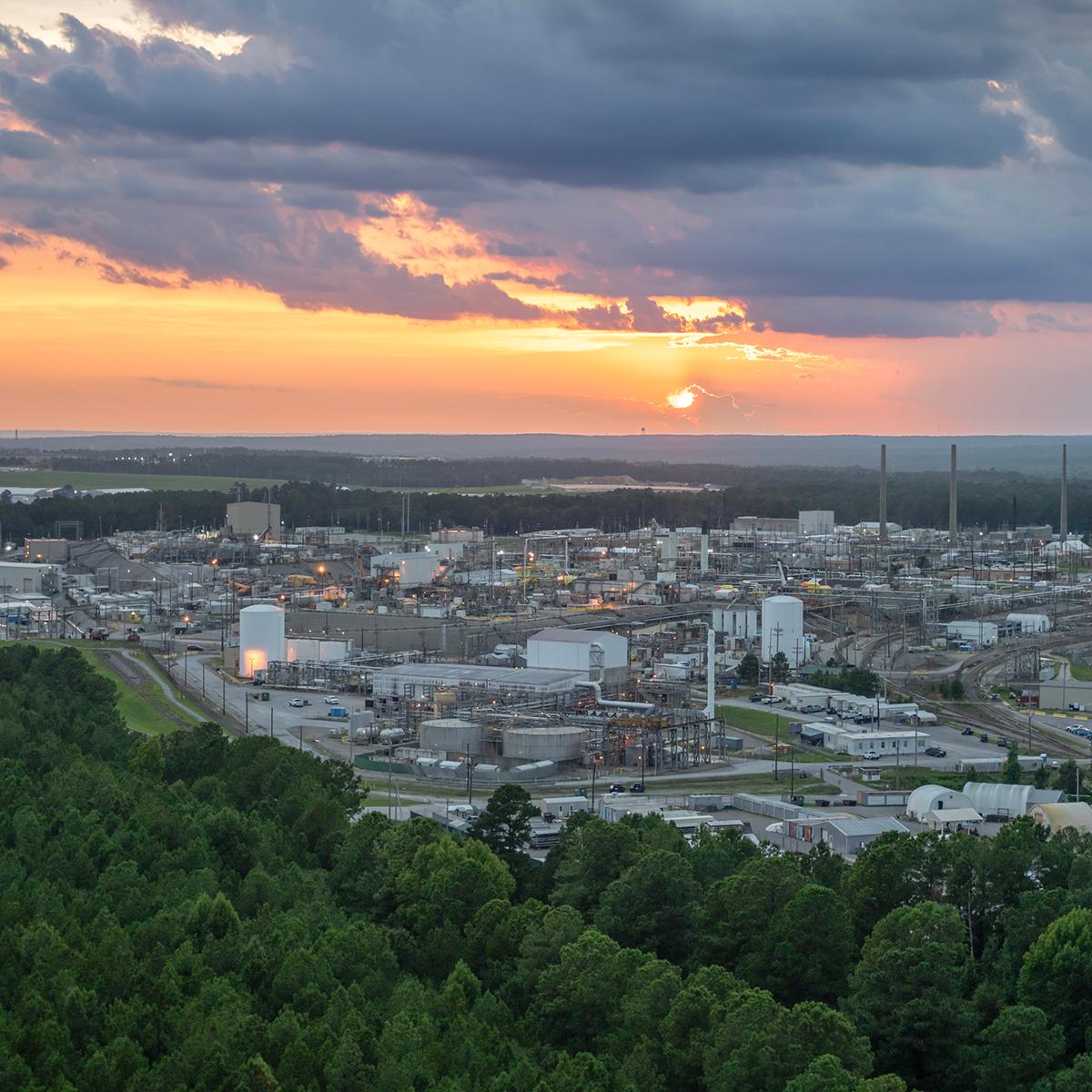
H Canyon at the Savannah River Site in an earlier official aerial photo; the image is not dated to the head-end work.
Image: Savannah River Site (U.S. Department of Energy)
Source · Press image from the Savannah River Site public website, used for news reporting.
The Department of Energy's Savannah River Site is ready to start head-end work in H Canyon, the first step in recovering uranium for up to 22.8 tonnes of HALEU, Nuclear Engineering International reported on Nov. 25.
Head end is the front of the process. Used fuel or target material arrives in heavily shielded equipment, is dissolved in acid and conditioned, and leaves as a clarified solution for two later solvent-extraction steps, the first and second cycles. Kevin Moeller, who manages H Canyon and HB Line, described head end as the gateway to the high-assay low-enriched uranium (HALEU) mission and the first system of a multiyear effort. He said crews had finished the planning, maintenance, testing and readiness work it needed.
The next gate is the first cycle. According to the report, the team is preparing to start first-cycle operations in the federal fiscal year that began on Oct. 1. That restart means bringing back hundreds of operating and maintenance procedures, several complex design changes and a long list of maintenance jobs. A storage tank for enriched uranium that had sat idle since about 2011 is already back in service after a pump replacement and a new discharge line.
Why the HALEU Tonnage Matters for Reactor Schedules
HALEU, enriched to between 5% and 20% uranium-235, is the fuel most advanced reactors need, according to Nuclear Engineering International, so its supply can set the schedule for projects that depend on it. Once the cycles are done, the recovered uranium is to be blended with natural uranium and transferred to commercial industry partners for advanced reactors, under the plan DOE and the site describe. None of the sources names those partners or the projects that would receive this material.
For scale, the HALEU tonnages on public record are the up to 150 t TerraPower may buy from ASP Isotopes over 2028-37, Oklo's 5 t DOE award and X-energy's conditional 4 t award. DOE said in February that the inventory is enough to fuel several proposed small modular reactors.
The step is DOE's own. H Canyon is run by DOE's Office of Environmental Management, and head-end readiness is an operating milestone at a DOE site. None of the sources read mentions a Nuclear Regulatory Commission licence for this step.
How Used Fuel Becomes HALEU at H Canyon
The uranium in the used fuel stored at Savannah River is highly enriched: the NRC calls uranium at 20% U-235 or more HEU, while HALEU sits between 5% and 20%. H Canyon, DOE's shielded chemical-separations plant, dissolves the fuel, recovers the uranium through solvent-extraction cycles and then, the site's fact sheet says, blends it down with natural uranium to make HALEU. The NRC lists downblending as one of two routes to HALEU, the other being enrichment in centrifuges.
That makes this fuel a by-product of cleanup rather than new enrichment capacity, which is why DOE can size it from an existing inventory. No source ties either figure below to a reactor, so the news is that a supply route is opening, not that any developer has fuel.
Two Figures: 19 t and 22.8 t of HALEU
Two different quantities are on record this year, and they should not be combined. DOE's February release, which announced the restart, said the used fuel stored at the site holds enough highly enriched uranium for as many as 19 metric tons of HALEU. A May 2026 SRS fact sheet says the mission, which it calls FUEL, will produce up to 22.8 metric tons by dissolving about 80% of the used fuel in L Basin. Nuclear Engineering International's November report uses the same figure, describing the inventory as holding enough highly enriched uranium for up to 22.8 tonnes. No source read explains the difference.
Head-end readiness at H Canyon is done; the cycles, blend-down and transfer are planned. DOE's February figure (as many as 19 t) and the SRS figure (up to 22.8 t) are separate.
Graphic: Voltgrid News
DOE also says recovering the uranium before disposal reduces the number of high-level waste canisters it must make. Before 2022, when H Canyon switched to dissolving fuel and sending the uranium to waste treatment, the site's fact sheet says the plant blended recovered uranium down into 301 metric tons of low-enriched uranium for commercial power reactor fuel, a different product from HALEU.
What Is Still Unconfirmed at H Canyon
No firm start date for the first cycle has been given, and the sources read give no date for the first HALEU shipment. DOE has not said which developers, reactors or projects will get the material, or on what terms. No source read explains why DOE's February figure is 19 t while the SRS fact sheet and the November report give 22.8 t.
Sources
- 01SRS prepares for HALEU productionNuclear Engineering Internationalneimagazine.com
- 02DOE’s Office of Environmental Management Restarts Uranium Recovery in South Carolina to Support Energy IndependenceU.S. Department of Energyenergy.gov
- 03H Canyon fact sheet: FUEL mission to produce up to 22.8 MT of HALEUSavannah River Sitepublic.srs.govas read on Nov 26, 2026
- Published
- Sources
- 3 cited