US Army Seeks Bids for Power Plants and AI Data Centers on 9 Bases
A US Army RFP, updated Nov. 23, seeks bids for 25-year enhanced use leases at nine installations for power plants, alone or with data centers, that provide resilient power within 1 hour of an outage. Bids due Jan. 18, 2027.
3 min read
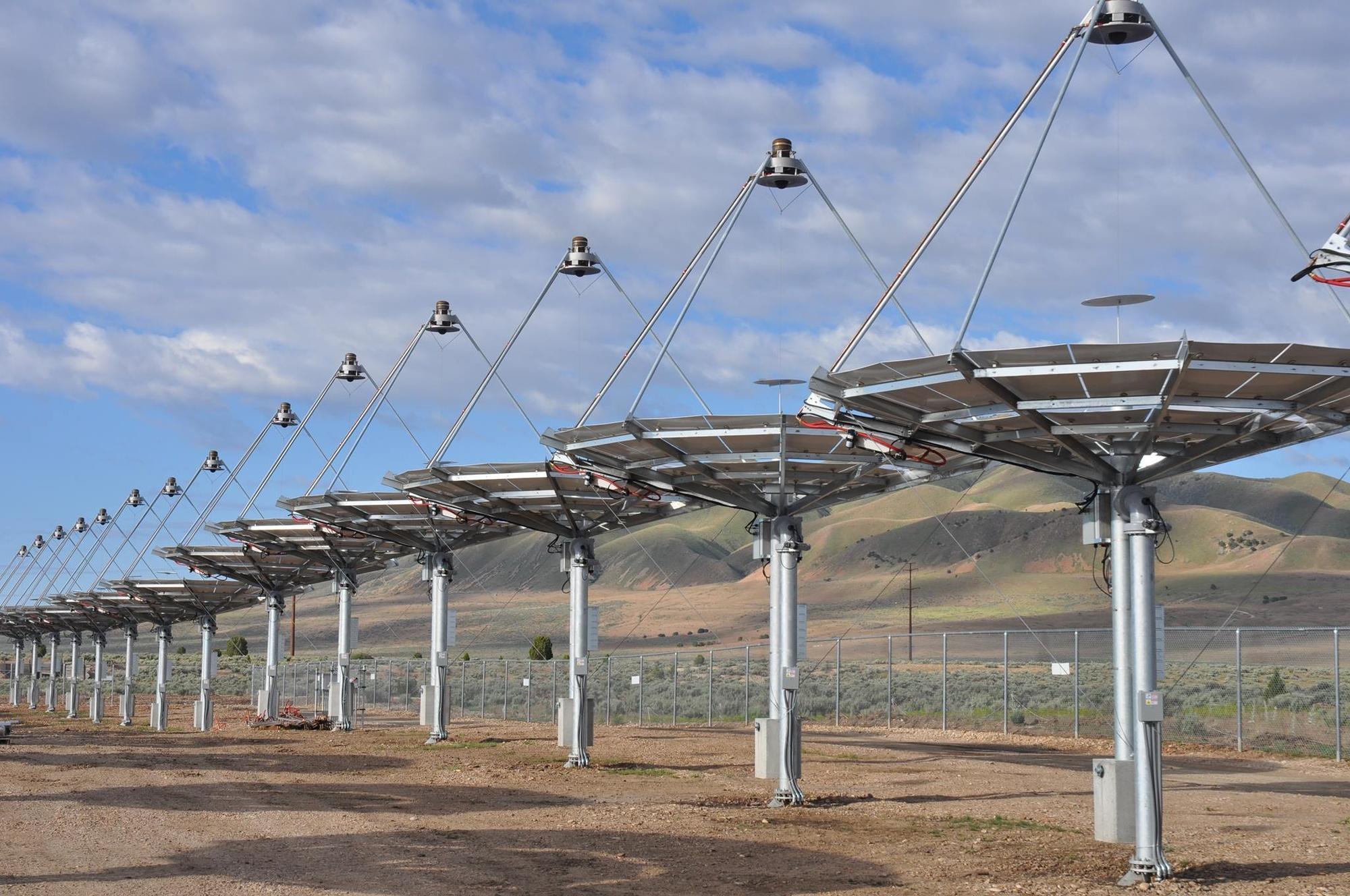
Solar dish array at Tooele Army Depot in Utah, one of the nine Army installations in the November power RFP. File photo of the site.
Image: U.S. Army Corps of Engineers (via DVIDS)
Source · U.S. federal government work, public domain.
The US Army is seeking bids for 25-year enhanced use leases at nine installations for private power plants, with or without AI data centers, that must provide resilient power to the base within one hour of a grid outage and for at least 14 continuous days. It is a solicitation, not an award.
The request for proposals, first published on SAM.gov on Nov. 20, updated on Nov. 23 and amended on Nov. 24, covers Blue Grass Army Depot, Pine Bluff Arsenal, Tooele Army Depot, Sierra Army Depot, Fort McCoy, Fort Bragg, Fort Hood, Fort Rucker and Joint Base Lewis-McChord. Bidders may propose generation alone or generation plus a data center, but the Army will not consider a data center on its own. Proposals are due Jan. 18, 2027, according to the notice, and DatacenterDynamics first reported the solicitation.
The resilience terms are the core of the solicitation. As part of what it gives the Army for the lease, the lessee must provide resilient power within one hour of a grid outage, meaning any loss of power from the grid serving the installation, for a minimum of 14 continuous days, and must provide any upgrades to the base's utility infrastructure needed to accept it. Bids that offer longer backup get preference. That is a shorter response time than the Army's June power solicitation for seven other installations, which asked for islanded power once an outage passed four hours, according to the Army. The notice states no megawatt figure for the resilience supply, and its text never uses the word islanded: it names microgrids only as one option for power-only bids and specifies no assets or controls.
The November RFP sets a 1-hour response after a grid outage; the June solicitation used an outage of more than 4 hours.
Graphic: Voltgrid News
Nuclear Is on the Technology List, and Bidders Must Find the Buyers
The notice names small modular reactors and other advanced nuclear systems among the technologies a power project may include, without saying nuclear is preferred, alongside low-emission gas turbines, reciprocating engines, fuel cells and hydrogen, utility-scale battery storage, and solar paired with dispatchable generation and storage. Hybrid portfolios are allowed. The notice text gives no megawatt figure and sets no size limit on data centers; the RFP's attachments may hold more detail. It ranks two data center types: first, hardened, isolated campuses built to the ICD 705 standard for Top Secret and IL6 workloads; second, hyperscale and AI or high-performance computing halls targeting a power usage effectiveness of 1.15 or lower.
The Army expects all power and computing capacity to be sold to third parties, and the developer must find those off-takers itself. Projects must work without any Army money and follow the utility rules of each territory, since some sites sit in competitive markets and others with vertically integrated utilities. Water use has to be net-neutral or better, with no draws on aquifers. The lease consideration is cash, in-kind value or both, at no less than an Army-appraised fair market value.
Army Sites Offered: Acreage, Power Lines and Gas Pipelines
DatacenterDynamics, citing the site documents, lists a single 358-acre plot at Blue Grass in Kentucky crossed by a 69 kV line; parcels of 36, 96 and 500 acres at Tooele in Utah, two of them over groundwater contaminated with trichloroethylene; 445 acres at Sierra in California; 385 acres of forest at Fort Bragg, served by Duke Energy; and 903 acres at Fort Rucker in Alabama. By Voltgrid's sum of DCD's figures, those five sites come to about 2,723 acres, with the other four sites' acreage not public, against roughly 3,125 acres in the Department of Energy's Hanford offer, which also asks bidders to bring their own power. Gas pipelines run on or next to the Tooele, Sierra and Fort Bragg parcels, giving gas turbines or engines a fuel supply close at hand.
The solicitation widens the Army's January call for data centers on four bases, where Carlyle and CyrusOne are now developing Army sites in Texas and Utah, according to DatacenterDynamics. The Army also buys smaller resilience projects directly, such as the Fort Buchanan microgrid in Puerto Rico.
What the Notice Does Not Say: No Megawatt Figure
The notice text does not say how large a plant each site can host or whether a cap applies to nuclear units; the June solicitation capped nuclear at 500 MW per unit, as the Army put it, without saying MWe or MWt. DatacenterDynamics reported that the documents for Fort McCoy, Fort Hood and Joint Base Lewis-McChord were removed from the notice, so their acreage and utility details are not public. The Army may award one or several leases and can change or cancel the solicitation before awards.
Sources
- 01US Army offers more land to private AI data centers, across nine sites - must include power generationDatacenterDynamicsdatacenterdynamics.com
- 02Enhanced Use Lease for Commercial Power Generation Facility (RFP W912-QR-DACA27-1-27-0015900)U.S. Department of the Army (SAM.gov)sam.gov
- 03Army launches tranche II of Strategic Capital Initiatives focused on energy resilienceU.S. Army (army.mil)army.mil
- Published
- Sources
- 3 cited