SpaceX Starmind: FCC Approves Up to 1 Million Data Center Satellites
The FCC's Space Bureau granted the Starmind license in part on Nov. 25, set milestones from 2033 to 2040 and deferred SpaceX's disposal plan for satellites above 600 km.
3 min read
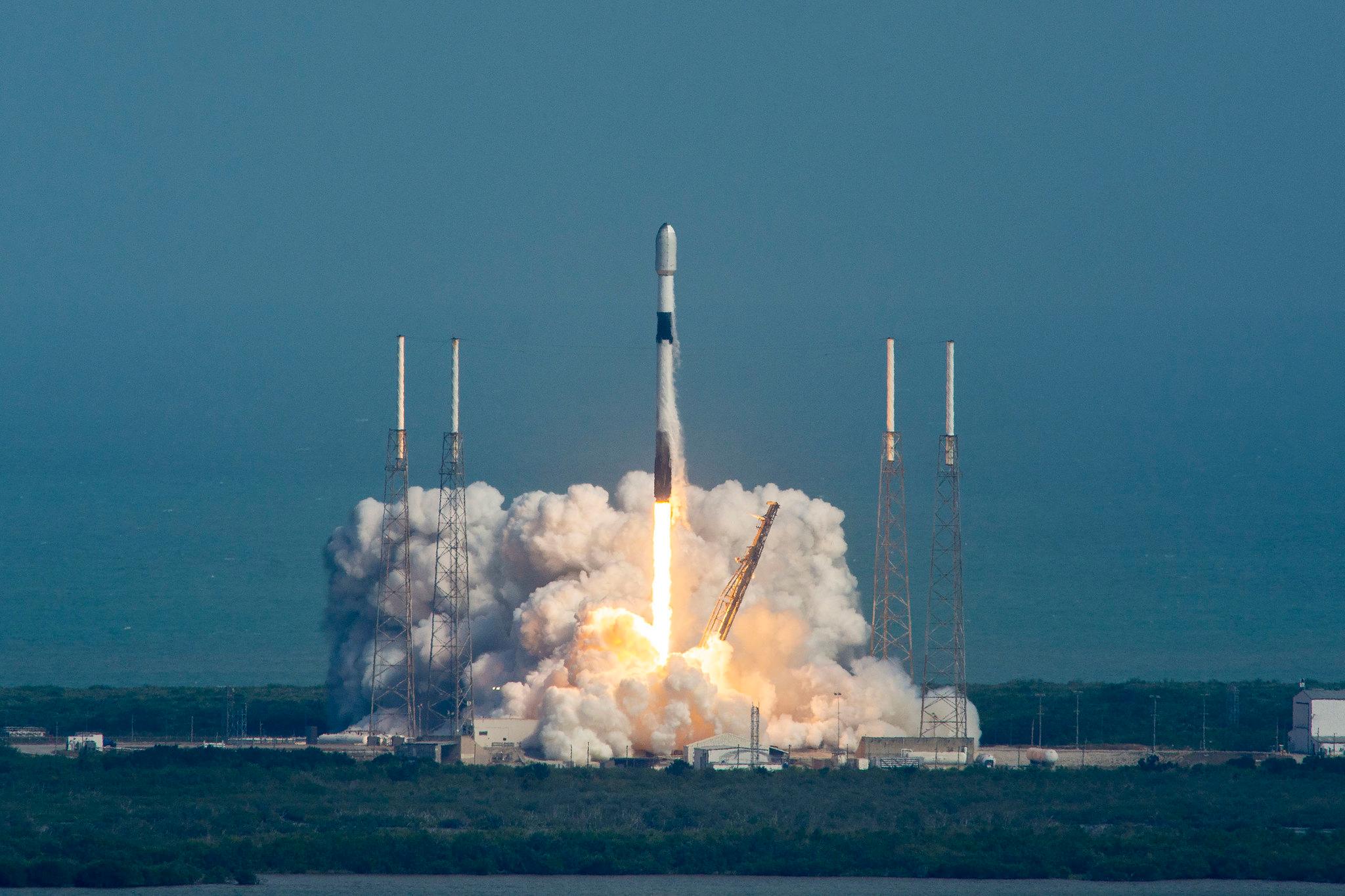
A SpaceX Falcon 9 lifts off on an earlier Starlink mission. The photo does not show Starmind hardware.
Image: SpaceX
Source · Press image from the SpaceX official Flickr stream, used for news reporting.
The Federal Communications Commission's Space Bureau on Nov. 25 authorized SpaceX's Starmind constellation of up to 1,000,000 satellites as orbital data centers, in a grant that is partly deferred and carries conditions.
FCC Chairman Brendan Carr announced the decision on X, CNBC reported. The order itself, DA 26-1273, was adopted and released the same day and signed by Space Bureau Chief Courtney Reinhard under delegated authority. It covers ICFS File No. SAT-LOA-20260108-00016, Call Sign S00798, which SpaceX filed on Jan. 30. The FCC marks it "granted-in-part/deferred-in-part," and it takes effect on release.
What the FCC Approved for Starmind
The grant covers a non-geostationary constellation in shells of 50 km each, at altitudes from 500 to 1,002 km, in 30-degree and sun-synchronous inclinations. SpaceX's nominal operating bands run from 550-568 km up to 967-1,002 km. Day-to-day traffic is meant to ride optical inter-satellite links, including links into Starlink. The only radio spectrum granted is backup and emergency telemetry, tracking and command, at 18.8-19.3 GHz (space-to-Earth) and 28.6-29.1 GHz (Earth-to-space), on an unprotected, non-interference basis.
The license term is 15 years and starts when SpaceX certifies that the first Starmind satellite is in orbit and operating to the terms of the grant. SpaceX has 30 days to decline the grant as conditioned; silence counts as acceptance.
Milestones and the 600 km Disposal Hold
The authorization becomes null and void unless SpaceX meets four deadlines. One satellite must be operating by Nov. 25, 2033. Ten percent of the maximum number, which is 100,000 satellites, must be operating by Nov. 25, 2035, and 50 percent, or 500,000, by Nov. 25, 2038. The remainder must follow by Nov. 25, 2040. The bureau waived the surety bond requirement and the processing-round procedures, and it applied the newer deployment milestones the Commission adopted in July.
Starmind's FCC authorization is null and void if SpaceX misses a milestone, starting with 1 satellite by Nov. 25, 2033.
Graphic: Voltgrid News
The bureau found SpaceX's debris plan compliant only for satellites operating below 600 km. SpaceX asked to dispose of satellites above 600 km in Earth disposal orbits or heliocentric orbits instead of letting them re-enter the atmosphere; the FCC deferred that waiver for lack of information. Before it deploys any satellite that will not re-enter, SpaceX must file a modification application with a final debris plan. SpaceX must also report twice a year, on Jan. 1 and July 1, on conjunction events, removals, re-entries and satellites deployed.
Why It Matters for Compute and Power
The order is a spectrum and orbit license, not an engineering review. It states no power, compute or launch figures, and the FCC made no finding on whether orbital data centers make technical or economic sense. For anyone sizing terrestrial demand, the figure to watch is the schedule: 100,000 satellites operating by Nov. 25, 2035 sets the pace, and the deferred 600 km question bears on how many of the million can sit in the higher shells. As Voltgrid reported on Nov. 15, a study that is not peer reviewed warned that constellations of this size could put more satellites in view than stars.
The FCC rejected petitions to deny from Amazon's Kuiper Systems, Viasat and the American Astronomical Society. It dismissed environmental and optical-astronomy objections as outside its authority. Amazon had called Starmind a "lofty ambition rather than a real plan," according to CNBC.
CNBC reported that Google's Project Suncatcher launched its first AI chips into space in October 2026, and that Blue Origin petitioned in March to launch up to 51,600 satellites in its Project Sunrise constellation. On the ground, Voltgrid News also covered SpaceX's Arizona and Texas data center plans.
What Is Not Confirmed Yet
SpaceX did not respond to CNBC's request for comment. No per-satellite power, compute or cost figures appear in the order, so any such numbers come from SpaceX or third parties and remain unverified here. SpaceX's disposal plan above 600 km is unresolved until the FCC rules on a modification application, and no launch date for the first Starmind satellite has been set in the order.
Sources
- Published
- Sources
- 2 cited