SpaceX Starbase Gas Plant: 35 Turbines, No Grid Link, $24B Estimate
Texas permitted 35 gas turbines at SpaceX's Starbase site that Politico puts at 750 MW, for a plant and compute site that would not connect to the grid. What is permitted, the GE Vernova 7E plan and what is undisclosed before the Dec. 9 tax hearing.
5 min read
Follows SpaceX Starbase Air Permit: Texas Approves 35 Turbines, 750 MW Off-Grid
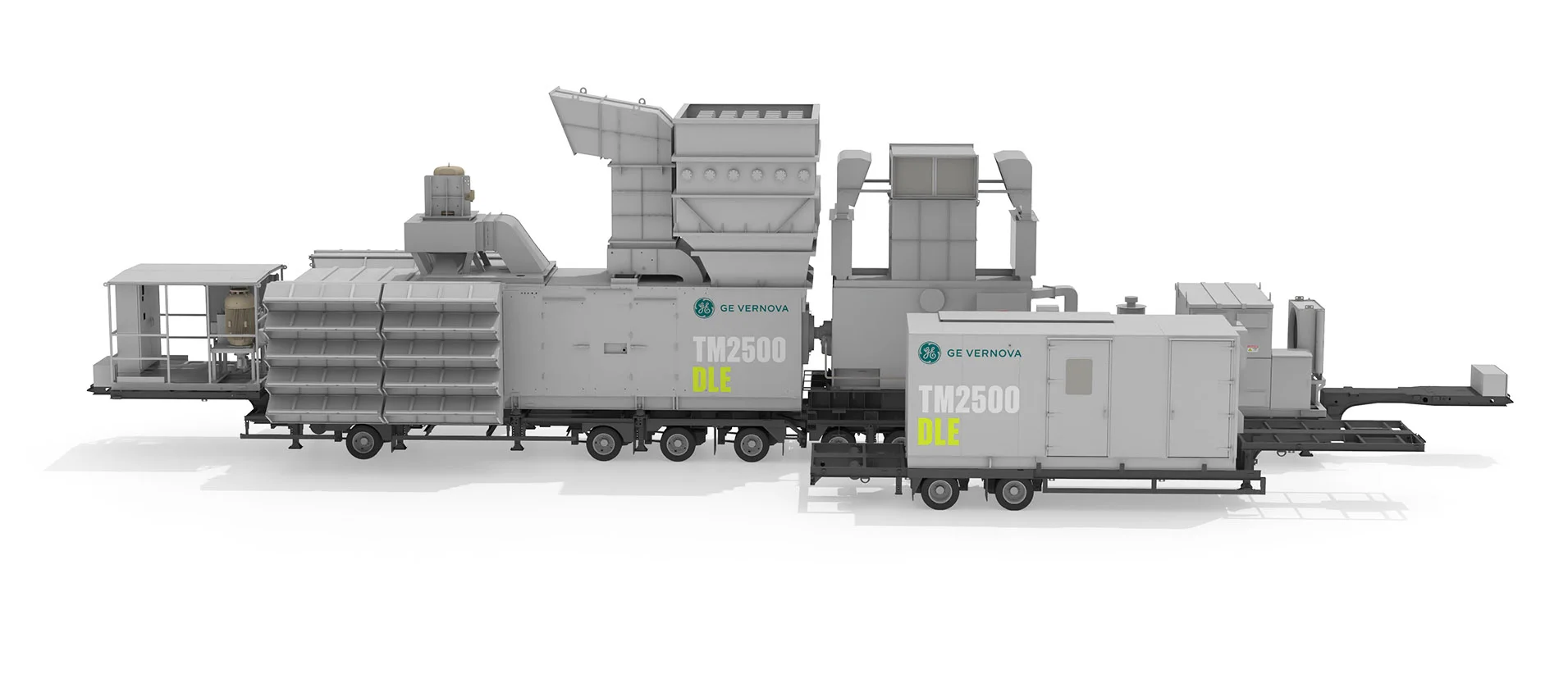
A GE Vernova TM2500 aeroderivative gas turbine, shown as a manufacturer product image in its DLE version. The Starbase filing lists TM2500 units among its temporary turbines; this is not a picture of the site.
Image: GE Vernova
Source · Product image from the GE Vernova website, used for news reporting.
SpaceX plans a gas plant and a super-compute facility at Starbase near Brownsville, Texas, and says the site will make its own electricity: 35 natural gas turbines producing 750 MW, according to a copy of the air permit that Politico reported Texas regulators issued on Nov. 16, 2026. The next step is local. The Starbase City Commission takes up a Chapter 312 property tax abatement and a Chapter 380 economic development agreement on Dec. 9, 2026, the city's hearing notice says.
Voltgrid first covered the project on Nov. 10, when the city notice showed SpaceX seeking a tax break on a $24 billion gas plant and compute site, and again on Nov. 18, when the Texas Commission on Environmental Quality (TCEQ) approved the air permit. This piece sets out what is permitted, what it will run on and what has not been disclosed.
The plant would not connect to the grid, Politico reported, and SpaceX said in a Nov. 12 statement carried by Reuters that the Starbase facility would make its own electricity rather than draw from the public grid. If the plant stays off the grid, as Politico and SpaceX describe it, the turbines on the site are the campus's only supply: on SpaceX's account, the electricity comes from the site's own plant.
Two-Stage Turbine Plan: Temporary Units, Then 7E
The registration, filed on Sept. 8, 2026 by Trinity Consultants on SpaceX's behalf, asks for TCEQ's Air Quality Standard Permit for Electric Generating Units, a pre-written permit rather than a case-by-case review, The 956 Report found after obtaining the filing. It describes two stages. The first, which the filing calls temporary, has 35 turbines: six GE Vernova TM2500 (Plus) Gen 6 units rated at 25.4 MW each, two TM2500 (+G4) Gen 8 units at 27.4 MW each, nine Mitsubishi FT8 units at 27.1 MW each and 18 Solar SMT-130 units at 16.48 MW each. The 956 Report puts that set at about 748 MW, the figure RGV Business Journal also gives.
The permanent stage replaces them with eight GE Vernova 7E turbines rated at 88.56 MW each, about 708 MW combined according to The 956 Report. The filing says the permanent units start as the temporary ones leave the site, and lists both the construction and operation start dates as "TBD". The filing has the turbines running in simple cycle only, without a steam turbine to recover waste heat, The 956 Report says. The filing also says the units are used or refurbished, were not bought directly from the manufacturer, and generally come without manufacturer performance guarantees.
The 956 Report sums the temporary stage at about 748 MW and the permanent 7E stage at about 708 MW; the swap date is listed as TBD, and the plant would not connect to the grid.
Graphic: Voltgrid News
Politico's 750 MW figure comes from the permit copy, not from a sum of the filing's ratings, and Politico did not say which stage it covers. Voltgrid has not read the permit itself.
This is on-site generation, not a microgrid. None of the documents describes battery storage, a microgrid controller or the controls needed to keep an island stable when a turbine trips. Without that detail, it is a gas plant described only as self-supplying.
The Air Permit and Its NOx Limit
The permit allows up to 248 tons a year of nitrogen oxides (NOx), Politico reported, just under the 250-ton line that triggers more robust review, including a public hearing. The filing's own cap for the first stage is 248.86 tons, The 956 Report found. If emissions run above the filing's figures, the filing says the plant's capacity factor will be cut in proportion, so the plant would run less. The registration allows 50 startup or shutdown events per turbine a year, The 956 Report says. The 956 Report also reads the filing's own emission tables as putting the plant above the Title V threshold, so a federal operating permit would follow.
TCEQ issued the permit three days after FracTracker Alliance and Public Citizen filed a complaint on Nov. 13 alleging that construction had started without authorization, citing images of cranes on the site between Oct. 9 and Nov. 12, Politico reported. TCEQ did not answer questions about the complaint. Gov. Greg Abbott had ordered data-center permits held, air permits included, until the Electric Reliability Council of Texas (ERCOT) finishes an audit due on Dec. 10. TCEQ said it had resumed normal review after being told ERCOT had gathered what it needed.
Tax Abatement Request and the $24 Billion Estimate
The city notice names Space Exploration Technologies Corp. as owner and applicant and puts the capital investment for the initial phases at about $24 billion, an applicant estimate that may cover several phases and future expansions. The site is about 444 acres between Boca Chica Boulevard and the Port of Brownsville, in the Cameron County Enterprise Zone. The notice gives neither the size nor the term of the abatement.
SpaceX said it expects to spend more than $24 billion at Starbase, according to Reuters, and said the Texas project had generated more than 3,000 construction jobs and would support more than 500 permanent jobs. The Texas Tribune reported that Brownsville de-annexed the tract earlier this year at SpaceX's request after the company offered $220 million for water and wastewater projects, which kept it outside Brownsville's 90-day data-center moratorium. Starbase later annexed the land.
What SpaceX Has Not Disclosed
SpaceX has not said publicly who will use the compute or how large it will be. The filing lists the site's main industry code as computer processing and data preparation, but does not mention a data center, The 956 Report found. Musk told investors SpaceX intends to build 10 to 20 GW of AI compute capacity next year, Politico reported, without tying any of it to this site.
The gas supply is also not disclosed. The 956 Report estimated the turbines would burn about 197 million cubic feet of gas a day at full load and said it is seeking records on any new pipeline. No source describes a lateral, a supply contract or backup fuel. There is no published schedule for first power or for the change to the 7E units. SpaceX did not respond to Politico's request for comment.
What to Watch Next
The Starbase City Commission hearing on the abatement and the Chapter 380 agreement is set for 7:00 p.m. on Dec. 9, 2026. ERCOT's audit, the condition for lifting the state's pause, is due on Dec. 10. Watch also for TCEQ's response to the FracTracker and Public Citizen complaint, any pipeline filing for gas to the site, and the federal operating permit that, by The 956 Report's reading of the filing's emission tables, the plant will also need.
Sources
- 01Notice of Public Hearing: SpaceX tax abatement, City of Starbase, Dec. 9, 2026City of Starbasecdn.prod.website-files.com
- 02SpaceX plans over $74 billion investment in Texas, Arizona AI campusesReuters via The Starthestar.com.my
- 03Texas issues air permit for massive SpaceX data centerPOLITICO (via Yahoo News)yahoo.com
- 0435 Gas Turbines, One Data-Processing Code: Inside SpaceX's Filing for a Power Plant at the Port of BrownsvilleThe 956 Reportthe956report.com
- 05SpaceX plans $24 billion data center project in StarbaseThe Texas Tribunetexastribune.org
- 06SpaceX seeks economic incentives for \$24B Starbase data center and power plantRGV Business Journalrgvbusinessjournal.com
- Published
- Sources
- 6 cited