Valar Atomics Seeks Utah Nuclear Data Center Permit, 40-120 Reactors
Valar Atomics' Carbon County application covers a gas plant, data centers and about 640 acres near Wellington; the planning commission's Nov. 12 outcome has not been reported.
Chips & Power DeskEdited by Ege Erten
Updated 4 min readAI-assisted
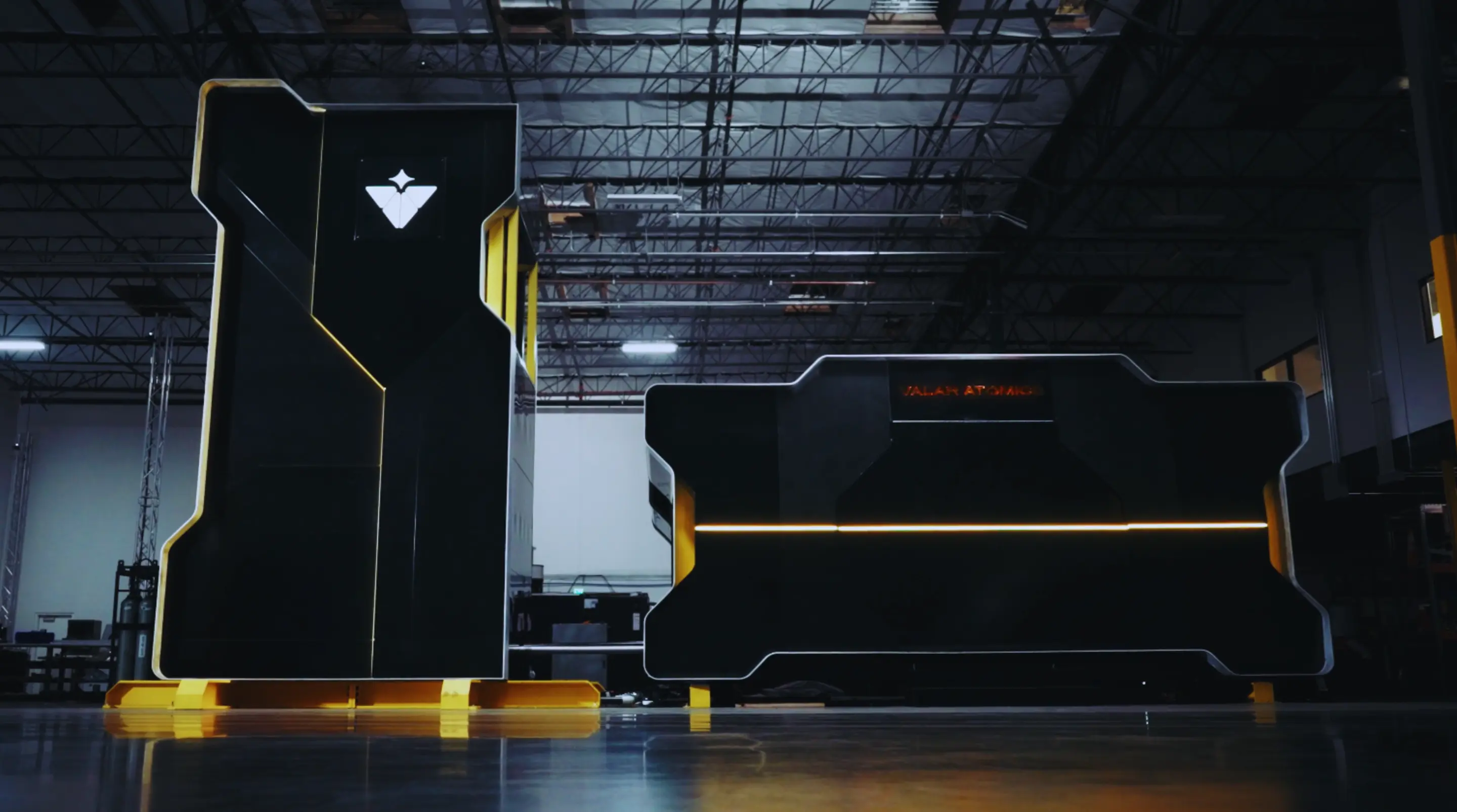
Valar Atomics' Ward 250 test reactor, as shown on the company's site. It is a research unit, not the commercial design the Carbon County campus would host.
Image: Valar Atomics
Source · Press image from the Valar Atomics website, used for news reporting.
Update (Nov 13, 22:16 UTC): The Carbon County Planning Commission approved Valar Atomics' conditional use permit for the Raceway Energy Campus with conditions on Nov. 12, The Salt Lake Tribune reported; Commissioner Lisa Simmons cast the only no vote, and no public hearing was held. Valar still needs a county building permit, a Utah Division of Air Quality permit and an NRC construction permit. The Tribune reports Valar puts the campus at around 3 gigawatts.
Valar Atomics has asked Carbon County, Utah, for its first permit for the Raceway Energy Campus, a planned nuclear-powered data center campus. The conditional use permit covers 40 to 120 reactors, a natural gas plant and data centers, and the county planning commission was scheduled to take up the request on Nov. 12. No report of that meeting has been found.
The Salt Lake Tribune, which obtained the application through an open records request, reported that the campus would sit on about 640 acres of state trust land near Wellington. The Carbon County Planning Commission's public notice lists the permit as the only agenda item of a special meeting at 6:30 p.m. on Nov. 12. The notice describes the project as advanced nuclear energy, nuclear fuel, manufacturing and data center facilities on parcel 2A-1292-016S, for the Utah Trust Lands Administration and Valar. Neither source says what the commission decided.
What Valar's Utah Permit Application Asks For
According to the Tribune, the natural gas plant would power manufacturing, labs and data center buildings until the reactors come online. Afterward, the plant, with transmission lines, battery storage and substations, would serve as back-up or supply peak periods and new uses. The Tribune's account of the application gives no gas plant size and no output per reactor, so the campus's total capacity in MW or GW cannot be calculated from the documents reported so far.
Valar also wants the county to agree that its planned activities all qualify as a conditional use under the site's "mining and grazing" zoning, and that changes in reactor designs or in the number of reactors or buildings would stay covered by the same permit. The Tribune says the reactors are expected to use helium in a closed loop, and quotes the application's "zero local water" as Valar's proposal for the site, with the amount needed for fire protection, plumbing and construction set later through a water right or supply contract. Spent fuel would go into dry storage licensed by the Nuclear Regulatory Commission (NRC) or authorized by the Department of Energy (DOE).
Why it matters for data center power
For data center planners, the signal is the sequence. In the application, the gas plant would be the first firm supply, ahead of future reactors; nothing is built and no size is given. Valar's public affairs chief Harry Hansen told the Price City Council on Oct. 28 that the full vision is "decades" of building and that he could not say when a commercial reactor would switch on, the Tribune reported. NPR separately reported a company proposal to the BLM with first reactors as soon as 2028 and the full site by 2032, which Valar has not confirmed for the state-land campus. Hansen said Valar will ask the NRC for a license to operate once a design is complete, and the county permit is a land-use approval that does not replace that step. No customer is named for the Carbon County campus.
State Sen. Nate Blouin, a Democrat from Millcreek, told the Tribune the application is the first mention of a "sizeable" gas plant at the site and called it a "bait-and-switch" for a company promoting unproven nuclear technology.
The county permit covers state land only. Valar's lease from the Trust Lands Administration began at 480 acres, with 160 more planned if the Utah National Guard relocates from adjacent land. A separate proposal to place data centers and hundreds of small reactors on adjoining federal land, about 9,000 acres according to the Tribune's Oct. 29 report, is under Bureau of Land Management (BLM) review, and the company says that process can take years. NPR, reporting on Sept. 30 from the company's BLM proposal, put it at 456 reactors, about 9.6 GW in aggregate, at 25 MWe per unit; these are company-proposal figures reported by NPR, not BLM findings. The reactor counts come from different documents: the county application cites 40 to 120 on the 640-acre state parcel, while KUTV reported around 70 after an Oct. 6 planning commission presentation, without attribution.
The county permit covers about 640 acres of state land; the separate federal proposal under BLM review is about 9,000 acres, as reported by the Tribune.
Illustration (AI-generated)
The Tribune also reported that Valar's test reactor reached self-sustaining criticality at the Utah San Rafael Energy Lab in neighboring Emery County, announced in June. That is a test reactor, not the commercial design the Carbon County campus would host.
What a County Conditional Use Permit Allows
A conditional use permit is a local land-use approval: it says a project may sit on a parcel under its zoning, with conditions the county sets on health, safety, water use and the environment. Valar's application asks Carbon County for that, covering 40 to 120 reactors on state land zoned for mining and grazing, the Salt Lake Tribune reported.
It does not license a reactor. The application leaves reactor thermal power to the Nuclear Regulatory Commission and the Department of Energy, the Tribune says, and Valar says its Ward 250 test reactor runs under DOE authorization. So a yes in Price would still leave the nuclear approvals, and any federal land decision, ahead.
What Is Still Unconfirmed After the Nov. 12 Meeting
The outcome of the Nov. 12 planning commission vote was not available in any report we could read on Nov. 13, so whether the permit was approved, conditioned or postponed is unconfirmed. The reactor model and per-unit output, the gas plant's size, any named data center customer and the BLM decision date are also undisclosed. Opponents have asked the county commission for a temporary moratorium on large energy projects through a citizen petition, and no action on it has been reported. Hansen said on Oct. 28 Valar would like to start moving dirt next year; NPR's reviewed documents had non-nuclear construction starting as soon as the end of 2026.
Changes
The Carbon County Planning Commission approved Valar Atomics' conditional use permit for the Raceway Energy Campus with conditions on Nov. 12, The Salt Lake Tribune reported; Commissioner Lisa Simmons cast the only no vote, and no public hearing was held. Valar still needs a county building permit, a Utah Division of Air Quality permit and an NRC construction permit. The Tribune reports Valar puts the campus at around 3 gigawatts.
First published.
Sources
- 01Carbon County Planning Commission Special MeetingUtah Public Notice Website (Carbon County)utah.gov
- 02Valar Atomics plans a fleet of Utah nuclear reactors, without public hearings so farThe Salt Lake Tribunesltrib.com
- 03A Utah startup has officially submitted its plans for nuclear-powered data centers. As it seeks its first permit, here’s what we know. - The Salt Lake TribuneGoogle Newsnews.google.com
- 04Carbon County approves permit for Valar Atomics' data center, nuclear projectThe Salt Lake Tribunesltrib.com
- Editor
- Ege Erten
- Published
- Updated
- Sources
- 4 cited
- Standards
- AI-assisted