Bosch Semiconductors Division Starts Jan 2028, Targets €5B Chip Sales
Bosch will set up a Semiconductors division inside Mobility on Jan. 1, 2028, aiming for about €5 billion in chip sales by 2030 and opening its fabs to outside customers.
Chips & Power DeskEdited by Ege Erten
2 min readAI-assisted
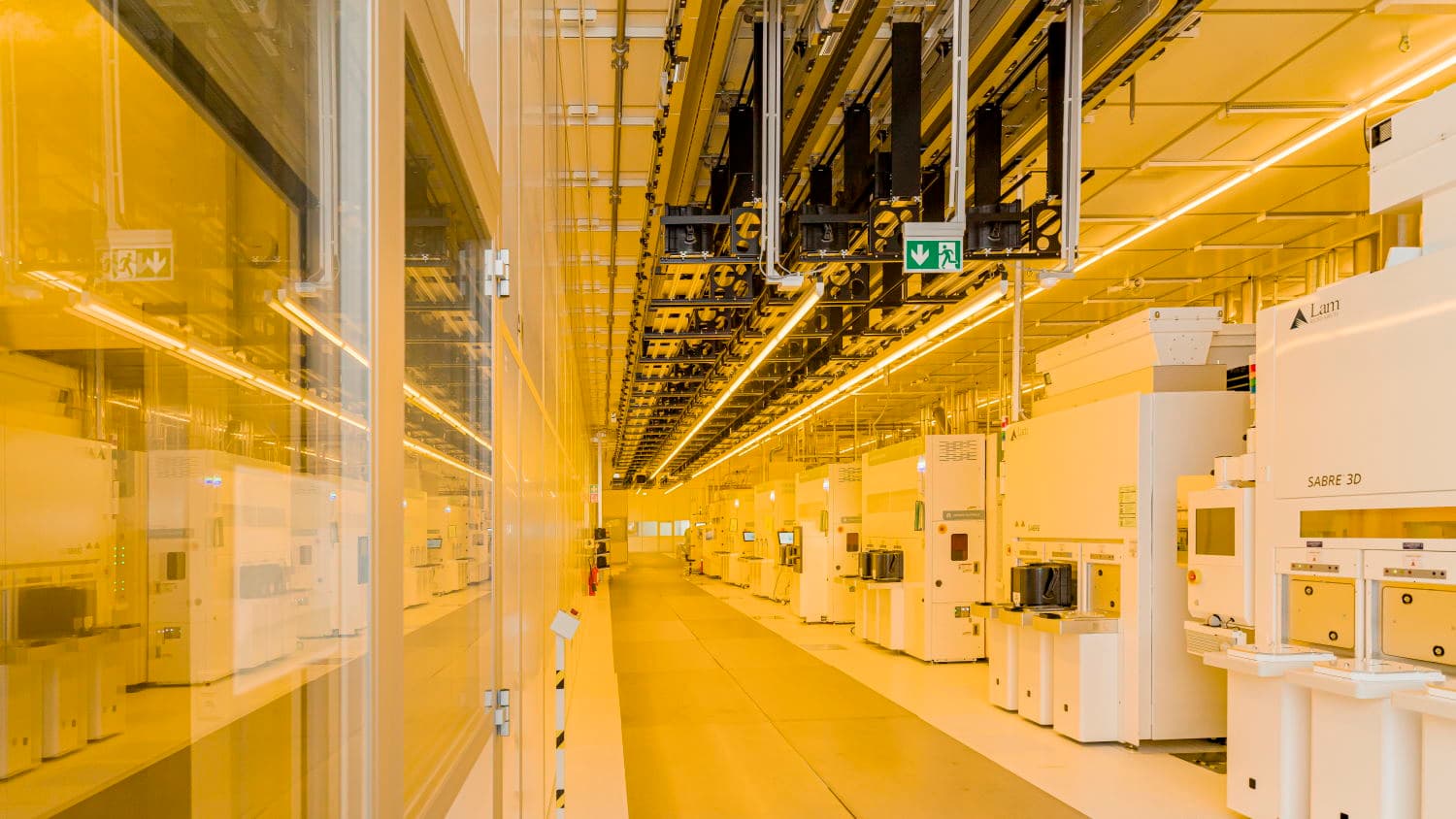
View into the clean room production at the Bosch semiconductor plant in Dresden (Bosch).
Image: Bosch
Source · Press image from the Bosch newsroom, used for news reporting.
Bosch said on Nov. 3, 2026 that it will create a dedicated Semiconductors division inside its Mobility business sector on Jan. 1, 2028, with a target of about €5 billion in semiconductor sales by 2030.
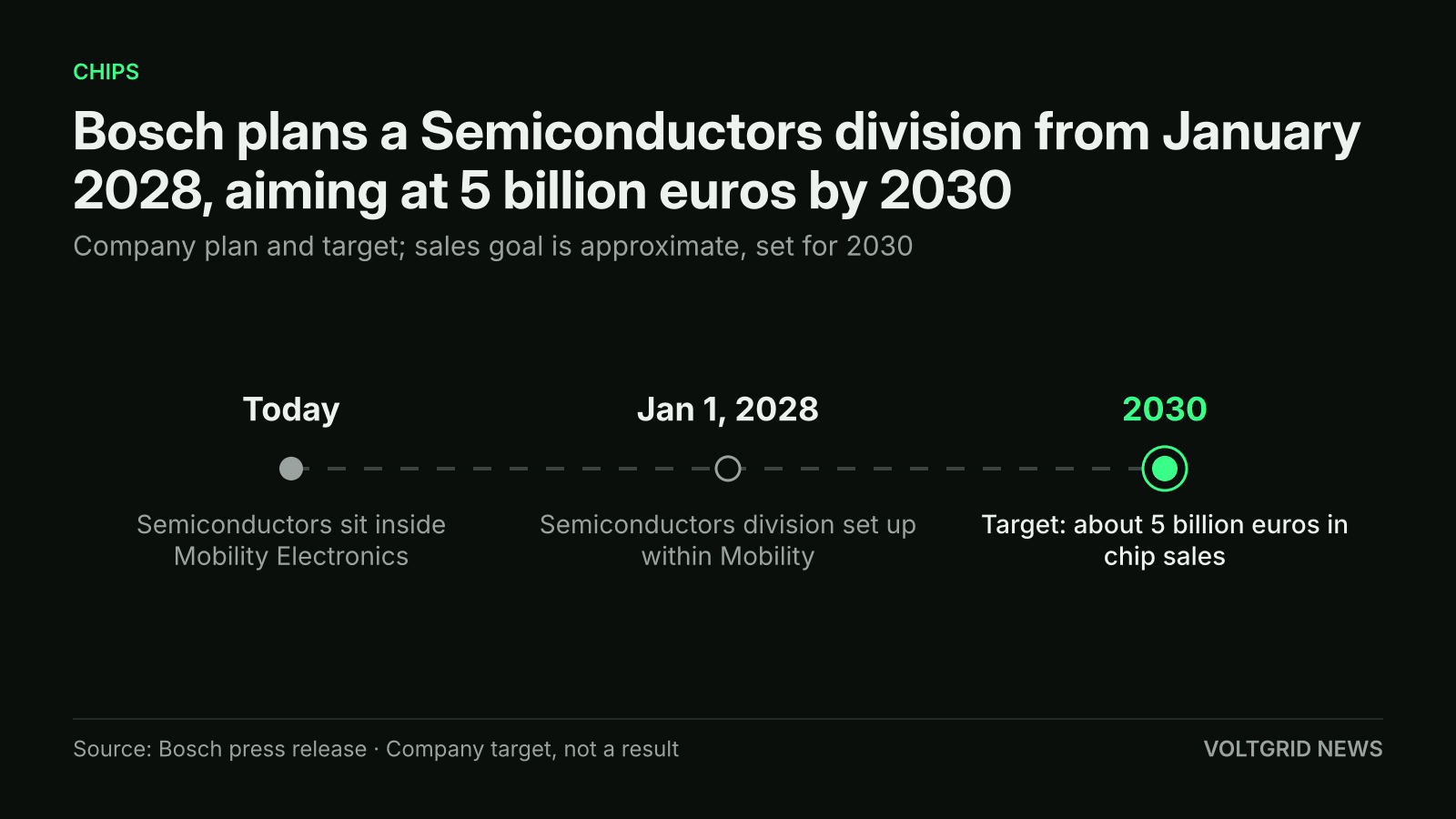
Bosch sets a Semiconductors division for Jan. 1, 2028 and targets about 5 billion euros in chip sales by 2030, a company goal.
Illustration (AI-generated)
The Stuttgart-based group said in its press release that the unit will take over the chip activities now housed in Mobility Electronics. From January 2028, Mobility Electronics will keep the automotive electronic control-unit business. The change follows the Mobility restructuring Bosch announced at the end of October 2026. The Next Web reported that the unit stays part of Bosch and does not become a separate company.
Bosch wants customers beyond the car. It named robotics, consumer electronics such as smartphones and wearables, and AI-related data centres as growth markets, and said it will make more of its manufacturing capacity available to external partners and expand its foundry activities. Erik Rein, who is responsible for Bosch's semiconductor business, said the company's strengths are its leadership in MEMS sensors and its silicon carbide chips and application-specific integrated circuits (ASICs).
For buyers of power and sensor chips, the foundry opening is the point to watch. Bosch has not said how much capacity it will offer, at which fabs, or on which processes, so the €5 billion target is a goal and not a capacity plan. Carmakers spent part of the autumn managing shortages during the Nexperia dispute, The Next Web noted, and an outside source of European-made silicon carbide and sensor parts would widen their options.
Fabs and silicon carbide capacity
Bosch said it runs about 40 semiconductor locations worldwide covering research, development and manufacturing. It has invested about €3 billion in its wafer fabs in Dresden and Reutlingen, Germany, and is spending around $2 billion to equip its Roseville, California, site to make specialised silicon carbide chips. It also plans to expand its semiconductor testing centre in Penang, Malaysia, by the middle of the next decade.
In Dresden, Bosch holds a 10% interest in European Semiconductor Manufacturing Company (ESMC) GmbH, the TSMC-led joint venture building a fab there. The company cited a McKinsey study that puts the extra demand from generative AI alone at up to 3.6 million additional wafers a year by 2030.
Bosch enters a field where Europe's power-chip makers are also adding capacity. As Voltgrid News reported, Infineon plans a €1.1 billion 300 mm gallium nitride line in Villach, Austria. Separately, Samsung has reportedly told customers it will close its 8-inch foundry lines by 2030, which would tighten mature-node supply.
What is not confirmed yet
Bosch has given no interim revenue figure, no current semiconductor sales number in the release, and no named external foundry customer. It has not said how the division will be staffed or whether any plant will change hands. The 2030 figure is a company target, and the January 2028 start is a planned date.
Sources
- 01Bosch to create semiconductor division from January 2028Google News · Reuters · news.google.com
- 02Focus on promising markets: Bosch is strengthening its semiconductor business with a dedicated divisionBosch press release · bosch-presse.de
- 03Bosch gives chips their own division, eyeing EUR 5bn in sales by 2030The Next Web · thenextweb.com