Samsung Reportedly Tells Customers It Will Exit 8-Inch Foundry by 2030
Samsung has reportedly told customers it will close all 8-inch (200 mm) foundry lines by end-2030, leaving Korean PMIC and driver-IC makers short of mature-node capacity.
Chips & Power DeskEdited by Ege Erten
3 min readAI-assisted
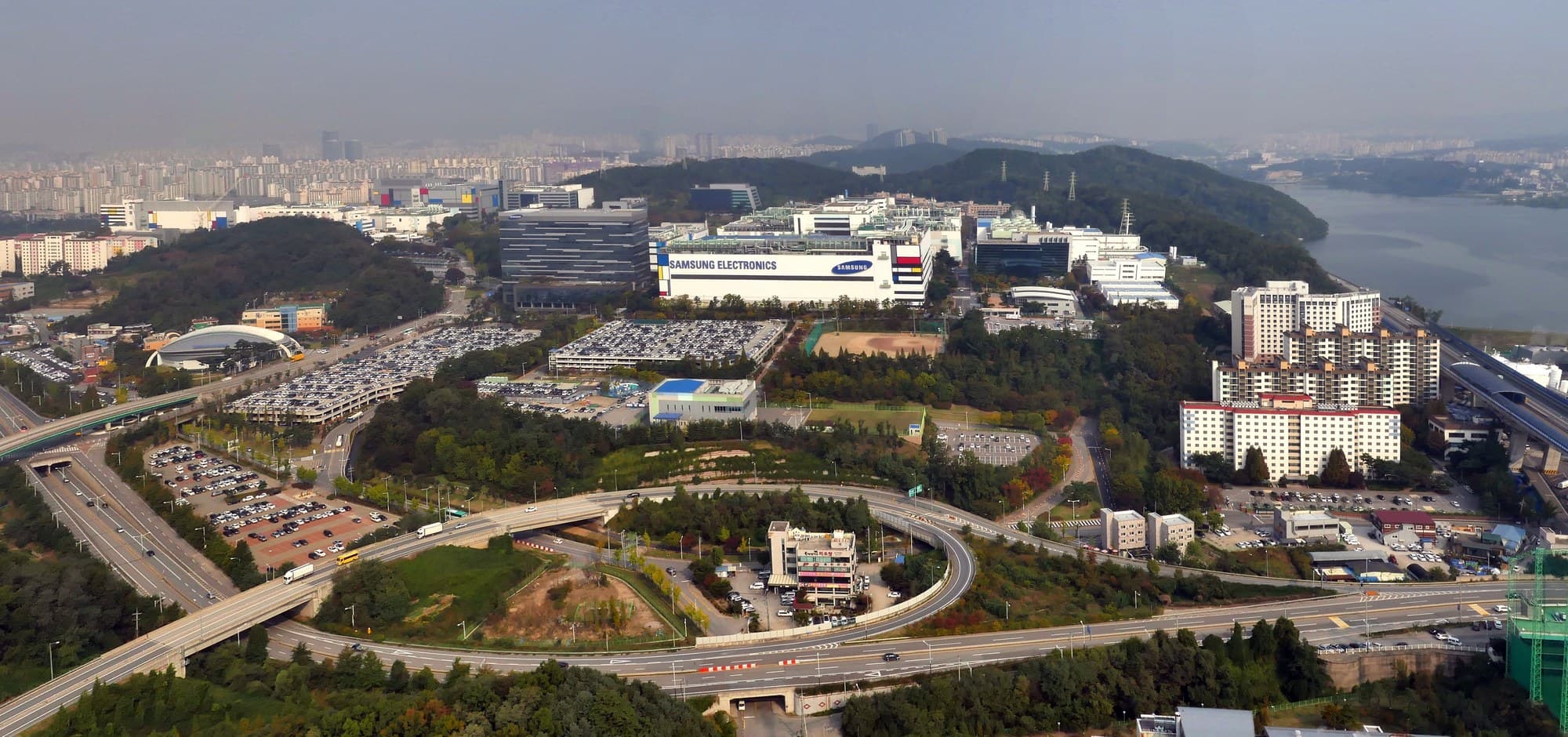
Samsung's Giheung campus, where its three 8-inch fabs sit, in a 2018 company photo.
Image: Samsung Electronics
Source · Press image from the Samsung Electronics newsroom, used for news reporting.
Samsung Electronics has told customers it will shut every 8-inch (200 mm) wafer foundry line by the end of 2030, according to Korean trade publication TheElec, which cited industry sources on Nov. 2, 2026.
It is the first time a deadline has been attached to the exit. Samsung had said only that it would run down its 8-inch lines gradually. Han Jin-man, who heads Samsung's foundry business, told employees in June that the 8-inch operation was still profitable but that the market had become "crowded and price-driven", and that Samsung planned to wind it down in stages, The Korea Herald reported on June 12. Samsung has not confirmed the 2030 date publicly.
This is about wafer size, not the 8 nm process. The lines in question make mature-node chips at 65 nm to 180 nm, a different matter from Samsung's 8LPU+ 8 nm node. The 8-inch parts matter for AI hardware because they include power management ICs (PMICs), the chips that regulate voltage on server boards and accelerator cards.
What is shutting and who is exposed
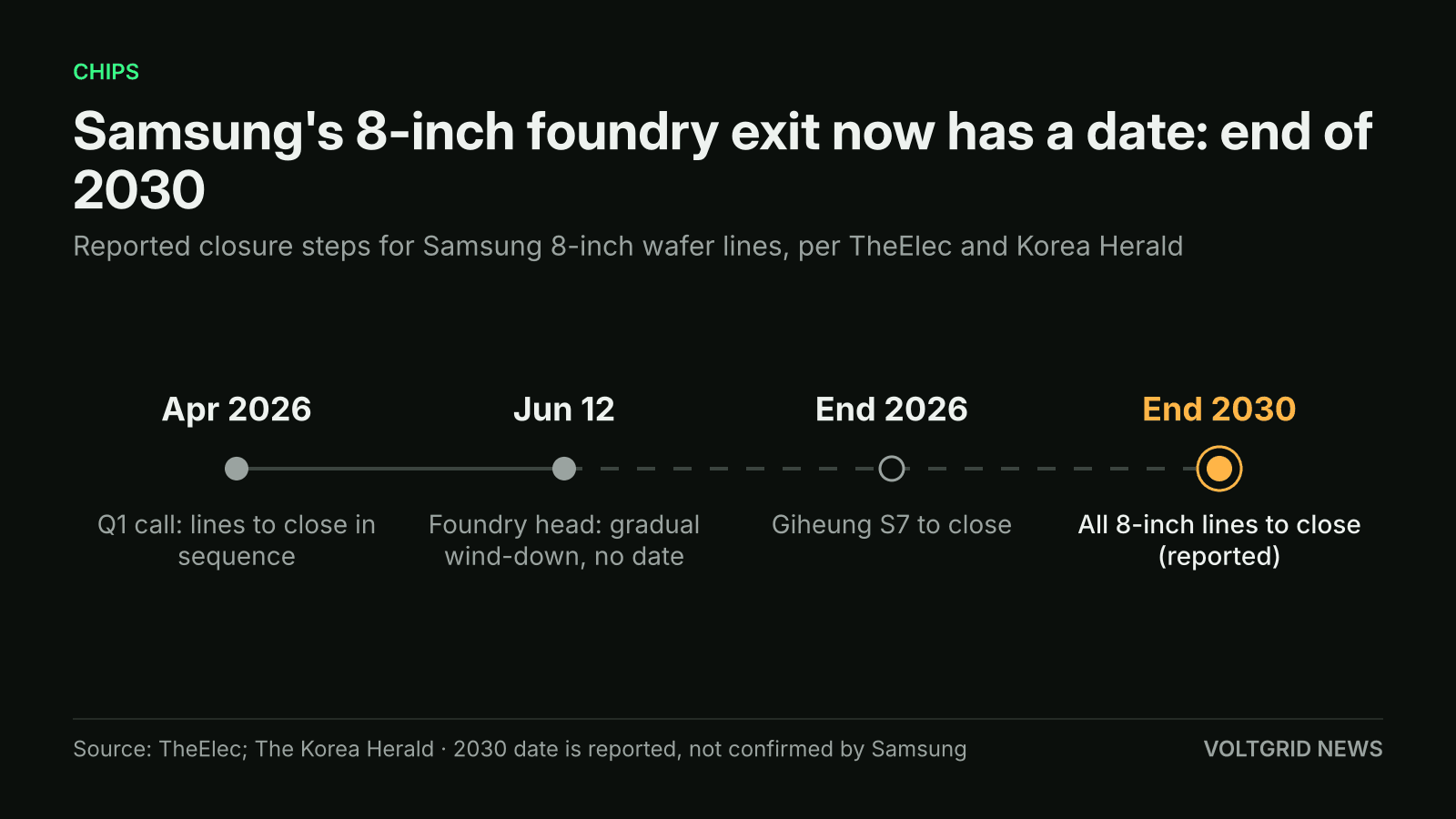
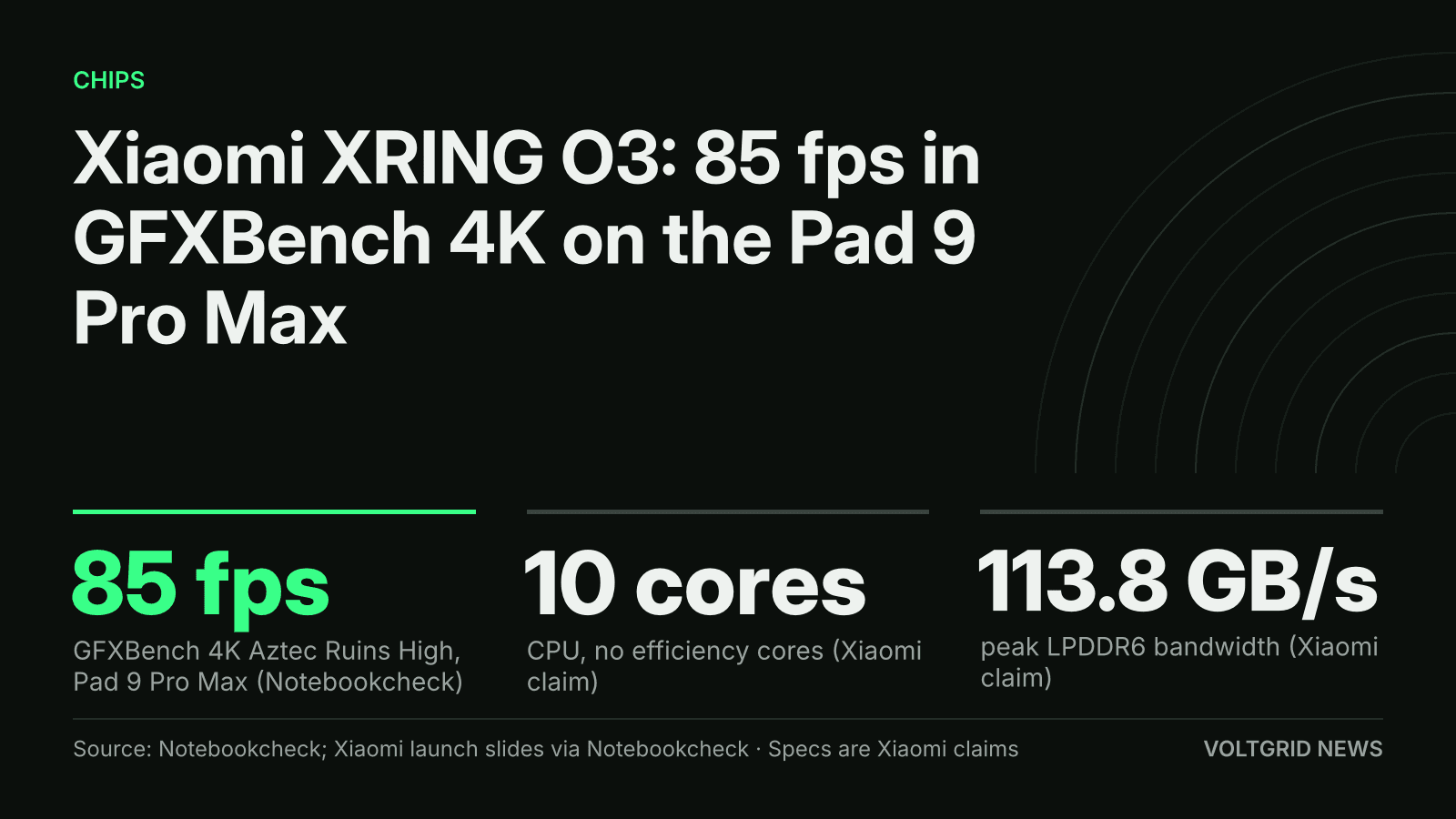
TheElec reports Samsung will close all 8-inch lines by the end of 2030; Samsung has not confirmed the date.
Illustration (AI-generated)
TheElec says the lines make display driver ICs, PMICs, microcontrollers and image sensors. Samsung runs three 8-inch fabs at Giheung, called S6, S7 and S8. Earlier this year the company decided to close S7, thought to hold about 50,000 wafers a month, by the end of 2026, and TheElec reported in January that this would take total 8-inch capacity from 250,000 to below 200,000 wafers a month. Samsung Foundry stopped taking orders for new 8-inch products in 2026, per TheElec, which also attributes an April earnings-call statement to foundry vice president Kang Seok-chae that the power, display-driver and image-sensor lines would close one after another.
TheElec names five South Korean customers: Imagis, ABOV Semiconductor, Dongwoon Anatech, Silicon Mitus and LX Semicon. They must move existing products to another foundry and requalify them before Samsung's lines stop.
Why there is nowhere obvious to go
According to TheElec, the two main 8-inch foundries in Korea, DB HiTek and SK Keyfoundry, are already running at full capacity. Taiwan has little spare 8-inch capacity, and customers whose end buyers restrict Chinese-made semiconductors cannot easily use Chinese foundries. One fabless executive told TheElec the firms would have to look to overseas foundries.
Moving to 12-inch wafers is no easy fix. These customers chose 90 nm to 180 nm processes for cost reasons, so a shift could raise unit costs and force redesigns, and analog chips that handle high voltage cannot simply be shrunk. Some fabless companies are building inventory ahead of the exit, which ties up cash, and industry figures quoted by TheElec want Samsung to delay the closure or the government to step in. Another industry official noted that four years of notice makes the decision hard to call unilateral.
What it means for the supply chain
The squeeze lands on a tight market. In its January report, TheElec cited TrendForce estimates that worldwide 8-inch utilization would rise from 75% to 80% in 2025 to 85% to 90% in 2026, driven by PMIC demand for AI servers, with some foundries planning price increases of 5% to 20%. Samsung's foundry investment is going into 12-inch advanced processes instead, as in its reported 2 nm tool orders for Taylor, which Voltgrid covered on Oct. 23.
What is not confirmed yet
The 2030 end date rests on TheElec's anonymous industry sources. Samsung has not said which customers were notified, whether S6 and S8 will run to the final year, or whether it will offer transition capacity. Watch for a Samsung statement, price notices from DB HiTek and SK Keyfoundry, and any move by affected Korean customers to qualify overseas foundries.