Envision Says 800 V DC Rack Power Is Live at Its Ulanqab AI Campus
Envision says its Ulanqab Galaxy campus now runs live AI loads on solid-state transformers and batteries feeding an 800 V DC bus, a claimed commercial first that no outside party has verified.
Energy & Cooling DeskEdited by Ege Erten
2 min readAI-assisted
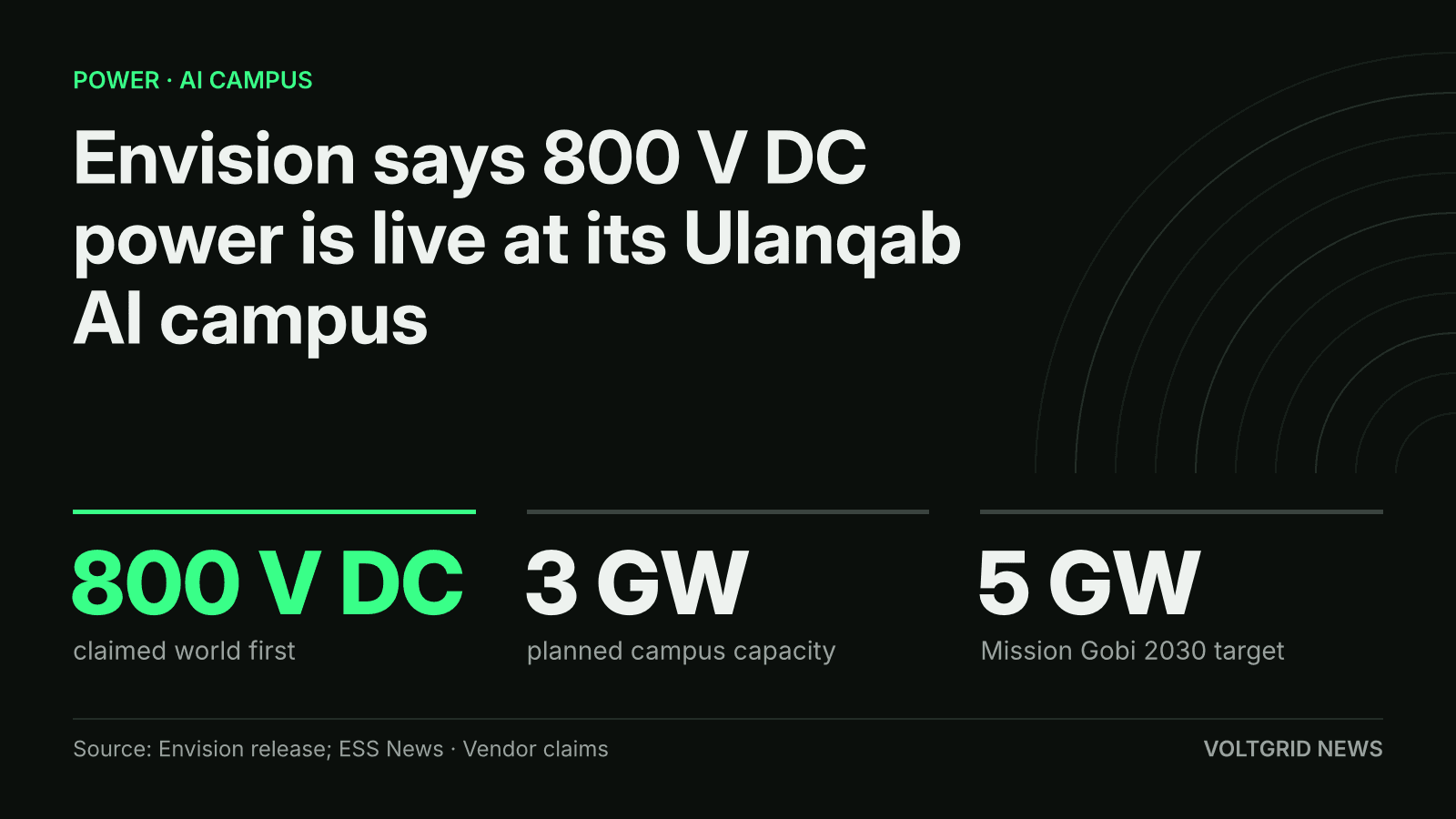
Envision's claims in numbers: 800 V DC, 3 GW planned campus capacity and a 5 GW target for Mission Gobi by 2030.
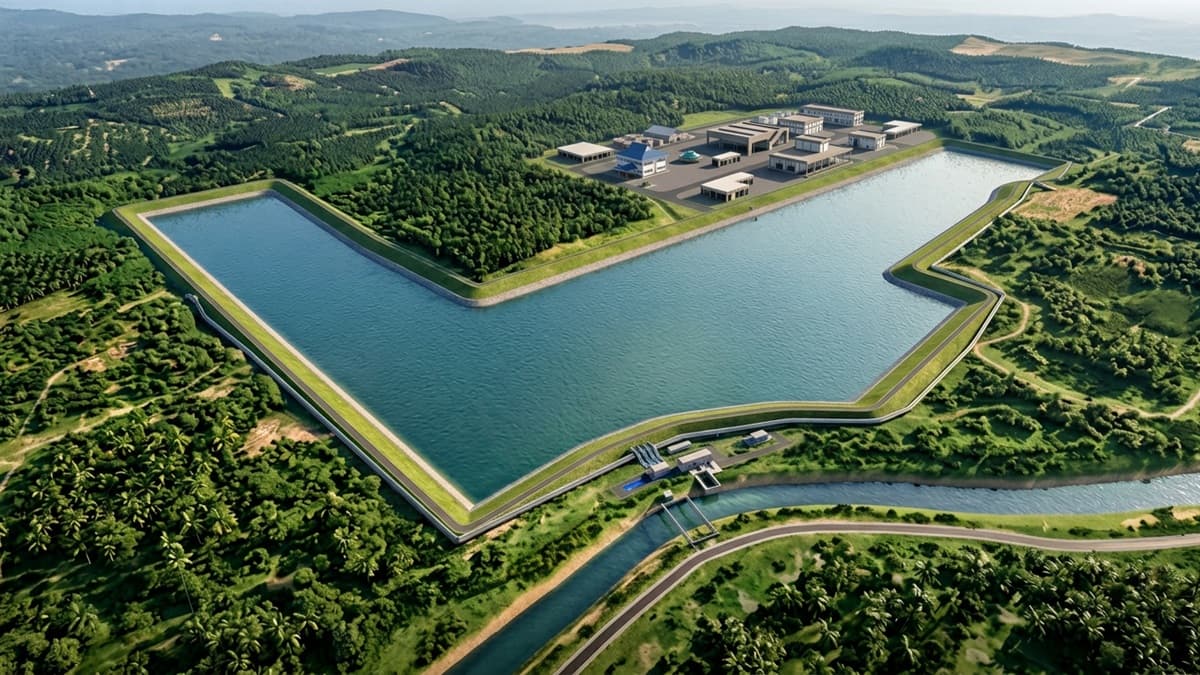
Illustration (AI-generated)
Envision Energy said on Nov. 2 that it has deployed what it calls the world's first commercial integrated 800 V DC power system in a large-scale AI data center, at its Galaxy campus in Ulanqab, China, where the system is powering live computing workloads.
The system combines solid-state transformers (SSTs), battery energy storage (BESS) and equipment that adjusts DC voltage for computing hardware, according to Envision's release. Its Dubhe Controller, backed by the company's Dubhe Energy Foundation Model, coordinates the transformers and batteries in real time to match supply to demand and handle sudden load swings. ESS News (pv magazine) carried the announcement the same day.
The case for 800 V DC at the rack is density. Most data centers run AC through the hall and convert to DC at the edge of the rack, ESS News noted, whereas a higher-voltage DC feed should allow more compute per rack. Envision says the architecture cuts conversion stages, equipment footprint, cabling and copper, and so can lower infrastructure cost and fit more computing into the same space. Those are the vendor's claims; the release gives no measured efficiency or cost figures for the live site.
What Envision says the system does
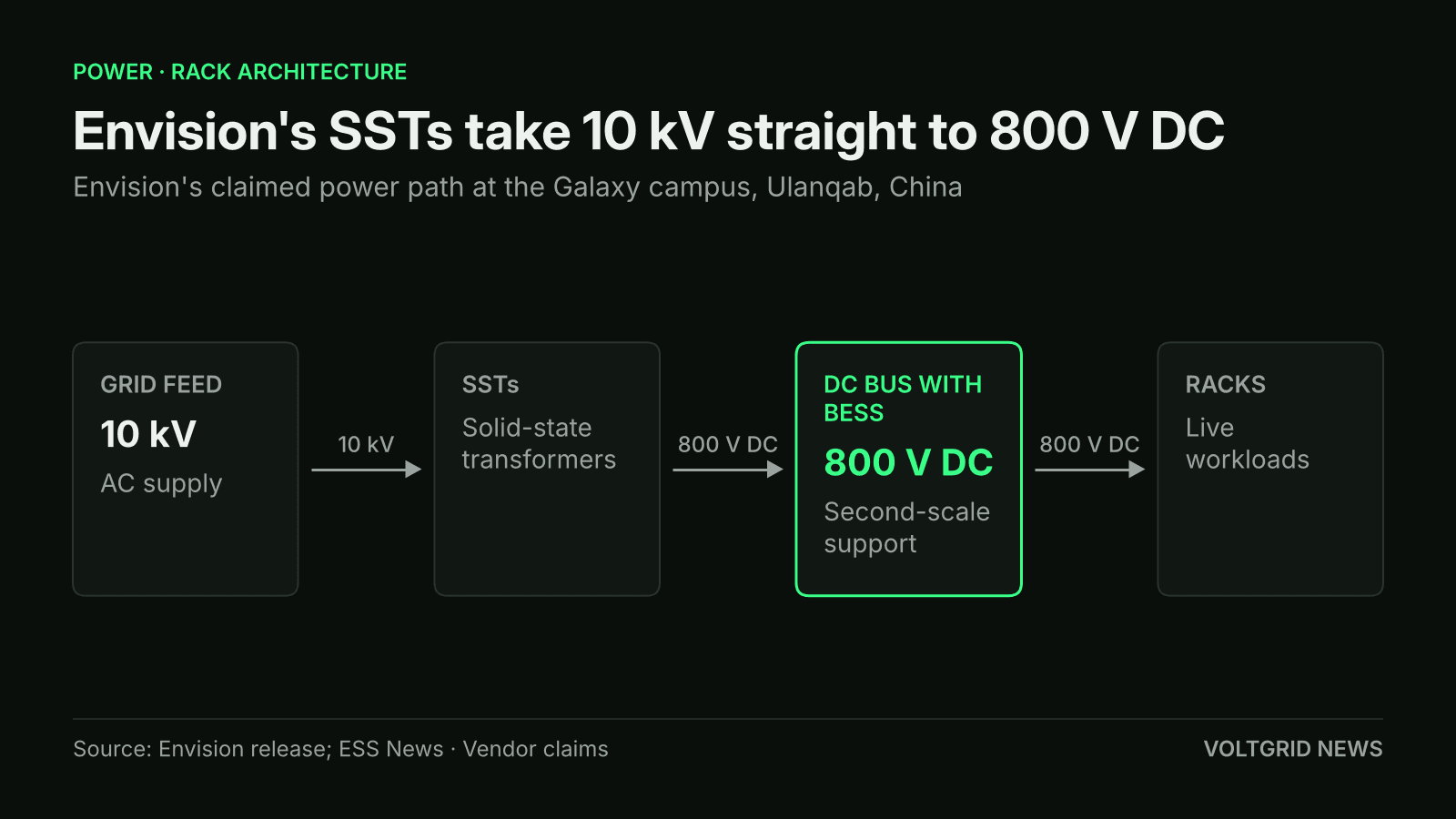
Envision says its solid-state transformers convert 10 kV straight to an 800 V DC bus; these are vendor claims.
Illustration (AI-generated)
The release lists three capabilities. The SSTs convert directly from 10 kV medium voltage to an 800 V DC bus. Batteries provide second-scale power support and minute-scale backup. Millisecond-level coordination between the SSTs and storage is meant to absorb GPU load fluctuations locally, before they reach the grid. At its July showing in Munich, Envision displayed a 2.5 MW SST rated for 10/13.8 kV AC input, 800 V DC output and 98.5% conversion efficiency, ESS News reported. That is a datasheet figure, not a result from Ulanqab.
The Galaxy campus began operating in August 2026. Envision plans 3 GW of capacity, designed to support up to one million AI accelerators at full build-out, with more than 80% of its power planned to come from direct renewable connections. It aims to repeat the design through Mission Gobi, a program targeting 5 GW of green AI data center capacity in desert regions by 2030.
How it compares with other 800 V DC moves
The rack-power shift is gathering pace on the equipment side. Vantage Data Centers said in October it had secured more than 1 GW of SST manufacturing capacity, as Voltgrid reported, for 800 VDC at its campuses. Infineon is working with NVIDIA on 800 VDC racks. Envision's claim is that a complete chain, from medium voltage to the DC bus with storage built in, is already carrying workloads.
What is not confirmed yet
The "world first" label is Envision's own, and the sources we read do not independently verify it. The release does not say how many racks or how much load the 800 V DC system serves, which accelerators or rack designs it feeds, or how much of the 3 GW plan is built. It also gives no customer, no delivery schedule for other sites and no financial terms. Until those details or an outside measurement appear, the deployment is best read as a vendor reference site rather than proof of performance at scale.