Google Funds US$160M Water Plant for Port Dickson Data Center
Google is paying US$160 million for a Linggi River reservoir and a 65 million litre-a-day water plant in Negeri Sembilan, to be state-owned, for its Port Dickson campus and local supply.
Energy & Cooling DeskEdited by Ege Erten
2 min readAI-assisted
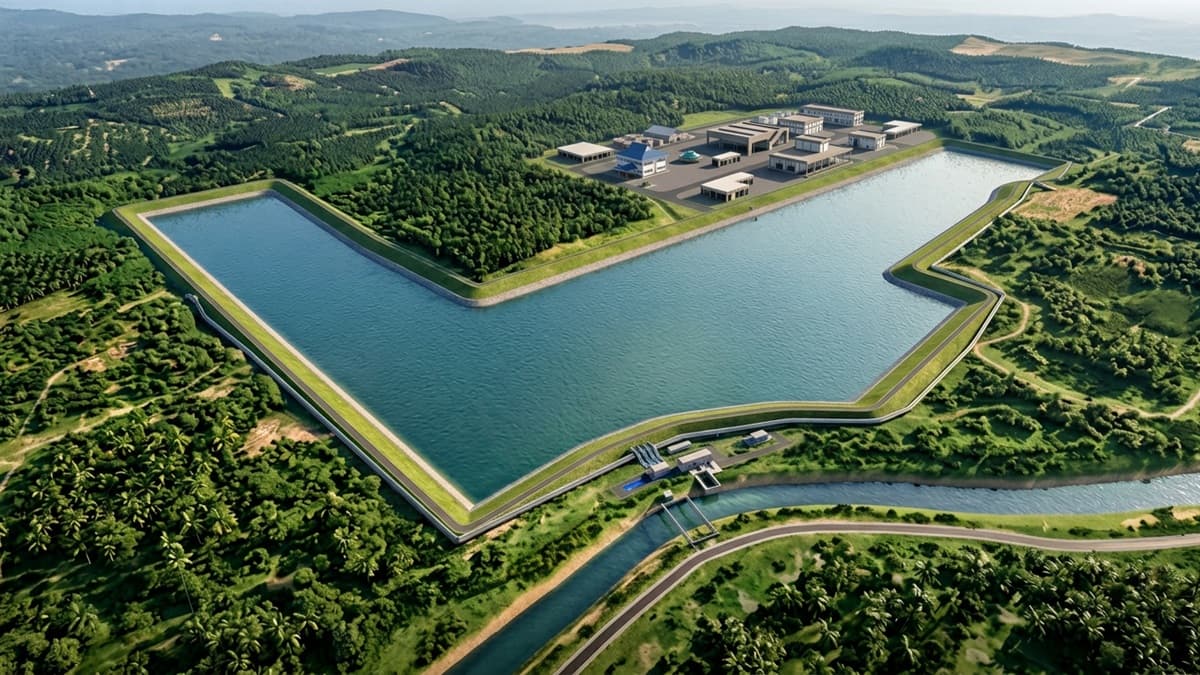
Artist impression of the planned off-river reservoir and water treatment plant in Negeri Sembilan, as released by Google. It is an illustration, not a photograph of the finished site.
Image: Google
Source · Press image from the Google Cloud Press Corner, used for news reporting.
Google said on Nov. 2, 2026 that it is providing US$160 million (about RM651 million) to build shared water infrastructure in Negeri Sembilan, Malaysia, for its planned data center campus at Springhill Industrial Park in Port Dickson.
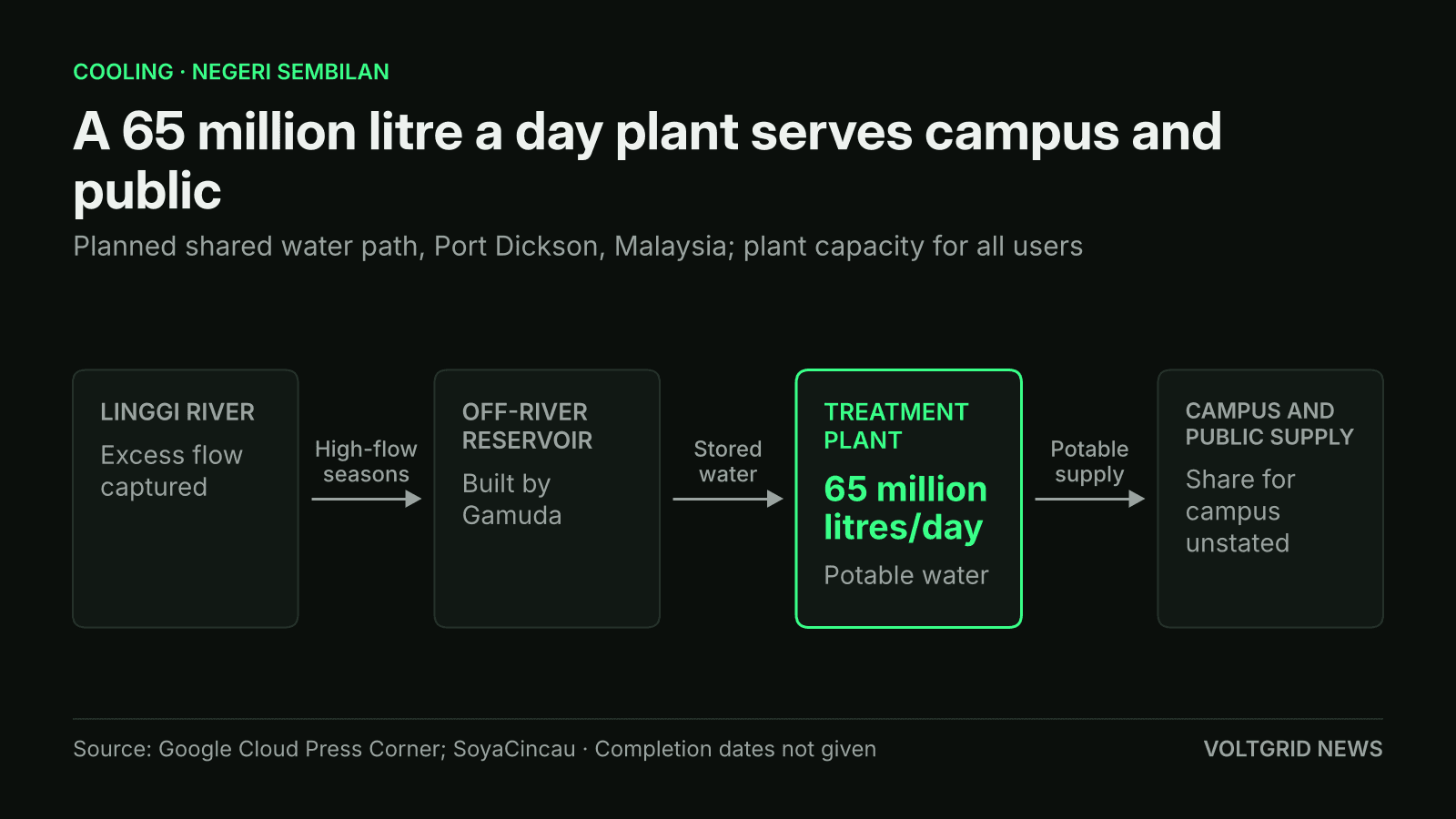
The plant's 65 million litres a day is capacity for all users; Google has not said how much the campus will draw.
Illustration (AI-generated)
Gamuda Berhad has been appointed to build an off-river storage reservoir and a water treatment plant, in coordination with the state government and the state water operator Syarikat Air Negeri Sembilan (SAINS), Google said in its press release. Once finished, both facilities will be owned by Menteri Besar Negeri Sembilan (Incorporated), or MBINS, the statutory body that manages state assets. The plant will be able to deliver 65 million litres of potable water a day, serving the campus and also expanding public supply, according to Google and SoyaCincau.
The 65 million litres is plant capacity for all users. Neither Google nor the reports say how much of it the campus will draw, how many megawatts the campus will hold or which cooling design it will use, so the figure is not a measure of the site's cooling water demand. What the deal does show is who carries the cost: Google pays for the supply works, and the state ends up owning them.
How the reservoir works
The reservoir sits along the Linggi River. It is designed to capture excess river flow and rainfall in high-yield seasons, which Google says should also reduce flood risk in nearby flood-prone areas. In lower-yield periods the plant can draw on the stored water instead of the river, so the river's natural flow is not disrupted, the company said. Drew Byrnes, Google's head of global infrastructure and energy for Asia Pacific, tied the project to Google's goal of replenishing 120% of the freshwater it consumes, and said Google's own risk assessment found local water sources were not at high risk of scarcity or depletion.
Why it matters for cooling
Water has become a siting condition for data centers, not an afterthought. Google's Finnish site drew a permit demand over drainage work, as Voltgrid reported, and NVIDIA's DSX reference design targets near-zero cooling water. Google's Port Dickson plan takes the opposite route: it builds new supply and hands it to the state. Malaysia is also tightening its terms for operators, having approved a 30% renewable energy requirement for data centres.
Google also said it will pay for 100% of the power the campus uses and for the direct infrastructure costs of connecting it to the grid, while complying with local regulations. Business Today Malaysia and Lowyat.NET carried the same US$160 million figure on Nov. 2.
What is not confirmed yet
Google has not given a completion date for the reservoir, the plant or the campus. It has not stated the campus's capacity or cooling method, or its expected water consumption, so whether 65 million litres a day leaves headroom for the public supply cannot be checked. Those are the numbers to watch when Google files its Port Dickson plans.
Sources
- 01Google to invest $160M in shared water infrastructure in Negeri Sembilan for data centerGoogle News · data centers · news.google.com
- 02Google Funds US$160 Million in Shared Water Infrastructure Alongside Digital Infrastructure Development in Negeri SembilanGoogle Cloud Press Corner · googlecloudpresscorner.com