Google Project Suncatcher Satellite Runs Gemma 4 on a TPU in Orbit
Google said on Oct. 30 that its Project Suncatcher prototype returned its first AI response from orbit; TechCrunch reports its up-to-1 kW budget runs one of four TPUs at a time.
Chips & Power DeskEdited by Ege Erten
3 min readAI-assisted
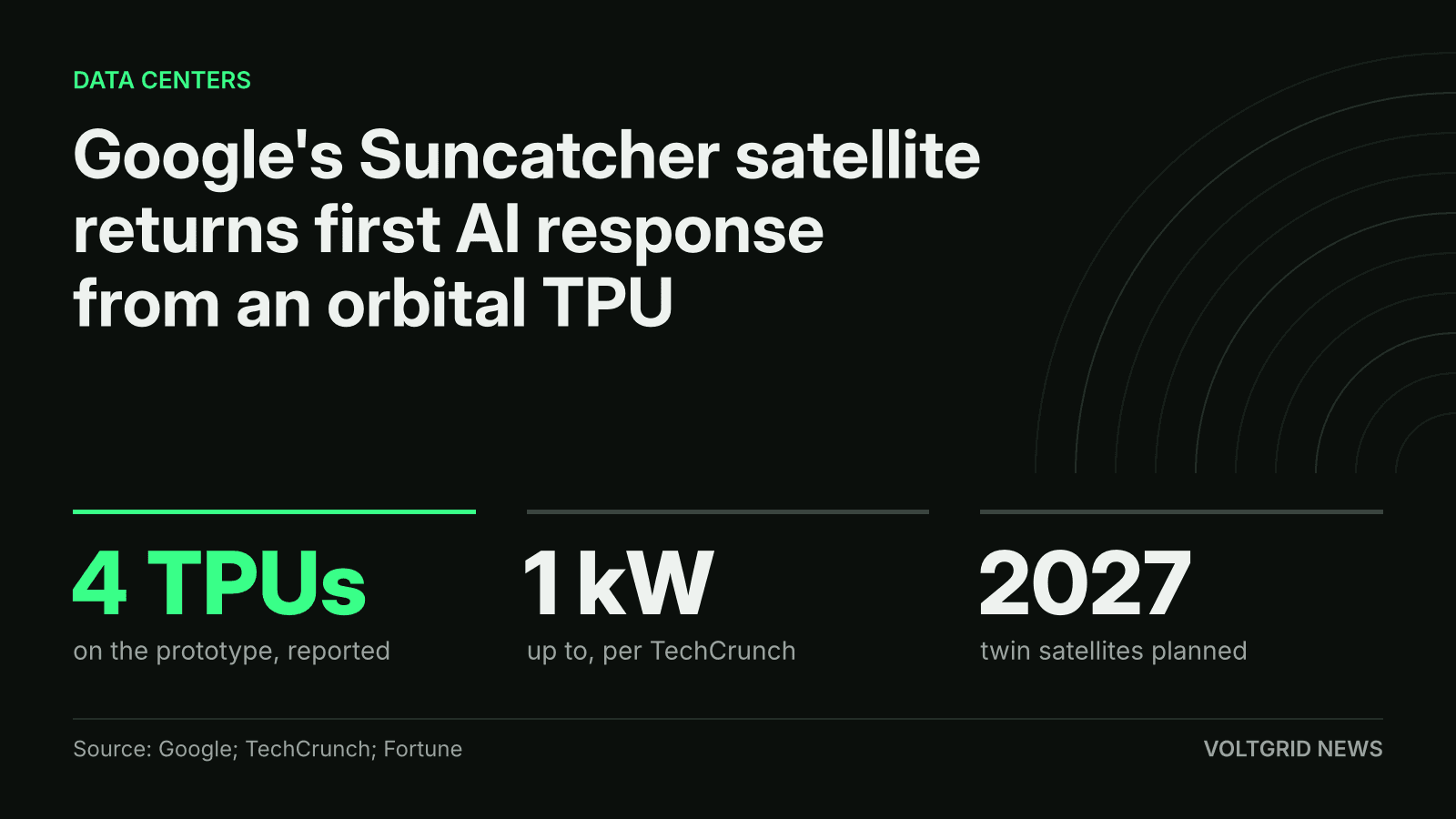
Key facts from Google, TechCrunch and Fortune: four TPUs, up to 1 kW (TechCrunch) and twin satellites planned for 2027.
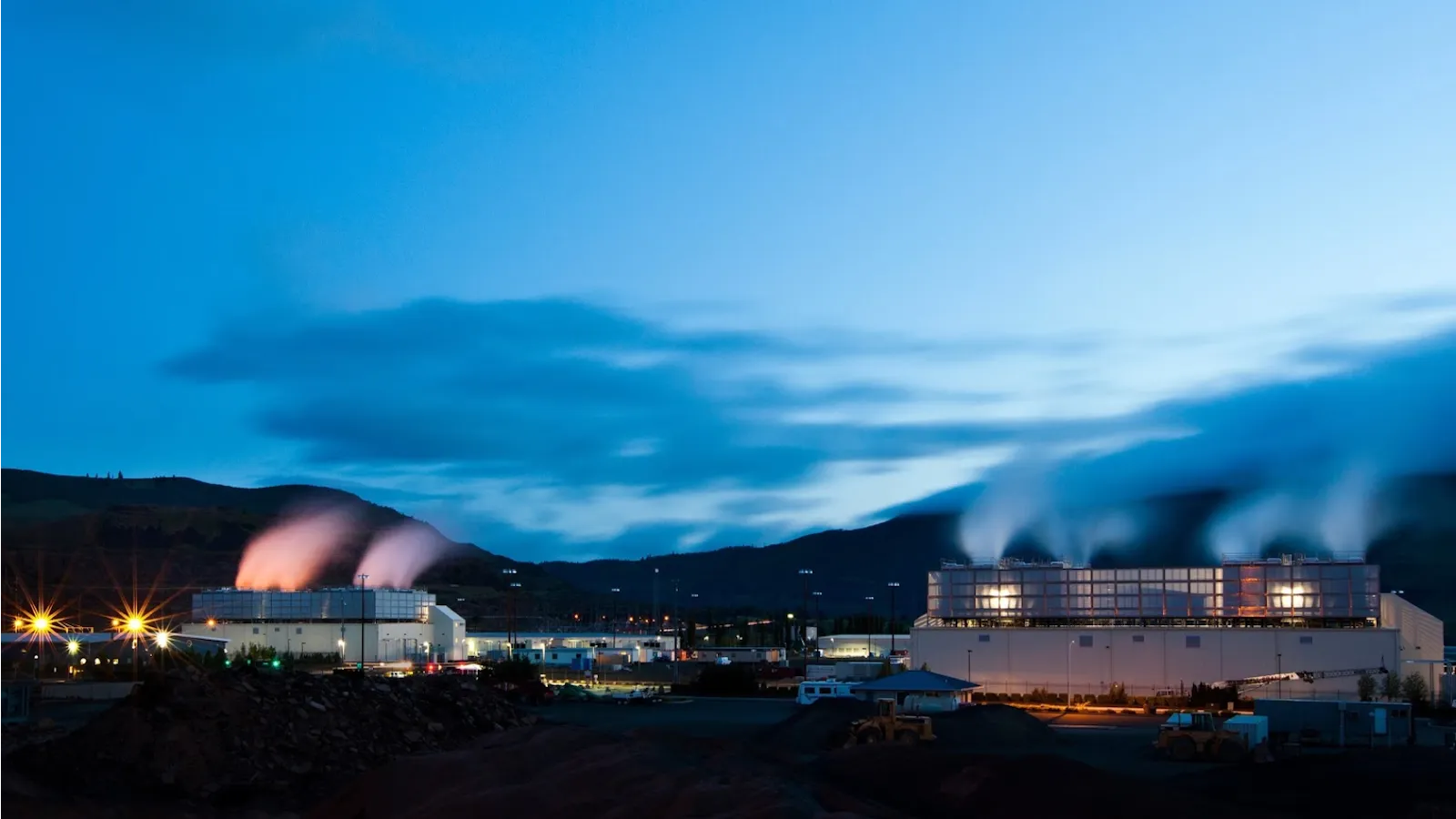
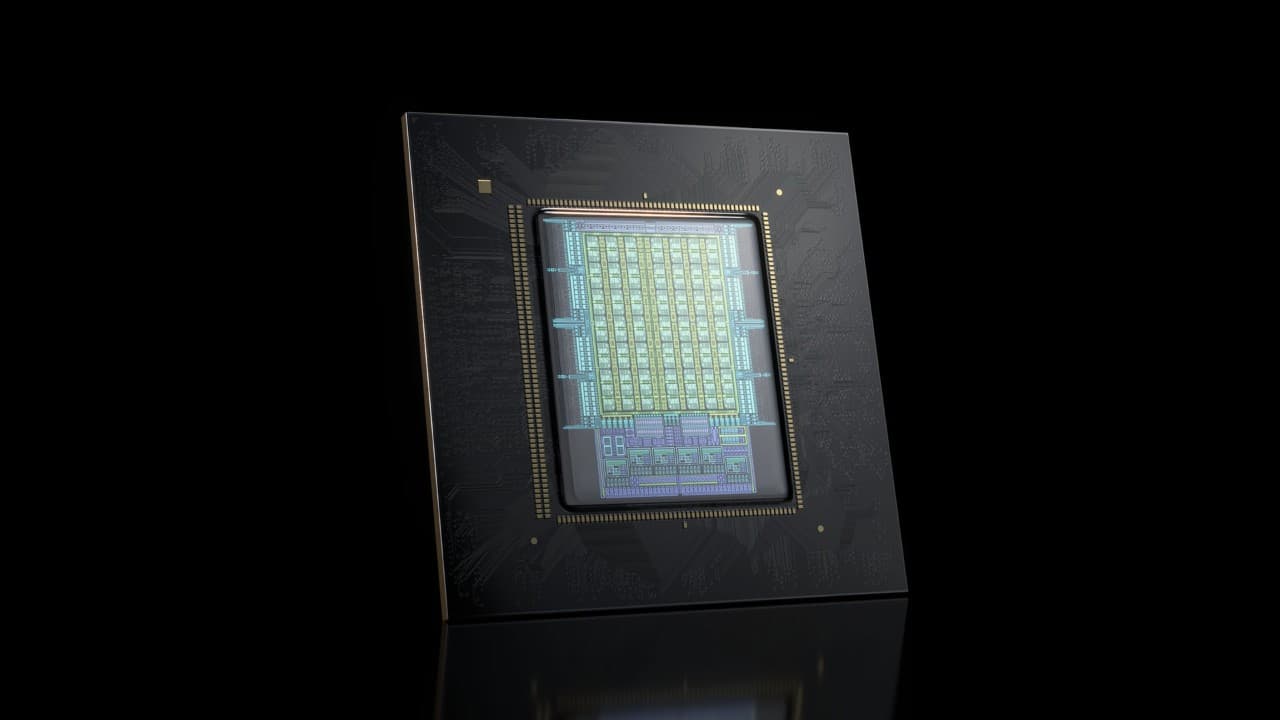
Illustration (AI-generated)
Google said on Oct. 30 that its Project Suncatcher prototype satellite has returned the first AI response from a data-center-class Tensor Processing Unit (TPU) in orbit, a haiku written by the Gemma 4 open model and downlinked over Svalbard, Norway.
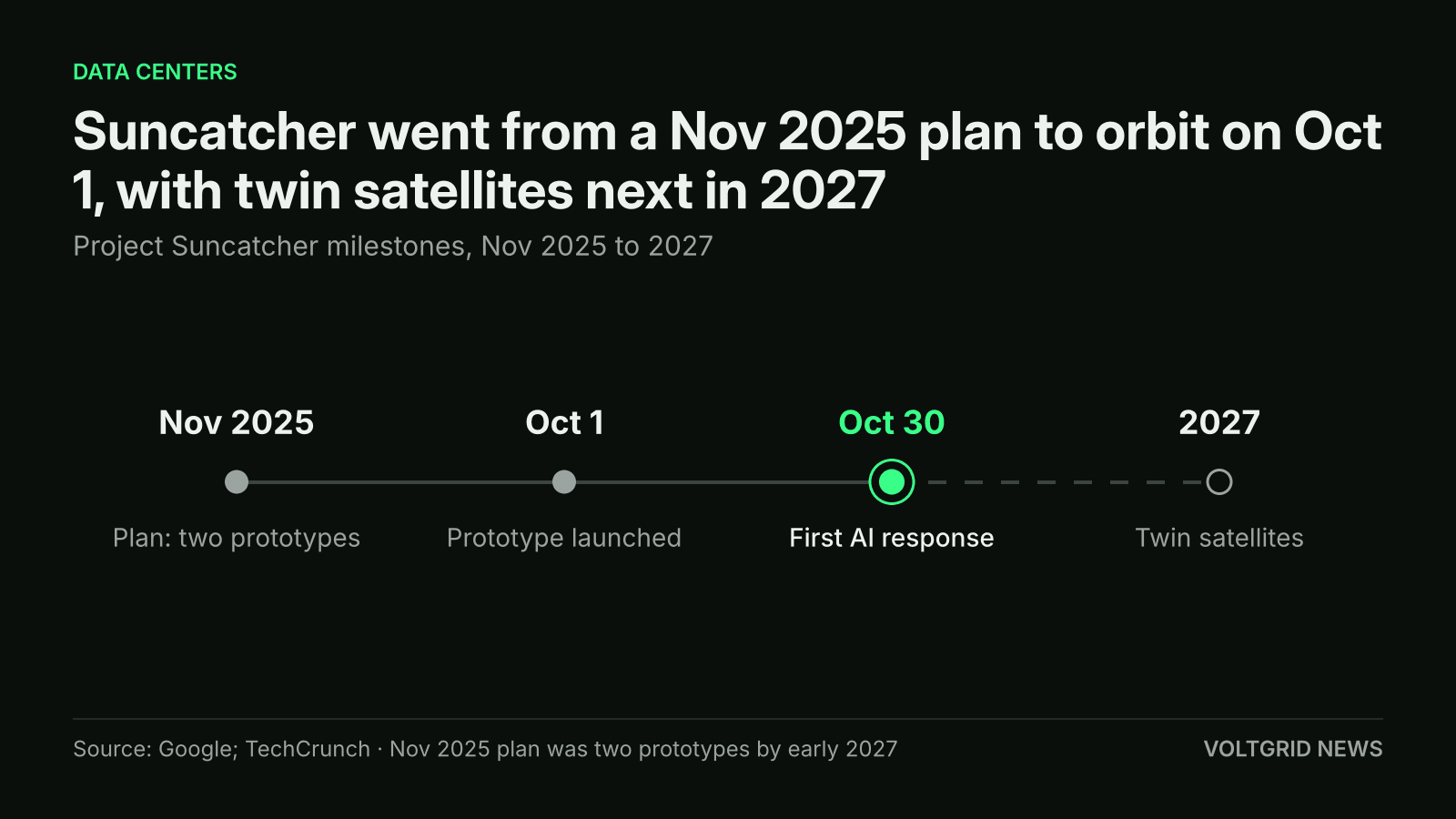
Suncatcher went from a Nov 2025 plan for two prototypes to an Oct 1 launch and an Oct 30 first AI response, with twin satellites planned for 2027.
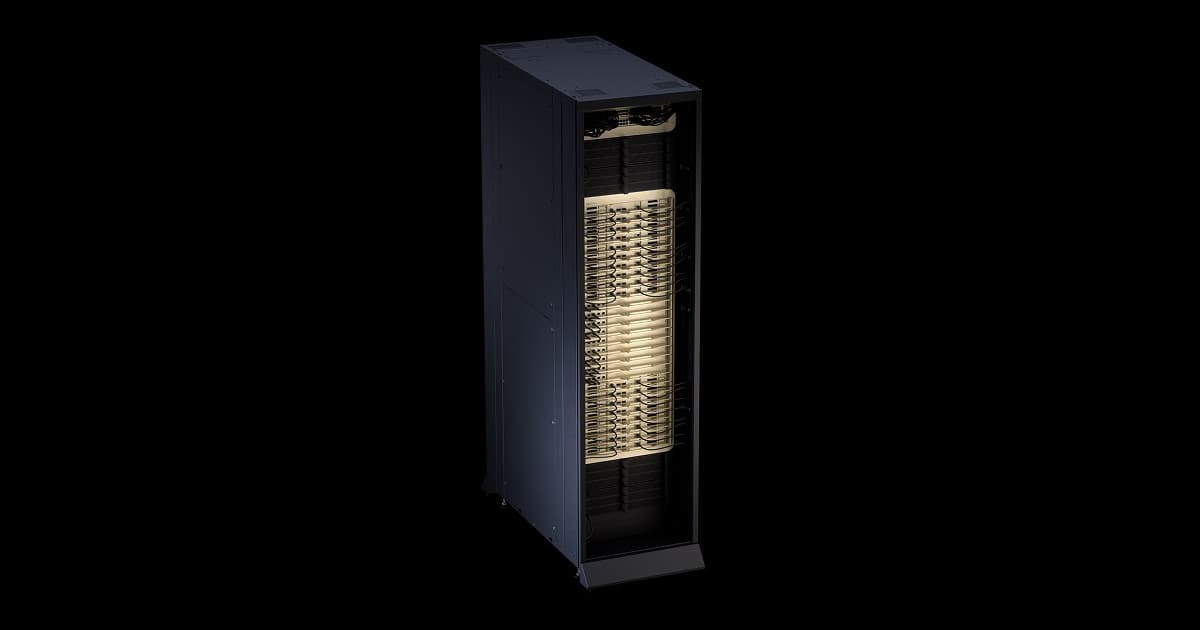
Illustration (AI-generated)
The satellite launched on Oct. 1 and spent the following weeks completing a commissioning checklist that included powering up the host and TPU trays and running early machine learning tests, Travis Beals, Google's senior director of Paradigms of Intelligence, wrote on the Google blog. During a ground-station pass the team uplinked a prompt asking for a haiku about being in space, then tested space-themed limericks and telemetry prompts that reported the status of the payload systems. A Google spokesperson told TechCrunch the satellite is operating nominally.
What Limits the Prototype's Run Time
TechCrunch reported that the satellite carries four TPUs and generates up to 1 kW of electricity, and that the power budget lets it run only one TPU at a time, for about 20 minutes per session. Fortune, citing NPR, put the run time at 15 minutes before the chips shut down to cool. Google's own post does not give a TPU count, a power figure or a duty cycle, so those numbers rest on the press reports.
That makes this a test of whether the chips and their heat pipes and radiators work in vacuum, not of capacity. Google's Sept. 24 post said that in low Earth orbit satellites can generate up to eight times more solar power than on Earth. Google's same post said future designs would carry dozens of TPUs per satellite; a prototype that, by TechCrunch's account, runs one TPU at a time is a hardware test, not a step in capacity.
Why Heat and Radiation Limit Orbital TPUs
On Earth, a data center moves heat into air or water. In a vacuum there is no airflow, so heat can leave a satellite only through radiators, Google said in its Sept. 24 post, and its team built and tested a heat-pipe and radiator system for the TPUs. That is why run time is the number to watch on this prototype.
Radiation is the second limit. In Google's November 2025 proton-beam test of its Trillium TPU, the high-bandwidth memory was the most sensitive part, showing its first irregularities at a cumulative 2 krad(Si), against an expected shielded five-year mission dose of 750 rad(Si). Google has not said which TPU generation flies, so the orbital test will show how these limits hold up on real hardware.
What the Next Tests Will Show
Google said it will next evaluate how the TPUs perform under thermal stress and radiation exposure in orbit. TechCrunch noted that radiation can cause bit flips that corrupt data without triggering normal monitoring, and that Google's ground testing suggested the effect would be minimal for inference and more of a problem for training. Google's Sept. 24 post said its Trillium TPUs, tested in a proton beam at UC Davis, withstood a total ionizing dose greater than a five-year space mission would deliver. The post does not say which TPU generation is on the satellite, so that link is unconfirmed.
Google's Sept. 24 post said the mission was developed in partnership with Planet and flew on SpaceX's Transporter-18 rideshare; TechCrunch said the Falcon 9 carried more than 100 other spacecraft. One of them, per Fortune, was Reason-1 from Cowboy Space, which Voltgrid News reported is targeting a 2028 orbital data center flight.
What Comes Next
Google says verifying that TPUs can run workloads reliably in space paves the way for a milestone of twin interconnected satellites in 2027. TechCrunch reported those two spacecraft would generate more power and demonstrate inter-satellite optical links. Google's Sept. 24 post said future designs would carry dozens of TPUs per satellite and link in clusters by laser.
Costs remain an open question. TechCrunch cited a peer-reviewed analysis by Suncatcher researchers estimating that SpaceX would need to fly Starship 1,800 times to reach the learning-driven cost reductions of its earlier vehicles. Google has given no date for an operational orbital system, and one prototype with four TPUs, per TechCrunch, is not a data center.