NVIDIA Vera Benchmark: Estimated 1.5% SPEC Lead Over EPYC 9755
Tom's Hardware's full test of a dual-socket Vera found an estimated 1.5% SPEC CPU 2026 intrate lead over AMD's EPYC 9755, below NVIDIA's 3% claim, with Python and bandwidth wins but AVX-512 and crypto losses.
Chips & Power DeskEdited by Ege Erten
3 min readAI-assisted
Follows our story: NVIDIA Vera CPU Specs: 88 Olympus Cores, 430-440 W Each in Tests
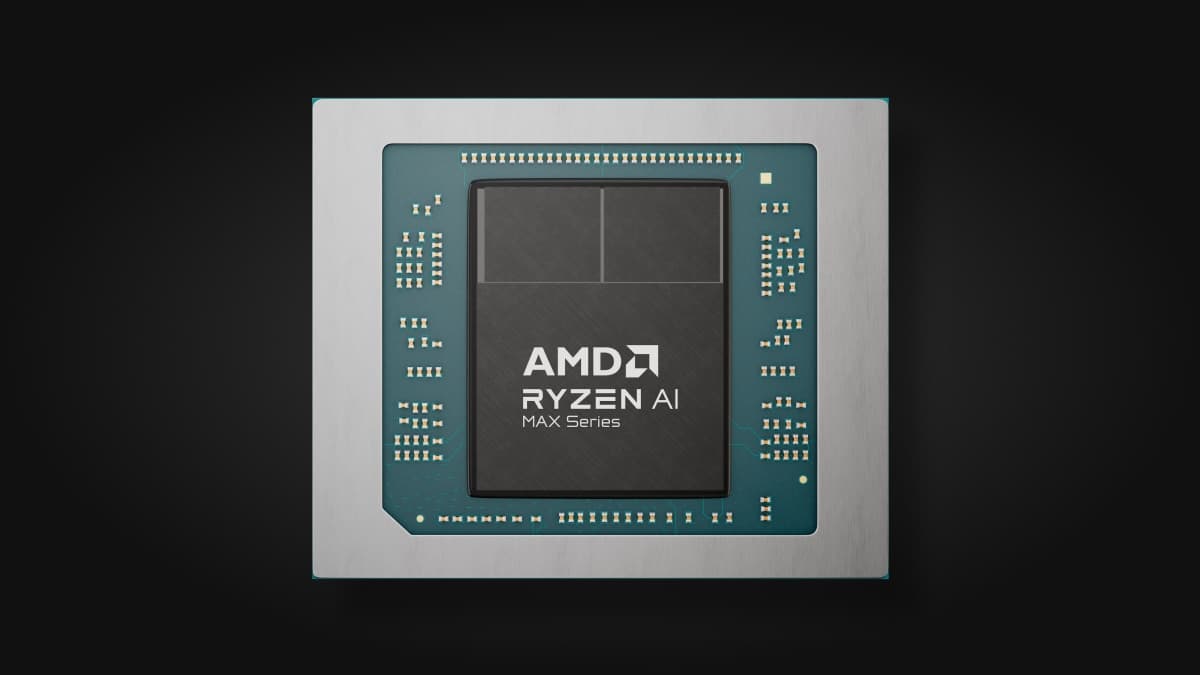
The NVIDIA Vera CPU, shown in an official NVIDIA product image.
Image: NVIDIA
Source · Press image from the NVIDIA website, used for news reporting.
Tom's Hardware's independent NVIDIA Vera benchmark put a two-socket Vera system 1.5% ahead of a two-socket AMD EPYC 9755 in estimated SPEC CPU 2026 intrate, in a review published on Oct. 30, below the 3% NVIDIA claims.
The review widens what independent testing says about Vera. Our Oct. 29 product file rested on an early Tom's Hardware memory test with no published setup and on Phoronix's power readings; the new results show Vera often matching or beating current x86 chips in general server work, not only in memory bandwidth, though it trails in several tests.
Tom's Hardware ran its tests over remote access NVIDIA gave it to a two-socket MGX Vera reference platform with 1.5 TB of Samsung LPDDR5-9600 SOCAMM2 memory. The rivals were a two-socket Supermicro server with Intel Xeon 6980P chips and 1.5 TB of DDR5-8800 MRDIMMs, and AMD's Volcano reference platform with EPYC 9965 or 9755 chips and 1.5 TB of DDR5-6000 RDIMMs. Every SPEC run used GCC 15.2 with link-time optimization and the jemalloc allocator, apart from a retest of the Xeon with Intel's oneAPI binaries. The scores are estimates because they were not submitted to SPEC, and the outlet said NVIDIA placed no limits on what it tested.
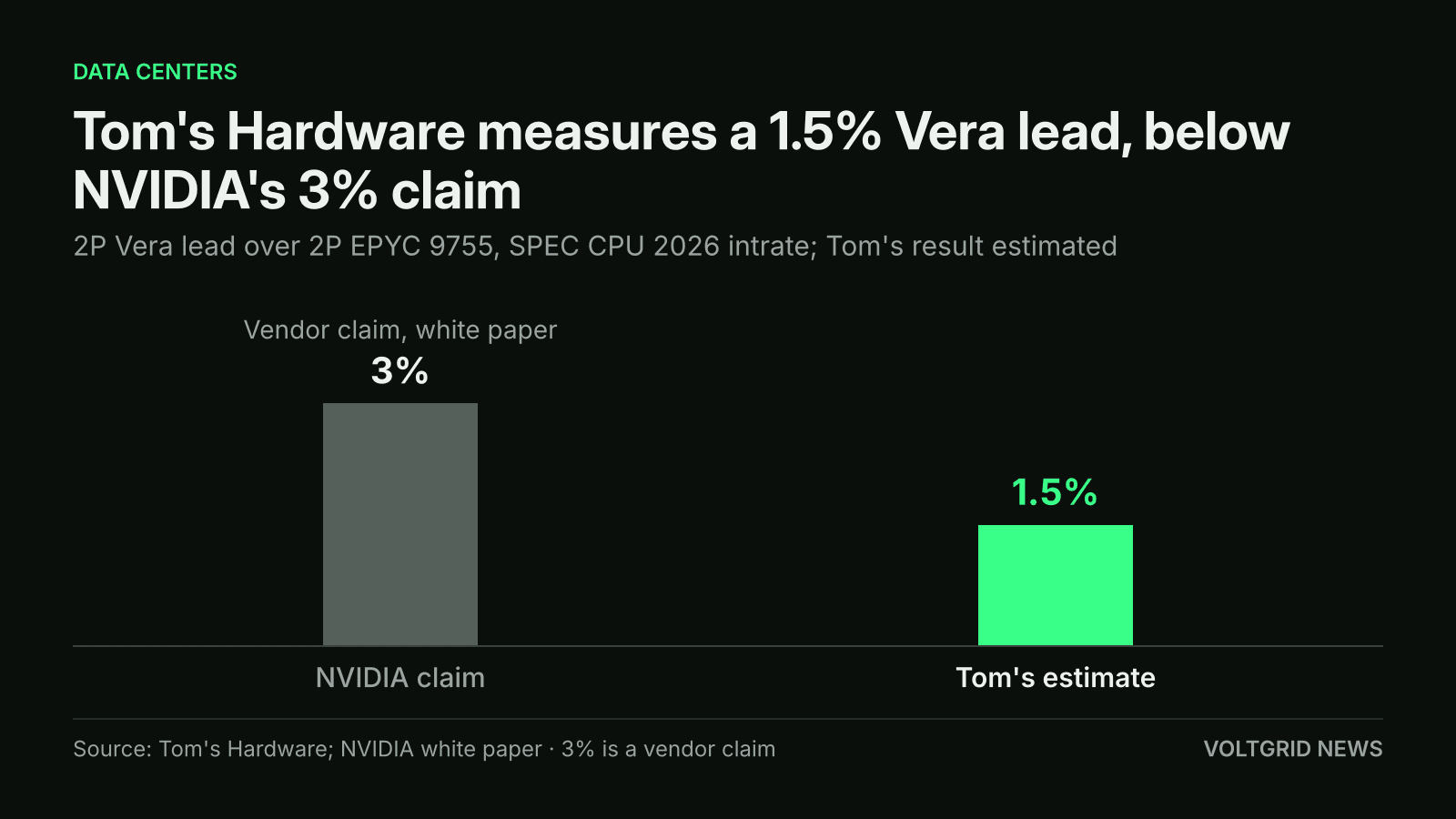
NVIDIA's 3% is a vendor claim; Tom's Hardware estimated a 1.5% lead.
Illustration (AI-generated)
The 3% figure comes from NVIDIA's white paper, as Tom's Hardware relayed it, and remains a vendor claim. Tom's Hardware noted that the EPYC 9755 pair runs 512 threads against Vera's 352. Vera running generic GCC code finished 8.6% ahead of two Xeon 6980P chips running Intel's oneAPI binaries, which had lifted the Xeon by about 10%.
Where Vera Led EPYC and Xeon, and Where It Trailed
Python was Vera's strongest suit in the Tom's Hardware results. It finished 4% ahead of the EPYC 9755 in PyBench total average test time and topped most PyPerformance tests outside a few web-server cases. It beat the dual EPYC 9755 by 12% in a timed GCC build and was nearly 40% ahead of a dual EPYC 9755 on a cold-cache first ClickHouse run, though only competitive with it on the second and third runs. In STREAM it led every x86 system, and the OpenMP spread policy NVIDIA suggested after the first pass raised Vera's bandwidth sharply while slightly slowing the AMD and Intel machines.
The weak spots sit where wide vector units or very high core counts pay off. Vera came last in the LLVM compile tests and trailed in John the Ripper, OpenSSL, SEAL cryptography, 7-Zip, Zstd decompression, CacheBench and simdjson. In OSPRay's dim_512 test, AVX-512 gave AMD three to four times Vera's performance, and CPU-only llama.cpp prompt processing on gpt-oss-20b went to a single-socket Xeon 6980P, with the two-socket Xeon second.
What SPEC CPU Intrate Measures
SPEC CPU intrate is a throughput test. It runs one copy of each integer application on every available thread and scores how much work the whole server finishes, Tom's Hardware explained. A system with more threads starts with more copies running.
That is why the thread counts matter here. Vera's dual-socket system ran 352 threads and the EPYC 9755 pair ran 512, yet Vera finished 1.5% ahead in Tom's estimate, against the 3% in NVIDIA's white paper. A score like this says how much work a rack completes in total. It says nothing about watts, which the review did not measure.
What the Vera Benchmark Means for AI Agent Hosting
For operators sizing CPU racks for AI agents, the choice becomes one of workload fit. Vera's leads come in memory-heavy, Python, GCC-build and cold-cache database work, the tool-call mix NVIDIA targets, while x86 keeps cryptography, decompression, LLVM builds and vector-heavy jobs. Modal reported gains under load in its own agent sandbox tests, which Tom's Hardware counts as vendor-level benchmarking and which this review does not confirm.
The power side is still unmeasured: the review gives no wall-power or performance-per-watt figures, against a configurable TDP of 250 W to 450 W in its spec table. No standard end-to-end agentic CPU benchmark exists yet, and Tom's Hardware says its own agentic tests are pending. Its rivals are also current parts; AMD's Zen 6 parts are queued to roll out through the end of the year and Intel's Diamond Rapids targets 2027, both promising more memory bandwidth than their predecessors, the outlet said.