Malaysia Approves 30% Renewable Energy Requirement for Data Centres
Deputy Prime Minister Fadillah Yusof said Oct. 27 that Malaysia approved a 30% renewable-energy requirement for data centres, but the Energy Commission has yet to publish guidelines or a start date.
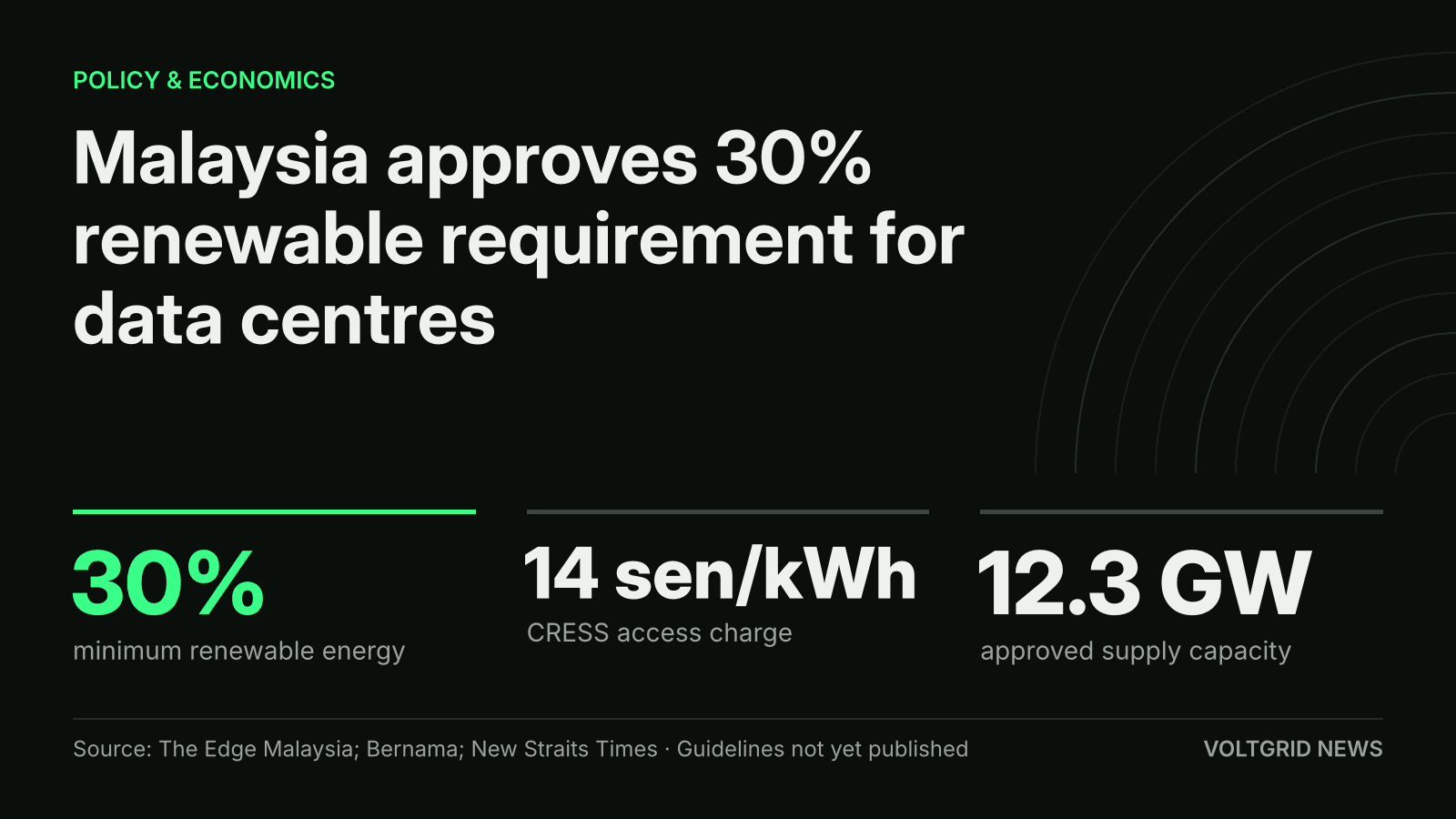
Malaysia's 30% renewable-energy requirement is a decision; Energy Commission guidelines are still being drafted.
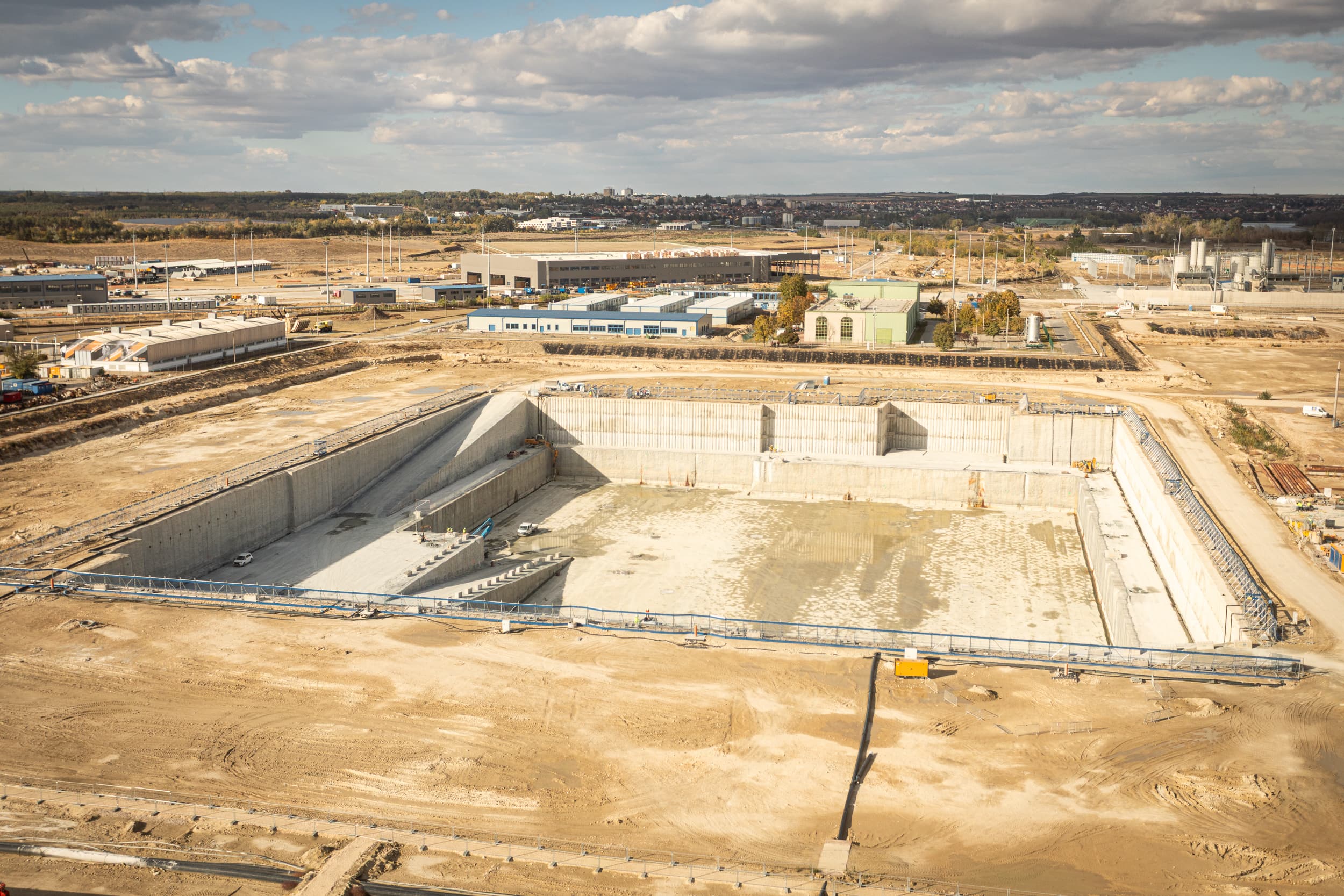
Illustration (AI-generated)
Malaysia's government has approved a requirement that data centres use at least 30% renewable energy, Deputy Prime Minister Fadillah Yusof told the Dewan Rakyat on Oct. 27, The Edge Malaysia reported.
Fadillah, who is also energy transition and water transformation minister, said the requirement is based on the total capacity or energy consumption of data centres. He spoke while winding up the Budget 2027 debate. Operators are also encouraged to generate their own solar power, so that the cost of meeting the sector's growing demand is not shifted to other electricity consumers.
The rule is a decision, not yet a working regime. The Energy Commission is developing a framework and guidelines for self-generation facilities and for the 30% requirement, Fadillah said, and Bernama reported on Oct. 28 that he repeated this in the chamber's question session. No start date or penalty has been announced.
What the rule means for data-centre power costs
The New Straits Times reported that operators can meet the 30% through the Corporate Renewable Energy Supply Scheme (CRESS), which lets renewable developers sell electricity directly to corporate customers over the national grid, or through the Solar for Self-Consumption initiative. Fadillah said the CRESS system access charge paid by developers stays at 14 sen per kWh, down from an initial 20 sen set after industry engagement. Green electricity users pay a separate four sen per kWh that was already in force, and he said the two should not be added up and reported as an 18 sen fee.
Bernama also reported that data centres must be equipped with backup generators that can be used for demand control, to ease pressure on the grid when operating reserves are low. Fadillah framed self-generation as a way to reduce full dependence on the national grid.
Demand behind the rule
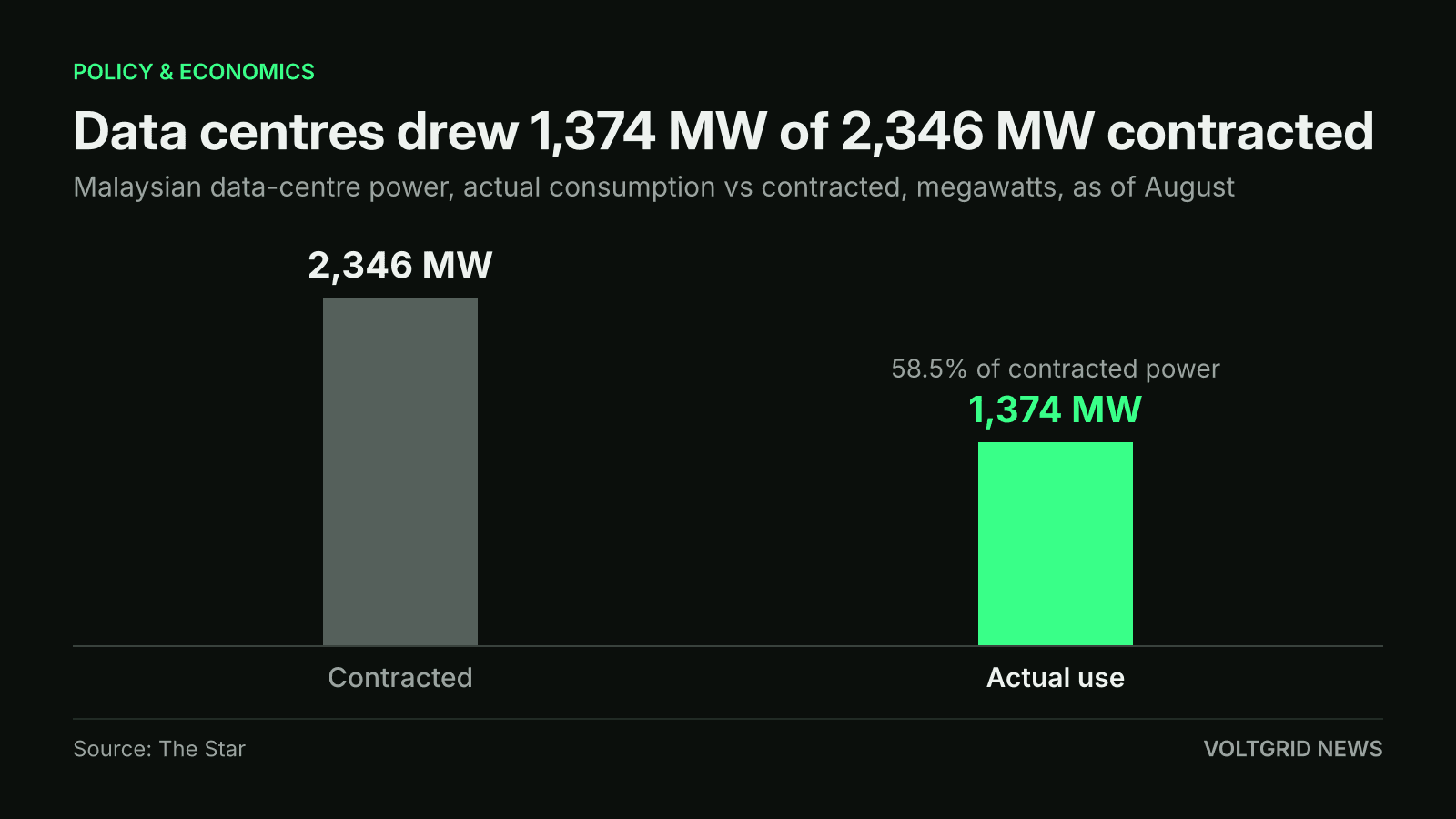
Data centres used 1,374 MW of 2,346 MW contracted as of August, according to The Star.
Illustration (AI-generated)
The requirement lands on a sector with far more power on paper than on the meter. The Star reported on Oct. 28 that Malaysian data centres were using 1,374 MW as of August against 2,346 MW contracted, or 58.5%. Fadillah said operators often request more power at application than they later use, and that a Data Centre Task Force now reviews actual consumption. In a written reply reported by the New Straits Times, he put approved data-centre supply capacity at 12.3 GW as of August and projected maximum demand from the sector at 8,391 MW by 2030.
The same reply described a cost-causation approach: parties that add system costs should bear them. It cited an Ultra High Voltage tariff in effect since July 1, 2025 and a higher Connected Load Charge meant to discourage applications for more capacity than needed.
Investment is arriving at the same time. SoftBank's Son plans a $50 billion Malaysia data-centre investment, the prime minister said, as Voltgrid reported on Oct. 25, and Aolani signed letters of intent for up to 500 MW of Malaysian AI capacity. Developers on those projects will be the first to learn what the guidelines require.
What is not confirmed yet
The scope is unsettled. DatacenterDynamics described the rule as applying to new data centres, while The Edge and Bernama describe it for data centres generally without saying whether existing sites are covered. Whether the 30% is measured on energy consumed or on contracted capacity, how it is verified, and when it takes effect all depend on the Energy Commission's guidelines, which have not been published.