Japan's LDP Proposes Raising Gasoline Benchmark ¥5 a Month From December
Japan's ruling party wants the benchmark gasoline price lifted from about ¥170 a liter in steps, shrinking a ¥43-a-liter subsidy that costs over ¥10 billion a day. The government has not adopted it.
2 min readAI-assisted
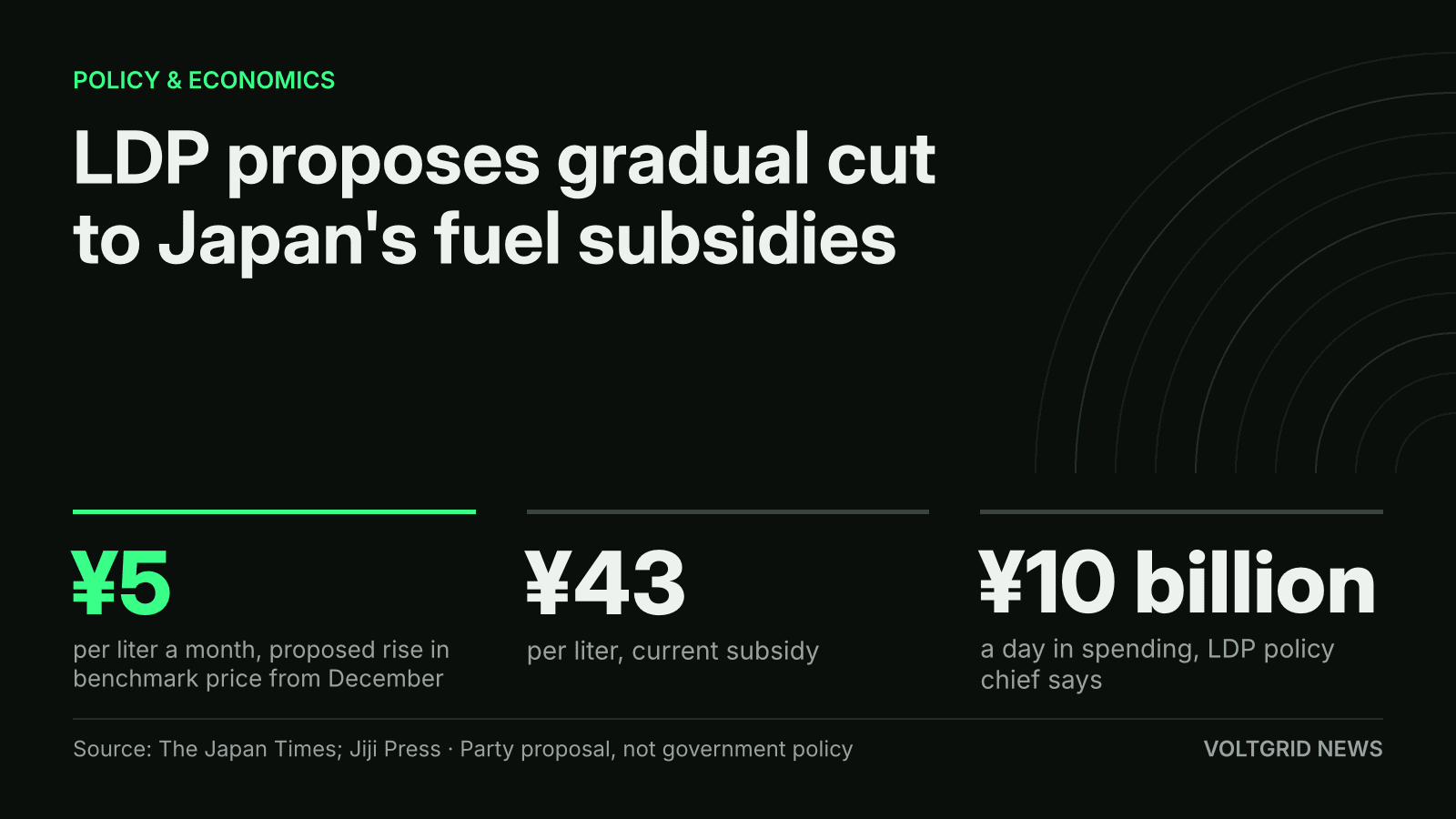
The LDP's proposal is not government policy; the subsidy is about ¥43 per liter today, according to The Japan Times.
Illustration (AI-generated)
Japan's ruling Liberal Democratic Party (LDP) compiled a proposal on Oct. 26 for the government to cut gasoline and other fuel subsidies gradually, starting in December, by raising the benchmark national average retail price of regular gasoline by about ¥5 a month from around ¥170 per liter, according to The Japan Times and Jiji Press.
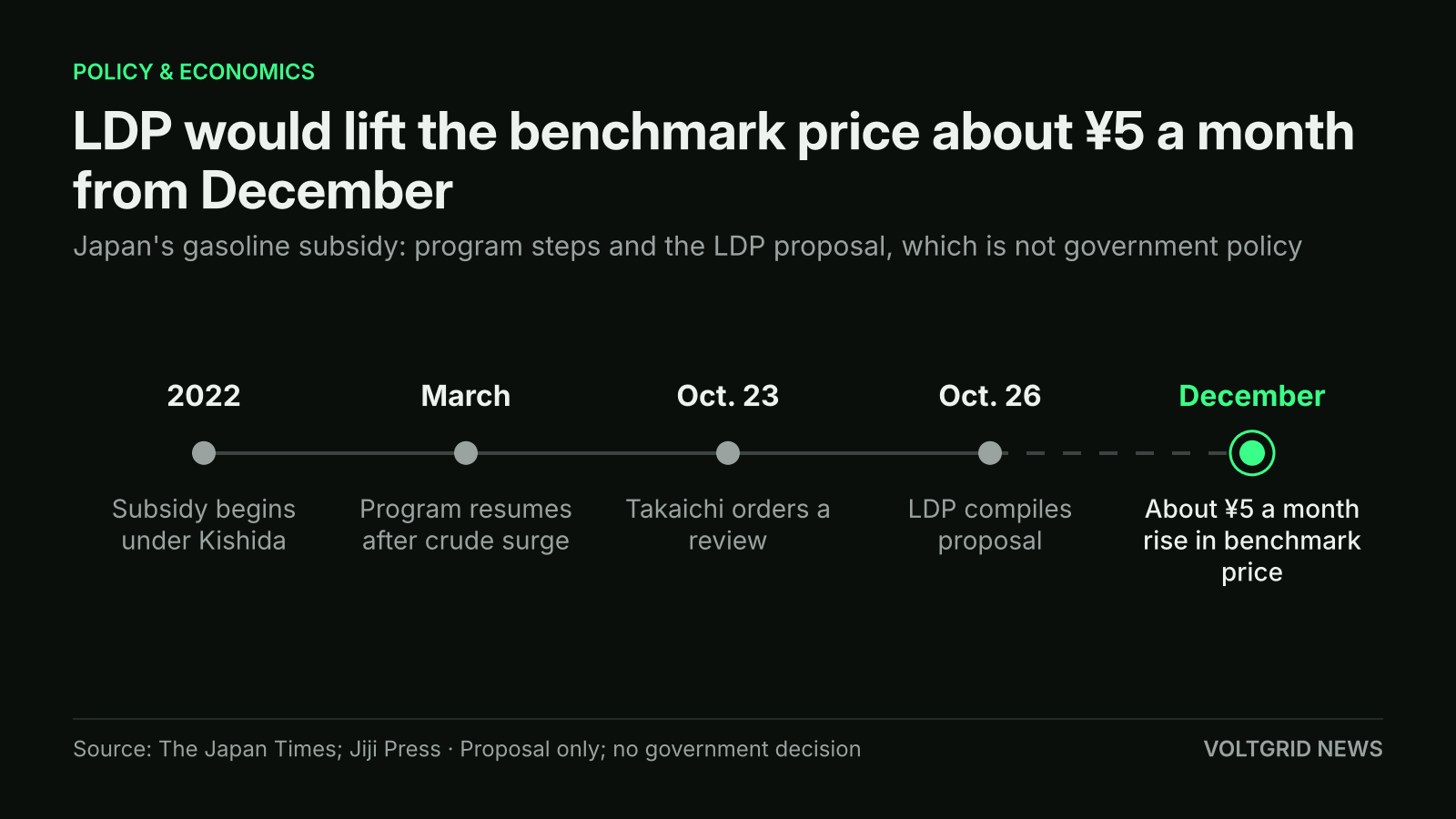
The LDP proposes raising the benchmark price about ¥5 a month from December; no government decision has been announced, Jiji Press and The Japan Times report.
Illustration (AI-generated)
The subsidy currently amounts to about ¥43 per liter. LDP policy chief Takayuki Kobayashi told a party meeting that the government has been spending over ¥10 billion a day on gasoline subsidies, and that "it is time to revise the program while keeping a close eye on people's livelihoods and economic activities."
The proposal says gasoline prices in Japan are lower than those in Europe and the United States, and asks the government to seek a smooth transition to a sustainable system. The LDP plans to submit it to the government soon. It is a party proposal, not government policy.
What the rule would change
The party would reduce the subsidy mainly through the benchmark price, the reference level of about ¥170 per liter, rather than through a separate cut to the payment. The sources do not give the end date or the size of each monthly step beyond "about ¥5".
The party also wants aid for electricity and gas bills to resume, citing higher energy demand in winter, and it included measures to curb rising kerosene prices. The package therefore pairs a smaller fuel subsidy with support aimed at household power and gas costs.
Why the program is under pressure
Japan began gasoline subsidies in 2022 under then-Prime Minister Fumio Kishida. The program was terminated at the end of last year and resumed in March this year after crude oil prices surged on the worsening situation in the Middle East, The Japan Times reported. Concerns over the fiscal burden have led to calls for an exit strategy.
On Oct. 23, Prime Minister Sanae Takaichi ordered industry minister Ryosei Akazawa to consider reviewing the system. Voltgrid also reported on Taiwan's inflation risk if Taipower and CPC subsidies end.
What is not decided yet
No government decision has been announced. The sources do not say whether the cabinet will adopt the ¥5-a-month schedule, when the first step would take effect, or whether the electricity and gas bill aid would be funded separately. The next step to watch is the LDP's submission of the proposal to the government and the review Akazawa has been asked to carry out.