Taiwan Inflation Could Rise if Taipower, CPC Subsidies End; CPI Over 2%
Taiwan inflation could rise if Taipower and CPC support is withdrawn while oil climbs, Governor Yang Chin-long told lawmakers on Oct. 28. CPI has topped 2% for five months; the budget still needs approval.
3 min readAI-assisted
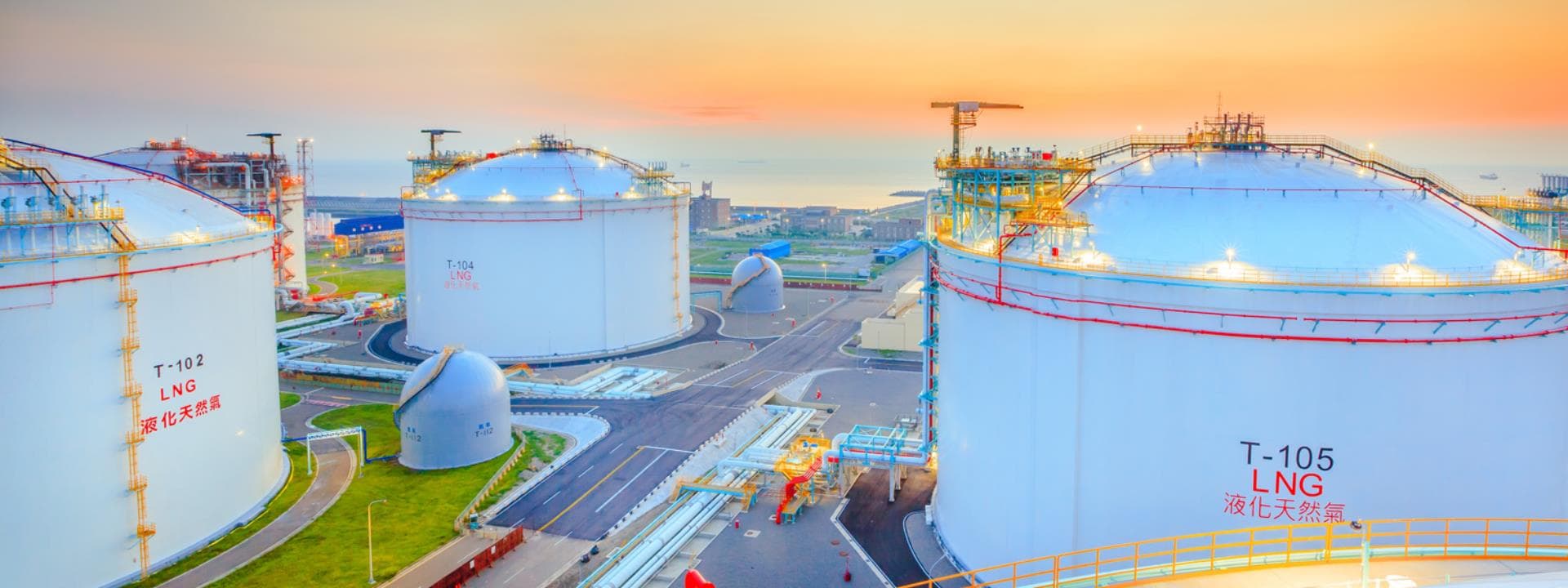
LNG storage tanks from CPC's own website. The image is illustrative and does not show a specific site named in the story.
Image: CPC Corp., Taiwan
Source · Press image from the CPC Corp., Taiwan website, used for news reporting.
Taiwan's inflation could rise if government subsidies for Taiwan Power Co. (Taipower) and CPC Corp., Taiwan are withdrawn while global oil prices keep rising, central bank Governor Yang Chin-long told lawmakers on Oct. 28, according to Focus Taiwan, the English-language service of the Central News Agency (CNA).
Yang spoke while presenting a report to the Legislative Yuan's Finance Committee, where lawmakers pressed him on possible interest rate hikes. Taiwan's consumer price index (CPI) has stayed above the government's 2 percent inflation warning threshold for five consecutive months through September, CNA reported.
What the Central Bank Said About Inflation
The central bank's written report forecasts CPI growth of 2.03 percent in 2026, easing to 1.83 percent in 2027. Other domestic and international institutions average 2.04 percent this year and 1.89 percent next year, the report said, as quoted by CNA.
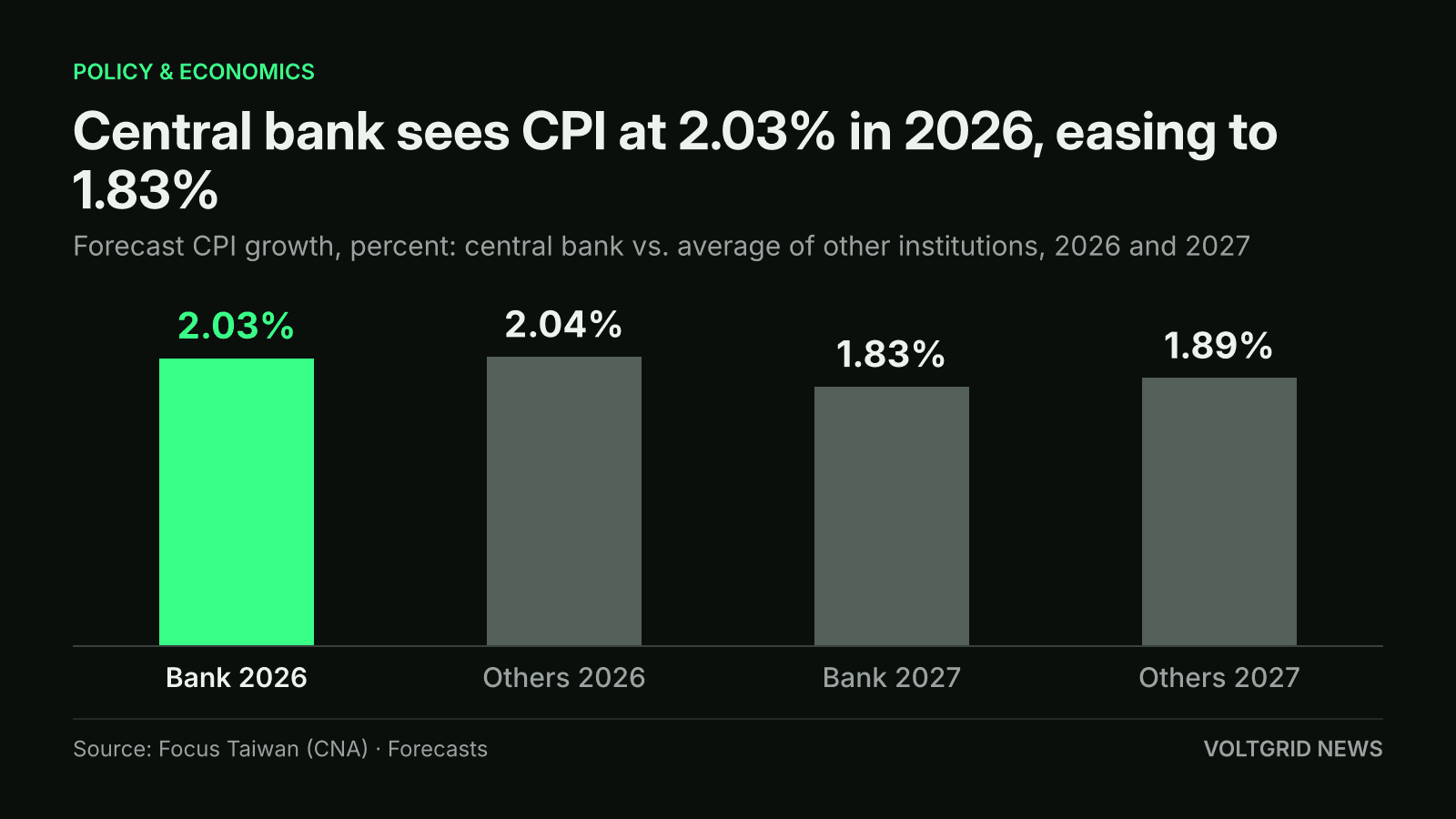
The central bank forecasts CPI growth of 2.03% in 2026 and 1.83% in 2027, close to other institutions' averages, according to Focus Taiwan.
Illustration (AI-generated)
Yang called inflation manageable because most forecasters expect global energy prices to moderate. He described higher oil prices as a supply-side driver and said the government's measures to stabilize electricity and fuel prices are a more targeted tool than rate increases, which would have broader economic effects while doing little against supply-driven price pressure.
Asked by Democratic Progressive Party legislator Lee Kuen-cheng whether failing to approve budget allocations for Taipower and CPC would fuel inflation, Yang said inflation should stay manageable if the government keeps its price stabilization measures even without those allocations. If both the budget support and the subsidies are withdrawn while oil keeps climbing, he said, inflation could rise further.
Why the Taipower and CPC Subsidies Matter for Power Buyers
Taiwan holds electricity and fuel prices down by having state-owned companies absorb the gap. Oilprice.com, citing Reuters, reported on Oct. 1 that Taiwan was allocating the equivalent of $13 billion in energy cost support for Taipower and CPC to offset cost inflation tied to the war in the Middle East. The economy ministry said CPC cannot absorb the difference between adjusted and unadjusted oil and gas prices, and warned that without supplementary budgets both companies may struggle to keep acting as price stabilizers.
For electricity users, the consequence runs through fuel costs. Oilprice.com put Taiwan's dependence on imported energy at as much as 94 percent to 97 percent of consumption, with natural gas providing over 23 percent of power generation and much of it imported as liquefied natural gas. A cost the utilities cannot pass on to customers has to be covered by the budget or it shows up in tariffs.
Data-center and chip customers sit close to that exposure. Oilprice.com reported that TSMC alone consumes as much as 8 percent of Taiwan's electricity, and that higher-priced U.S. LNG needs to be offset at least partly to keep industry competitive. Those are the outlet's figures; Voltgrid has not verified them against Taipower data.
What is not confirmed yet
Yang's remarks do not decide the question: the supplementary budget for Taipower and CPC still needs the Legislative Yuan's approval, and the sources Voltgrid read do not say when lawmakers will vote or what the final amounts will be. The central bank did not announce a rate decision on Oct. 28, and Yang said policymakers would keep watching domestic prices, economic conditions and inflation forecasts before acting.
He added that inflation near 2 percent next year would be acceptable, while a much higher rate would call for more caution. The next dated steps to watch are the committee and floor handling of the energy support budget and the central bank's next policy meeting, neither of which has a date in the reports Voltgrid read.