Sizewell C Called 'Terrible Deal' by UK MPs; Bills Could Rise £22bn
UK MPs on the Public Accounts Committee say Sizewell C's RAB financing leaves consumers with about £22bn more at £47.7bn cost, while investors add £30m; DESNZ disputes the finding.
2 min readAI-assisted

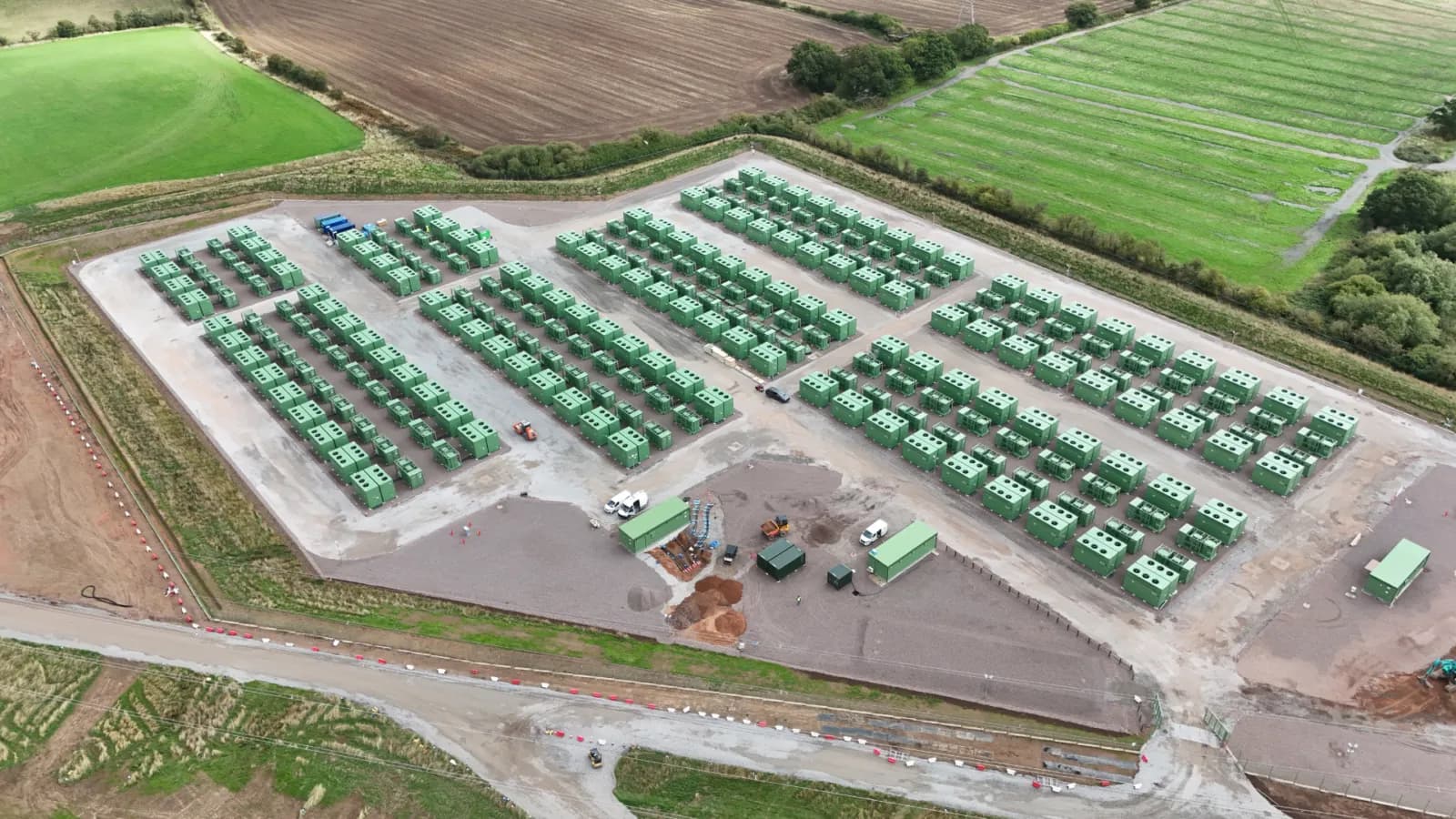
Earthworks at the Sizewell C site in Suffolk, the 3.2 GW project the Public Accounts Committee says is a terrible deal for the UK taxpayer.
Image: Sizewell C
Source · Press image from the Sizewell C website, used for news reporting.
The UK Parliament's Public Accounts Committee (PAC) said on Oct. 28 that Sizewell C is "a terrible deal for the UK taxpayer", calculating that consumers could pay almost £22bn more if construction costs reach £47.7bn, according to New Civil Engineer and Construction News.
The 3.2 GW plant on the Suffolk coast is costed at £38bn, and the government support package exposes the public to up to £54.4bn of costs, New Civil Engineer reported. The MPs said investors would put in only an extra £30m in the £47.7bn case, the top of the Department for Energy Security and Net Zero's (DESNZ) estimated range.
How the RAB financing works
Sizewell C uses the regulated asset base (RAB) model, under which customers pay a fee on their bills during construction and share the risk of cost rises with investors, Construction News explained. Ministers approved the financing in July 2025, with the government taking a 44.9% stake alongside EDF, Centrica, La Caisse and Amber Infrastructure, while the National Wealth Fund provides most of the debt.
Who pays
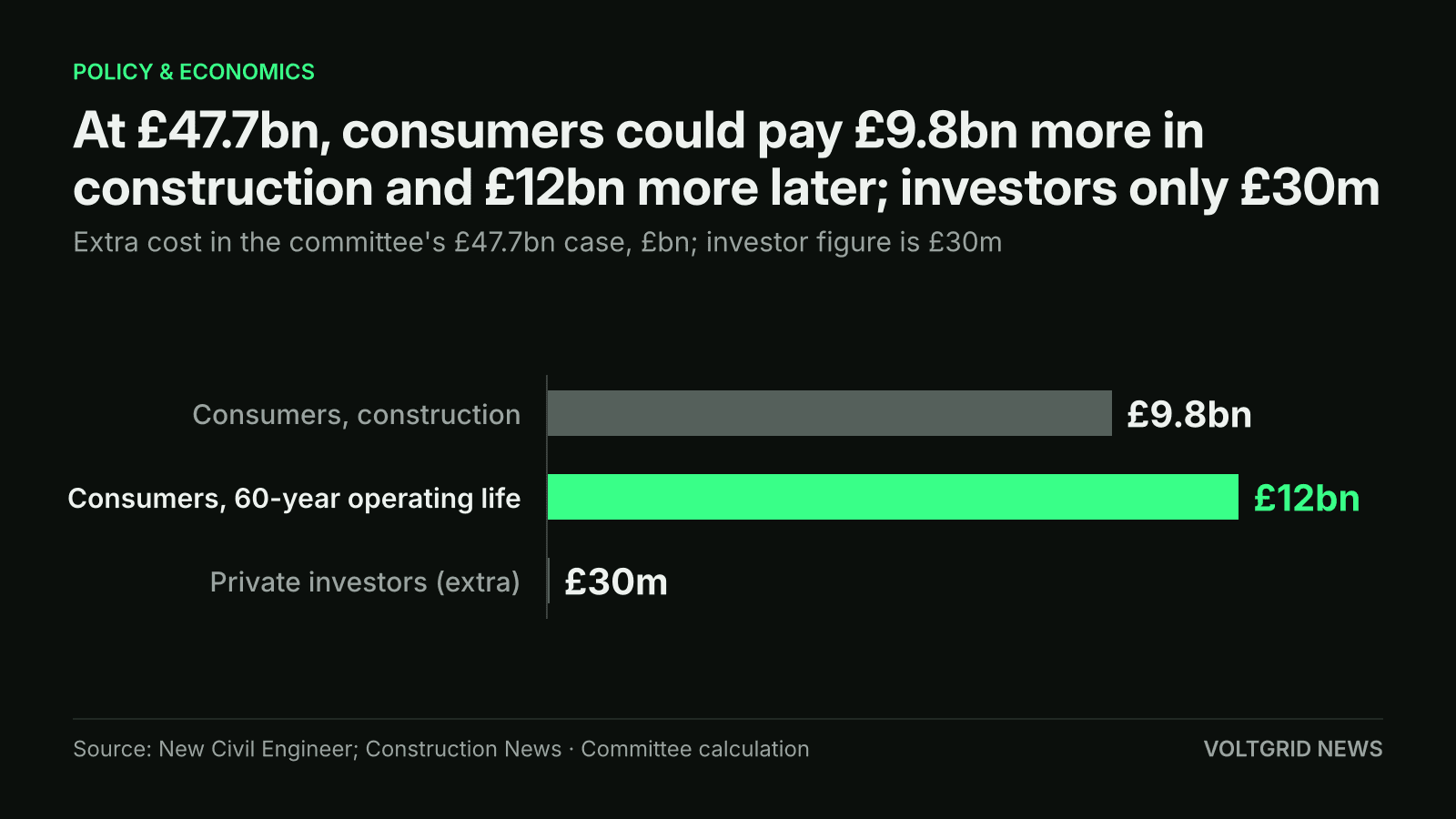
The committee calculates consumers could pay £9.8bn more during construction and a further £12bn over 60 years, while investors add only £30m, New Civil Engineer reports.
Illustration (AI-generated)
The committee's figure splits into £9.8bn more during construction and a further £12bn over the plant's 60-year operating life. It also noted that taxpayers cover any final shortfall in decommissioning funding, and said annual investor returns of over 10% are hard to justify. The MPs wrote that the department has given up majority control even though the public supplies most of the financing.
For power buyers and data-center developers weighing UK grid capacity, the point is who carries cost overruns: here it is bill payers rather than the owners. Hinkley Point C works differently, Construction News noted, with its developers financing construction and a contract for difference supporting revenue once it generates.
Delivery record and the government's answer
The report said no comparable nuclear station anywhere has been delivered on time and on budget, and that projects using the same reactor design have seen delays of up to 14 years. DESNZ replied that the report ignores investors' incentive to finish as cheaply and quickly as possible, and said Sizewell C could save £2bn a year across the energy system once running. The Nuclear Industry Association said the model costs consumers less by drawing in private money. Both are the parties' own claims.
As Voltgrid reported, a letter of intent covers operating 14 UK BWRX-300 small modular reactors; the committee asked how the nuclear premium charged by investors on future projects can be reduced. For a cost-overrun comparison elsewhere, see Snowy 2.0's new cost target.
What happens next
The committee wants Sizewell C and the department to report every six months, covering costs, schedule, milestones, bill impact and forecast investor returns, instead of once a year. It also asks for a plan to meet the 70% UK construction-spend target. The government has not yet published a formal response, and the PAC's own report page could not be read directly, so figures come from the two outlets quoting it.