Hungary Files Bill on US Nuclear Pact Centred on SMRs, Names No Vendor
Hungary sent parliament a bill approving its US nuclear accord on Oct. 27. It centres on SMRs and a 12-month technology study, names no vendor or budget, and leaves room for EU procurement exemptions.
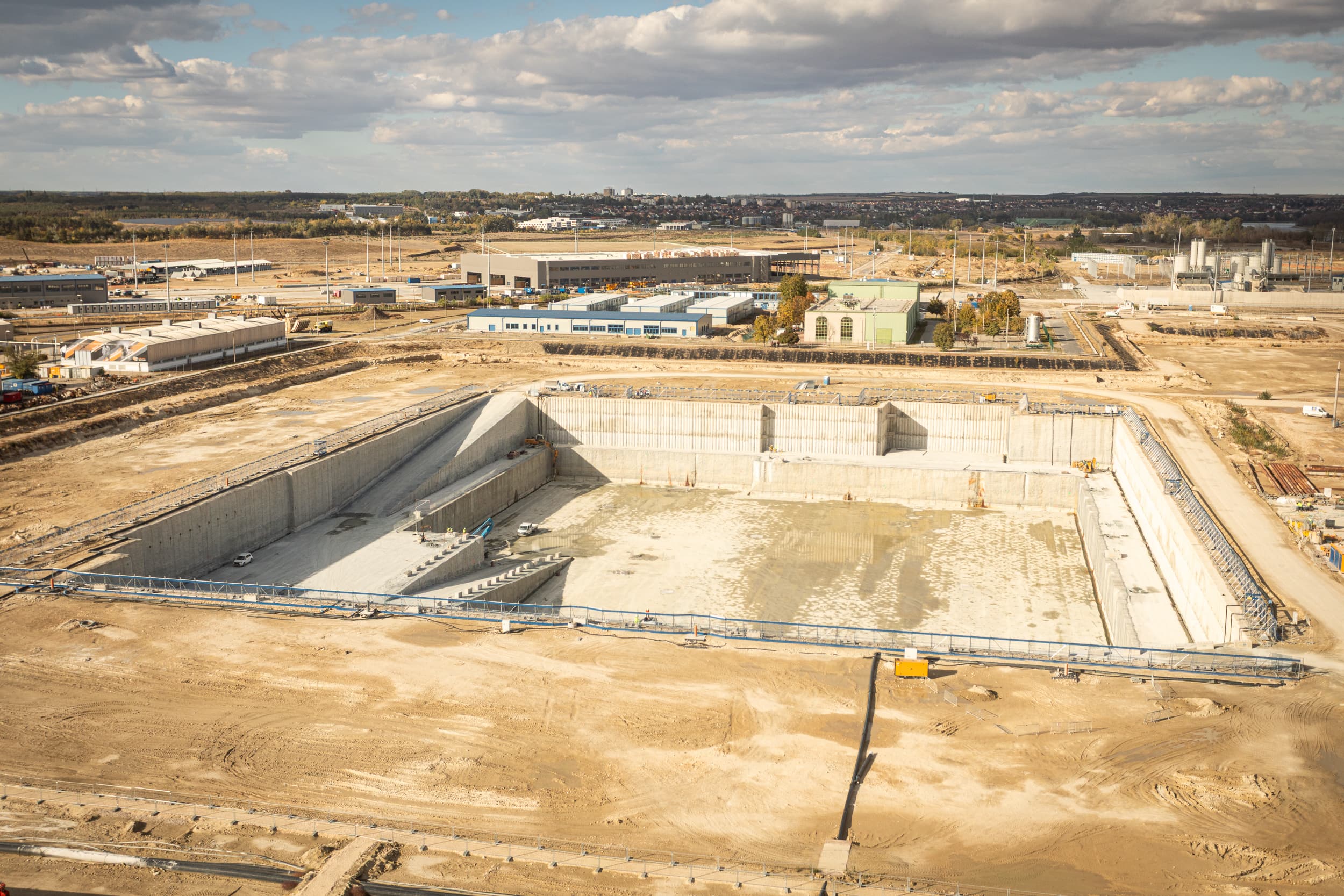
Paks II construction site in Hungary, where the nuclear expansion is being prepared. The photo shows the Paks II project, not a site chosen under the US agreement.
Image: Paks II Ltd.
Source · Press image from the Paks II Ltd. website, used for news reporting.
Hungary's government filed a bill with parliament on the evening of Oct. 27 to approve its US civil nuclear agreement, which centres on preparing small modular reactors (SMRs), Portfolio.hu reported on Oct. 28.
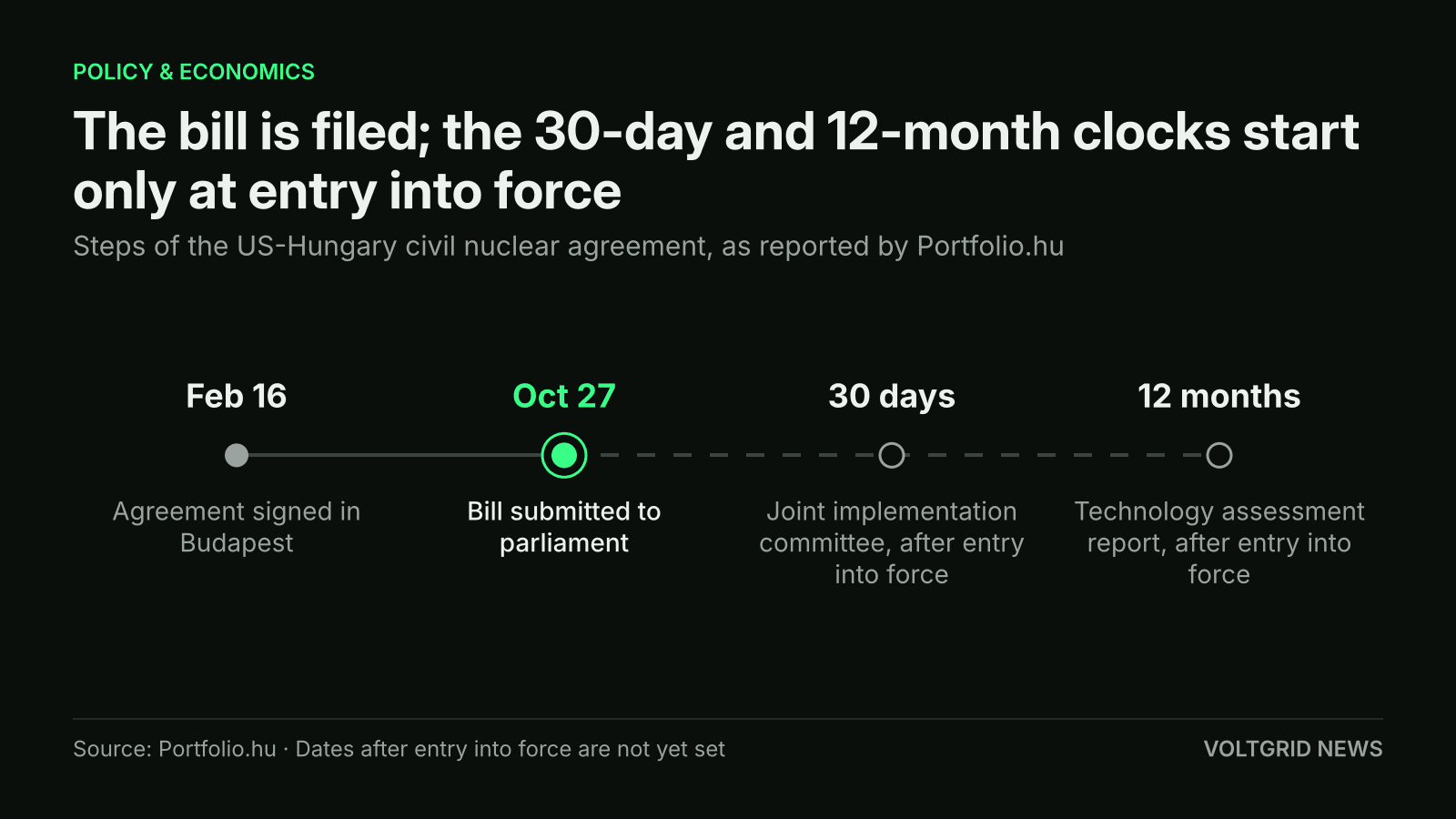
The bill was filed Oct 27; the 30-day committee and 12-month assessment clocks run only from entry into force, per Portfolio.hu.
Illustration (AI-generated)
The agreement is the intergovernmental accord that the previous Fidesz-led government signed in Budapest on Feb. 16, according to Portfolio. The bill is the next legislative step, and the outlet says it shows Prime Minister Peter Magyar's government is carrying on the US nuclear track it inherited. That is notable because Hungary is also reviewing whether to replace Rosatom as main contractor for the Paks expansion, which Reuters reported on Oct. 21, with Rosatom answering on Oct. 23.
The text names no company and no reactor type, Portfolio said. Budapest would "encourage" the choice of US nuclear technology, while the US government would encourage American firms to take part but would have no role in picking the supplier. Cooperation could cover power generation and other uses such as hydrogen production, and could extend to new large reactors, fuel supply for existing units, spent-fuel storage, regulation and workforce training.
What the bill sets in motion
Within 30 days of entry into force, the two sides would set up a joint programme implementation committee. It would have 12 months to produce a technology assessment report covering the SMR market, technology maturity, delivery risks, possible sites and funding sources, according to Portfolio.
Financing is left open. The US Export-Import Bank and other US financial institutions appear as possible funders, but Portfolio said the agreement by itself creates no financial obligation for either side.
The procurement clause
The most consequential provision for investors is on procurement, in Portfolio's reading. Hungary commits to follow national and EU public-procurement rules but, where needed, would seek an exemption or authorisation from the European Commission and other authorities from an open-market procedure for project financing and for selecting the technology supplier and main contractor.
Portfolio stressed that this is not an automatic waiver: the European Commission and other bodies would still decide. In the outlet's assessment, the clause leaves room for a directly negotiated supplier deal, which could speed preparation but would limit competition between rival technologies. That assessment is Portfolio's, not a position stated in the agreement.
Existing US ties, and what is not confirmed
Portfolio noted earlier steps by Hungarian energy company MVM: a November 2025 contract with Westinghouse under which, subject to licensing, the US firm could supply Europe-made VVER-440 fuel to the Paks plant from 2028, and a December agreement with Holtec International to study its SMR-300 design. Holtec Europe and Hyundai Engineering & Construction executives told Portfolio in March that a Hungarian SMR could appear around 2033, which is their projection, not a government commitment.
Several points remain open. The reports seen so far give no bill number, no date for the parliamentary vote and no start date for the 30-day and 12-month clocks. No vendor, site or budget has been named, and any procurement exemption would depend on a decision by EU authorities.