Georgia PSC Election Results: Hubbard, Edwards Give Democrats 3-2 Majority
Peter Hubbard and Shelia Edwards won both Georgia Public Service Commission seats on Nov. 3, per unofficial counts, giving Democrats 3 of 5 seats on the Georgia Power regulator. Certified totals are not yet reported.
Chips & Power DeskEdited by Ege Erten
3 min readAI-assisted
Follows our story: Georgia, Louisiana PSC Elections Nov. 3: 2 Seats Each, Meta Hyperion Power
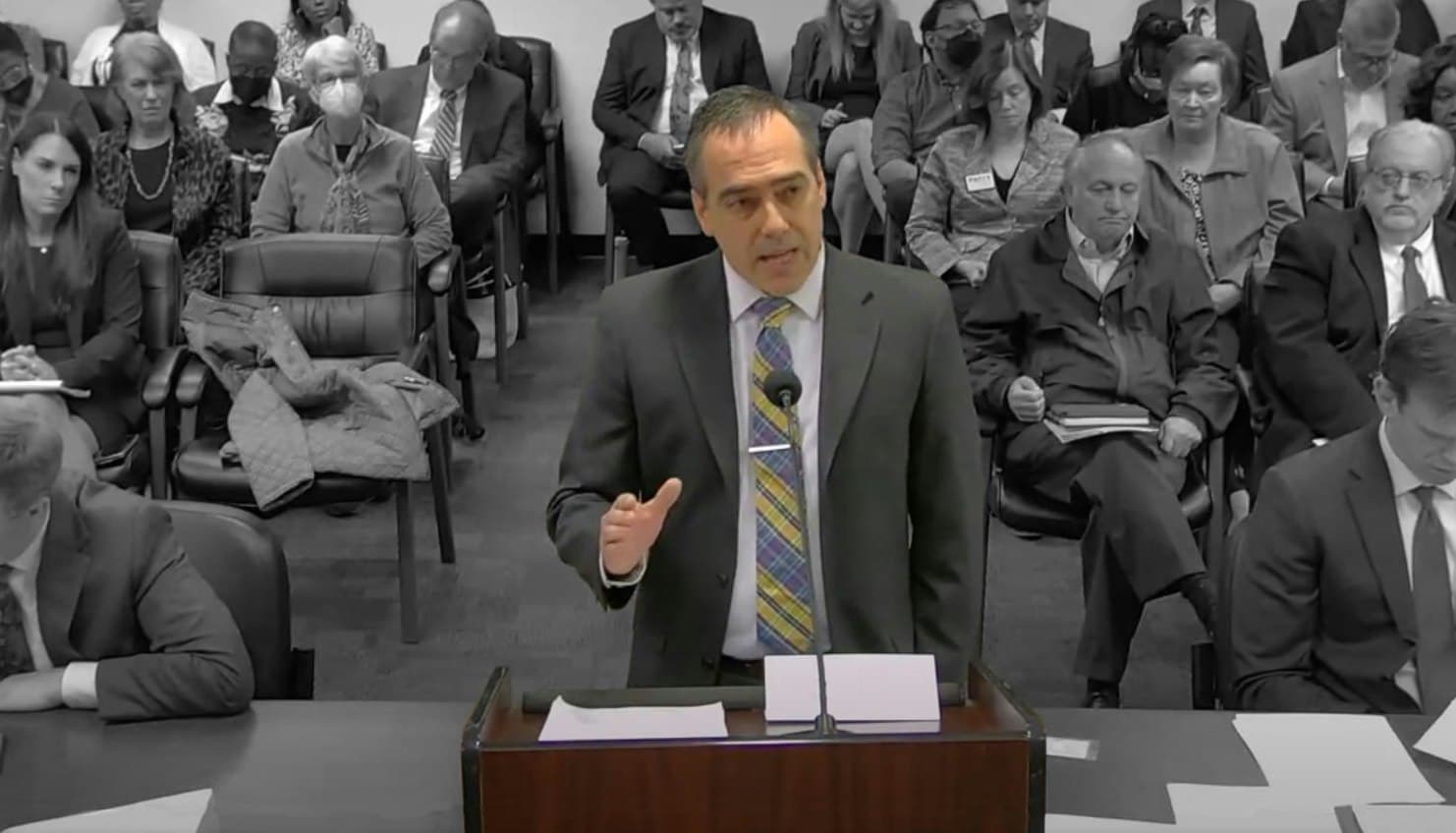
Peter Hubbard, who won Georgia's District 3 Public Service Commission seat, speaking at a hearing in a photo from his campaign site.
Image: Peter Hubbard campaign
Source · Press image from the Peter Hubbard campaign website, used for news reporting.
Georgia PSC election results show Democrats Peter Hubbard and Shelia Edwards won both Georgia Public Service Commission seats on the Nov. 3 ballot, giving Democrats a 3-2 majority on the board that regulates Georgia Power, according to the Georgia Recorder, which cited unofficial Secretary of State results.
As of late Tuesday, Hubbard had 56% of the vote in District 3 and Edwards had 55% in District 5, the Georgia Recorder reported. FOX 5 Atlanta reported that the Associated Press called District 3 for Hubbard at 10:38 p.m. and District 5 for Edwards at 10:54 p.m. The Current reported the leads at 13 and 10 percentage points when the AP made its calls. These are election-night counts, and the final certified margins may differ.
Hubbard, who flipped District 3 in a 2025 special election, beat Republican Fitz Johnson, the former commissioner he unseated last year. Edwards, a Cobb County business owner, beat Republican Josh Tolbert, a mechanical engineer, for the open District 5 seat vacated by Tricia Pridemore. Alicia Johnson, who also flipped a seat in 2025, is the third Democrat, and Edwards gives the party its three of five seats. The Georgia Recorder said the majority takes effect next year, and the commission had been all Republican from 2006 until the start of this year, according to The Current.
Why the Georgia PSC Majority Matters for Data Centers
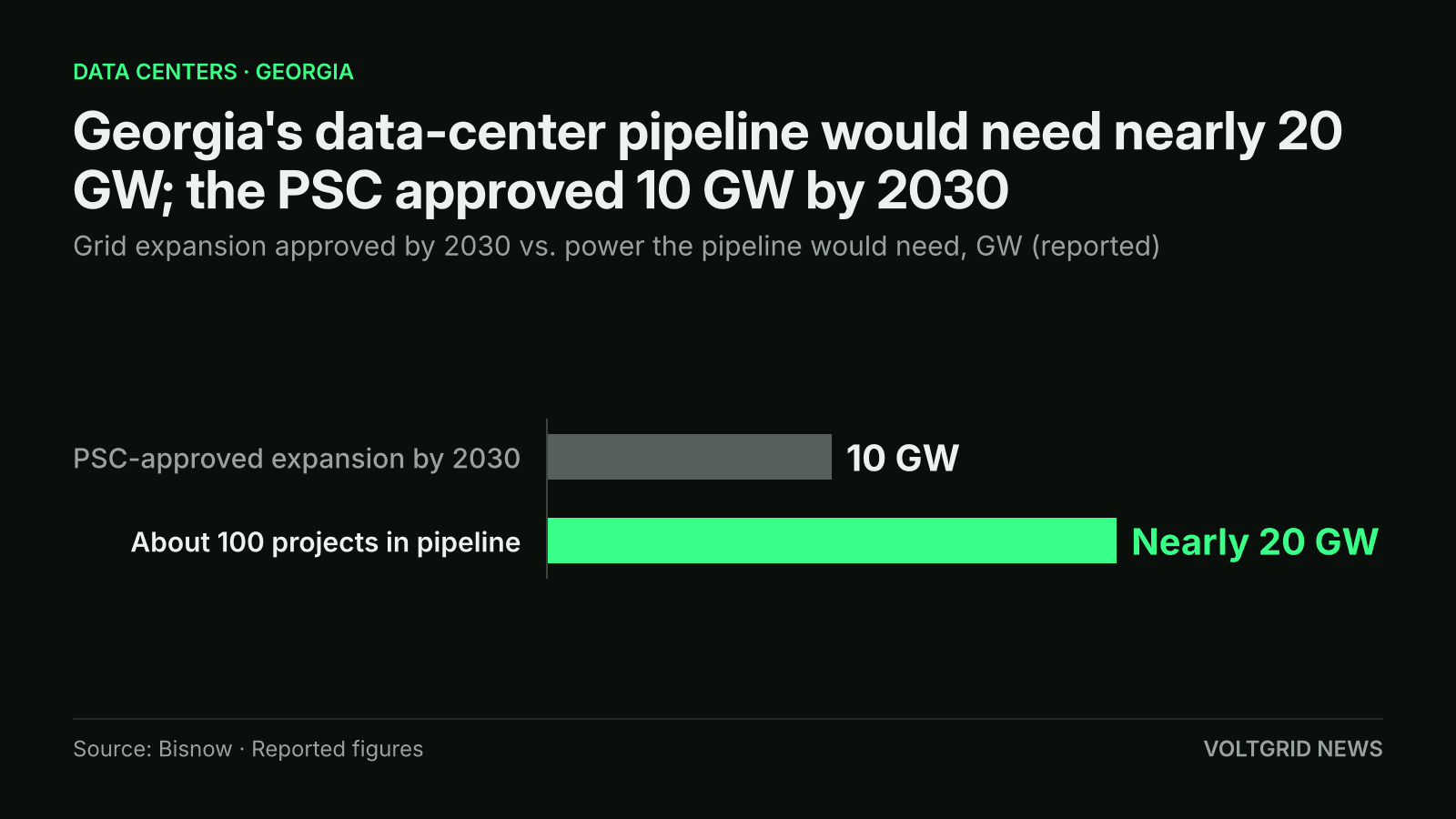
The pipeline of about 100 data centers would need nearly 20 GW, against the 10 GW expansion approved by 2030, Bisnow reported.
Illustration (AI-generated)
The commission does not decide whether a data center is built. It does decide how Georgia Power plans, builds and charges for the power those sites need. Last December it approved an agreement letting Georgia Power expand the state's grid by 10 GW by 2030 for data-center demand, Bisnow reported. Bisnow also reported that Georgia has more than 100 operating data centers and about 100 more in the pipeline that would need nearly 20 GW.
Georgia Power told Bisnow it requires data-center operators to pay for any additional power they need so the cost does not fall on other customers. Both winners ran on tighter scrutiny. Hubbard said at an Atlanta Press Club debate that he wants to lower power bills with clean energy and hold data centers accountable. Edwards said Democrats could turn the commission into a consumer-focused rather than utility-focused body, and Bisnow, citing The Current, reported she has backed a pause of at least one year on data-center development while the state writes rules.
What the new commission can and cannot do
Hubbard has said the commission's oversight covers the power side, meaning where the electricity comes from and what data centers pay on their tariff, while water use and tax incentives sit outside it, Heatmap reported. He cited an estimate of $3.5 billion in data-center tax abatements in Georgia this year.
Rates are the other pressure. The Recorder said the all-Republican commission approved six rate increases in recent years, which it estimated at about $500 a year for the average household. Heatmap reported that the commission approved a three-year base rate freeze before the election and that average Georgia rates rose less than 1% in the past year, against more than 18% over three years.
Voters are also acting on data centers locally. Our report on Sunbury, Ohio's 25 MW ban and 13 other town measures covers the Ohio ballot results.
What is not confirmed yet
Edwards's first name appears as both Shelia and Sheila across outlets, and the official certified totals and swearing-in dates have not been published in the reports we read. The Current said Georgia Power's next long-term energy plan is due in 2028, with a rate case expected to follow, but no hearing dates are set in those reports. As Voltgrid reported before the vote, the Louisiana commission races were on the same ballot; their results are not covered in the Georgia reports above. Southern Company shares fell slightly more than 0.5% in after-hours trading Tuesday, according to Heatmap.
Sources
- 01Democrats Win Control of Georgia's Energy RegulatorHeatmap · heatmap.news
- 02Democrats gain control of Georgia board that regulates utilities for first time in decadesGeorgia Recorder · georgiarecorder.com
- 03Georgia's Utility Board Race Could Reshape Nearly 20 GW Pipeline Of Data CentersBisnow · bisnow.com
- 04MAP: How your neighbors voted for Georgia Public Service CommissionFOX 5 Atlanta · fox5atlanta.com