Huawei OSTA O1 Pro Reportedly Runs Kirin 9030S, From RMB 5,499
Huawei's new OSTA brand launched in China on Nov. 20 with prices up to RMB 8,799 across four configurations, TechNode and Android Headlines report; no sales outside China are announced.
2 min read
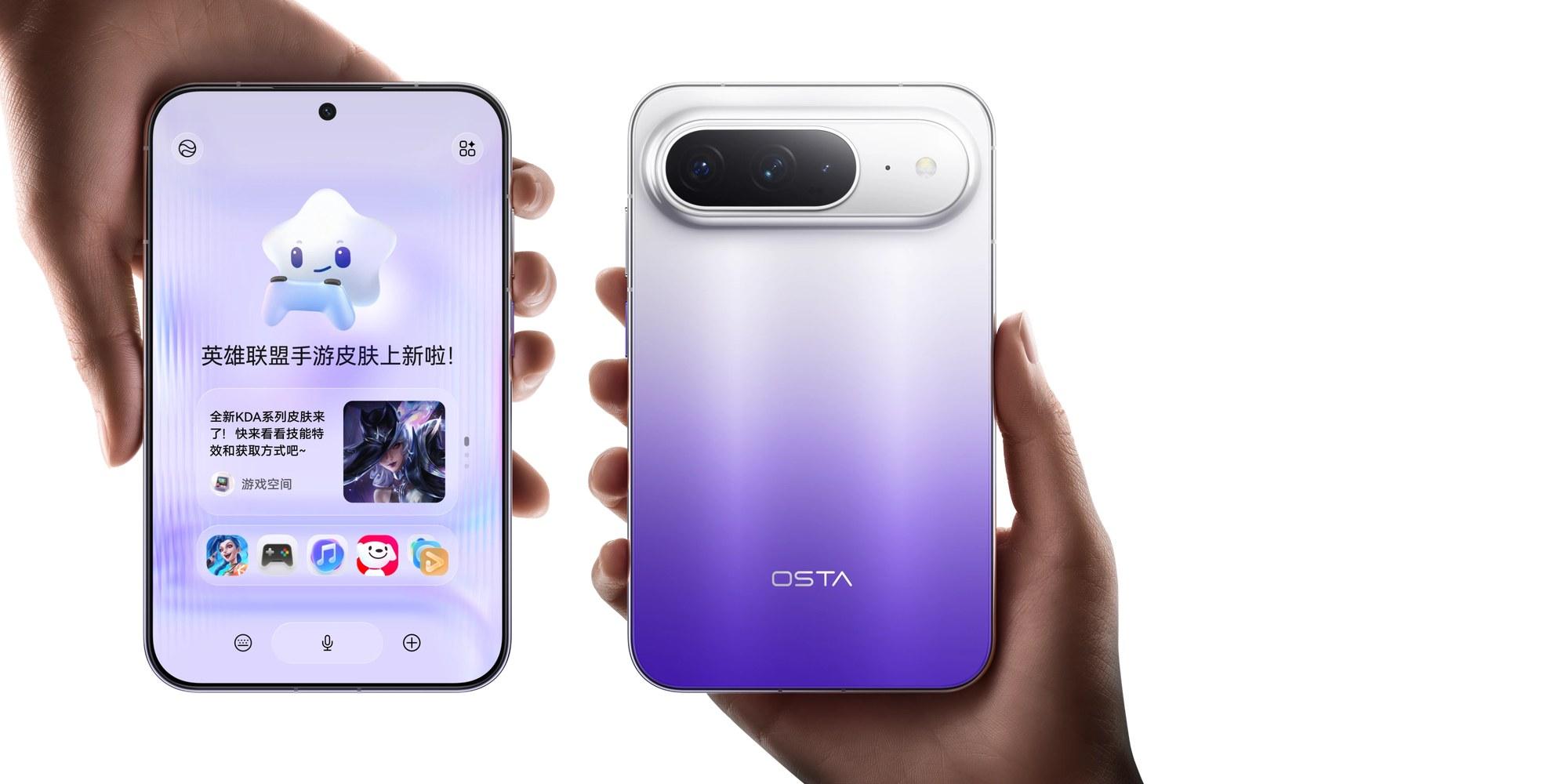
The OSTA O1 Pro, shown on Huawei's own product page for the phone.
Image: Huawei
Source · Press image from the Huawei consumer site, used for news reporting.
Huawei launched its OSTA smartphone brand in China on Nov. 20 with its first handset, the OSTA O1 Pro, which TechNode and Android Headlines both report runs on a Kirin 9030S, at introductory prices from RMB 5,499 to RMB 8,799.
According to Android Headlines, the four configurations are 12GB/256GB at RMB 5,499, 12GB/512GB at RMB 6,499, 16GB/512GB at RMB 7,299 and 16GB/1TB at RMB 8,799, after an RMB 200 launch discount. Huawei has not announced plans to sell the phone outside China, the outlet said. TechNode reports that the O1 Pro debuts an AI-focused edition of HarmonyOS 7, and that Huawei executive Richard Yu presented OSTA as a consumer brand built around AI.
Reported O1 Pro prices climb from RMB 5,499 to RMB 8,799 across four RAM and storage configurations.
Graphic: Voltgrid News
One Kirin Chip, More Phones
The Kirin 9030S is not new silicon. Huawei's own spec pages already list it in the Pura 90 Pro and Pura 90 Pro Max. Putting the same part into a second brand spreads one Kirin chip across more phones and more price points. Huawei has not said why it reuses the chip, and no source names the foundry or process for the 9030S.
The pattern has been visible all autumn. As Voltgrid reported, the Pura 90 Plus arrived on Oct. 28 as the first Kirin 9025 phone at the same RMB 5,499 entry price, and the Enjoy 100 Pro Max split the Kirin 8020 and 8020A by storage tier. OSTA's O1 Pro now starts at the same RMB 5,499 with the Kirin 9030S, the chip in Huawei's Pura 90 Pro line, under a separate badge.
OSTA O1 Pro Specs: Display, Battery and Cameras
Android Headlines lists a 6.39-inch OLED at 2232 x 1320 pixels and 120 Hz with 6,500 nits peak brightness, a 7,000 mAh battery with 66 W wired, 50 W wireless and 5 W reverse wired charging. The camera set is a 200MP RYYB main sensor with optical stabilization, a 50MP periscope telephoto at 3.7x, a multispectral colour sensor and a 50MP front camera.
TechNode says the software puts an animated assistant on a system-level AI screen. Huawei says the system links more than 2,100 system functions and over 500 ecosystem skills, including Alipay, Xiaohongshu, JD.com and Taobao, so users can ask for a service without opening the app first.
How Huawei's Kirin 9030 Names Differ
Huawei's spec pages separate its phone chips by name alone. The Mate 80 Pro Max lists the Kirin 9030 Pro, the Mate 80 Pro lists either the 9030 Pro or the 9030 depending on RAM, and the Pura 90 Pro line lists the Kirin 9030S. TechInsights, a teardown firm, says the 9030 Pro is made by SMIC on its N+3 process. No source we read gives a process for the 9030S.
Huawei publishes no core counts, clocks or process for any Kirin, so every such figure comes from third parties. A benchmark labelled "Kirin 9030" may therefore describe a different part from the one in the O1 Pro. Until a test or teardown names the O1 Pro's chip, treat its speed and manufacturing as unknown and compare it by name only.
Core layouts circulating for the 9030S come only from spec listing sites and are not confirmed. No independent benchmark or teardown of the O1 Pro has been published, and the first one will show how the chip performs in this phone.
Sources
- Published
- Sources
- 2 cited